




As the world prepares for the 2028 Summer Olympic Games, the spectacle of athletic achievement is increasingly overshadowed by a more existential challenge: the climate crisis. With a projected global audience of over five billion people, Los Angeles finds itself at a unique, high-stakes intersection. The city is currently navigating a complex recovery from devastating wildfires, all while accelerating the infrastructure and policy shifts required to host the world’s largest sporting event.
In an effort to address these competing pressures, a timely webinar—part of the official London Climate Action Week—will convene on 23 June 2026, from 16:00 to 17:00 CEST (15:00 to 16:00 BST). This digital forum will interrogate whether the LA28 Games can serve as a catalyst for urban resilience or if they represent an unsustainable relic in an era of environmental volatility.
Main Facts: The Sustainability Blueprint
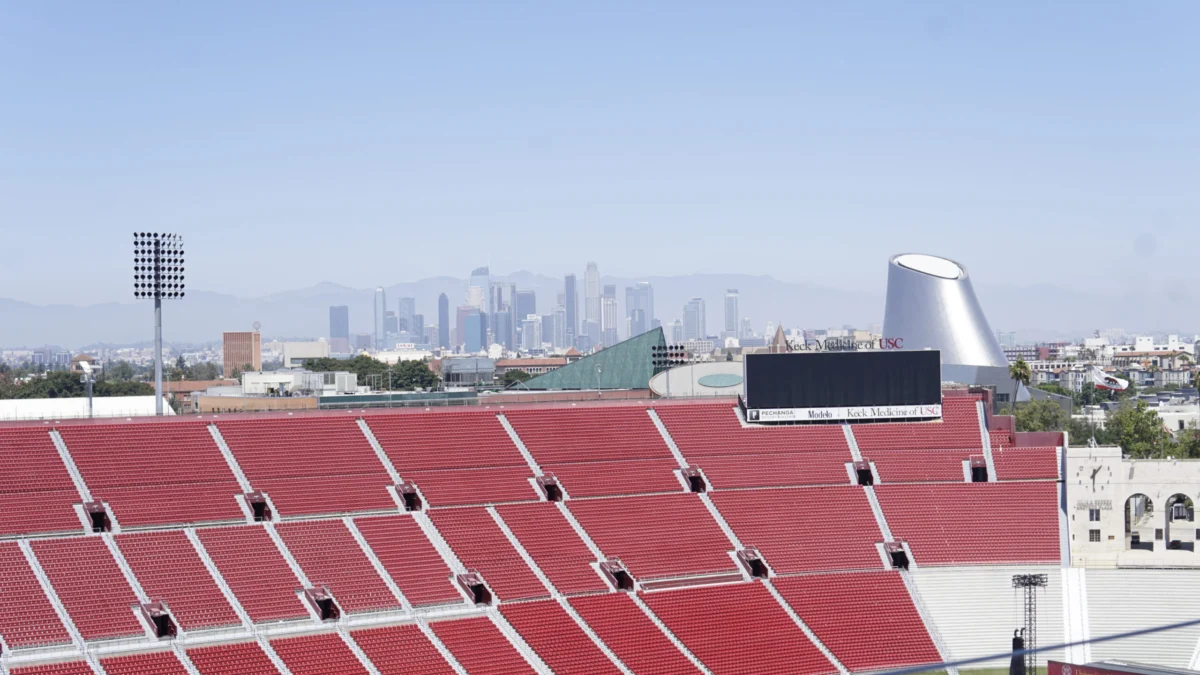
The LA28 Organizing Committee has made bold, unprecedented pledges that aim to decouple the Olympics from the massive carbon footprints historically associated with mega-events. Central to their strategy is a radical commitment to infrastructure: LA28 will utilize only existing or temporary venues. By eschewing the construction of permanent, high-carbon “white elephant” stadiums, the committee aims to minimize the environmental impact of the physical event.
Furthermore, the organizers have committed to a "car-free" initiative, aiming to overhaul mobility patterns in a city notoriously dependent on the automobile. This includes an aggressive push for public transit integration and sustainable urban mobility corridors. However, the efficacy of these measures remains a subject of intense academic and public scrutiny. The webinar will serve as a platform to dissect the feasibility of these goals and ask whether a city still scarred by recent climate-driven catastrophes can truly host a "sustainable" spectacle.
Chronology: From Wildfire Recovery to the Global Stage
To understand the stakes, one must look at the timeline of Los Angeles’ environmental journey leading up to 2028:
- 2020–2025: The Climate Volatility Period. Southern California experienced a series of unprecedented heatwaves and wildfire seasons, forcing the city to fast-track its climate adaptation strategies.
- 2026: The Strategic Pivot. As the city enters the two-year countdown to the Games, the integration of disaster recovery with Olympic planning becomes the primary focus of local policy.
- June 23, 2026: The London Climate Action Week webinar takes place, bringing global experts together to debate the “LA Model.”
- 2027: Final Readiness. The city undergoes rigorous testing of its temporary infrastructure and upgraded public transit networks.
- July 2028: The Opening Ceremony. The world watches to see if the sustainability pledges hold up under the pressure of global scrutiny.
Supporting Data: The Climate Context
The challenge for Los Angeles is underscored by sobering environmental data. According to regional climate reports, the Southern California basin has seen a temperature increase of approximately 2°C over the last century, significantly higher than the global average.
- Wildfire Impact: Over the past decade, wildfire-related property damage in the region has reached multi-billion dollar figures, straining municipal budgets that are also being tapped for Olympic infrastructure.
- Mobility Metrics: Currently, over 70% of trips in Los Angeles are made by private vehicle. To meet the LA28 "car-free" pledge, the city must achieve an unprecedented shift in consumer behavior and transit capacity within a condensed 24-month window.
- Emissions Targets: The organizers aim to achieve a "climate-positive" status, meaning they must offset more carbon than they produce—a goal that requires total transparency in supply chain management and energy procurement for the Games.
Official Responses and Stakeholder Positions
The Los Angeles Olympic organizing team maintains that they are setting a new international standard. In recent statements, representatives have argued that the Games are not just a sports event, but a "strategic accelerant" for city-wide infrastructure projects that would otherwise take decades to complete.
"We are not just hosting a competition; we are hosting a test of urban resilience," said an official spokesperson for the LA28 initiative. "By refusing to build new venues, we are forcing the city to optimize what we already have, which is the definition of sustainable urbanism."
However, environmental advocacy groups remain skeptical. Critics argue that the "existing venue" policy does not account for the massive surge in air travel emissions or the indirect environmental costs of security operations, policing, and temporary power grids. "The danger," notes one climate policy researcher participating in the London Climate Action Week, "is that the Olympics provide a thin veneer of sustainability to a city that is still fundamentally struggling with the realities of climate-driven urban decay."
Implications: Can the Olympics Survive the Climate Era?
The implications of the LA28 experiment extend far beyond the borders of California. If Los Angeles succeeds in decoupling a mega-event from environmental destruction, it could provide a blueprint for all future Olympic hosts. If it fails, the event risks being remembered as the last "old-world" spectacle in an era that can no longer afford such displays.
The Urban Policy Ripple Effect
The pressure to host the Olympics is forcing Los Angeles to address long-standing failures in its urban policy. The need for efficient, car-free transit is finally gaining the political capital necessary to override bureaucratic inertia. If successful, these infrastructure projects could serve as the city’s true "Olympic legacy," benefiting residents long after the athletes have departed.
The Future of Athletic Prowess
There is also a deeper, philosophical question: can the Olympic Games continue to provide a stage for human achievement when the host environment is under siege? The juxtaposition of record-breaking athletic performances against the backdrop of wildfire-affected landscapes creates a jarring cognitive dissonance. The Games must adapt not only their logistics but their narrative—moving from a celebration of nationalistic dominance to a global display of collective resilience.
A Test of Global Cooperation
The upcoming webinar during London Climate Action Week is a microcosm of the global challenge. It forces the organizers to move beyond press releases and engage with the reality of climate science. The dialogue will explore:
- Resilience Integration: How to build physical and social infrastructure that protects the most vulnerable citizens during both extreme weather events and massive sporting influxes.
- Accountability: How to measure the "carbon footprint" of a global event accurately when supply chains are complex and international.
- The Ethics of Mega-Events: Whether the resources spent on the Olympics could be better directed toward localized climate adaptation.
As we look toward 2028, the world is waiting for an answer. Los Angeles is not just preparing to host the Olympics; it is preparing to prove that in the 21st century, even the most massive global gatherings can be reimagined to serve the planet, rather than drain it.
Join the Conversation
The webinar on June 23, 2026, promises to be a critical juncture in the pre-Games discourse. Whether you are a policy maker, an environmental advocate, or a concerned citizen, the questions raised will shape the way we understand the intersection of urban life and the climate crisis.
Webinar Details:
- Date: 23 June 2026
- Time: 16.00-17.00 CEST / 15.00-16.00 BST
- Location: Online (Webinar)
- Focus: Resilience, Mobility, and Sustainability in the shadow of the 2028 Olympics.
The outcome of this debate will likely set the tone for the final two-year sprint to the opening ceremony. Will LA28 be the Games that finally change the narrative, or will the climate reality prove too great an obstacle for the modern Olympic ideal? The answers will not be found in the stadiums, but in the policy decisions made in the boardrooms and the city halls of Los Angeles today.
