





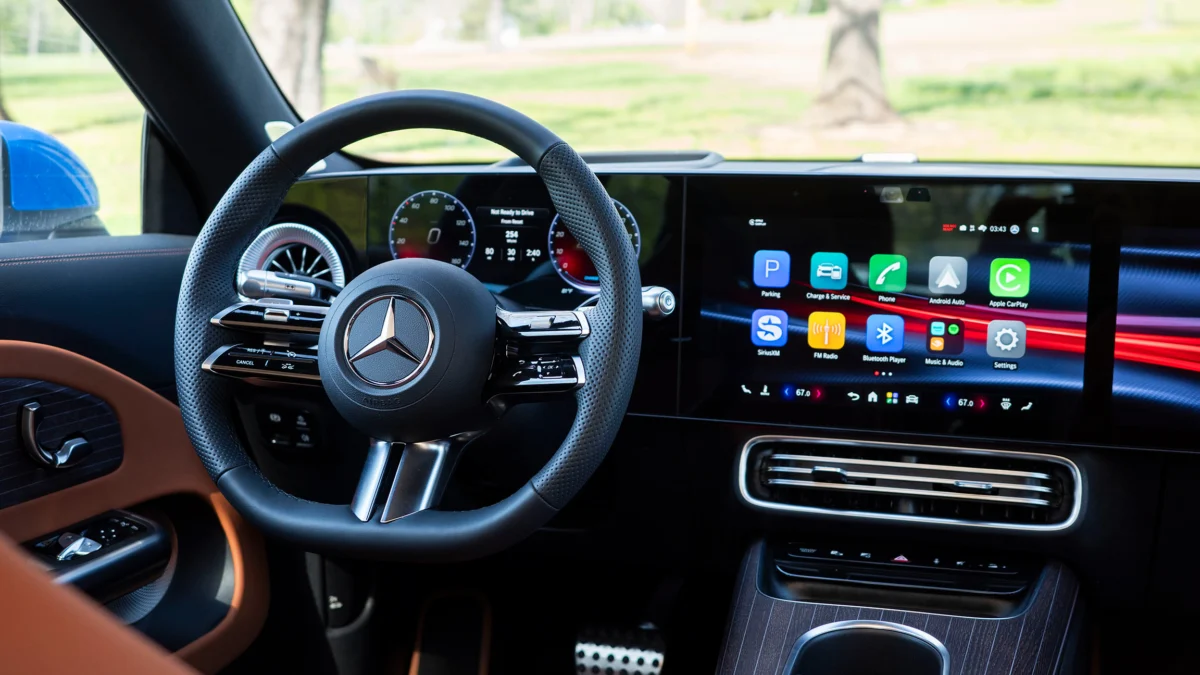
For the better part of a decade, the automotive industry has been locked in a race toward total digitalization. The dashboard of the modern luxury vehicle, once a cockpit defined by tactile feedback, weighted knobs, and satisfyingly mechanical switches, has been systematically dismantled. In its place, manufacturers have installed vast, shimmering panes of glass—the “Hyperscreens” and digital interfaces that promised a futuristic, streamlined experience.
However, a significant course correction is underway. Mercedes-Benz, a brand that has served as the vanguard for this digital-first philosophy, has officially signaled a retreat. In a rare moment of corporate candor, CEO Ola Källenius has acknowledged that the industry’s obsession with screen-based interfaces has gone too far, confirming that Mercedes will begin reintroducing physical buttons to its vehicle interiors.
The Genesis of the Digital Overhaul
To understand the significance of this pivot, one must look at the trajectory of the last ten years. Mercedes-Benz, particularly with its MBUX (Mercedes-Benz User Experience) system, became synonymous with high-definition, screen-heavy interiors. The brand’s strategy was clear: leverage software to define the luxury experience. By migrating climate controls, volume adjustment, and even seat adjustments into sub-menus on touchscreens, the company aimed to offer a clean, minimalist aesthetic that appealed to a tech-savvy demographic.
However, the user experience often lagged behind the visual ambition. As noted in recent reviews of the 2027 Mercedes-Benz CLA, the transition to an all-touch interface often resulted in "infotainment fatigue." Drivers found themselves navigating through multiple layers of menus just to perform basic functions—a task that, in a traditional vehicle, would require nothing more than a quick flick of a wrist or a tactile turn of a dial.
Chronology of the "Button-Busting" Era
The push toward screen-centric design did not happen overnight. It was a gradual evolution driven by several factors:
- 2015–2018: The rise of the smartphone influence. Automakers began looking at Tesla’s Model S, which utilized a massive vertical touchscreen, as the gold standard for innovation.
- 2019–2022: The "Clean Slate" movement. Design houses pushed for the removal of physical buttons to reduce manufacturing complexity and achieve a "floating" dashboard look that was impossible to achieve with mechanical hardware.
- 2023–2025: Peak Digitalization. Mercedes-Benz introduced the Hyperscreen, a pillar-to-pillar glass display that spanned the width of the dashboard. While visually stunning, it signaled the effective death of the physical switch in high-end Mercedes models.
- 2026: The turning point. Following intense feedback from both automotive journalists and, more importantly, long-time Mercedes customers, the company began re-evaluating its design language.
- 2027: The pivot. CEO Ola Källenius acknowledges the "low button" crisis, marking the beginning of a return to ergonomic fundamentals.
The Human Factor: Why "Tech for Tech’s Sake" Failed
The primary argument for removing buttons was always rooted in efficiency and personalization. Software, proponents argued, can be updated over-the-air (OTA). A button, once placed, is static. However, this logic ignored the fundamental principles of ergonomics and driver distraction.
Human factors engineering—the study of how humans interact with machines—suggests that physical controls allow for "blind operation." A driver can learn the position of a volume knob or a temperature dial through muscle memory. Conversely, a touchscreen requires visual confirmation. The driver must take their eyes off the road to ensure they are pressing the correct icon, particularly in a moving vehicle where haptic feedback is often insufficient.
"Sometimes you get a bit ahead of yourself and do technology for the sake of technology and maybe forget a little bit about the customer," Källenius admitted in a recent interview with Autocar. This statement serves as a watershed moment for the industry. It is a tacit admission that while digital screens are superior for media, navigation, and deep-system settings, they are objectively inferior for high-frequency tasks.
The Industry Context: A Collective Realization
Mercedes-Benz is not the only manufacturer grappling with this identity crisis. Its primary rival, BMW, has faced similar criticism for its "Curved Display" and the removal of physical climate controls in models like the 5 Series. The industry, as Källenius noted, has reached a state of "low button" that has become a liability.
The implications for the broader market are profound. When an industry leader like Mercedes pivots, the supply chain and interior design trends follow suit. We are likely to see a "neo-analog" resurgence in the next five years, where the most successful vehicles will be those that strike a balance: large, beautiful screens for information, but physical, tactile buttons for critical safety and comfort functions.
The Challenge of Implementation
Reintroducing buttons is not as simple as drilling a hole in a dashboard and popping in a switch. Automotive design is a cycle of years, not months. The architecture of a modern vehicle is highly integrated; wiring harnesses, electronic control units (ECUs), and dashboard molds are designed years in advance.
As noted in industry reports, the cost of re-engineering a dashboard to accommodate physical controls is substantial. Furthermore, there is the challenge of aesthetics. Designers who have spent the last half-decade perfecting the "minimalist glass" look now have to find a way to integrate physical buttons without making the cabin look cluttered or dated. This is the new frontier of luxury design: achieving the "tech-forward" look while retaining the "analog-friendly" functionality.
Implications for the Future of UX
The shift back to buttons suggests a maturation of the automotive software market. We are moving out of the "experimental phase" where automakers tried to force drivers to behave like smartphone users. Instead, we are entering a "pragmatic phase."
Key takeaways for the future include:
- Ergonomics Over Aesthetics: Future designs will prioritize the location and feel of controls over the pure "wow factor" of a display.
- Hybrid Interfaces: Expect to see more "smart knobs"—dials that feature integrated digital displays, combining the tactile feel of a button with the versatility of a screen.
- Voice Control Limitations: While AI-assisted voice commands have improved, the industry is recognizing that voice cannot replace the speed and reliability of a physical button in high-stress driving situations.
- Customer-Centric Development: The feedback loop between the driver and the manufacturer is shortening. As software becomes a larger part of the car, companies are realizing that they can—and must—respond to user complaints with more agility.
Conclusion: A Welcome Return to Sanity
The admission from Mercedes-Benz is a victory for the driving public. It is a refreshing display of humility from one of the world’s most powerful automotive entities. By acknowledging that they went "too far," the company has not only validated the frustrations of its loyal customer base but has also set a new standard for corporate responsibility in the age of digital transformation.
As we look toward the next generation of Mercedes models, we can expect to see a more measured approach. The screens will remain—they are essential for modern connectivity and navigation—but they will no longer be the sole gatekeepers of the vehicle’s functions. The buttons are coming back, and with them, hopefully, a return to the intuitive, driver-focused experience that defined the brand for so long. For those of us who believe that a car should be driven, not operated like a tablet on wheels, this is the best news to emerge from Stuttgart in years.
