



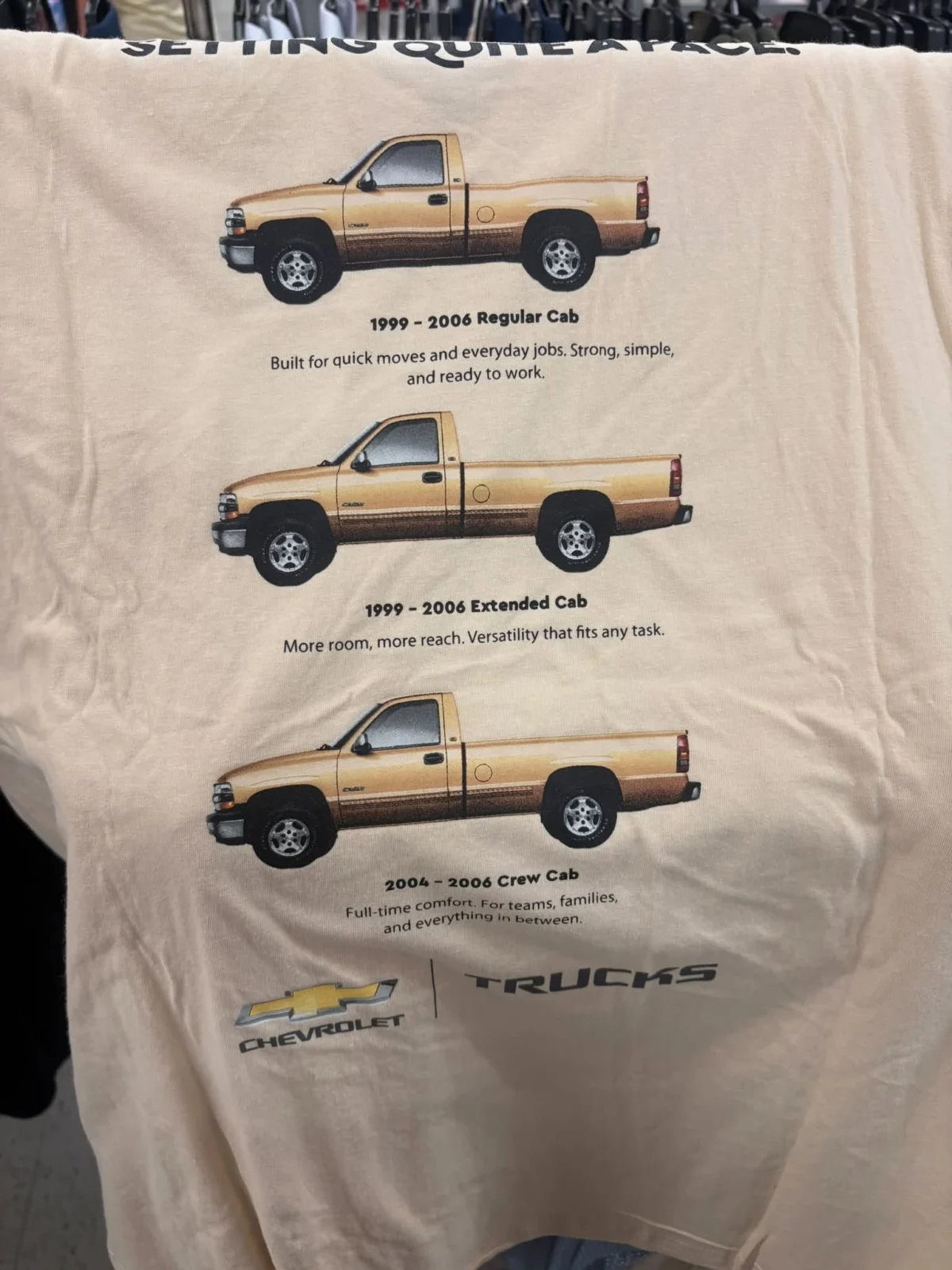
In an era where generative artificial intelligence can produce high-quality imagery in seconds, the line between authentic corporate merchandise and digital forgery is becoming dangerously blurred. This week, a bizarre fashion mishap at major retailers TJ Maxx and Marshalls has brought this issue to the forefront of the automotive industry. A t-shirt featuring what appeared to be an "officially licensed" Chevrolet design was discovered by shoppers, sparking confusion due to its glaring anatomical inaccuracies.
Upon investigation, it has been confirmed that this garment was not a product of Chevrolet’s design studios, but rather a classic example of "AI slop"—content generated by algorithms without human oversight, leading to hallucinations that contradict the very reality they attempt to depict.
The Anatomy of an Error: Identifying the Glitch
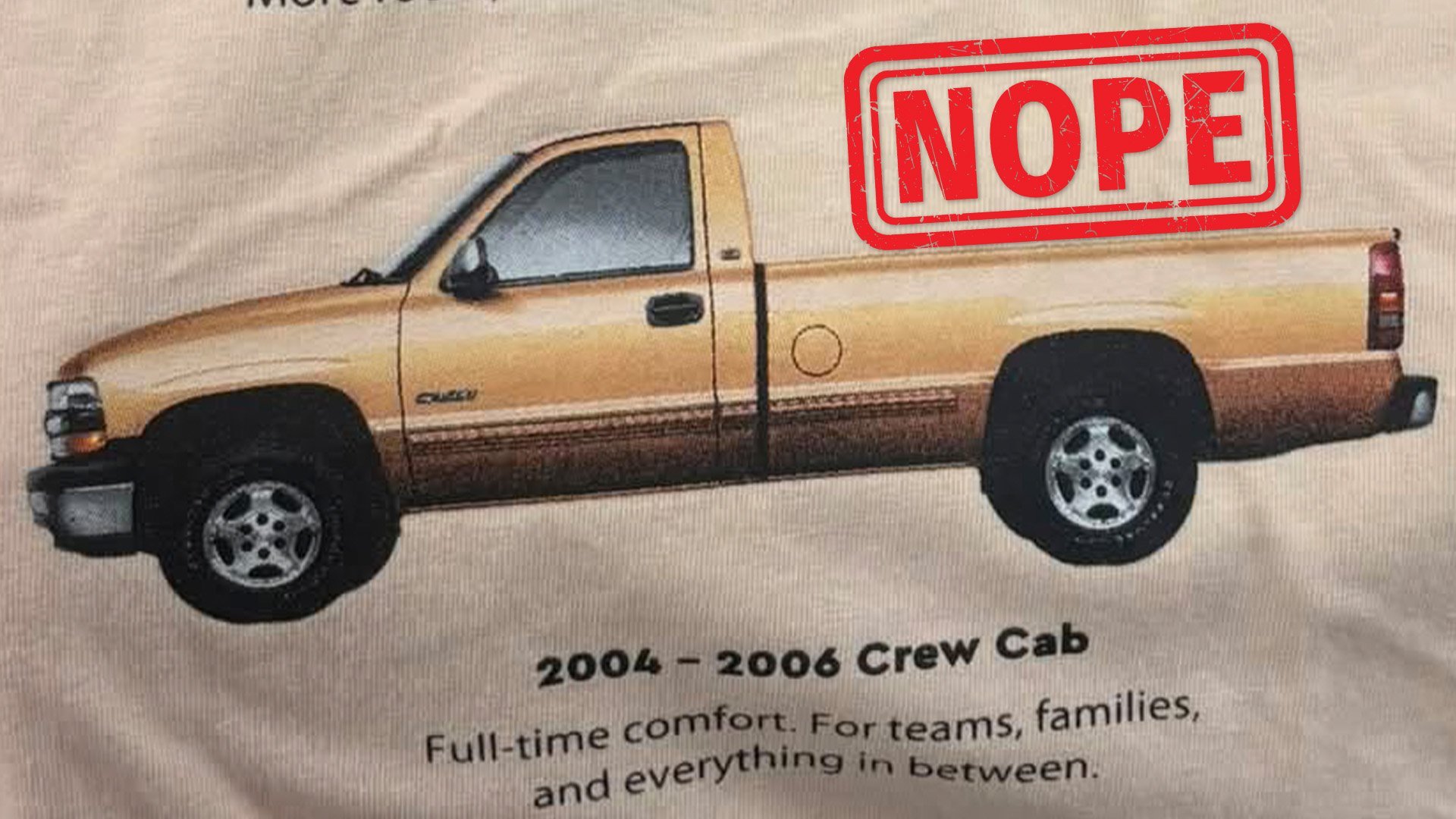
The shirt in question attempted to showcase the evolution of the iconic GMT800-generation Chevrolet Silverado. The design displayed three iterations of the truck, labeled "Regular Cab," "Extended Cab," and "Crew Cab." To any automotive enthusiast, the error was immediately apparent: despite the labels, every single truck depicted featured only two doors.
The AI, lacking a fundamental understanding of automotive engineering or nomenclature, simply stretched the truck’s bed length in each successive illustration to differentiate the models. In the world of real-world pickup trucks, a "Crew Cab" is defined by its four full-sized doors and increased rear-seat legroom, not merely a longer cargo box on a two-door frame.
This oversight is the hallmark of generative AI in its current state: the software can mimic the visual style of a Chevrolet Silverado, but it lacks the contextual intelligence to understand the mechanical and structural differences that define the brand’s identity. The result is a product that feels "uncanny"—it looks like a Chevy at a glance, but falls apart under the slightest scrutiny.
A Chronology of the Discovery
The story began earlier this week when eagle-eyed shoppers browsing the racks at TJ Maxx and Marshalls noticed the odd merchandise. Photos of the shirt began circulating on social media, with many users mocking the obvious AI errors.
- Monday: The initial discovery of the shirt hits social media platforms. Automotive enthusiasts begin questioning whether this is a "deep-cut" parody or a massive licensing failure.
- Tuesday: The issue gains traction in automotive circles, with blogs—including The Drive—highlighting the absurdity of the design.
- Wednesday: Inquiries are sent to General Motors’ corporate communications department regarding the legitimacy of the product.
- Thursday: General Motors confirms that the shirt is unauthorized, violates trademark standards, and announces that legal and operational steps are being taken to pull the merchandise from shelves.
The Licensing Gap: How Did This Happen?
To understand how an unauthorized, low-quality AI design reached the floor of a major retailer, one must look at the complexities of the modern supply chain. Large retail chains often source apparel from third-party vendors, who in turn utilize various sub-contractors and graphic design agencies.
In this instance, it appears the oversight occurred at the design phase. A vendor, looking to minimize costs and maximize turnaround speed, likely tasked a prompt engineer or an automated tool with creating a "vintage-style Chevrolet truck shirt." The resulting image was likely printed and distributed without a rigorous quality assurance (QA) process by either the manufacturer or the retailer.
This highlights a significant vulnerability in brand protection. For decades, automakers have guarded their logos and vehicle likenesses with ironclad licensing agreements. However, as AI makes the creation of "derivative works" faster and cheaper, the sheer volume of illicit merchandise is threatening to overwhelm traditional enforcement methods.
Official Response: General Motors Takes a Stand
General Motors, which is famously protective of its brand identity, responded swiftly once the issue was brought to its attention. The company’s stance is clear: they do not tolerate the unauthorized use of their intellectual property, especially when the resulting product fails to meet their quality standards.
"We can confirm that this product did not go through GM’s official licensing approval process and does not meet GM’s licensing standards," a Chevrolet spokesperson told reporters. "We are working with our partners to investigate how this product reached retail. We take the proper use of our trademarks, intellectual property, and brand integrity very seriously and will be taking action as appropriate to remove these items from circulation."
The "appropriate action" usually involves cease-and-desist orders issued to the manufacturers, a demand for the destruction of remaining stock, and potential financial penalties for the breach of trademark law. For retailers like TJ Maxx, this creates a logistical headache, as they must now pull and inventory the products for return or destruction.
The Precedent: Why This Isn’t the First Time
While the Chevrolet shirt is the latest high-profile example, it is far from the first instance of AI-generated content causing embarrassment for major automotive brands. The automotive community is still reeling from a similar incident involving the Ram brand.
In that case, a "patriotic" t-shirt was discovered for sale that featured an AI-generated image of a Toyota Tacoma—the primary competitor to the Ram mid-size truck offering—mistakenly marketed as a Ram product. Furthermore, the design featured a botched American flag, with incorrect proportions and an impossible number of stars and stripes.
These incidents suggest a disturbing trend: the "race to the bottom" in the apparel industry, where speed to market is prioritized over accuracy. When vendors outsource design to AI to save a few dollars on a graphic designer’s hourly rate, the brand equity of companies like Chevrolet and Ram is placed at risk.
Broader Implications: The Future of Brand Integrity
The proliferation of "AI slop" in retail raises several long-term questions for corporations and consumers alike:
1. The Erosion of Brand Authority
When consumers see a low-quality, inaccurate shirt at a major store, it subconsciously degrades their perception of the brand. If an automaker cannot control the representation of their own trucks, it signals a lack of oversight that can eventually bleed into the consumer’s perception of the actual vehicles.
2. The Legal Battlefield
Trademark law was designed to protect brands from "consumer confusion." If a shopper buys a shirt believing it is an official Chevy product, and that product is of poor quality, the brand suffers. Companies are now forced to invest in AI-driven monitoring software of their own to scan the web and retail databases for unauthorized, AI-generated merchandise before it reaches the shelves.
3. The Human Element
The controversy serves as a strong argument for the retention of human designers. An artist who understands the legacy of the GMT800 Silverado would never draw a two-door Crew Cab. Human designers provide the "cultural context" that AI currently lacks. As these errors become more frequent, we may see a "premium" placed on goods labeled as "human-designed," similar to the "organic" or "hand-crafted" labels in the food industry.
4. Retailer Accountability
Retailers like TJ Maxx and Marshalls are now in a difficult position. While they are essentially middlemen, they are increasingly being held accountable for the inventory they stock. Expect to see stricter vendor compliance agreements in the future, where suppliers must provide proof of human-verified design and licensing documentation for all graphic apparel.
Conclusion: A Lesson in Due Diligence
The "Chevy AI Slop" shirt is more than just a funny internet story about a poorly drawn truck. It is a symptom of a digital landscape shifting too quickly for traditional safeguards to keep up. As we move forward, the burden of proof will fall on both the retailers and the manufacturers to ensure that what we wear on our backs is as accurate as the machines we drive on the road.
For now, the lesson for consumers is simple: if the anatomy of the truck looks wrong, the shirt is likely a digital hallucination. For Chevrolet, the path forward involves a mixture of legal heavy-handedness and a renewed focus on vetting the vendors who claim to represent their historic legacy.
In the digital age, a brand’s reputation is only as strong as its weakest link—and sometimes, that link is a poorly prompted piece of code sitting on a clearance rack.
