





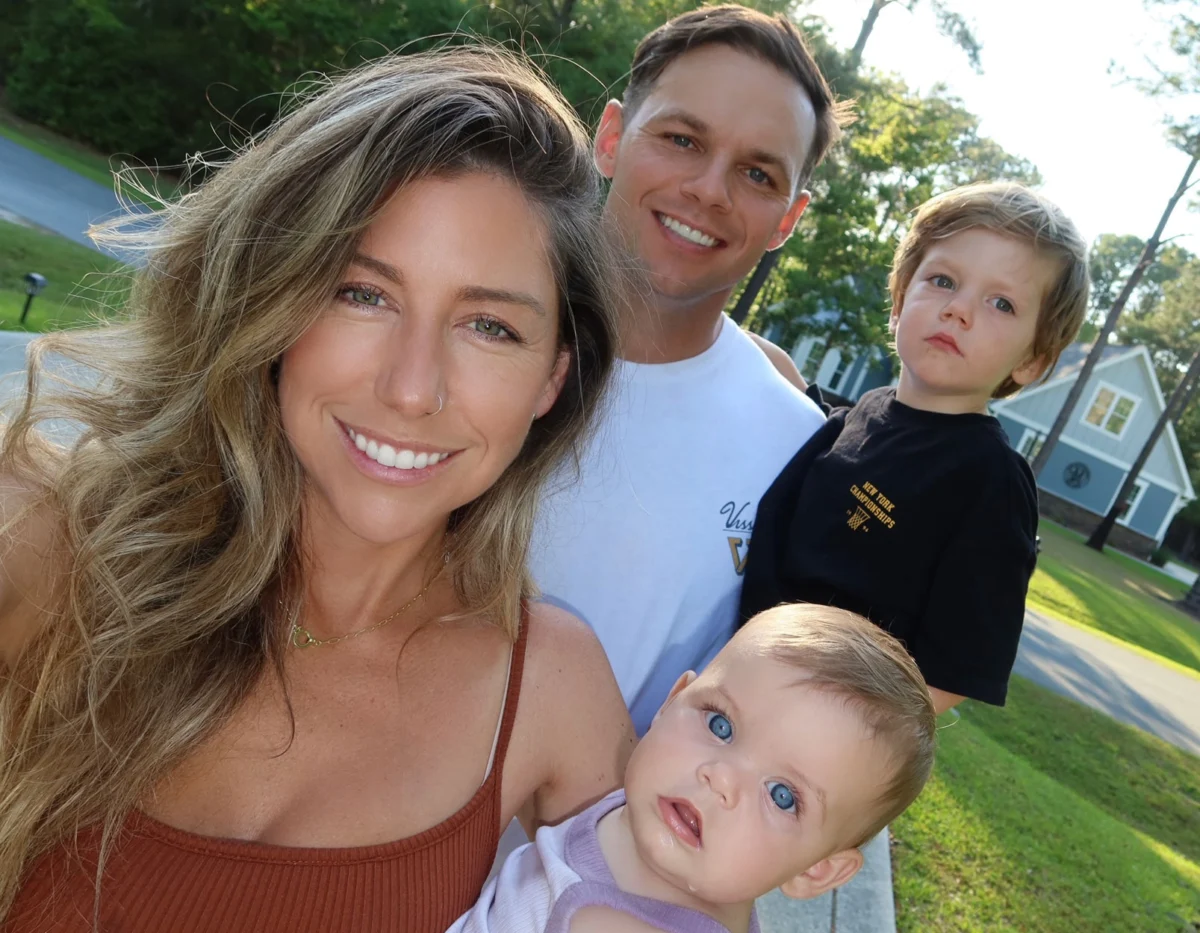
For Kris DeVault, the clock is not just a measurement of time; it is a relentless antagonist. His three-year-old son, Brody, is currently navigating a developmental landscape defined by the absence of milestones—speech, coordination, and physical strength—all stolen by a rare genetic condition known as creatine transporter deficiency (CTD).
As Montana moves forward with a bold, controversial experiment in healthcare policy, families like the DeVaults find themselves at the center of a national debate: Does a parent have the fundamental right to choose an unproven, potentially life-altering medical intervention for their child, even when the scientific community warns of the dangers of bypassing traditional safety nets?
The Anatomy of a Rare Condition
Brody’s journey began shortly after his birth in March 2023. While his early months seemed normal, the developmental gaps soon became undeniable. By the time he reached his toddler years, genetic testing confirmed the diagnosis: CTD. In healthy individuals, creatine acts as a vital fuel source for brain and muscle cells. In children like Brody, a genetic defect prevents the brain from effectively absorbing this fuel, leading to profound neurological and physical impairment.
Brody is, by all accounts, a vibrant and curious child. Yet, he is locked in a silent struggle. "He’s got no words, really," his father explains. "He wants to communicate more than he’s able to… which then turns into frustration." This frustration is compounded by a lack of sensory awareness; his father recently discovered him standing on a red ant hill, his feet being bitten repeatedly, with the boy simply looking down, unable to register the pain or the danger.
His physical frailty is equally harrowing. His muscle development is stunted to the point where his arms are noticeably thinner than those of his nine-month-old sister. For the DeVaults, the neurological reality is the most pressing: the first few years of life represent a "plasticity window," a critical developmental period where the brain is most receptive to change. Every day that passes without treatment, they fear, is a day that the window closes further.
The Promise and Peril of Experimental Medicine
On the horizon of this tragedy is a potential light: a drug being developed by the French biotechnology firm, Ceres Brain Therapeutics. The treatment is designed to bypass the metabolic blockade in the brain, effectively ferrying creatine directly to the cells that need it.
For CEO Thomas Joudinaud and his team, the results in murine (mouse) models have been promising. They have also completed a Phase I clinical trial involving 48 healthy adult volunteers to assess safety profiles. However, the drug has never been tested in humans with CTD, nor has it been tested in children.
Under standard FDA protocols, the path to approval is a marathon, not a sprint. The company intends to launch a Phase II trial in France, but for the DeVault family, the logistical and timing barriers are insurmountable. Even if the drug receives future FDA approval, it remains years away from the U.S. market—a timeline that, to Kris DeVault, feels like a death sentence for his son’s potential.
Montana’s Legislative Gambit
Montana has emerged as a radical alternative to the federal regulatory status quo. Following the passage of its 2015 "Right to Try" law—which originally focused on terminal patients—the state expanded its reach in 2023. The new statutes now permit non-terminally ill patients to access drugs that have successfully cleared preliminary Phase I clinical trials.
To operationalize this, the state has established an Experimental Treatment Review Board (ETRB). This board is tasked with evaluating individual applications for access to experimental therapies, creating a pathway for clinics within the state to administer treatments that have not yet received full FDA authorization. Last weekend, the Montana Department of Health and Human Services finalized the regulatory framework for these clinics, effectively opening the door for the first patients to be considered.
The Regulatory Tug-of-War
The existence of this law, however, has created a high-stakes standoff between state policy and federal authority. While the Montana framework is, in the words of Joudinaud, "very interesting and very pragmatic," Ceres Brain Therapeutics remains hesitant to participate.

The primary fear is the chilling effect of federal retaliation. Biotechnology companies rely heavily on the FDA for eventual drug approval and market access. There is a palpable concern that participating in a state-sanctioned, non-FDA-compliant distribution program could jeopardize a company’s standing with federal regulators.
Kris DeVault has spent months lobbying FDA officials, seeking a "letter of comfort" or some assurance that companies participating in the Montana program will not be penalized during future approval processes. To date, those pleas have been met with silence. As a result, the legal gray area keeps the drug just out of reach, forcing desperate parents to look toward "offshore" options, such as private clinics in the special economic zone of Próspera, Honduras, where oversight is significantly more opaque.
Professional Perspectives and Ethical Implications
The debate surrounding Montana’s law is as much about philosophy as it is about medicine. Dr. Aaron Kesselheim, a professor at Harvard Medical School and an expert in drug regulation, remains a vocal critic of the "Right to Try" movement.
"Patients who want these kinds of treatments deserve them to be rigorously assessed," Kesselheim argues. "So that they can better understand what they’re getting themselves into, and what they’re paying their hard-earned money for."
Critics emphasize that Phase I trials are designed to test safety in limited populations—they do not, by definition, prove efficacy. There is a profound risk that patients will pay exorbitant out-of-pocket costs for therapies that offer no therapeutic benefit and could potentially introduce new, unforeseen health risks.
However, for families like the DeVaults, the clinical perspective often feels disconnected from the reality of the parent-child relationship. Kris DeVault bristles at the suggestion that he lacks the capacity to make informed decisions regarding his son’s health.
"I’m a full-grown human being," DeVault says. "I’m capable of going to Vegas right now… blowing it all on the poker table, or I can go to the gun shop and buy a firearm. How come I can’t make a decision to purchase a potential treatment that might change the entire trajectory of my son’s life?"
The Future of Patient Autonomy
The situation in Montana represents a fundamental shift in the social contract between the state, the patient, and the scientific establishment. If the ETRB begins approving applications, it will signal a new era where local oversight supersedes federal caution.
For the biotech industry, the stakes are equally high. If companies begin to utilize state-level "Right to Try" programs, it could force the FDA to either formalize a pathway for expanded access or engage in a constitutional battle over state versus federal regulatory authority.
For now, the DeVaults remain in a state of suspended animation. Brody continues to grow, his world expanding while his physical and communicative abilities remain hampered. His father waits for a sign—either from the Montana ETRB or from a shifting regulatory climate in Washington—that his son might finally have the chance to access the therapy that could change everything.
The tragedy of rare diseases is that they do not wait for the legislative process to conclude. As the Montana experiment begins, the world watches, waiting to see if this state-led initiative provides a beacon of hope for the vulnerable or an ethical minefield that complicates the lives of the very people it aims to save.
