





In the annals of automotive history, few vehicles carry the controversial and poignant weight of the General Motors EV1. Once a symbol of a promising, emission-free future, the sleek, aerodynamic coupe was systematically erased from public roads by its own manufacturer in the early 2000s. Today, a team of dedicated enthusiasts behind the YouTube channel The Questionable Garage is attempting the seemingly impossible: resurrecting one of the few surviving examples, known as VIN 212. Purchased for a staggering $104,000 at an impound auction in late 2025, this project represents more than just a car restoration; it is an archeological dig into the foundations of the modern electric vehicle movement.
The Improbable Journey: From Scrapyard to Workshop
The story of VIN 212 is one of survival against the odds. When General Motors decided to terminate the EV1 program, the company engaged in a sweeping recall, retrieving nearly every unit from its lessees. Most were promptly crushed, turned into scrap metal to prevent any further existence of the technology GM was not yet ready to embrace. Only a handful of examples escaped this fate, often donated to museums or educational institutions under the condition that they be permanently disabled.
VIN 212 spent years as a teaching aid at Clark Atlanta University. To ensure the car would never drive again, the university—acting on GM’s strict decommissioning mandates—removed critical components, including the power control module. The car eventually fell into a state of neglect, languishing in storage before surfacing at an impound auction. The acquisition of such a rare artifact was a monumental milestone for The Questionable Garage, marking the beginning of a restoration project that has since garnered support from unlikely sources, including the original manufacturer itself.
Chronology of a High-Voltage Comeback
The restoration process has been a masterclass in forensic engineering. Because official service manuals are sparse and proprietary software for the EV1 is largely extinct, the team has had to rely on institutional knowledge and sheer persistence.
Phase 1: Assessment and Deep Cleaning
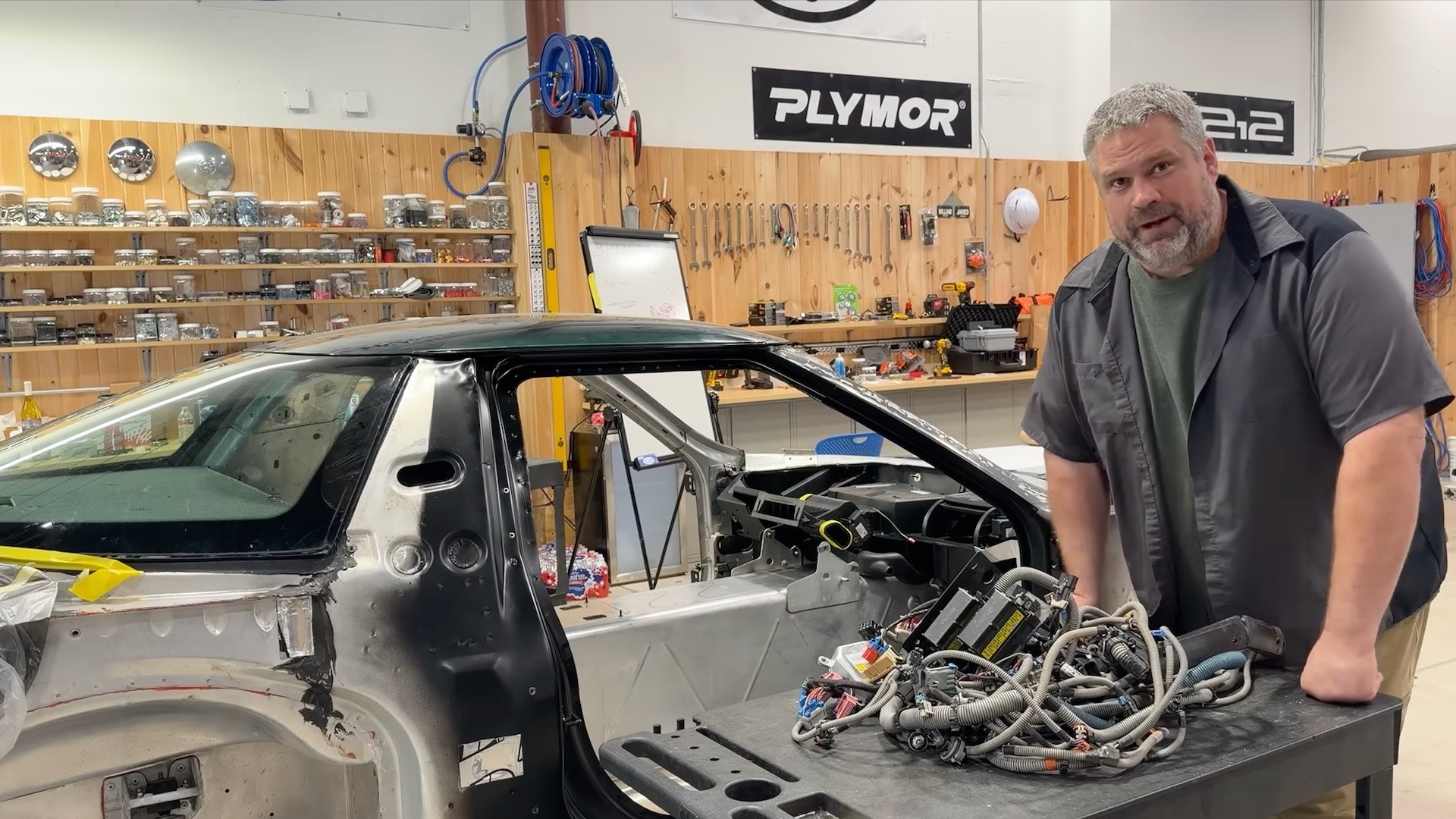
The initial phase focused on reversing the damage caused by years of outdoor storage. Corrosion had permeated the vehicle’s intricate wiring harness, threatening the delicate electronic signals required to operate the car’s proprietary systems. The team utilized ultrasonic cleaning technology, a process involving high-frequency vibration, to strip away decades of oxidation from the connectors without damaging the fragile wiring.
Phase 2: Electrical Integration
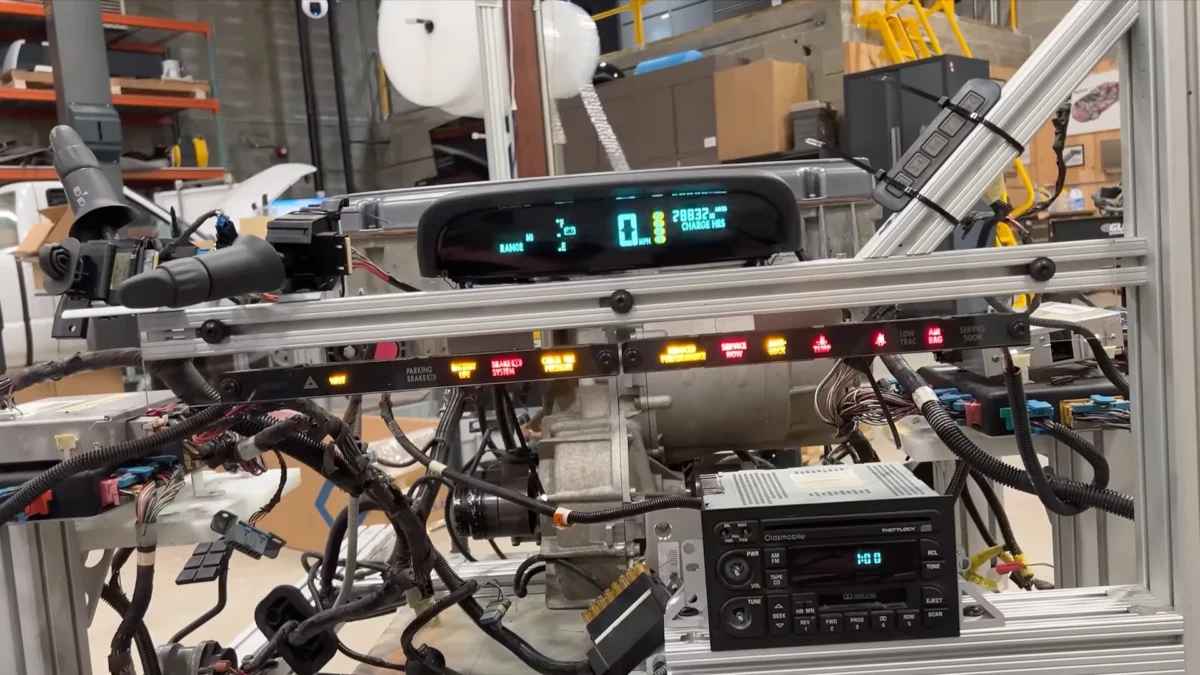
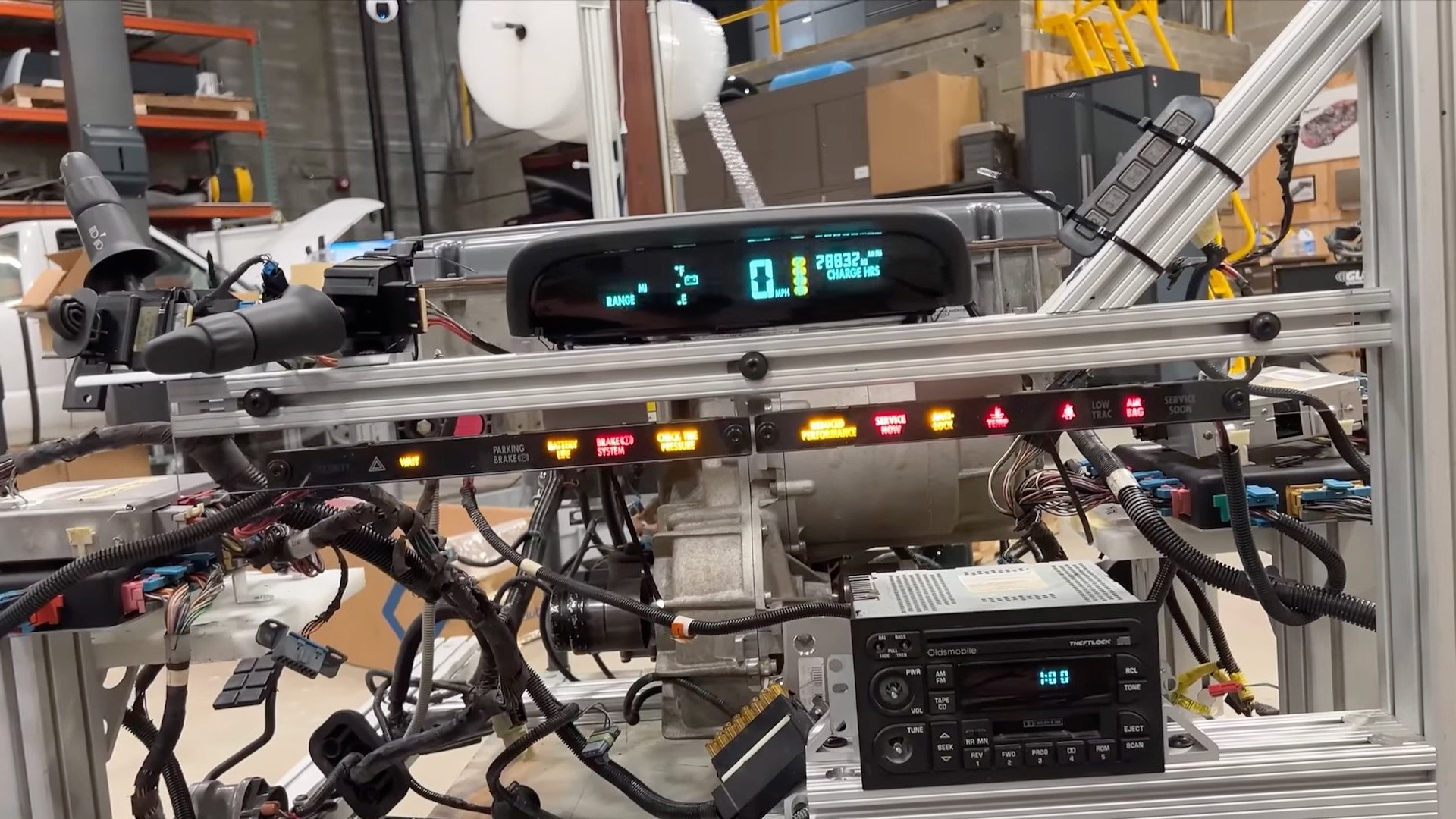
In their most recent update, the team successfully introduced 12-volt power to the vehicle’s harness—a significant breakthrough. By building a custom “buck” to house the electrical components outside the vehicle, the restorers were able to monitor the system’s health. The dashboard illuminated for the first time in decades, displaying the odometer at 28,832 miles and bringing the radio and instrument cluster back to life. Critically, the car successfully accepted its security handshake, a major hurdle that suggests the onboard computer is capable of communicating with the rest of the vehicle.
Phase 3: Mechanical De-modification
A fascinating discovery occurred during the cleaning of the shifter panel. The team found a makeshift modification—a taped-on screw—designed to bypass the park-interlock switch. This "hack" had been implemented during the car’s decommissioning to allow it to roll in neutral. Reversing this damage and restoring the factory-standard operation of the shifter and backlit buttons is essential to returning the car to its original, functional state.
Supporting Data: The Technical Hurdle
The EV1 was light-years ahead of its time, utilizing a lead-acid (and later NiMH) battery pack and a highly integrated power management system. The primary technical challenge facing the restorers is the lack of the original proprietary Powertrain Control Module (PCM).
To overcome this, the team is looking toward an unlikely donor: the S-10 EV. General Motors produced a small number of electric S-10 pickups in the 1990s, which shared some of the same electrical DNA as the EV1. By porting software from the S-10 EV into a donor PCM, the team hopes to trick the EV1 into thinking it has found its original computer. This "software transplant" is the next great frontier for the project. If successful, it would prove that even twenty-year-old proprietary software can be reverse-engineered to breathe life back into legacy hardware.
Official Responses and Changing Tides
Perhaps the most surprising aspect of this restoration is the shifting posture of General Motors. In the past, the automaker was famously litigious and protective regarding the EV1. However, as the automotive industry has pivoted fully toward electrification, GM’s stance on its past has softened.
The Questionable Garage has documented that GM has provided varying levels of cooperation and historical insight into the restoration of VIN 212. This signals a cultural shift within the corporation: instead of viewing the EV1 as a liability or a PR embarrassment, it is being reframed as a "legacy asset"—the ancestor of the current Ultium platform. While GM is not performing the labor, their willingness to engage with the project provides a layer of legitimacy that helps the team source rare components and technical documentation that would otherwise remain locked in corporate archives.
Implications for the Future of Automotive Heritage
The restoration of VIN 212 carries profound implications for the preservation of modern automotive history. We are currently entering an era where vehicles are increasingly software-defined. As cars age, their dependence on proprietary cloud services, digital keys, and encrypted software modules poses a unique threat: when the manufacturer stops supporting the software, the car becomes a "brick."
The "Right to Repair" for Electric Vehicles
The EV1 project serves as a test case for the Right to Repair movement as it applies to the software-defined vehicle. If enthusiasts can successfully reverse-engineer the control systems of a 1990s electric car, it provides a roadmap for future generations to keep electric vehicles on the road long after their original batteries are obsolete and their servers have been decommissioned.
A Lesson in Innovation
The EV1 remains a "false start" in history, a product of a time when the infrastructure and public sentiment were not yet ready for a transition away from internal combustion. Yet, as the team at The Questionable Garage proves, the technology was inherently sound. The EV1 was not a failure of engineering, but a failure of market timing. By putting VIN 212 back on the road, the team is not just restoring a car; they are validating the work of the engineers who, thirty years ago, correctly predicted the future of transportation.
Conclusion: The Road Ahead
As the project moves closer to its goal, the automotive community watches with bated breath. The sight of the EV1’s dashboard glowing in a modern garage is a haunting, beautiful reminder of what could have been. The final hurdle—marrying the S-10 software with the EV1’s powertrain—will be the true test of the project’s viability. If VIN 212 eventually moves under its own power, it will stand as a testament to human ingenuity and the stubborn, beautiful refusal to let history be erased. Whether the car ever hits a public highway or remains a static exhibit of triumph, it has already achieved its most important mission: it has ensured that the story of the EV1 continues to be told, one wire at a time.
