




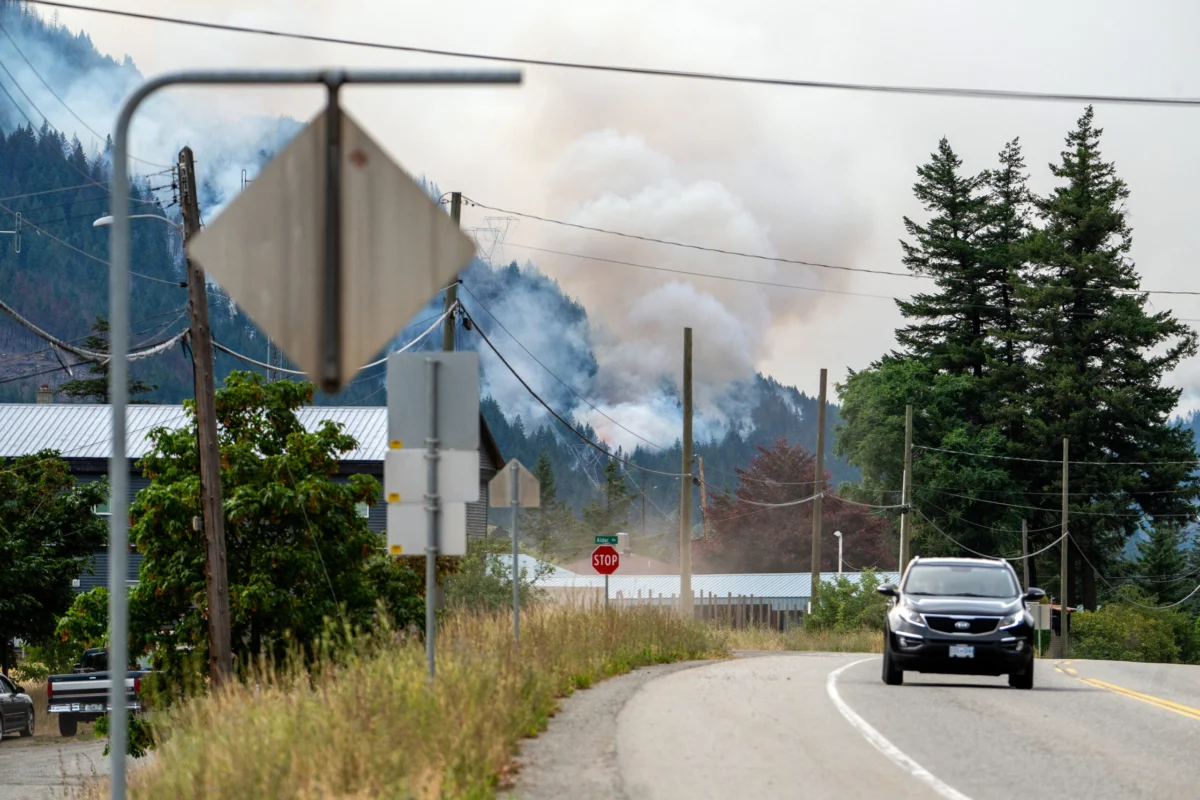
The summer of 2026 will be remembered not for the warmth of the sun, but for the pervasive, acrid haze of smoke that blanketed the North American continent. From the dense forests of Ontario to the remote, fragile ecosystems of the Northwest Territories, Canada has been engulfed in a wildfire crisis of unprecedented proportions. A landmark study released this Thursday by World Weather Attribution (WWA) has now provided the scientific confirmation that many observers feared: human-induced climate change is the primary driver turning seasonal fire risk into a recurring, existential threat.
According to the report, the extreme fire weather that has fueled Canada’s latest infernos is at least twice as likely to occur today as it would have been in a pre-industrial climate. As global temperatures climb to 1.4°C above pre-industrial levels, the threshold between a manageable fire season and a catastrophic one is being crossed with alarming frequency.
The Scientific Consensus: A World Out of Balance
The WWA study, which utilized a combination of historical observation data and sophisticated climate modeling, offers a sobering look at how the warming planet is "loading the dice" for forest fires. By comparing current conditions to a hypothetical world without human-caused greenhouse gas emissions, researchers were able to quantify the exact impact of rising temperatures on fire susceptibility.
The findings are stark. In Ontario, the severe weather conditions that preceded recent blazes are now twice as probable as they were historically. In the Northwest Territories, the shift is even more dramatic. A week of "fire weather"—a composite index accounting for temperature, humidity, wind, and soil moisture—that would have been considered a once-a-decade event is now estimated to return every two years.
"Our research is yet another piece of evidence for this shift being due to climate change," says Theodore Keeping, a research associate at Imperial College London and a coauthor of the study. "The geographic spread of these fires is scary and shows that despite preparedness from wildfire governance, adaptation alone is not enough."
Chronology of a Catastrophic Season
The 2026 wildfire season did not begin in isolation; it followed a pattern of escalating dryness that had been building since the late spring.
- Late June 2026: Initial ignitions were reported across Northern Ontario and parts of the Northwest Territories. While minor at first, these sparks met a landscape parched by record-breaking heat, allowing them to rapidly transition into high-intensity crown fires.
- Early July 2026: The fires intensified, overwhelming local suppression efforts. The Canadian Interagency Forest Fire Centre reported a surge in "out-of-control" status fires.
- Mid-July 2026: The smoke plumes expanded, drifting across the border and turning the skies of major U.S. metropolitan areas, including New York City, a haunting, surreal shade of orange. This visibility turned a localized Canadian crisis into a headline issue for the American public and political class.
- Late July – Early August 2026: The scale of the destruction became clear. Over 4,000 fires were recorded nationwide. The total area scorched surpassed the landmass of Switzerland, marking a 45% increase over the 30-year average calculated between 1994 and 2023.
Supporting Data: The Arithmetic of Disaster
The statistical reality of the 2026 season is staggering. The reliance on the Fire Weather Index (FWI) allows scientists to predict how difficult it is to suppress a fire once ignition occurs. By analyzing rainfall deficits and heat accumulation, the WWA team demonstrated that the "fire season" is no longer confined to a few peak months but is expanding into the shoulder seasons, effectively shortening the window for natural forest recovery.
The environmental cost is not merely in timber and property loss, but in the reversal of the carbon cycle. As millions of acres of boreal forest burn, the trees release massive quantities of stored carbon dioxide back into the atmosphere. This creates a feedback loop: more CO2 leads to more warming, which leads to more extreme fire weather, which leads to more burning. The forest, once a critical carbon sink, is increasingly becoming a significant source of emissions.
Global Parallels: A Planet in Flames
Canada’s experience is not an anomaly; it is a symptom of a global trend. Across the Atlantic, France, Spain, Portugal, and Greece have faced repeated, devastating fire seasons that have forced mass evacuations and destroyed centuries-old landscapes. In the Southern Hemisphere, earlier in 2026, Chile and Argentina saw 20 lives lost and vast swaths of the Patagonian wilderness incinerated.
The common denominator across these disparate geographies is the rise in average global temperature. Whether in the Mediterranean basin or the Canadian shield, the same mechanisms are at play: higher temperatures lead to lower fuel moisture, and shifts in atmospheric circulation patterns lead to persistent, long-term droughts.
Official Responses and Political Friction
The crisis has inevitably bled into the political sphere, causing tensions that transcend borders. In the United States, the recurring air quality crises have sparked heated debate. President Donald Trump, in response to the smoke plumes drifting south, has threatened the imposition of tariffs on Canada, framing the environmental issue as a trade and regulatory grievance.
This reaction highlights the complexity of climate-related disasters: they do not respect national sovereignty, yet they demand international cooperation. While Canada’s wildfire management agencies have increased their preparedness, the WWA report warns that "adaptation alone is not enough." The sheer scale of the fires means that no amount of personnel or water-bombing aircraft can keep pace when the climate itself has turned against the forest.
Friederike Otto, a professor in climate science at Imperial College London and a coauthor of the study, summarized the human impact of these statistics. "Doubling the likelihood is really bad," Otto noted. "Given the immense challenge of containing wildfires, even if just a little bit worse, it would mean that everything is even stretched further."
Implications: The Future of the Boreal Forest
The long-term implications of these findings are profound. If fire frequency continues to increase at the current rate, the very composition of Canada’s forests could change. Boreal ecosystems are adapted to fire, but they are not adapted to this current frequency. If the intervals between fires become too short, the forest does not have enough time to regenerate, potentially leading to the conversion of dense woodlands into scrubland or grassland.
For communities living on the edge of the wilderness, the "new normal" is an era of permanent vigilance. Infrastructure—power lines, highways, and communication networks—must be hardened against heat and flame. Furthermore, the economic burden of fighting these fires, providing emergency housing for evacuees, and managing the long-term health effects of smoke inhalation is placing an unprecedented strain on public coffers.
The WWA report concludes that while the situation is dire, it is not hopeless. However, the path to stabilization requires a fundamental shift in how society approaches the climate crisis. If the probability of extreme fire weather has doubled because of our current level of warming, the trajectory for the next few decades depends entirely on the global commitment to curbing greenhouse gas emissions.
As the smoke finally begins to clear over the Canadian landscape, the charred remains of the forest serve as a permanent, blackened monument to the study’s conclusions. The message is as clear as the blue skies that residents of North America are once again learning to appreciate: the era of climate-driven infernos is here, and the climate-stabilizing actions we take today will determine whether these summers remain an anomaly or become the defining feature of the century.
