





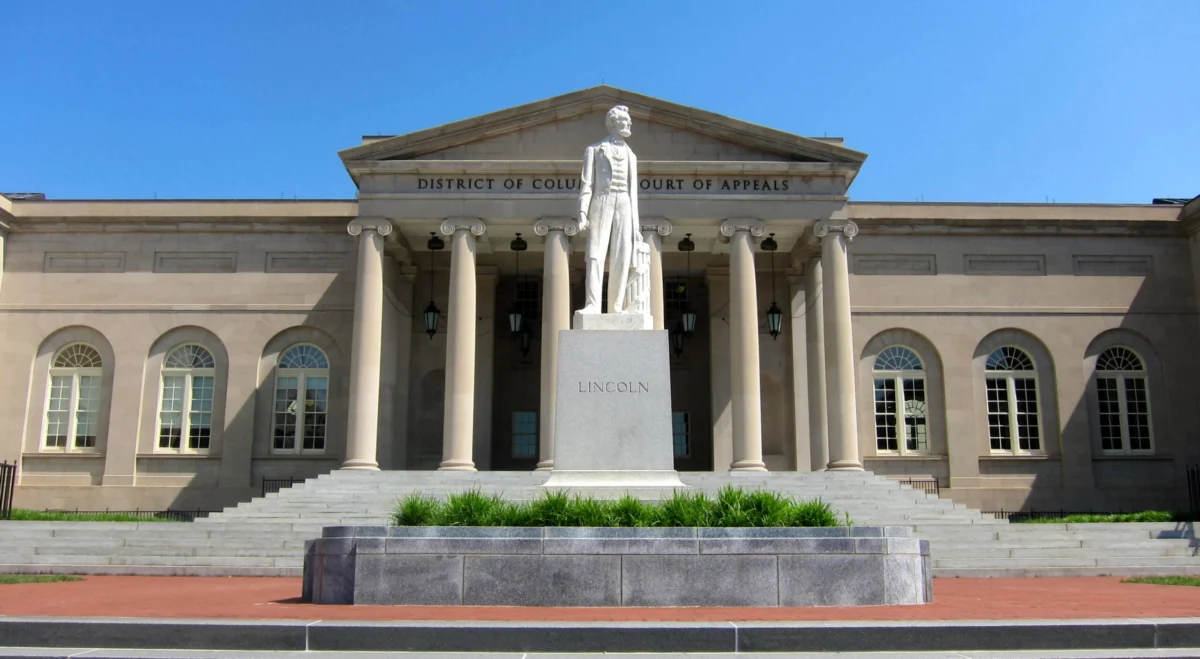
In a landmark decision that highlights the escalating legal tension between the executive branch’s policy reversals and the stability of federal grant programs, a divided en banc panel of the U.S. Court of Appeals for the D.C. Circuit ruled on Tuesday that the Trump administration likely acted unlawfully when it moved to terminate billions of dollars in Biden-era clean-energy grants.
The 6-4 decision in Climate United Fund v. Citibank represents a major judicial roadblock for the administration’s aggressive efforts to unwind legacy climate spending. By reinstating the core of a previous district court injunction, the appellate court has effectively blocked the Environmental Protection Agency (EPA) from clawing back funds already allocated to non-profit entities. The court has, however, stayed its judgment to provide the administration an opportunity to seek emergency intervention from the Supreme Court.
The Core Conflict: Jurisdiction and the Tucker Act
At the heart of this dispute is a complex procedural battle over where grant recipients can seek redress when the government unilaterally terminates funding. The Trump administration has consistently argued that such challenges belong in the U.S. Court of Federal Claims under the Tucker Act. The Tucker Act generally restricts plaintiffs to seeking monetary damages, a limitation that would prevent them from securing the injunctive relief necessary to stop the EPA from freezing their accounts.
In September 2025, a three-judge panel of the D.C. Circuit had initially vacated the injunction, siding with the administration’s view that the dispute was essentially a contract disagreement. However, the en banc court—the full complement of judges—sharply disagreed. In their majority opinion, the court treated the grantees’ claims not as mere contract breaches, but as constitutional and Administrative Procedure Act (APA) violations. The court found that the EPA’s interference with funds already held in escrow at Citibank constituted an unlawful seizure of property rather than a simple contractual dispute, thereby justifying the jurisdiction of the district court.
Chronology of the Climate Fund Controversy
The legal saga of the Greenhouse Gas Reduction Fund (GGRF) has been defined by rapid, high-stakes shifts in policy and judicial oversight:
- August 2024: The EPA awards $20 billion through the National Clean Investment Fund and the Clean Communities Investment Accelerator to eight nonprofits, aiming to mobilize private capital for clean-energy and energy-efficiency projects nationwide.
- January 2025: Following the inauguration of President Donald Trump, the EPA freezes the awards, citing administrative "waste and abuse."
- Spring 2025: Several major grantees, including the Climate United Fund and the Coalition for Green Capital, initiate litigation in the U.S. District Court for the District of Columbia.
- Summer 2025: U.S. District Judge Tanya Chutkan issues an injunction against the EPA, noting that the agency failed to provide evidence of fraud or malfeasance.
- September 2025: A D.C. Circuit panel vacates the injunction, citing the Tucker Act and arguing the case belongs in the Court of Federal Claims.
- Late 2025: Congress passes the "One Big Beautiful Bill Act," which includes Section 60002, effectively repealing the original Inflation Reduction Act provision that authorized the fund.
- August 2026: The full en banc D.C. Circuit overturns the panel’s decision, reinstating the injunction and ruling that the EPA’s actions were likely unlawful.
The "One Big Beautiful Bill Act" and Legislative Uncertainty
The legal landscape was further complicated mid-litigation by the passage of the 2025 "One Big Beautiful Bill Act." This sweeping legislation, the cornerstone of the second Trump administration’s economic agenda, included a specific provision, Section 60002, which repealed 42 U.S.C. § 7434—the very statutory foundation of the Greenhouse Gas Reduction Fund.
The administration has used this legislative change to argue that the funds are no longer authorized and that the injunctions protecting the grantees are moot. The four dissenting judges on the appellate panel aligned with this view, arguing that the legislative repeal of the underlying program renders the grantees unable to prove that an injunction is warranted, as the legal basis for the grants no longer exists. The majority, however, maintained that the government cannot use subsequent legislation to retroactively seize funds that had already been legally obligated and transferred to third-party accounts.
Supporting Data: The Scale of the "Green Bank"
The Greenhouse Gas Reduction Fund was designed as a $27 billion "green bank," a centerpiece of the 2022 Inflation Reduction Act. The program’s objective was to leverage public money to catalyze private sector investment in low-carbon infrastructure.
The scale of the impact is significant:
- Total Awarded: $20 billion to eight primary non-profit recipients.
- Major Litigants: The Climate United Fund, which was set to receive $6.97 billion, and the Coalition for Green Capital, which was awarded $5 billion.
- Total Challenged: Five of the eight grantees, representing approximately $16 billion in clean-energy financing, participated in the litigation to prevent the clawback of their awards.
These funds were intended to support a wide range of projects, from residential solar installations in underserved communities to large-scale industrial decarbonization efforts. Proponents of the fund argue that the freeze has caused a "chilling effect" across the renewable energy sector, forcing projects to stall and causing uncertainty for investors who had relied on the EPA’s initial funding commitments.
Official Responses and Administrative Defiance
The administration’s stance has been one of uncompromising skepticism toward the program. EPA Administrator Lee Zeldin has consistently framed the funding as a misuse of taxpayer dollars. In public remarks, Zeldin characterized the grant recipients’ activities as a "clear-cut case of waste and abuse," and in some instances, suggested the conduct was criminal in nature.
When pressed during the initial district court proceedings, however, the EPA struggled to produce documentation substantiating claims of fraud. Judge Tanya Chutkan, in her initial ruling, noted that the agency had provided no evidence to support its allegations of criminal activity, forcing the administration to pivot its arguments toward broader "oversight concerns" and the policy prerogative of the executive branch to terminate unauthorized programs.
Conversely, the recipients of the grants have framed the ruling as a victory for the rule of law. Beth Bafford, CEO of the Climate United Fund, issued a statement following the appellate decision: "The court has confirmed that the EPA acted unlawfully to freeze and dismantle the National Clean Investment Fund. We remain committed to our mission of deploying this capital to build a sustainable and equitable energy future."
Broader Implications for Administrative Law
The implications of this ruling extend far beyond the climate sector. The decision serves as a significant check on the executive branch’s power to unilaterally rescind funding that has already been awarded and obligated by previous administrations.
If the ruling stands, it creates a precedent that prevents agencies from using "administrative review" as a pretext for dismantling programs that the current executive branch finds politically or ideologically unfavorable. It reinforces the principle that once funds are obligated, the government is subject to the same standards of legal compliance as any other entity, and cannot simply invoke "waste and abuse" as a catch-all justification for rescinding support.
As the case returns to the district court, the legal battle will shift toward the long-term impact of the "One Big Beautiful Bill Act." Even with the injunction in place, the repeal of the underlying statute leaves a lingering question: Can the government prospectively terminate the program’s operations even if it cannot retroactively seize the already-distributed funds?
For now, the climate finance sector remains in a state of nervous anticipation. While the D.C. Circuit’s ruling offers a temporary reprieve for the grantees, the looming shadow of a potential Supreme Court review ensures that this clash over the intersection of environmental policy, fiscal authority, and executive power is far from concluded. Legal analysts suggest that the Supreme Court may be interested in the case not only for its impact on climate funding but also for the opportunity it provides to define the boundaries of judicial review under the Tucker Act and the Administrative Procedure Act.
