





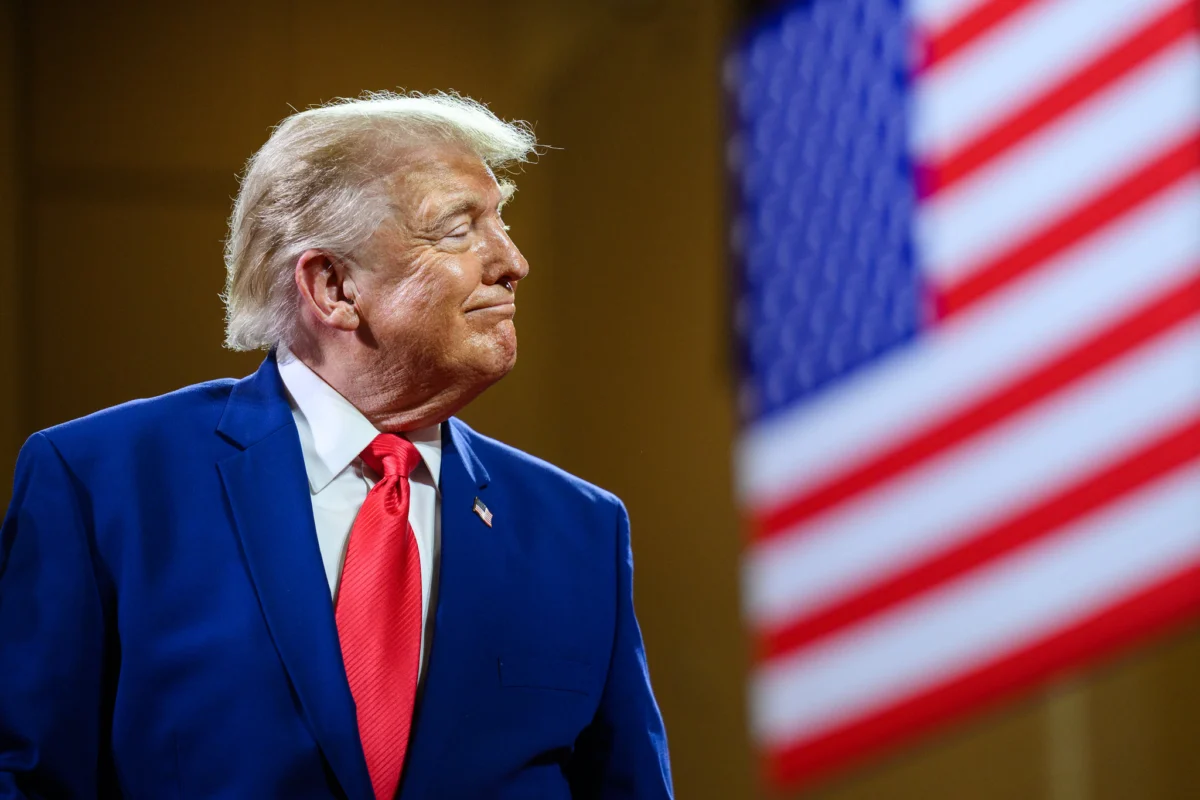
In a move that has sent ripples through both the political establishment and the halls of fiscal policy research, President Trump recently unveiled an ambitious economic proposal at the Republican National Convention in Dallas: a pledge to issue a $5,000 dividend payment to every adult citizen in the United States. This unprecedented promise, contingent upon the Republican party securing control of both the House and the Senate in the upcoming midterm elections, is framed as a redistribution of revenue generated by the administration’s aggressive new tariff policies.
While the proposal has been met with enthusiasm from the administration’s inner circle, including Vice President JD Vance, the mathematical and economic underpinnings of the plan have triggered intense scrutiny from economists and policy analysts. As the federal government grapples with a deepening deficit and persistent inflationary pressures, the feasibility—and the potential fallout—of such a massive fiscal injection remains the subject of a high-stakes debate.
The Proposal: A New Paradigm for Federal Revenue?
The core of the administration’s argument rests on the assumption that trade protectionism can function as a primary funding mechanism for direct public disbursements. Vice President JD Vance has been a vocal proponent of this perspective, arguing that the revenue generated by the president’s new tariff regime is essentially "found money" that should be returned to the American people.
By framing the $5,000 payment as a "dividend," the administration attempts to shift the narrative away from traditional government spending toward the concept of national ownership—a model similar to the Alaska Permanent Fund, though on a national scale. However, the scale of this proposal dwarfs any existing state-level dividend programs, creating an unprecedented administrative and fiscal undertaking.
Chronology of the Policy Shift
The journey toward this proposal began with the administration’s pivot to a more protectionist trade strategy, characterized by several rounds of significant tariff hikes.
- 2024: The federal government collected $79 billion in customs duties. At this stage, the tariff regime was standard, and revenue was considered a secondary byproduct of trade policy rather than a central pillar of fiscal strategy.
- 2025: Following the implementation of several aggressive rounds of new tariffs, collections spiked to $264 billion. This surge provided the rhetorical foundation for the current administration to claim that tariffs could serve as a sustainable engine for government revenue.
- Late 2025 – Early 2026: Revenue trends hit a period of volatility. Collections began to dip, complicated by legal challenges. The Supreme Court struck down several specific tariff applications as unconstitutional, forcing the Treasury to issue significant refunds, which turned some monthly revenue figures negative.
- 2027 (Present): President Trump officially announced the $5,000 dividend plan at the Republican National Convention, signaling that the administration views the tariff revenue as a permanent and scalable resource for the American public.
Supporting Data: The Fiscal Math
To understand the viability of a $5,000 payout, one must first look at the population and the projected revenue. With approximately 250 million adults in the United States eligible to vote, a blanket $5,000 check for every adult would carry a staggering price tag of $1.25 trillion.
When placed against the backdrop of the federal budget, the numbers become even more daunting. The federal government is already projected to run a budget deficit of nearly $1.9 trillion in fiscal year 2027. If the administration were to proceed with this dividend, the deficit would swell to nearly $3 trillion in a single year, even accounting for the projected tariff income.
The Tariff Revenue Gap
The administration’s claims regarding tariff revenue require careful qualification. While gross collections surged in 2025, economists point to two critical factors that diminish the net impact:
- Reduced Import Volume: As tariffs increase the cost of foreign goods, import volume inevitably declines. This reduction cannibalizes the revenue generated by pre-existing, lower-level tariffs.
- Tax Base Erosion: Increased tariff costs act as a drag on the broader economy. As businesses face higher costs, their profitability—and therefore their contribution to federal corporate income taxes—tends to decline. Similarly, the inflationary impact of these tariffs can dampen personal consumption, ultimately lowering the total revenue collected through income and payroll taxes.
Based on projections from independent policy analysts, the new tariffs are expected to generate approximately $125 billion in net revenue in 2027, and roughly $1.4 trillion over the ten-year period spanning 2026 to 2035. Even in the best-case scenario, the 2027 revenue from these tariffs would cover only about 10% of the cost of the proposed dividend payment.
Official Responses and Political Maneuvering
The proposal has effectively split the political landscape. Supporters argue that the move is a populist victory, placing wealth directly into the hands of households that have struggled with the rising cost of living. They maintain that the tariff-based funding model punishes foreign competitors while rewarding domestic citizens.
Conversely, fiscal hawks and mainstream economists have warned of the long-term dangers. The administration has largely dismissed these concerns, choosing to focus on the immediate political capital gained from the promise of direct cash transfers. Vice President Vance’s support has been instrumental in keeping the proposal at the forefront of the administration’s platform, suggesting that the White House is doubling down on the belief that the political benefits outweigh the warnings of fiscal experts.
Implications for the American Economy
The economic implications of a $1.25 trillion deficit-financed payment are profound and potentially destabilizing.
Inflationary Risks
With inflation currently running above the Federal Reserve’s 2% target, an injection of $1.25 trillion into the hands of consumers would likely exacerbate upward pressure on prices. In economic terms, this is a classic case of "too much money chasing too few goods." If the supply of goods remains constrained by trade barriers—which the tariffs themselves help create—the likely result is further inflation, effectively neutralizing the purchasing power of the $5,000 dividend.
Interest Rates and Market Confidence
International markets look to the U.S. government for signs of fiscal responsibility. A massive, deficit-financed expenditure of this scale could signal to global investors that the U.S. is not prioritizing long-term stability. This perception could lead to a decline in demand for U.S. Treasuries, forcing interest rates higher. Higher interest rates, in turn, increase the cost of servicing the national debt, creating a feedback loop that could lead to even higher taxes or deeper cuts in other essential government programs.
The Distortion of Trade Policy
Perhaps most concerning to economists is the use of trade policy as a revenue-generating tool. Tariffs are fundamentally trade barriers that raise costs for businesses and consumers. By viewing them as a primary source of funding, the government creates a perverse incentive to maintain inefficient or harmful trade barriers simply to keep the revenue stream alive. This policy shift risks burdening U.S. businesses and workers, who rely on affordable imports to remain competitive in the global market.
Conclusion
The promise of a $5,000 dividend is a striking example of modern populist economic policy—simple in its appeal, yet profoundly complex and risky in its implementation. While the prospect of a massive cash injection is undoubtedly attractive to the average citizen, the fiscal reality suggests that the proposal is essentially a trillion-dollar gamble.
As the country moves toward the midterm elections, the debate will likely intensify. The question remains whether the American electorate will choose the immediate gratification of a government payout or heed the warnings of economists who caution against the long-term dangers of ballooning the deficit. Ultimately, the proposal highlights a fundamental disagreement over the role of the federal government, the efficacy of protectionist trade, and the standard of fiscal health required to maintain a stable, prosperous economy. For now, the "Trump Dividend" stands as one of the most controversial and potentially transformative fiscal proposals in modern American history.
