



Introduction
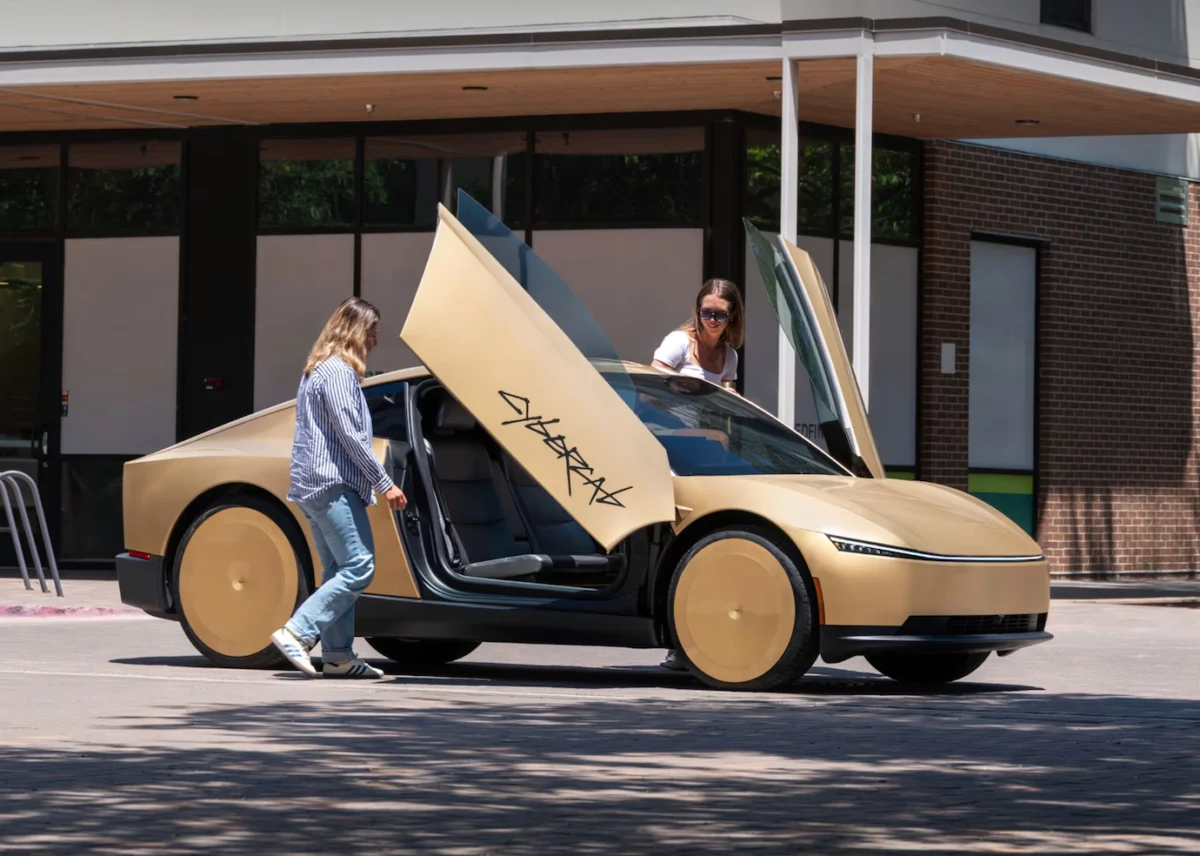
Tesla’s highly anticipated transition from a traditional automaker to an autonomous ride-hailing powerhouse took a quiet, highly unusual turn recently. Departing from the bombastic, heavily produced, and globally livestreamed spectacles that have defined the company’s product launches for over a decade, Tesla chose a remarkably subdued, private event to showcase the Cybercab. It was an unexpected format for a product that Chief Executive Officer Elon Musk has repeatedly characterized as a "fork-in-the-road" moment for the company’s future valuation and identity.
In sharp contrast to prior events, Musk did not deliver a lengthy, vision-casting keynote. By all accounts, the formal presentation lasted a mere 15 minutes, leaving attendees and industry analysts to piece together the technical and operational realities of the Cybercab from newly released documents, updated terms of service in the "Robotaxi" application, and social media posts from select brand enthusiasts.
As the dust settles, a clearer picture of the Cybercab is beginning to emerge. The vehicle represents a radical application of Tesla’s cost-cutting manufacturing philosophy, featuring controversial engineering choices such as a "brake-by-wire" system and the omission of standard child-safety hardware. Simultaneously, federal safety regulators have already initiated investigations into the technology underpinning the vehicle, setting up a high-stakes confrontation between Tesla’s rapid deployment ambitions and the stringent requirements of public safety.
Main Facts: Inside the Quiet Launch of Tesla’s Cybercab
The core promise of the Cybercab is nothing short of revolutionary: a bespoke, fully autonomous vehicle operating without steering wheels or pedals, relying exclusively on Tesla’s "Vision" system (cameras and artificial intelligence) to navigate complex urban environments. Tesla claims this approach will allow it to offer autonomous rides at a fraction of the cost of established competitors like Alphabet’s Waymo, which rely on expensive sensor suites including LiDAR and radar.
However, the details of how Tesla intends to execute this vision were not presented on stage. Instead, they were scattered across technical PDFs released by the company and updated terms of service within Tesla’s proprietary "Robotaxi" app.
Key revelations from these documents include:
- Age Restrictions: Minors under the age of 13 are strictly prohibited from riding in the Cybercab "at this time."
- No LATCH Anchors: The Cybercab lacks standard lower anchors and tethers for children (LATCH) systems, requiring child seats to be secured solely via seat belts.
- Emergency Protocols: In the event of a collision, the vehicle is programmed to execute a highly specific, multi-step safety sequence, including automatically unlocking its controversial electronic doors and establishing a direct, two-way audio connection with Tesla’s support team.
- Brake-by-Wire Architecture: Tesla has eliminated traditional hydraulic brake lines in favor of an all-electronic, actuator-controlled braking system to reduce manufacturing complexity and vehicle weight.
- Restricted Windows: The vehicle’s side windows are mechanically restricted and cannot be fully rolled down by passengers.
Chronology of the Cybercab’s Unveiling and Regulatory Backlash
The road to the Cybercab has been marked by shifting timelines, intense public speculation, and immediate regulatory pushback.
[October 2024: "We, Robot" Event]
       │
       ▼
[September 2026: Private Cybercab Event & App Update] ──► (Technical details released via PDF & Terms of Service)
       │
       ▼
[September 2026: NHTSA Launches Investigation] ─────────► (Federal probe into Cybercab deployment and FSD safety)
For years, Elon Musk has promised that a dedicated Tesla robotaxi was just around the corner, frequently asserting that existing Tesla vehicles would soon become cash-generating autonomous assets through over-the-air software updates. Following the initial "We, Robot" demonstration event in late 2024, public interest shifted toward the practical realities of deploying such a fleet.
In September 2026, Tesla quietly hosted a private Cybercab event. Rather than the expansive, carnival-like atmospheres of the past, this gathering was brief, highly exclusive, and lacked the typical executive-led deep dives. Almost immediately following the event, Tesla updated its "Robotaxi" application and uploaded technical specifications to its server.
The response from federal authorities was swift. Within days of the technical disclosures and the formalization of the Robotaxi app terms, the National Highway Traffic Safety Administration (NHTSA) announced a formal investigation into Tesla’s Cybercab deployment and the underlying software. The federal probe focuses on the safety of Tesla’s self-driving technology, particularly its performance in low-visibility conditions and its compliance with federal motor vehicle safety standards.
Supporting Data: A Technical Breakdown of the Cybercab
The technical documents and user agreements released by Tesla reveal several design decisions that prioritize manufacturing efficiency and cost reduction, sometimes at the expense of traditional passenger conveniences and industry norms.
1. Child Safety Constraints and the Omission of LATCH Anchors
One of the most surprising policy and design details is the restriction on young passengers. According to Tesla’s updated terms of service, children under the age of 13 are not permitted to ride in the Cybercab. While minors between the ages of 8 and 17 are permitted to ride unaccompanied in Tesla’s "Robotaxi" Model Y SUVs, the smaller, two-seat Cybercab remains off-limits to pre-teens.
| Vehicle Type | Minimum Passenger Age | Child Seat Attachment Method | Unaccompanied Minors Allowed? |
|---|---|---|---|
| Tesla Cybercab | 13 years old | Seat Belt Only (No LATCH) | No (Must be accompanied by adult if under 18) |
| Model Y "Robotaxi" | 8 years old | LATCH Anchors or Seat Belt | Yes (Ages 8–17, subject to terms) |
Furthermore, the Cybercab does not feature standard LATCH (Lower Anchors and Tethers for Children) hardware, which has been a safety standard in passenger vehicles for decades. Parents wishing to secure a child seat in the Cybercab must rely entirely on the vehicle’s seat belts.
This omission aligns with Tesla’s aggressive parts-reduction strategy, championed by Musk as a way to lower the vehicle’s retail price. However, critics point out the irony of omitting child safety anchors in a vehicle designed for general public transport, especially given Musk’s public commentary encouraging higher birth rates.
2. Post-Crash Emergency Protocols
The safety of driverless vehicles during and after a collision is a primary concern for municipal authorities and first responders. Tesla’s technical documentation outlines a precise, automated sequence that occurs immediately if a Cybercab is involved in a crash:
- Airbag Deployment: Supplemental restraint systems inflate instantly.
- Cabin Access: The electronic doors automatically unlock to allow passengers to exit and first responders to enter.
- Electrical Isolation: The vehicle’s high-voltage battery pack is automatically disconnected and disabled to prevent thermal runaway or electrical shock.
- Atmospheric Venting: The side windows automatically drop to a pre-set "vent" position to clear smoke and pressure from airbag deployment.
- Active Deceleration: The vehicle applies its electronic brakes to come to a complete stop and transitions into park.
- Emergency Communication: The infotainment system automatically establishes a live, two-way voice connection between the cabin and Tesla’s dedicated rider support team.
The automatic unlocking of the doors is a highly critical feature. Tesla has faced intense scrutiny and multiple lawsuits regarding its reliance on electronic door latches, which can become inoperable if a vehicle loses low-voltage power during an accident. Recently, Tesla agreed to recall approximately three million vehicles in China following regulatory investigations into electronic door mechanisms that could trap occupants after a collision.
3. Ergonomics and Manual Door Releases
To mitigate concerns regarding electronic latch failures, Tesla has redesigned the interior door controls for the Cybercab. In previous models, such as the Model 3 and Model Y, the manual emergency door releases were recessed or located in obscure positions, making them difficult for unfamiliar passengers to locate in a crisis.
The Cybercab utilizes electronic exterior buttons and automatic doors to facilitate easy entry and exit at the start and end of a ride. However, on the inside, Tesla has placed a highly visible, mechanical manual release lever directly on the armrest of each door. This design improvement ensures that passengers can quickly exit the vehicle mechanically, even in the event of a total electrical failure.
4. Transition to Brake-by-Wire Technology
Following its implementation of steer-by-wire technology in the Cybertruck, Tesla has taken another step toward purely electronic control systems by implementing a brake-by-wire architecture in the Cybercab.
[Traditional System]: Brake Pedal ──► Hydraulic Fluid Lines ──► Brake Calipers
[Cybercab System]:    Sensors     ──► Electronic Actuators ──► Brake Calipers
By removing the physical hydraulic lines, master cylinders, and fluid reservoirs, Tesla eliminates significant manufacturing complexity. Electronic actuators mounted directly to the brake calipers receive digital signals to apply stopping force. Writing on social media, Musk defended the engineering choice: "Having electric brakes avoids the complexity of a hydraulic system: no need to [route] plumbing all around the car."
While brake-by-wire systems offer faster response times and weight savings, they require robust electronic redundancy to ensure that a localized power loss does not result in a complete loss of braking capability.
5. Cabin Comfort and Window Limitations
In another curious engineering choice, Tesla’s documentation notes that the windows of the Cybercab "cannot be fully opened at this time." The company has not provided an official explanation for this restriction, though industry experts speculate it may be a measure to optimize cabin aerodynamics, prevent passengers from discarding trash, or reduce the risk of occupants leaning out of the moving, driverless vehicle.
Conversely, passenger utility is supported by high-power USB-C ports. According to hands-on reviews by prominent tech influencers, the Cybercab’s cabin ports deliver up to 90 watts of power. This is roughly four times the wattage found in standard vehicle USB outlets, allowing passengers to quickly charge demanding electronics, such as laptops, during their commute.
Regulatory Scrutiny and Official Responses
Tesla’s "Vision-only" approach to autonomy has long drawn skepticism from safety advocates and federal regulators. The deployment of the Cybercab has brought this tension to a head.
The National Highway Traffic Safety Administration (NHTSA) has officially launched an investigation into Tesla’s self-driving systems, focusing specifically on the software scheduled for use in the Cybercab fleet. Regulators are evaluating whether Tesla’s system is capable of safely navigating adverse weather, low-visibility conditions, and unpredictable roadway hazards without the aid of secondary active sensors like LiDAR.
Historically, Tesla has maintained that its camera-based neural networks mimic human vision and are theoretically superior to systems burdened by conflicting sensor data. However, municipal governments, particularly in California and Texas, have indicated that they will require rigorous, real-world data before granting Tesla the permits necessary to operate commercial, driverless ride-hailing networks on public roads.
Tesla, which famously disbanded its public relations department years ago, has not issued formal press statements addressing the specific safety concerns raised by the NHTSA or the lack of child-safety LATCH hardware in the Cybercab.
Implications: The Vision-Only Gamble and the Future of Ride-Hailing
The design, limitations, and regulatory environment of the Cybercab highlight the central tension at the heart of Tesla’s autonomous vehicle strategy: cost-efficiency versus safety redundancy.
       ┌─────────────────────────────────────────────────────────┐
       │               TESLA'S ROBOTAXI DILEMMA                  │
       └────────────────────────────┬────────────────────────────┘
                                    │
            ┌───────────────────────┴───────────────────────┐
            ▼                                               ▼
┌───────────────────────┐                       ┌───────────────────────┐
│     COST-CUTTING      │                       │ SAFETY & REDUNDANCY   │
│  • Vision-only (No    │                       │  • Strict regulatory  │
│    LiDAR/Radar)       │          VS           │    oversight (NHTSA)  │
│  • Brake-by-wire      │                       │  • Public trust &     │
│  • No LATCH anchors   │                       │    passenger safety   │
└───────────────────────┘                       └───────────────────────┘
By removing hydraulic brakes, steering columns, LATCH anchors, and LiDAR sensors, Tesla has designed a vehicle that could theoretically be produced at an unprecedentedly low cost. If successful, this would allow Tesla to underprice competitors like Waymo and Zoox, democratizing autonomous transport.
However, this aggressive reductionism introduces significant risks:
- The Redundancy Deficit: Competitors use overlapping sensor technologies (sensor fusion) so that if one system fails or is blinded by heavy rain or dust, others can safely guide the vehicle. Tesla’s reliance on cameras alone means any obstruction to the lenses could compromise the vehicle’s operational capability.
- The Regulatory Bottleneck: Without steering wheels or pedals, the Cybercab cannot be legally operated by a human driver in an emergency. This design requires special federal exemptions from Federal Motor Vehicle Safety Standards (FMVSS), which are historically difficult and slow to obtain.
- Market Limitations: The ban on children under 13 and the lack of standard child-seat anchors significantly limit the Cybercab’s utility for families, restricting its target demographic primarily to solo commuters and adult couples.
Tesla’s transition to a robotaxi operator is no longer just a software engineering challenge; it is a complex regulatory and physical manufacturing battle. While the Cybercab showcases highly innovative cost-saving measures and safety-conscious interior redesigns, the company must now prove to skeptical regulators and the public that its streamlined, camera-reliant vehicle is safe enough to navigate the unpredictable realities of public roads.
