



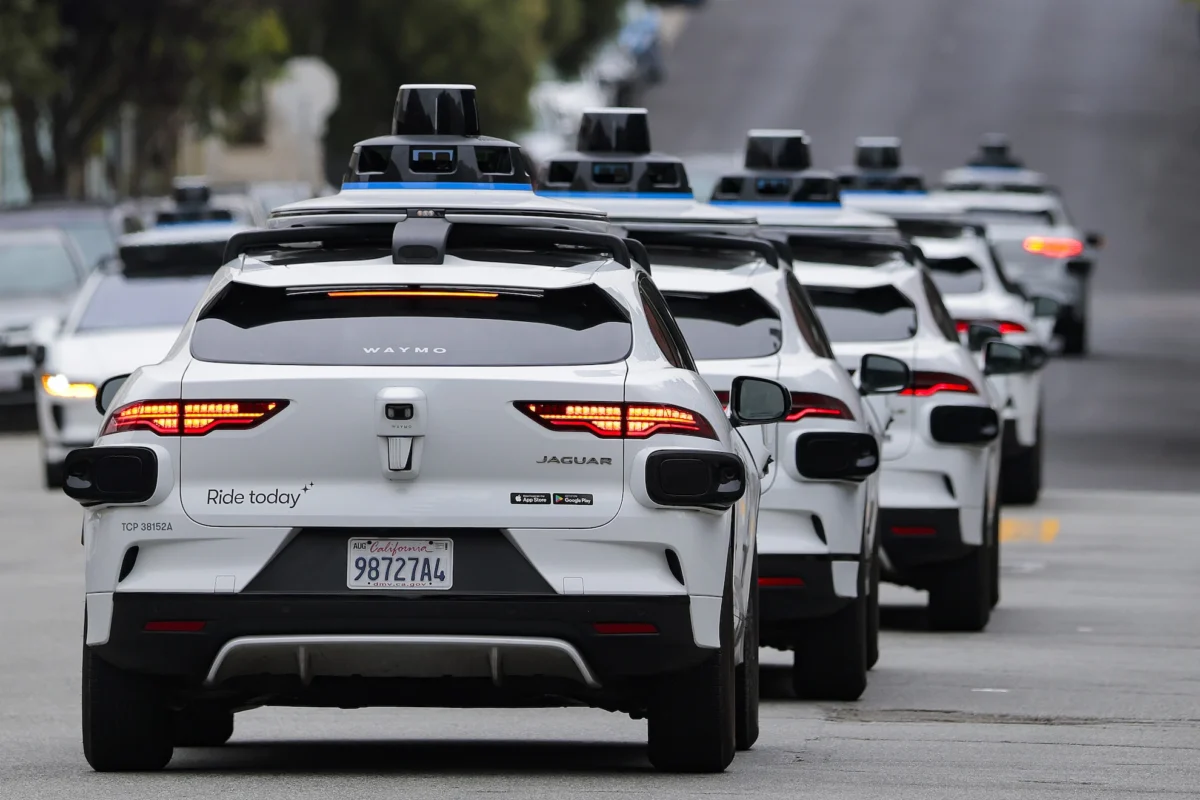
SAN FRANCISCO — Alphabet Inc.’s autonomous driving subsidiary, Waymo, temporarily suspended its driverless ride-hailing operations across San Francisco on Saturday, July 18, 2026. The decision came in response to a widespread electrical grid failure that plunged large swathes of the city into darkness, disabling traffic signals and disrupting local communication networks.
While service has since resumed with significant operational modifications—including the complete suspension of high-speed freeway routes—the incident has reignited a fierce debate over the resilience of autonomous vehicles (AVs) during municipal infrastructure emergencies.
The blackout, which affected approximately 7,000 Pacific Gas and Electric (PG&E) customers, serves as a stark reminder of the technical and logistical hurdles confronting the driverless vehicle industry. It also comes just two days after San Francisco Mayor Daniel Lurie renewed calls for more stringent state-level oversight of autonomous fleets.
Main Facts of the Disruption
At approximately 12:30 PM PDT on July 18, 2026, Waymo users in San Francisco began receiving mobile app notifications informing them that the robotaxi service was "temporarily paused." The alert also noted that "freeway routes are unavailable," a critical restriction given Waymo’s recent, highly publicized expansion onto Bay Area highways.
[Waymo Passenger Alert - 12:30 PM PDT]
"Service is temporarily paused in your area due to local conditions. Freeway routes are currently unavailable. We are monitoring the situation and will resume operations as soon as it is safe to do so."
Waymo later confirmed it had implemented a systematic, one-hour service shutdown across its entire San Francisco service area. The company initiated the pause to evaluate the severity of the PG&E power outage and to ensure its fleet would not clog intersections where traffic lights had gone dark.
Although Waymo restarted its ride-hailing service early Saturday afternoon, it did so under restricted parameters. The company restricted its vehicles to surface streets, maintaining a temporary ban on freeway operations while engineering and operations teams monitored the stability of local municipal infrastructure.
Chronology of the Event and Historical Context
The disruption on Saturday is not an isolated incident; rather, it is the latest chapter in a series of infrastructure-related failures that have plagued autonomous vehicle deployments in San Francisco over the past year.
Timeline of the July 18, 2026 Incident:
- 11:45 AM PDT: A localized power grid failure occurs in San Francisco, cutting electricity to roughly 7,000 PG&E customers and disabling municipal traffic signals across multiple busy neighborhoods.
- 12:15 PM PDT: Waymo’s fleet operations center notes a rise in localized routing anomalies as driverless vehicles encounter unlit intersections and fluctuating cellular signals.
- 12:30 PM PDT: Waymo officially pushes an in-app alert to users, pausing ride-hailing services citywide and disabling all freeway routes.
- 1:30 PM PDT: After a one-hour assessment and direct coordination with San Francisco emergency services and municipal transportation officials, Waymo initiates a phased resumption of service.
- 2:00 PM PDT: Service is fully restored on surface streets, though freeway operations remain offline as a precautionary measure.
Historical Context of AV Vulnerability:
To understand the sensitivity of Waymo’s operational response, it is necessary to examine the company’s recent history with municipal grid failures:
- December 2025 Blackout: A severe winter storm triggered a massive blackout across San Francisco. Without active traffic signals, dozens of Waymo robotaxis defaulted to their onboard "fail-safe" modes. Lacking real-time guidance and struggling to navigate dark, unregulated four-way intersections, the vehicles stalled in place, blocking emergency vehicles and paralyzing transit corridors for hours. Waymo was forced to suspend operations entirely until the grid was restored.
- Fourth of July Fireworks Gridlock (2026): Just weeks prior to the July 18 outage, a massive influx of pedestrians and unauthorized road closures during the Golden Gate Bridge fireworks show overwhelmed Waymo’s routing algorithms. Dozens of driverless vehicles became trapped in dense gridlock, unable to navigate around impromptu crowds, sparking public outrage and drawing sharp criticism from local emergency responders.
Supporting Data and Technical Challenges
The vulnerability of Level 4 autonomous vehicles to power outages lies at the intersection of sensor design, machine learning logic, and telecommunications dependencies.
The "Dark Intersection" Dilemma
Under California vehicle code, a dark or malfunctioning traffic signal must be treated as a four-way stop. For human drivers, this transition requires defensive driving, eye contact, and hand gestures to negotiate right-of-way.
For an autonomous vehicle, a dark intersection presents an array of computational challenges:
- Sensor Occlusion and Classification: While LiDAR and radar can easily map the physical geometry of an intersection in the dark, the vehicle’s cameras must confirm whether a traffic light is green, red, or completely unlit. A dark signal bulb can sometimes be misclassified as an inactive sensor or an environmental anomaly.
- Defensive Posturing: To prevent collisions, Waymo’s "driver" is programmed with an abundance of caution. When confronted with an unlit intersection where human drivers may not be adhering to strict four-way stop rules, the robotaxi will often wait indefinitely for a clear, legally compliant gap in traffic. This defensive posturing frequently leads to "active stalling," where the vehicle remains perfectly safe but creates a severe bottleneck behind it.
Cellular and Edge-Computing Dependencies
Waymo’s vehicles operate autonomously on local hardware, but they rely heavily on continuous, low-latency cellular connectivity (5G/LTE) to communicate with Waymo’s Fleet Operations Center. This connection is essential for:
- Receiving real-time routing updates and geofencing boundaries.
- Accessing remote guidance from human operators when the vehicle encounters an unprecedented scenario (known as "edge cases").
- Transmitting telemetry and diagnostic data.
During widespread power outages, local cellular towers often experience power surges, battery-backup failures, or bandwidth congestion as citizens flood the network. A degraded cellular network directly impacts Waymo’s ability to provide remote assistance to stalled vehicles, prompting the company to pull vehicles off the road proactively.

Official Responses
The July 18 incident has drawn swift responses from corporate spokespersons, utility representatives, and local political leaders who are increasingly demanding a say in how autonomous fleets are regulated.
Waymo’s Corporate Stance
In an initial statement to TechCrunch, a Waymo spokesperson emphasized the company’s commitment to safety and public coordination:
"We are making temporary adjustments to our service while we monitor local conditions. We know riders depend on us, and we will return to normal operations as soon as possible."
Following the resumption of service, the spokesperson clarified the operational necessity of the brief shutdown:
"We decided to pause service for approximately one hour to assess the scale of the power outage affecting a large portion of San Francisco and to coordinate closely with local officials. This proactive measure ensured we could safely navigate the affected areas without contributing to local traffic congestion."
Municipal Pushback from Mayor Daniel Lurie
The timing of the outage is politically sensitive. Only two days prior, on July 16, 2026, San Francisco Mayor Daniel Lurie launched a public campaign demanding that state regulators grant municipalities greater control over autonomous vehicle operations.
Following Saturday’s grid failure, Mayor Lurie’s office issued a statement reinforcing his position:
"This afternoon’s events are precisely why we need a stronger, more collaborative regulatory framework. When our power grid goes down, our first responders must be focused on life-safety issues—not on managing stalled, driverless vehicles that cannot navigate dark intersections. We need tougher state regulations that adequately address how autonomous vehicles operate during major incidents, planned or not."
Currently, regulatory authority over autonomous vehicles in California rests almost entirely with state agencies, specifically the California Public Utilities Commission (CPUC) and the Department of Motor Vehicles (DMV). San Francisco officials have long argued that this centralized structure deprives local cities of the authority to protect their own streets during emergencies.
Implications for the AV Industry and Urban Infrastructure
The recurring disruptions in San Francisco carry profound implications for the broader commercialization of autonomous ride-hailing. As companies like Waymo, Zoox, and Cruise attempt to scale their operations to other major metropolitan areas—such as Los Angeles, Phoenix, and Austin—they must prove their technology can withstand the unpredictable realities of aging urban infrastructure.
| Key Operational Challenge | Current Tech Vulnerability | Proposed Long-Term Solution |
|---|---|---|
| Grid Failure / Dark Lights | Vehicle defaults to safe-stop, causing gridlock. | V2X (Vehicle-to-Everything) localized mesh networks. |
| Cellular Network Outage | Loss of remote assistance/teleoperation link. | Onboard satellite backup links (e.g., Starlink integration). |
| Emergency Vehicle Blockage | Difficulty interpreting manual hand signals from police. | Advanced behavioral models trained on human gesture recognition. |
Technical Evolution: The Need for True Offline Autonomy
The dependency of Level 4 vehicles on cellular networks and external infrastructure is a critical vulnerability. To achieve true resilience, autonomous vehicle developers must invest heavily in offline edge-computing capabilities. Vehicles must be capable of navigating highly complex, unmapped detour routes and interpreting manual hand gestures from traffic officers or construction workers without relying on cloud-based remote guidance.
The Regulatory Battleground
Mayor Lurie’s legislative push could serve as a blueprint for other cities. If San Francisco succeeds in lobbying state lawmakers to amend the CPUC’s authority, it could lead to a fragmented regulatory landscape. Under a decentralized model, cities could enforce local geofences, mandate automatic fleet groundings during declared emergencies, or impose strict caps on fleet sizes during peak traffic hours or public events.
Ultimately, the events of July 18, 2026, demonstrate that autonomous vehicles do not operate in a vacuum. Their success is deeply tied to the physical and digital health of the cities they inhabit. Until robotaxis can seamlessly adapt to failing power grids, unpredictable crowds, and disrupted communications, they will remain highly sophisticated systems vulnerable to the everyday failures of municipal infrastructure.
