




In the rapidly homogenizing world of automotive manufacturing, where robots, AI-driven assembly lines, and high-volume production cycles dictate the cadence of progress, there remains a small, defiant pocket of resistance in Okayama, Japan. For over five decades, OS Giken has stood as a titan of the aftermarket performance world, synonymous with precision clutches, limited-slip differentials, and a reverence for mechanical engineering that borders on the spiritual.
A recently released, hour-long documentary by the YouTube channel Inside Japanese Factories provides an intimate, unvarnished look at the company’s most ambitious endeavor: the resurrection of the legendary Datsun L-Series inline-six engine, refined through the prism of modern engineering. This is not merely a repair; it is a masterclass in artisanal automotive assembly that challenges the prevailing narrative that faster is always better.
The Core: A Heritage Reimagined
The centerpiece of this project is the L-Series engine, an powerplant that defined the golden era of Japanese sports cars, most notably the S30 Datsun 240Z. However, the OS Giken interpretation elevates this classic architecture to modern performance standards through the installation of the TC24-B1Z cylinder head.
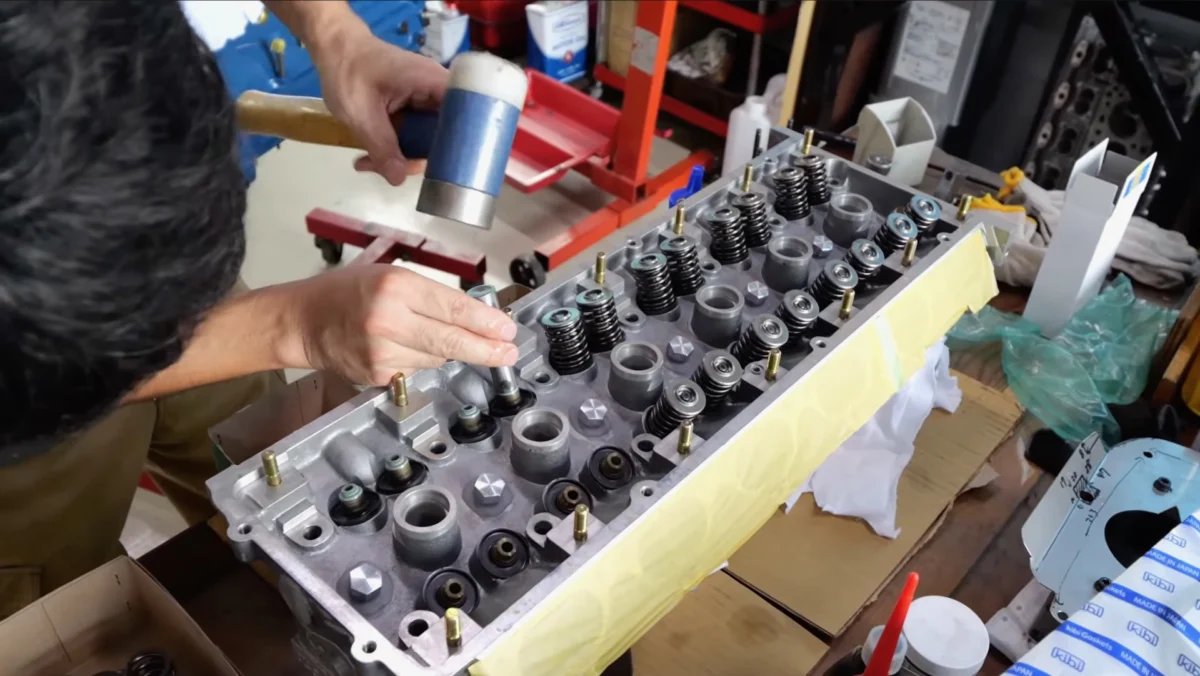
The TC24-B1Z is a modern reissue of the iconic TC24-B1 head, a masterpiece originally designed by OS Giken founder Masaharu Okazaki in the 1970s. In its original iteration, the design was so complex and ahead of its time that only nine units were ever produced. By 2017, OS Giken made the decision to resurrect this design, utilizing modern CNC machining and CAD (Computer-Aided Design) software to iron out the inconsistencies inherent in 1970s casting processes. The result is a dual-overhead-cam head that breathes life into the L-Series block, transforming a reliable vintage motor into a high-revving, high-output piece of performance art.
A Chronology of Precision: The Four-Month Build
The process of assembling an engine at OS Giken is a deliberate, rhythmic affair. Unlike mass-production facilities that rely on computerized torque sensors and automated assembly arms, the team at the Okayama facility operates with the manual sensitivity of a Swiss watchmaker.
Phase 1: Preparation and Sanitation
The process begins with the raw foundation: an original L-Series engine block. It is stripped, thoroughly cleaned, and inspected for structural integrity. In an era where engines are often discarded rather than rebuilt, the commitment to salvaging and perfecting the original block is a nod to the company’s respect for the Datsun legacy.
Phase 2: The Internal Symphony
The build proceeds through the meticulous installation of the rotating assembly—the crankshaft, pistons, and connecting rods. Every component is balanced to exacting tolerances. The assembly is not rushed; the mechanics operate with a tactile awareness that digital sensors cannot replicate. Each bolt is tightened by hand, with the mechanics feeling the resistance of the metal, ensuring that the tension is uniform across every fastener.
Phase 3: The Head and Induction
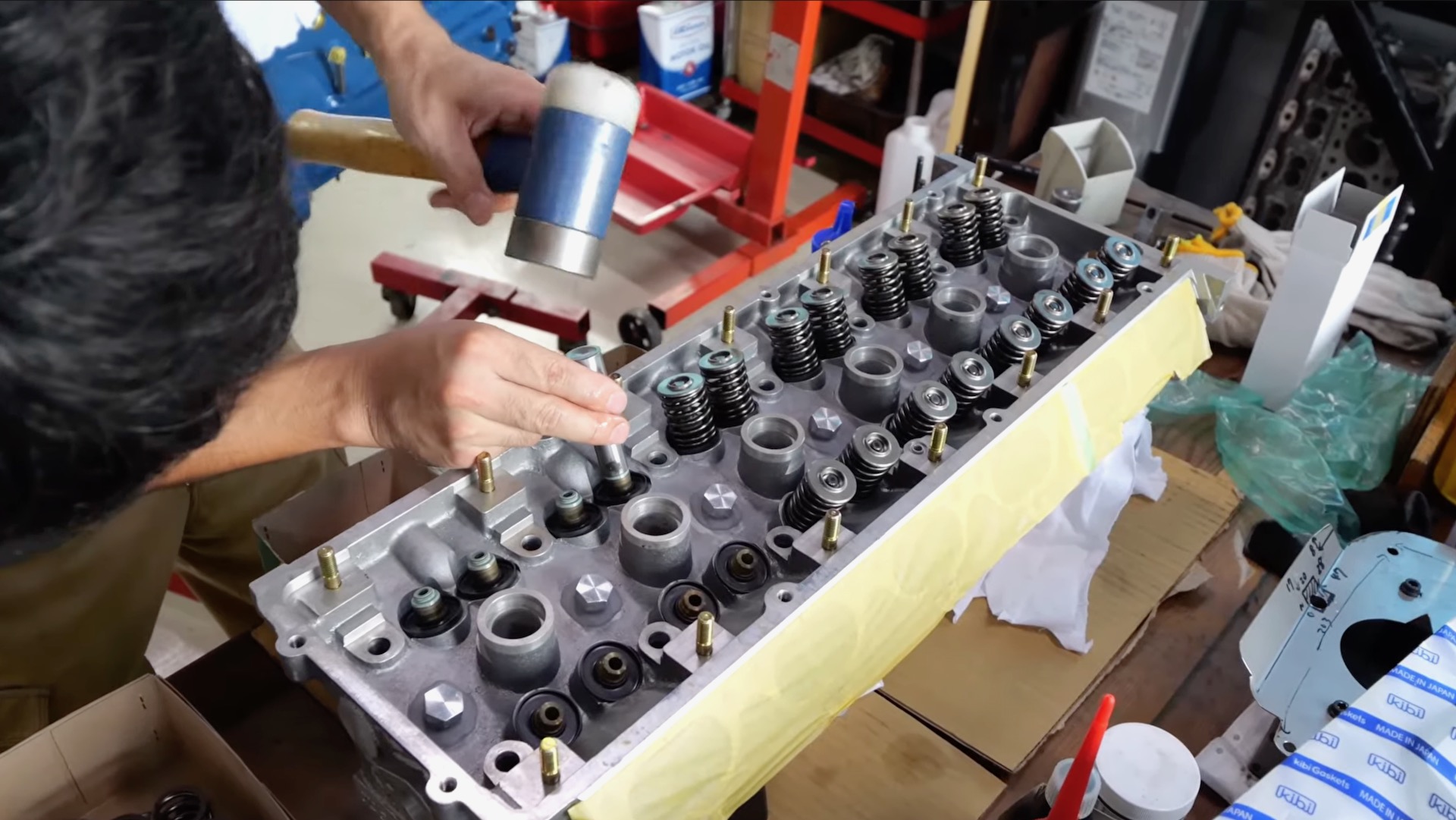
The installation of the TC24-B1Z head represents the bridge between the past and the present. The mechanics spend significant time porting and polishing the intake and exhaust runners to optimize airflow. This is where the "side-project" nature of the build becomes apparent; there is no clock on the wall pushing for hourly quotas. The focus is exclusively on maximizing volumetric efficiency.
Phase 4: Validation and Testing
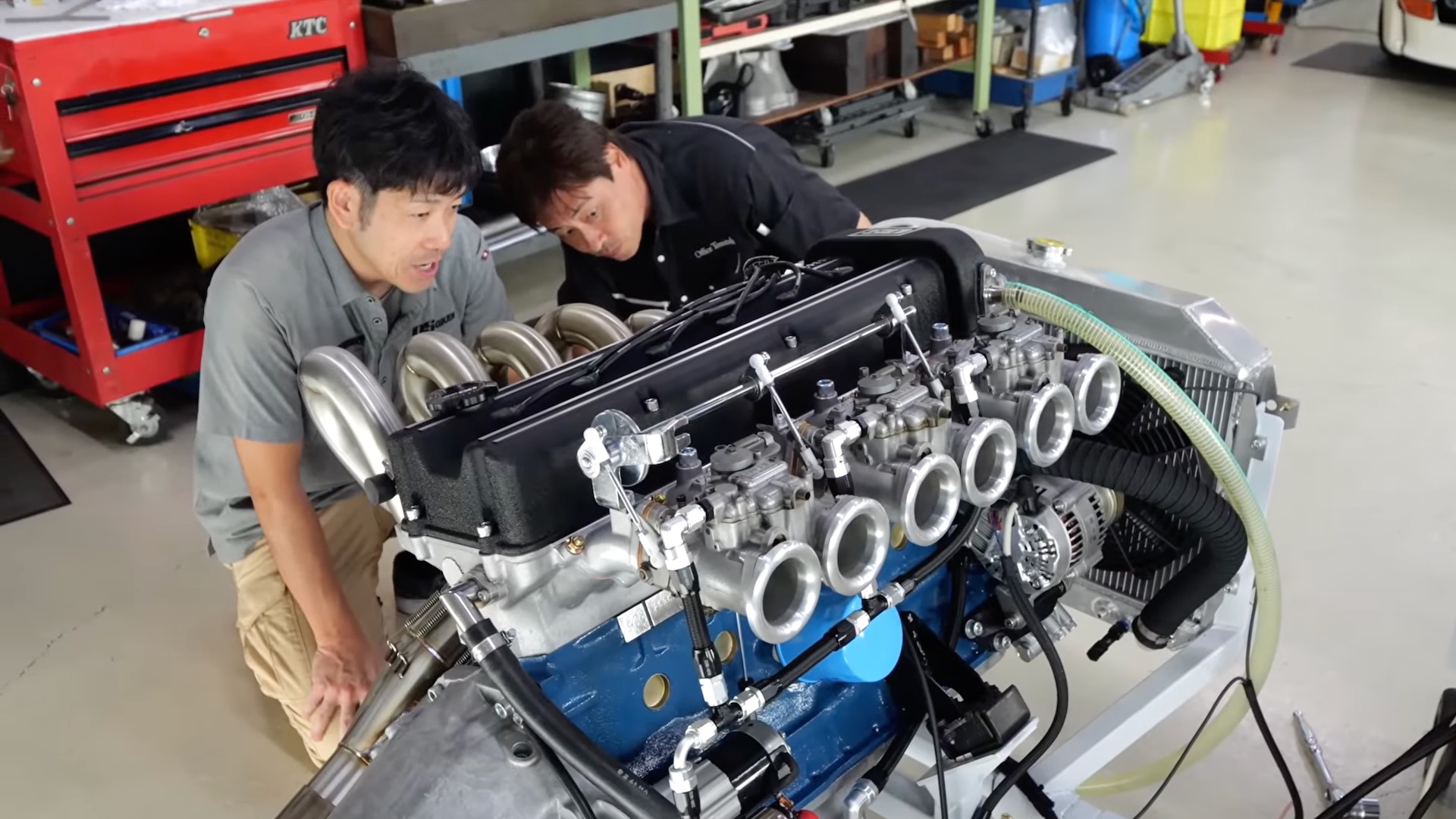
Before the engine is even considered for chassis integration, it is mounted on an engine stand for rigorous testing. In the final, most tense moments of the build, the engine is fired for the first time. The mechanics do not rely on diagnostic computers alone; they listen. They physically monitor the engine for vibrations, oil pressure consistency, and the tell-tale "sings" of a perfectly timed combustion cycle. It is a moment of raw mechanical honesty.
Supporting Data: Why Small-Scale Still Matters
While the video captures the romance of the process, it also highlights a critical shift in the automotive industry. OS Giken is not a large-scale manufacturer. Much like the famous Watanabe wheel factory—which also maintains a small, manual output—OS Giken proves that excellence can be achieved through labor-intensive, human-centric processes.
Current industry trends favor "highly automated efficiency," yet the output from such factories often lacks the soul or the specialized performance characteristics of these hand-built units. By maintaining a small staff of master mechanics, OS Giken creates a product that is, in essence, a "bespoke" engine. The four-month timeline for a single build may seem inefficient by corporate standards, but the end result—a high-output, reliable, and historically significant engine—is something that no mass-produced unit can replicate.
Official Stance and Philosophy
OS Giken has long maintained that their mission is to provide the "ideal" performance part, regardless of the difficulty in manufacturing. Their literature and public communications emphasize that the TC24-B1Z is not just a part; it is a continuation of Masaharu Okazaki’s original vision. By updating the manufacturing techniques for the 21st century, they aren’t changing the engine; they are enabling it to finally realize the potential that was constrained by the manufacturing limitations of the 1970s.
The company views these engine builds as a form of institutional knowledge preservation. By training younger technicians alongside veterans in this "slow" method of building, they ensure that the techniques required to tune and assemble high-performance internal combustion engines do not disappear in the wake of the electric vehicle revolution.
Implications for the Automotive Aftermarket
The fascination with the OS Giken video points to a growing "analog movement" within the car enthusiast community. As new cars become increasingly defined by software, autonomous features, and sealed-unit components that cannot be serviced by the owner, there is a renewed interest in platforms that are mechanical, transparent, and modular.
1. The Value of Legacy Platforms
The success of this project confirms that there is a sustainable market for "restomod" components that improve upon classic platforms. Owners of vintage Japanese sports cars are increasingly willing to pay a premium for parts that allow them to drive their vehicles with modern power levels while maintaining the classic aesthetic.
2. The Resurgence of the "Human" Mechanic
The video serves as a reminder that the human touch remains the gold standard in specialized engine building. The ability to "read" an engine through sound and feel is a skill set that remains highly relevant, even in an era of ECU tuning and data logging.
3. Sustainability through Longevity
By keeping older engines running with high-performance, long-lasting components, OS Giken is inadvertently promoting a form of sustainability. Extending the life of an existing engine through high-quality rebuilds is inherently more resource-efficient than the carbon-intensive process of manufacturing new vehicles.
Conclusion
The Inside Japanese Factories footage is more than just "chill weekend entertainment." It is a testament to the endurance of mechanical passion. OS Giken’s ability to take a 50-year-old engine block and turn it into a modern masterpiece is a reminder that in the world of automotive engineering, the most impressive results are often found not in the speed of the production line, but in the patience of the hands that guide it.
As we look toward an electrified future, these artisanal engine builds stand as a monument to the internal combustion era—reminding us that while engines may one day go silent, the art of building them will remain a high-water mark of human engineering capability.
