

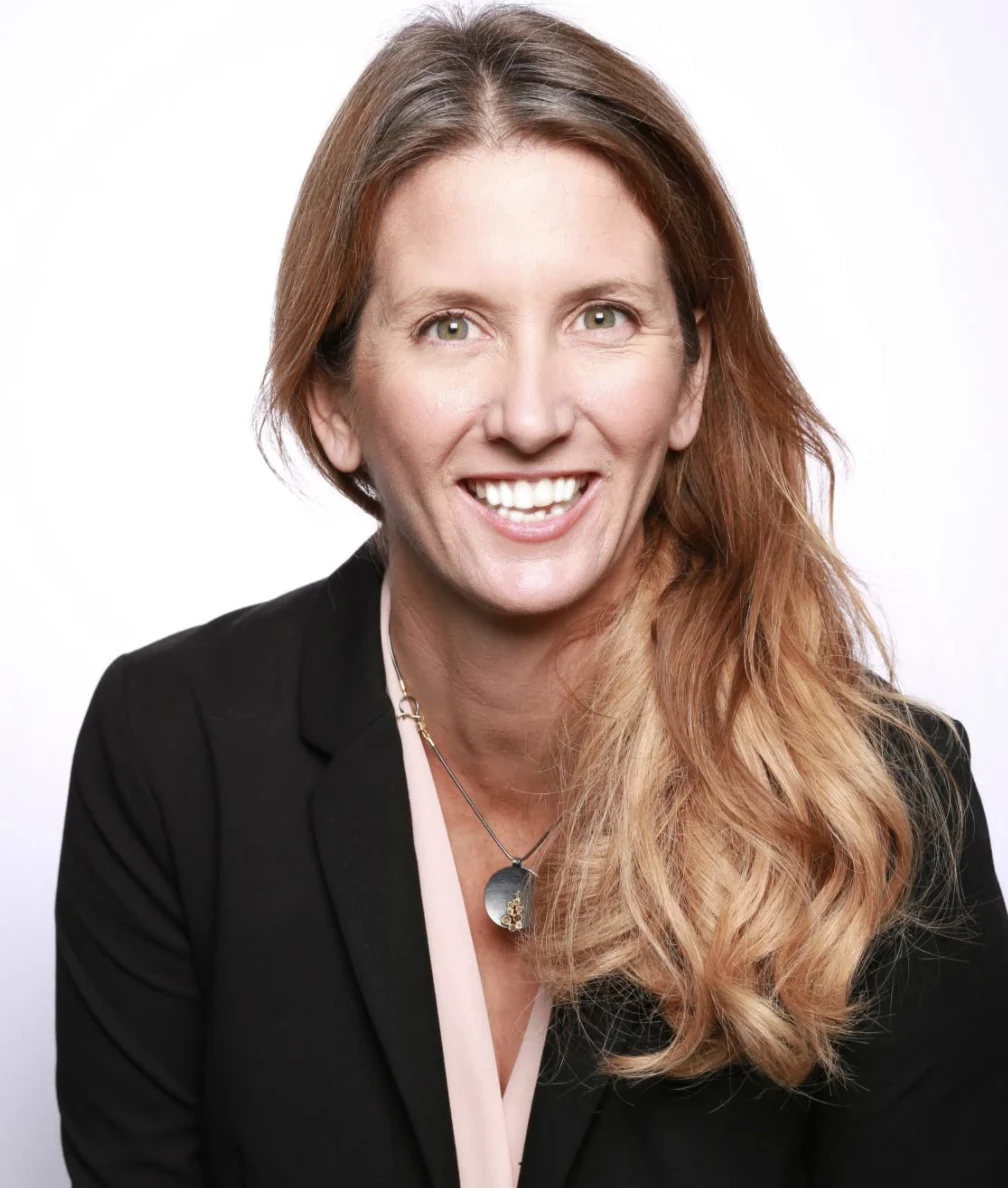
JERUSALEM and SANTA CLARA, Calif. — In a transition that marks the end of one of the most influential tenures in the automotive technology sector, Mobileye Global Inc. announced that its founder, President, and Chief Executive Officer, Amnon Shashua, plans to step down from his leadership post.
The announcement, disclosed in a regulatory filing with the U.S. Securities and Exchange Commission (SEC) on Thursday, July 23, 2026, signals a massive leadership transition for the Israeli autonomous driving pioneer. Shashua, who has guided Mobileye for nearly three decades from an academic spin-off into a global powerhouse, will remain in his current role as CEO until a suitable successor is identified and onboarded.
This leadership transition comes at a critical juncture for Mobileye. The company is currently navigating a complex strategic evolution, moving beyond its traditional domain of Advanced Driver Assistance Systems (ADAS) chips to pioneer "Mobileye 3.0"—an ambitious expansion into commercial robotaxis and humanoid robotics.
Main Facts of the Transition
According to the SEC Form 8-K filed on July 23, 2026, Shashua’s decision to step down was mutual and planned in coordination with the company’s Board of Directors. The board has initiated a formal search process, retaining a leading executive search firm to identify candidates capable of managing Mobileye’s dual identity as a high-volume automotive supplier and a cutting-edge robotics developer.
Key parameters of the transition include:
- Continuity of Leadership: Shashua will continue to exercise full executive authority as CEO and President during the search process to ensure operational stability.
- Board Seat Retention: While stepping back from day-to-day executive management, Shashua is expected to retain a seat on Mobileye’s Board of Directors and potentially transition into a Chief Technology Advisor role.
- Timing: No firm departure date has been set, but the transition is expected to conclude within the next six to twelve months, depending on the recruitment timeline.
Chronology of Mobileye Under Amnon Shashua (1999–2026)
To understand the weight of Shashua’s departure, one must examine the history of Mobileye, which is inextricably linked to his personal research and vision.
[1999] Founded based on Hebrew University research
   │
[2014] Record-breaking IPO on the NYSE ($890M raised)
   │
[2017] Acquired by Intel Corporation for $15.3 Billion
   │
[2022] Spun out as a public company; Intel remains majority owner
   │
[Jan 2026] Acquires Mentee Robotics for $900M ("Mobileye 3.0")
   │
[June 2026] Announces 2027 U.S. Robotaxi commercial launch
   │
[July 2026] Amnon Shashua announces plans to step down as CEO
The Academic Genesis (1999–2013)
In 1999, Amnon Shashua, then an associate professor of computer science at the Hebrew University of Jerusalem, co-founded Mobileye alongside businessman Ziv Aviram. Shashua’s academic research suggested that safe autonomous driving and collision avoidance could be achieved using a single, low-cost monocular camera combined with sophisticated computer vision algorithms, defying the prevailing industry consensus that expensive stereo cameras or radar arrays were mandatory.
Over the next decade, Mobileye developed its proprietary EyeQ chip family. By the late 2000s, the company secured major supply agreements with global automotive OEMs (Original Equipment Manufacturers) like BMW, General Motors, and Volvo, establishing its technology as the gold standard for lane departure warnings, traffic sign recognition, and automatic emergency braking.
Public Markets, Intel, and the Private Interlude (2014–2021)
In 2014, Mobileye went public on the New York Stock Exchange, raising $890 million in what was, at the time, the largest-ever initial public offering for an Israeli company in the United States.
The company’s rapid growth and dominance in the ADAS market caught the attention of Silicon Valley. In 2017, Intel Corporation acquired Mobileye for $15.3 billion—a blockbuster deal aimed at positioning the chip giant at the center of the emerging autonomous vehicle revolution. Under Intel’s umbrella, Mobileye operated with significant autonomy, and Shashua continued to lead the division as it scaled its R&D.
The Re-IPO and the Birth of "Mobileye 2.0" (2022–2025)
Recognizing the need to unlock shareholder value and grant Mobileye more agility, Intel spun the company back out into the public markets in October 2022. While Intel retained a majority stake (holding over 88% of the voting power), Mobileye once again traded publicly on the Nasdaq.
During this "Mobileye 2.0" phase, Shashua pushed the company to transition from a Tier-2 component supplier into a Tier-1 systems integrator. The company introduced SuperVision (a hands-off, eyes-on point-to-point assisted driving system) and Chauffeur (an eyes-off autonomous system), securing flagship integration contracts with brands like Porsche and Volkswagen Group.
The Pivot to "Mobileye 3.0" (2026)
The year 2026 marked a profound pivot for the company. In January 2026, Mobileye acquired Mentee Robotics—a humanoid robotics startup founded by Shashua in 2022—for $900 million. Shashua framed this acquisition as the catalyst for "Mobileye 3.0," an era where the company’s proprietary computer vision, mapping, and machine learning stacks would be deployed not just in passenger cars, but in bipedal humanoid robots and direct-to-consumer mobility services.
This was quickly followed by an announcement in June 2026 that Mobileye would launch its own branded robotaxi service in a major, yet-to-be-disclosed U.S. city by 2027, pitting the company directly against established operators like Alphabet’s Waymo and General Motors’ Cruise.
Supporting Data and Financial Context
The transition comes at a time of significant financial scale and market pressure for Mobileye. Despite its strong technological moat, the company has had to balance heavy R&D spending with shifting global automotive demand.

Key Financial and Operational Metrics (As of Mid-2026)
| Metric | Detail / Value |
|---|---|
| Market Capitalization | Approx. $22–25 Billion (subject to market fluctuations) |
| Primary Shareholder | Intel Corporation (holds ~88% voting control) |
| EyeQ Chip Shipments | Cumulative shipments exceeding 180 million units globally |
| Mentee Robotics Acquisition Cost | $900 Million (Closed January 2026) |
| Projected Robotaxi Launch | 2027 (U.S. Metropolitan Area) |
The Cost of Innovation
Mobileye’s shift toward full Level 4 autonomy (under its Drive platform) and humanoid robotics represents a capital-intensive strategy. The $900 million acquisition of Mentee Robotics, while highly synergistic on an intellectual property level, required significant cash reserves.
Furthermore, entering the robotaxi market as an operator rather than a technology licensor requires substantial capital expenditure for fleet acquisition, maintenance infrastructure, and localized regulatory compliance. Analysts estimate that establishing a commercial robotaxi network in a single U.S. city requires an upfront investment of $150 million to $300 million.
Official Responses and Corporate Statements
In the regulatory filing, Mobileye emphasized that the search for a new CEO would be conducted with a focus on preserving the company’s unique culture of innovation while scaling its operational capabilities.
While Shashua did not release an external personal statement, sources close to the executive indicate that after 27 years of continuous leadership, he views the current transition as the natural evolution of the company. Having successfully integrated Mentee Robotics and established the roadmap for the 2027 U.S. robotaxi rollout, Shashua reportedly believes that the "foundational architecture" of Mobileye 3.0 is secure, leaving the company ready for an operationally focused successor.
Intel, as the majority shareholder, expressed its support for the transition. In an internal communication shared with partners, an Intel spokesperson noted:
"Amnon Shashua is a visionary whose contributions have fundamentally reshaped automotive safety and the future of mobility. Intel remains fully committed to Mobileye’s long-term growth strategy, including its expansion into autonomous fleets and robotics. We will work closely with the Mobileye Board of Directors to ensure a seamless leadership transition."
Implications for the Autonomous Vehicle and Robotics Industries
The departure of an iconic founder-academic like Amnon Shashua carries profound implications for Mobileye’s future, its automotive partners, and the broader tech landscape.
1. The Challenge of the Founder-to-Manager Transition
Shashua is not merely an executive; he is the chief scientist of Mobileye. His deep understanding of artificial intelligence, neural networks, and optical physics allowed Mobileye to compete with much larger tech firms. Replacing an academic-founder who can personally write foundational papers on computer vision is incredibly difficult. The incoming CEO will need to possess not only corporate management expertise but also the technical credibility to lead an R&D department staffed by thousands of specialized AI engineers.
2. The Future of "Mobileye 3.0" and Humanoid Robotics
The acquisition of Mentee Robotics for $900 million was seen by some Wall Street analysts as a highly speculative bet. While humanoid robotics is a rapidly growing field—championed by the likes of Tesla (Optimus), Figure, and Boston Dynamics—it is highly capital-intensive and years away from widespread commercial monetization.
Without Shashua’s personal championship of the project, there is a risk that institutional investors may pressure the new leadership team to scale back robotics investments to protect Mobileye’s core, highly profitable ADAS cash flows.
                  ┌──────────────────────────────┐
                  │   Incoming CEO's Dilemma     │
                  └──────────────┬───────────────┘
                                 │
         ┌───────────────────────┴───────────────────────┐
         ▼                                               ▼
┌─────────────────────────────────┐             ┌─────────────────────────────────┐
│     Core ADAS Business (Low L)  │             │   "Mobileye 3.0" (High L/R&D)   │
├─────────────────────────────────┤             ├─────────────────────────────────┤
│ • High volume EyeQ chip sales   │             │ • 2027 U.S. Robotaxi service    │
│ • Stable revenue from legacy OEMs│            │ • Mentee Humanoid Robots ($900M)│
│ • Highly profitable cash cow    │             │ • Capital-intensive & high-risk │
└─────────────────────────────────┘             └─────────────────────────────────┘
3. Relationships with Automotive OEMs
Automakers such as Volkswagen, Porsche, and Geely have deepened their integration with Mobileye because of Shashua’s long-standing personal relationships with automotive executives. The transition to a new CEO could introduce friction into these partnerships, particularly as Mobileye begins to compete directly with some of its customers by launching its own robotaxi fleets.
4. Competition in the Robotaxi Sector
By entering the U.S. robotaxi market in 2027, Mobileye is stepping onto a battlefield currently dominated by Waymo. While Mobileye’s approach relies heavily on its crowd-sourced mapping technology (Road Experience Management or REM) and a camera-first sensor suite, Waymo relies on highly detailed custom lidar and HD maps. The leadership transition will test whether Mobileye can execute a massive operational pivot to fleet management without losing its technical edge in sensor processing.
Looking Ahead
Amnon Shashua’s planned departure marks the closing of a chapter on one of the most remarkable stories in modern technology. From a university lab in Jerusalem to the highways of the world, his work has saved countless lives through driver-assist technology and laid the groundwork for a driverless future.
As Mobileye begins its search for a new leader, the company stands at a crossroads. The successor will inherit a company with unparalleled market penetration in driver-assistance tech, but one that is also embarking on its most daring, high-risk venture yet: teaching machines not just how to drive our cars, but how to walk among us.
