



Introduction and Main Facts
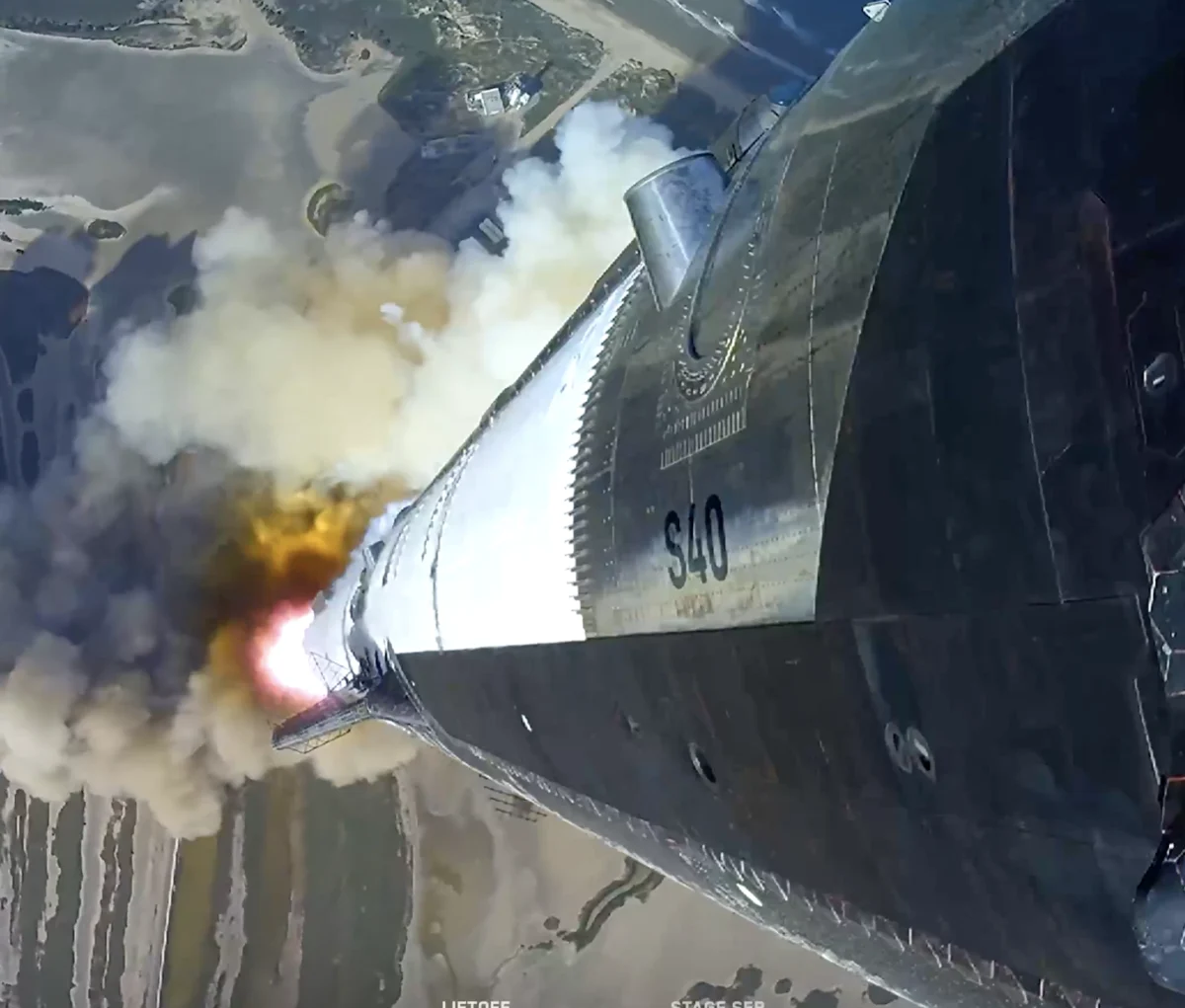
SpaceX completed the 13th test flight of its massive Starship launch system on Friday, marking the second flight of the upgraded Version 3 (V3) prototype. The mission delivered a highly anticipated technical milestone by successfully deploying the first batch of SpaceX’s third-generation (Gen 3) Starlink satellites. Additionally, the upper stage of the vehicle—referred to simply as "the Ship"—executed a successful atmospheric reentry and simulated landing in the Indian Ocean.
However, the mission was marred by a critical failure during the return of the Super Heavy booster. The booster, which was programmed to perform a simulated landing burn and soft-splashdown in the Gulf of Mexico, failed to ignite all the necessary Raptor engines during its final descent. This resulted in a high-velocity impact with the ocean surface and the subsequent destruction of the booster.
This flight was particularly significant as it was the first Starship launch since SpaceX transitioned to a public company in June, following the largest Initial Public Offering (IPO) in history. The booster’s failure had immediate repercussions in the financial markets, highlighting the intense scrutiny the aerospace giant now faces from public investors. Following the announcement of the booster’s destruction, SpaceX’s stock—which has been on a downward trajectory since its post-IPO peak—experienced further losses in after-hours trading.
Chronology of Flight 13: From Abort to Splashdown
[Mid-July: Aborted Launch Attempt]
       │ (Engine ignition failures; 6 Raptor engines replaced)
       ▼
[Friday: Launch Day Liftoff]
       │ (Successful launch from Starbase, Texas)
       ▼
[Stage Separation (Hot-Staging)]
       ├──► [Super Heavy Booster Descent]
       │           │ (Boostback burn completed)
       │           │ (Landing burn engine ignition failure)
       │           ▼
       │    [Explosion / High-Speed Gulf Impact]
       │
       └──► [Starship V3 Upper Stage Ascent]
                   │ (Flawless orbital insertion trajectory)
                   │ (Deployment of Gen 3 Starlink Satellites)
                   │       │
                   │       └──► [Satellites burn up in atmosphere after 20 mins]
                   │            (Successful communications established)
                   │
                   ├──► [Atmospheric Reentry]
                   │    (Heat shield tiles remain intact)
                   ▼
            [Indian Ocean Simulated Landing]
            (Successful splashdown, ship floats intact for drone inspection)
The Road to Flight 13: May’s Debut and July’s Abort
The path to Friday’s launch was marked by technical hurdles. The flight represented the second outing for the V3 Starship architecture. During the inaugural V3 test flight in May, SpaceX encountered staging issues when the Super Heavy booster failed to separate cleanly from the upper stage. Additionally, the upper stage suffered the loss of a Raptor engine during its ascent.
The initial attempt to launch the 13th Starship test flight occurred a little over a week prior to Friday’s liftoff. That attempt was aborted immediately after ignition sequence start due to a series of engine startup anomalies. SpaceX engineers spent the subsequent days diagnosing the issue, ultimately replacing six Raptor engines on the vehicle to ensure system integrity before clearing the rocket for its next attempt.
Launch Day: Ascent and Separation
On Friday, the countdown proceeded without interruption, and the dual-stage rocket lifted off from SpaceX’s Starbase facility in Boca Chica, Texas. The ascent phase appeared nominal, with all 33 Raptor engines on the Super Heavy booster firing to propel the vehicle through Max-Q (maximum aerodynamic pressure).
At hot-staging, the Starship upper stage successfully ignited its engines and separated from the booster. Unlike the May flight, the V3 upper stage performed flawlessly during ascent, maintaining thrust on all engines and avoiding the premature engine shutdowns that had plagued previous test flights.
The Super Heavy Descent and Failure
Following separation, the Super Heavy booster executed its boostback burn to redirect its trajectory toward the designated splashdown zone in the Gulf of Mexico. The booster successfully navigated atmospheric reentry, but the sequence failed during the critical terminal landing phase.
As the booster approached the water, it attempted to ignite its central landing engines to decelerate. However, multiple engines failed to ignite. Unable to arrest its velocity, the booster struck the water at a speed far exceeding its design tolerances, resulting in a violent explosion upon impact.
The Ship’s Indian Ocean Triumph
In contrast to the booster’s demise, the Starship upper stage achieved unprecedented success. After separating from the booster, the Ship coasted on a suborbital trajectory. During this coast phase, it successfully opened its payload bay door to deploy the new Gen 3 Starlink satellites.
Approximately one hour after liftoff, the Ship entered the dense layers of the Earth’s atmosphere over the Indian Ocean. Utilizing its upgraded heat shield, the vehicle survived the extreme thermal and aerodynamic forces of reentry. It then executed a belly-flop maneuver, flipped vertically, and performed a successful simulated landing burn.
Unlike previous test flights where the Ship exploded upon tipping over into the water, the V3 Ship remained structurally intact. It floated upright in the ocean, allowing SpaceX to deploy remote camera drones to conduct a close-up inspection of the heat shield’s thermal protection tiles.
Supporting Data: Technical and Financial Metrics
The dual outcome of Flight 13 highlights the technical complexity of the Starship program and the financial volatility of a newly public SpaceX.
Starlink V3 Capacity Gains
The primary payload payload of Flight 13 was the new third-generation Starlink satellite. While Starlink represents SpaceX’s primary revenue-generating engine, the current constellation relies heavily on Falcon 9 launches, which limit payload volume.
According to SpaceX technical specifications:
- Downlink Capacity: A single Starship V3 launch carrying 60 Gen 3 Starlink satellites is designed to deliver a twenty-fold (20x) increase in total downlink capacity compared to a standard batch deployed by a single Falcon 9 rocket.
- Operational Lifespan on Flight 13: Because Starship does not yet fly a trajectory that circularizes its orbit, the deployed Gen 3 satellites were released into a highly elliptical, short-lived trajectory. They remained in space for approximately 20 minutes before burning up in the Earth’s atmosphere.
- Telemetry Success: Despite their brief lifespan, SpaceX confirmed that ground stations successfully established and maintained communications with all deployed satellites, validating the Gen 3 communication payload.
Post-IPO Stock Market Performance
SpaceX’s landmark IPO in June 2026 was celebrated as the largest in financial history, with shares peaking shortly thereafter at over $200 per share. However, the transition to public markets has exposed the company to immediate financial consequences following technical setbacks.
- Pre-Launch Decline: Following the aborted launch attempt a week prior, market anxiety contributed to a steady decline in SpaceX’s stock price.
- Friday Close: Shares closed Friday’s regular trading session at $115.00, representing a decline of more than 42% from their post-IPO high.
- After-Hours Reaction: In the hours following the booster crash in the Gulf of Mexico, SpaceX shares fell an additional 2% in after-hours trading before stabilizing slightly.
| Metric | Detail / Value |
|---|---|
| Launch Flight Number | 13 (Second of the V3 Architecture) |
| Booster Landing Result | Hard impact, explosion in the Gulf of Mexico |
| Ship Landing Result | Soft-splashdown, remained intact in the Indian Ocean |
| Starlink Gen 3 Lifespan | ~20 minutes before atmospheric burn-up |
| Post-IPO Peak Share Price | >$200.00 |
| Friday Closing Share Price | $115.00 (Pre-market/after-hours down ~2%) |
Corporate Philosophy and Official Responses
The "Fly, Fail, Fix" Methodology
SpaceX has long championed an iterative design methodology, colloquially referred to as "fly, fail, fix." Unlike traditional aerospace defense contractors that spend years in theoretical design to ensure a flawless first flight, SpaceX builds hardware rapidly, tests it to destruction, and uses real-world telemetry to redesign components.
Following the flight, SpaceX officials emphasized the positive aspects of the test, pointing to the successful deployment of the Gen 3 Starlinks and the survival of the upper stage during reentry as major victories. The company views the engine failures on the Super Heavy booster as actionable data points that will inform modifications for the 14th test flight.
The S-1 Warning on Reusability
While the "fly, fail, fix" approach has worked for Falcon 9, the financial stakes are higher now that SpaceX is public. In the company’s S-1 registration statement filed with the Securities and Exchange Commission (SEC) prior to the IPO, SpaceX explicitly outlined the risks associated with Starship’s development.
The S-1 document noted that the economic model of the Starlink network is deeply dependent on the rapid, low-cost launch capabilities of a fully reusable Starship. The filing warned investors:
"Without a fully-reusable Starship launch system, the expansion of the Starlink constellation and the deployment of our next-generation network would proceed at a significantly slower pace and at a substantially higher cost, materially impacting our long-term operating margins."
Strategic Implications for SpaceX
The Economics of Starlink’s Expansion
The successful communication test with the Gen 3 Starlink satellites proves the technology is viable, but the economic reality remains tied to the launch vehicle. To sustain its capital-intensive space-based internet network, SpaceX must reduce launch costs.
While the Falcon 9 is highly efficient, its payload fairing cannot accommodate the bulkier, high-capacity Gen 3 satellites. Starship is the only vehicle in SpaceX’s fleet capable of launching these larger payloads in volume. However, if the Super Heavy booster must be expended or is frequently lost during landing attempts, the cost per launch increases dramatically. To realize the promised twenty-fold increase in downlink capacity cost-effectively, SpaceX must achieve operational reusability for both the Ship and the booster.
Navigating Public Market Scrutiny
The post-launch drop in SpaceX stock highlights a cultural shift for the company. As a private entity, SpaceX was insulated from quarterly earnings pressure and public market volatility, allowing Elon Musk to pursue high-risk, high-reward testing regimes without immediate financial penalties.
Now, as a publicly traded company, SpaceX must balance its aggressive, iterative development style with the risk-averse expectations of institutional investors. Persistent failures of the Super Heavy booster, even during test flights, can lead to sharp devaluations in equity, raising the cost of capital for a company that remains highly reliant on funding its deep-space ambitions through Starlink revenues. The challenge for SpaceX moving forward will be to maintain its rapid pace of innovation while reassuring Wall Street that its developmental losses are calculated steps toward profitability.
