




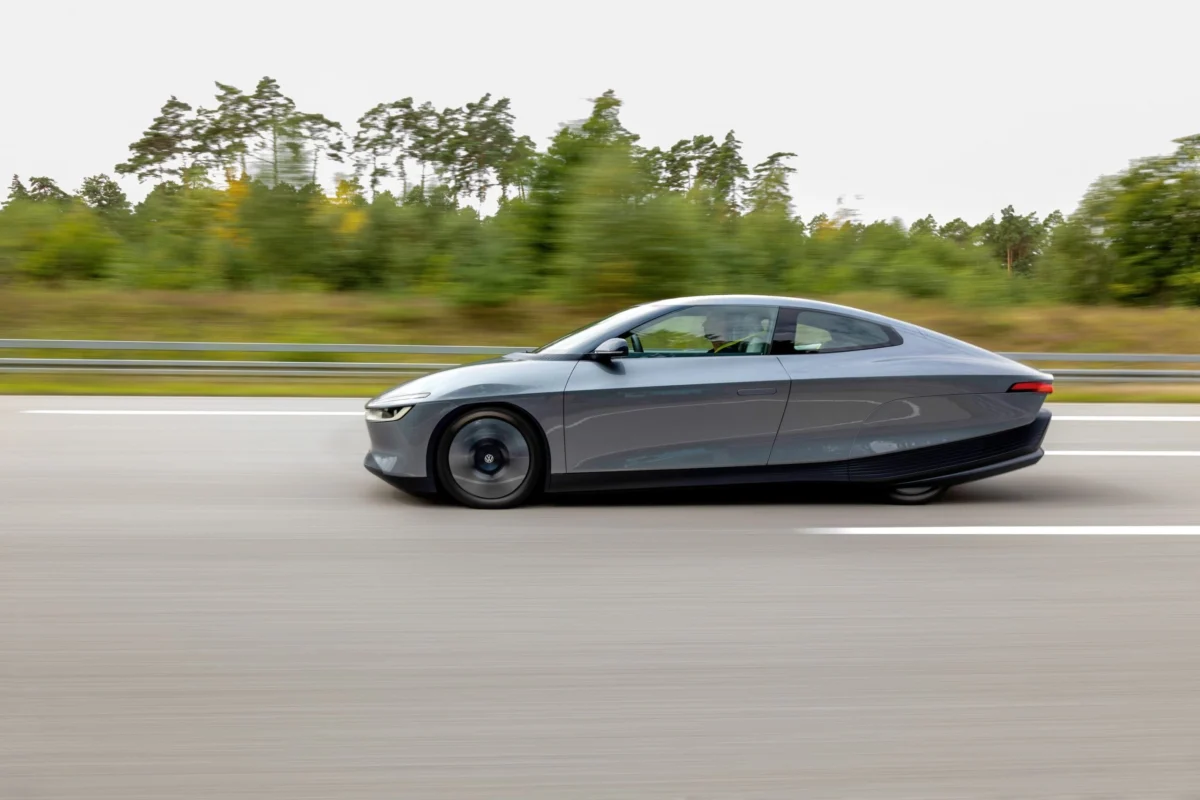
In an automotive market long dominated by an arms race for larger batteries and increasingly massive electric SUVs, Volkswagen has pivoted back to first principles. The German automaker recently unveiled the "Mission Efficiency" prototype, an ultra-streamlined electric vehicle (EV) that achieves an extraordinary equivalent of 323 miles per gallon (MPGe) under ideal conditions.
Far from being a static clay model or a purely digital design study, the Mission Efficiency is a fully functioning, road-legal vehicle. To prove its real-world viability, Volkswagen engineers drove the prototype on an ambitious 794-mile (1,278-kilometer) journey from the company’s global headquarters in Wolfsburg, Germany, to Vienna, Austria. The results of this drive have challenged prevailing assumptions about EV design, battery sizing, and the trade-offs consumers might be asked to make in the name of sustainability.
Main Facts: Engineering a Hyper-Efficient Future
The Mission Efficiency prototype represents a masterclass in aerodynamic optimization and minimalist automotive design. Built using a "near-production" electric motor and a 54.9-kilowatt-hour (kWh) battery sourced from the upcoming ID. Polo, the vehicle bridges the gap between experimental laboratory science and mass-market feasibility.
To achieve its headline-grabbing efficiency figures, Volkswagen engineers had to systematically eliminate the primary enemies of electric range: aerodynamic drag, excess weight, and parasitic electrical loads.
+-------------------------------------------------------------+
|               VOLKSWAGEN MISSION EFFICIENCY                 |
+-------------------------------------------------------------+
|  Ideal Efficiency: 323 MPGe                                 |
|  Real-World Test Consumption: 7.51 kWh / 100 miles          |
|  Coefficient of Drag (Cd): 0.158                            |
|  Battery Capacity: 54.9 kWh (from ID. Polo)                 |
|  Cabin Layout: 2+2 (Rear passenger height limit: 5'3")       |
+-------------------------------------------------------------+
Aerodynamics and the Kammback Silhouette
The most striking visual element of the Mission Efficiency is its teardrop profile, which culminates in a sharply truncated rear end. This design, known in aerodynamic circles as a "Kammback" (or Kamm tail), mimics the airflow characteristics of a perfect teardrop without requiring an impractically long vehicle body.
By tapering the roofline sharply behind the driver’s head, Volkswagen achieved an incredibly low coefficient of drag ($C_d$) of just 0.158. For comparison, the highly aerodynamic Tesla Model S posts a $C_d$ of 0.208, while the Lucid Air—currently the most aerodynamic production sedan on the market—comes in at 0.197. Furthermore, the frontal area of the Mission Efficiency was kept to a remarkably slim 2.08 square meters, minimizing the pocket of air the car must push through at high speeds.

Structural and Cabin Trade-offs
Achieving such extreme aerodynamic performance required significant packaging compromises:
- The 2+2 Cabin Constraint: The aggressively sloping roofline severely limits rear-seat headroom. Volkswagen openly admits the rear seats are only suitable for occupants under 5 feet 3 inches (1.6 meters) tall, framing the vehicle as a "2+2" designed theoretically for a young family with small children.
- Tightened Wheel Arches: Wheels and tires are responsible for roughly 25% to 33% of a vehicle’s total aerodynamic drag. To combat this, designers minimized the gap between the front tires and the wheel arches. While highly effective at smoothing airflow, this tight clearance restricts the vertical suspension travel necessary to absorb major road imperfections, suggesting a firmer, less forgiving ride quality.
- Minimalist Interior Infrastructure: To shed weight and reduce parasitic power draw, Volkswagen omitted a traditional built-in infotainment system and heavy multi-speaker sound system. Instead, the dashboard features a mounting dock for a smartphone or tablet and a portable Bluetooth speaker—a weight-saving strategy popularized by EV startups like the Amazon-backed Slate Auto.
Chronology: The Road from Wolfsburg to Vienna
The true test of any efficiency-minded vehicle lies outside the climate-controlled wind tunnel. To validate their calculations, the Volkswagen engineering team embarked on a rigorous, single-charge-stop road test across Central Europe.
[Wolfsburg, Germany] (Start)
       │
       ▼
[German Autobahn & Highways] (High-speed aerodynamic testing)
       │
       ▼
[Midpoint Charging Stop] (Single charge replenishment)
       │
       ▼
[Austrian Border & Alpine Foothills] (Varying elevation & terrain)
       │
       ▼
[Vienna, Austria] (Arrival: 104 miles of remaining range)
Phase 1: Departure from Wolfsburg
The journey began at Volkswagen’s historic headquarters in Wolfsburg, Germany. The vehicle’s 54.9-kWh battery was charged to 100%. The route was plotted southeast toward Vienna, a trajectory that would take the prototype across Germany’s highway network—including unrestricted speed sections of the Autobahn—and through the undulating terrain of the Austrian border.
Phase 2: High-Speed Highway Cruising
Maintaining highway speeds is traditionally the Achilles’ heel of electric vehicles, as aerodynamic drag increases exponentially with speed. The Mission Efficiency team maintained steady, real-world highway speeds rather than hypermiling at crawl-like paces. The car’s ultra-low drag coefficient proved its worth here, allowing the vehicle to glide through the air with minimal energy expenditure.
Phase 3: The Midpoint Charge
Over the course of the 794-mile journey, the team stopped to charge the battery exactly once. This single stop allowed the engineers to top up the compact 54.9-kWh pack, demonstrating that ultra-high efficiency can compensate for a modest battery size.
Phase 4: Arrival in Vienna
The prototype arrived in the Austrian capital of Vienna having completed the 794-mile run. Upon arrival, the vehicle’s instrument cluster indicated a remaining range of 104 miles (168 kilometers).

Over the entire trip, the Mission Efficiency recorded an average energy consumption of 7.51 kilowatt-hours per 100 miles. When converted to the EPA’s fuel economy equivalent, this equates to an astonishing 279 MPGe in mixed, real-world driving conditions—a figure unprecedented for a road-going vehicle of this class.
Supporting Data: Technical Specifications and Comparisons
To understand the magnitude of Volkswagen’s achievement, it is helpful to contrast the Mission Efficiency prototype with the current benchmark for production EV efficiency: the Lucid Air Pure.
| Vehicle Metric | Volkswagen Mission Efficiency | Lucid Air Pure (Production Benchmark) |
|---|---|---|
| Battery Capacity | 54.9 kWh | 84.0 kWh |
| EPA/Estimated Range | ~410+ miles (Calculated) | 420 miles (EPA Rated) |
| Real-World Consumption | 7.51 kWh / 100 miles | ~15.0 kWh / 100 miles |
| Coefficient of Drag ($C_d$) | 0.158 | 0.197 |
| Frontal Area | 2.08 $m^2$ | ~2.20 $m^2$ |
| Seating Configuration | 2+2 (Height-restricted rear) | 5-Passenger Luxury Sedan |
| Infotainment | Bring-Your-Own-Device (BYOD) | Multi-screen Integrated System |
Analyzing the Battery Math
The Lucid Air Pure is widely celebrated for achieving an EPA-rated 420 miles of range from an 84-kWh battery pack. It is a large, luxurious, and highly practical five-passenger sedan.
By contrast, back-of-the-envelope calculations reveal that Volkswagen’s Mission Efficiency can extract more than 400 miles of range from a battery pack that is 35% smaller (54.9 kWh). By using a smaller battery to achieve a similar range, Volkswagen slashes the weight of the vehicle, reduces the carbon footprint associated with battery manufacturing, and lowers the eventual retail cost of the vehicle’s cell chemistry.
The Role of Solar Integration
To eke out every possible watt, Volkswagen integrated high-efficiency solar cells into the roof and trunk lid of the prototype. While solar-integrated EVs frequently capture public imagination, the physics of solar energy collection on moving passenger vehicles remain highly constrained.
According to Volkswagen’s technical data, the solar roof adds a maximum of 18 miles (30 kilometers) of range per day. Crucially, this metric assumes highly idealized conditions: a perfectly flat route, uninterrupted direct sunlight, and a constant cruising speed of 42.25 mph (68 kph). In typical daily usage, the solar cells serve primarily to run auxiliary systems, such as cabin ventilation, rather than acting as a primary source of propulsion.

Official Responses: Volkswagen’s Vision and Historical Context
In official press releases, Volkswagen has repeatedly emphasized that the Mission Efficiency is a "near-production" vehicle. By utilizing the electric motor and battery pack scheduled for the ID. Polo, the company is signaling that the drivetrain technology is ready for assembly lines, even if the radical exterior design requires further refinement.
The Shadow of the XL1
Industry analysts have quickly drawn parallels between the Mission Efficiency and Volkswagen’s legendary XL1. Released in 2013 under the direction of former VW Chairman Ferdinand Piëch, the XL1 was a diesel-hybrid "one-liter car" (designed to consume less than 1 liter of fuel per 100 kilometers).
            [2013: Volkswagen XL1]
            - Diesel-Hybrid Powertrain
            - Production: 250 Units
            - Cost: €110,000
            - Focus: Ultra-low fuel consumption
                     │
                     ▼
       [2026+: Mission Efficiency]
       - Battery Electric Powertrain
       - "Near-Production" ID. Polo Tech
       - Target: Mass-market viability
Like the Mission Efficiency, the XL1 featured a radical aerodynamic silhouette, a 2-seat cabin, and highly compromised rear visibility. Volkswagen ultimately produced a limited run of just 250 XL1 units, retailing at a staggering €110,000 each.
While the XL1 was a high-priced halo car for collectors, Volkswagen’s framing of the Mission Efficiency suggests a different path. By anchoring this prototype to the high-volume ID. Polo platform, VW is exploring whether hyper-efficient packaging can be democratized for the mass market.
Strategic Implications for the Automotive Industry
The debut of the Mission Efficiency prototype comes at a critical juncture for the global transition to electric mobility. The strategic implications of this vehicle extend far beyond Volkswagen’s product lineup, touching on manufacturing economics, infrastructure strain, and consumer behavior.
1. Shifting the EV Economics
For the past decade, the solution to EV "range anxiety" has been simple: install larger battery packs. However, this approach has hit a wall of diminishing returns. Larger batteries add immense weight, require stronger (and heavier) suspension components, and demand more raw materials like lithium, cobalt, and nickel—minerals fraught with geopolitical and environmental supply-chain risks.

If automakers can transition their focus from battery size to aerodynamic and thermal efficiency, they can deliver 400-mile EVs with 50-kWh batteries instead of 100-kWh batteries. This would effectively double the number of vehicles an automaker can build from a fixed supply of battery raw materials, dramatically lowering the entry price of long-range EVs.
2. Easing Grid and Charging Infrastructure Strain
A hyper-efficient EV requires far less electrical energy to travel the same distance as a heavy electric SUV.
- A vehicle consuming 7.51 kWh per 100 miles draws half the energy from the electrical grid compared to a typical modern EV consuming 30 kWh per 100 miles.
- At public charging stations, a hyper-efficient vehicle can reclaim 300 miles of range in half the time of a less efficient vehicle using the same charging speed, vastly improving charger turnover rates and reducing highway station congestion.
3. The Challenge of Consumer Acceptance
The ultimate hurdle for vehicles like the Mission Efficiency is not scientific, but psychological. Are modern consumers willing to trade the commanding ride height of an SUV, the cavernous cargo capacity of a hatchback, and the luxury of massive, built-in dashboard screens for the sake of hyper-efficiency?
By omitting integrated infotainment systems in favor of a "bring-your-own-device" approach, Volkswagen is testing whether consumers will embrace functional simplicity. If the market shifts toward viewing vehicles as software-agnostic mobility pods, minimalist cabins could become the new norm, saving manufacturers billions in software development and hardware costs.
Ultimately, the Mission Efficiency prototype serves as a compelling proof of concept. It demonstrates that the future of sustainable transportation may not lie in mining more materials for bigger batteries, but in refining the physics of how cars move through the wind.
