



By Industry Desk
Published July 28, 2026
Amazon is signaling a robust commitment to its long-term infrastructure strategy, announcing a significant expansion of its North American fulfillment network. In a move designed to fortify its competitive edge in e-commerce, the retail titan has confirmed plans for two major operational facilities in New York and Texas. These investments—a massive $1 billion site on Long Island and a strategically positioned distribution hub in the Lone Star State—represent the latest chapter in Amazon’s ongoing effort to reduce delivery times and expand its inventory reach.
This dual-state expansion is part of a broader, multi-year strategy to modernize the company’s "last-mile" and regional fulfillment capabilities, ensuring that Amazon maintains its logistical supremacy even as consumer demand for same-day and next-day delivery reaches record heights.
Strategic Investments: The New Facilities
The Holbrook, New York Development
The centerpiece of Amazon’s recent announcement is the proposed 4-million-square-foot operations facility in Holbrook, New York. Representing a staggering $1 billion capital injection into the Long Island region, the facility is being designed as a showcase for Amazon’s next-generation robotics.
The site is expected to function as a primary hub for the Northeast, leveraging advanced automation to manage high-volume throughput. Beyond the sheer physical scale, the project promises a significant economic impact, with Amazon projecting the creation of approximately 1,000 full-time jobs. These roles, ranging from robotics technicians to inventory management specialists, underscore the company’s pivot toward a more tech-integrated warehouse model.
The Terrell, Texas Distribution Hub
Parallel to the New York project, Amazon is deepening its footprint in Texas—a state that has become a critical nexus for the company’s southern logistics network. According to a July 9 filing with the Texas Department of Licensing and Regulation, the company is set to construct a $98 million distribution center in Terrell.
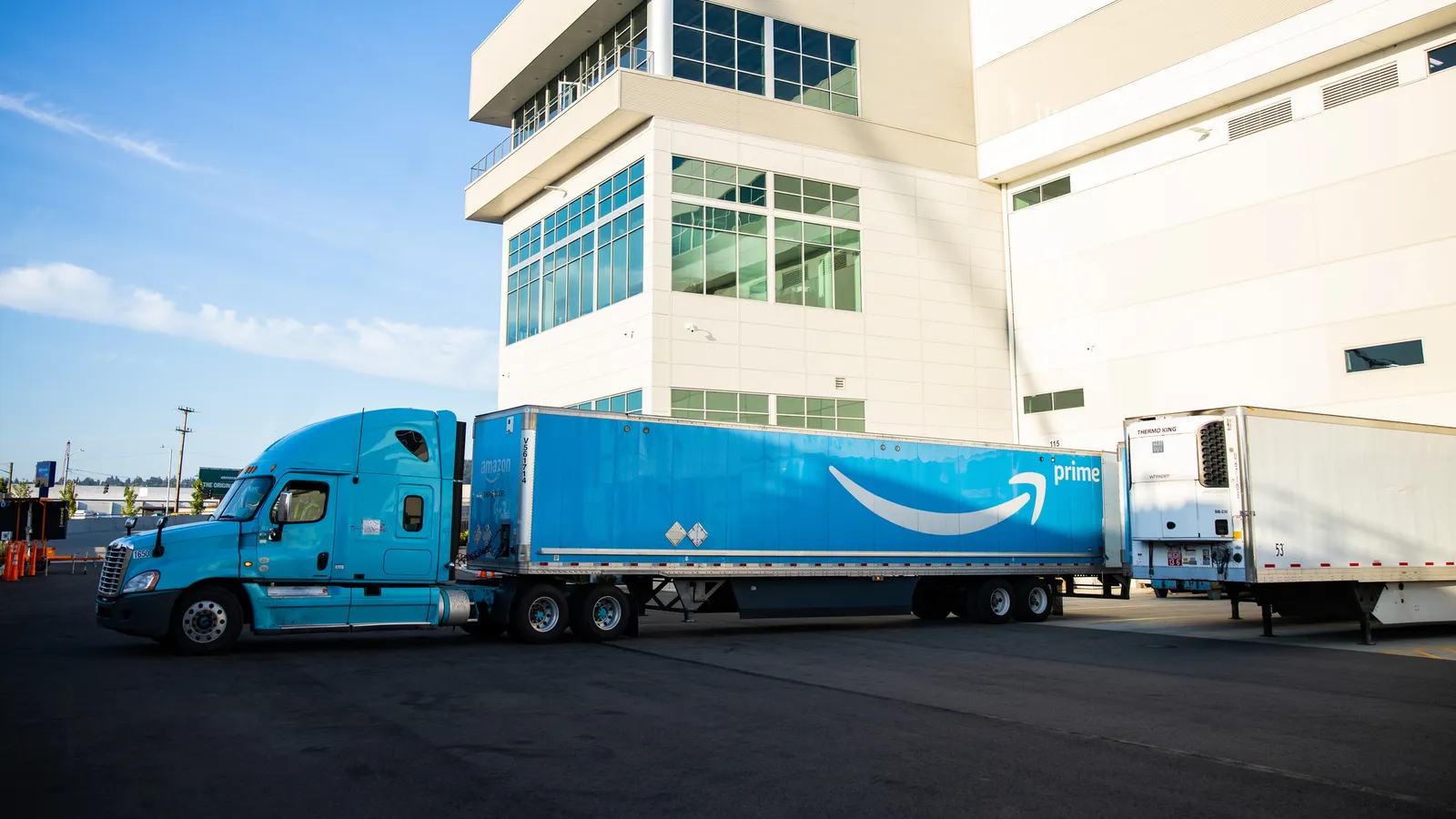
Spanning roughly 1.2 million square feet, this facility is engineered specifically to accelerate delivery speeds and increase product selection for customers across the Southwest. Construction is slated to commence on August 3, 2026, with an ambitious target completion date of August 2027.
A Chronology of Expansion and Optimization
Amazon’s current activity in Holbrook and Terrell does not exist in a vacuum. It is the culmination of a decade-long trajectory of facility acquisition, construction, and—crucially—rationalization.
- 2025 – Present: Amazon shifts focus toward massive robotics-enabled fulfillment centers, such as the 3-million-square-foot facility in North Carolina, signaling a move away from smaller, manual warehouses toward highly automated, hyper-efficient hubs.
- Early 2026: The company begins a series of facility renovations, including the transformation of existing sites in Homestead, Florida, to increase sortation capacity.
- August 2026: Construction begins on the 250,000-square-foot sorting warehouse in Georgetown, Texas, aimed at tightening the efficiency of the regional fulfillment network.
- July 28, 2026: Official confirmation of the Holbrook and Terrell expansion plans.
This chronology reveals a company that is no longer just "building out," but "optimizing." The closure of legacy sites, such as the temporary shuttering of a facility in Port St. Lucie, Florida, demonstrates a willingness to consolidate operations into more efficient, modernized structures.
The Economics of Efficiency: Supporting Data
To understand why Amazon is investing billions in physical real estate during a time of economic uncertainty, one must look at the data driving these decisions.
The Robotics Advantage
The integration of robotic systems is not merely a labor-saving measure; it is a throughput necessity. Modern "robotics-equipped" facilities, like the one planned for Holbrook, allow for a higher density of inventory per square foot. By utilizing vertical space and autonomous mobile robots (AMRs), Amazon can process orders up to 40% faster than in traditional, non-automated warehouses.
Regionalization of Supply Chains
Amazon’s move toward "regionalization"—the practice of keeping inventory closer to the end consumer—has been the primary driver of its delivery speed improvements. By placing massive distribution centers in high-growth corridors like Terrell, Texas, the company reduces the "stem time" (the distance a delivery vehicle must travel from the hub to the customer’s door). This lowers fuel costs and significantly improves the likelihood of meeting "Prime" delivery promises.

Official Perspectives and Corporate Strategy
In communications with Supply Chain Dive, Amazon representatives emphasized that these projects are essential to the company’s "Customer Obsession" philosophy.
"Our goal is to ensure that no matter where a customer lives, they have access to the same speed and product variety that defined our early growth," a company spokesperson stated. "The investments in New York and Texas are specifically tailored to meet the unique logistical demands of those regions, utilizing the most advanced technology currently available in our global network."
Industry analysts note that while the $1 billion price tag for the Holbrook site is significant, it is a calculated risk. As competition from other major retailers intensifies, maintaining a superior physical network is seen as a "moat" that protects Amazon from market-share erosion.
Broader Implications: What This Means for the Industry
The Labor Market Shift
The creation of 1,000 full-time jobs in Long Island and the regional hiring in Texas provide a boost to local economies. However, the nature of these jobs is changing. The shift toward automation means that future warehouse employees will increasingly be required to possess technical skills related to machine maintenance, software troubleshooting, and data oversight. This creates both a challenge for recruitment and an opportunity for regional workforce development.
Environmental and Community Impact
The construction of 4-million-square-foot facilities is not without controversy. Environmental groups and local municipalities often scrutinize the impact on traffic, carbon emissions, and local infrastructure. Amazon has increasingly sought to mitigate these concerns by integrating LEED-certified construction practices and investing in electric vehicle (EV) charging infrastructure at these new sites, aligning with their "Climate Pledge" to reach net-zero carbon by 2040.
Competitive Pressure
Competitors in the e-commerce space are now forced to respond. Companies that cannot match the density of Amazon’s fulfillment network face a significant disadvantage in "last-mile" economics. This expansion likely triggers a secondary wave of investment across the supply chain, as logistics providers and real estate developers compete to provide similar, high-tech infrastructure for other market players.

Conclusion: Looking Ahead
As Amazon moves into the latter half of 2026, the strategy is clear: the company is doubling down on its physical assets to ensure that it remains the undisputed leader in retail logistics. The Holbrook and Terrell projects are not just warehouses; they are sophisticated nodes in a global machine designed for speed, efficiency, and scale.
While the retail landscape remains volatile, Amazon’s consistent ability to re-engineer its supply chain ensures that its service remains the benchmark by which all others are measured. Whether these massive investments will yield the expected long-term returns depends on the company’s ability to seamlessly integrate these sites into its existing network—a task it has proven capable of time and again, but one that grows increasingly complex as the network expands.
For the residents of Long Island and the Dallas-Fort Worth metro area, these facilities represent the new reality of the modern economy: a world where the click of a button initiates a multi-billion-dollar logistical response, bringing the world’s inventory to the doorstep in record time.
