




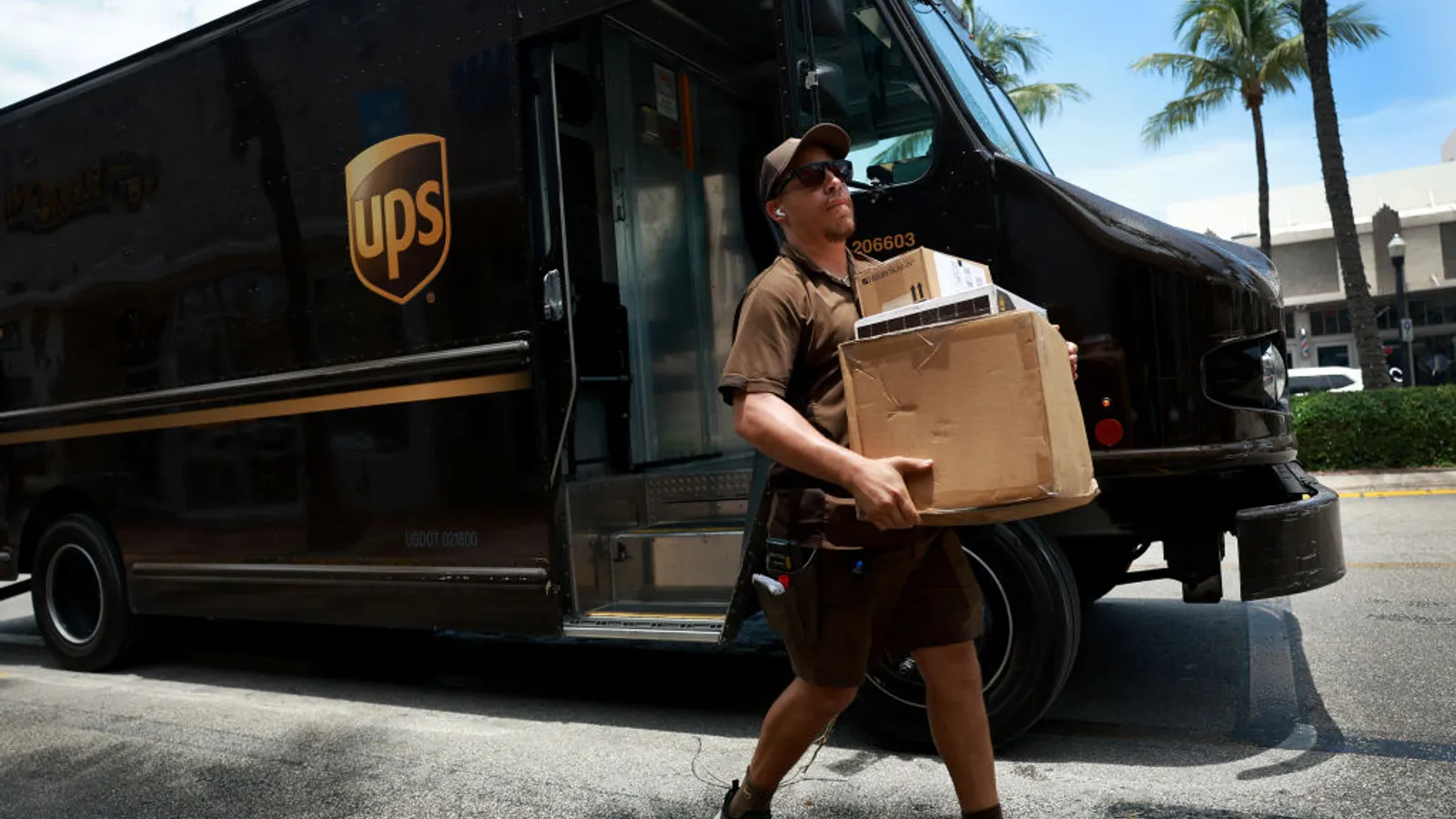
In the high-stakes arena of global logistics, the boundaries between e-commerce giants and traditional parcel carriers are becoming increasingly porous. As of July 2026, UPS CEO Carol Tomé has articulated a clear strategic vision for the shipping titan, effectively drawing a line in the sand regarding market positioning. In a recent earnings call, Tomé asserted that while Amazon has mastered the art of lightweight, short-distance urban fulfillment, UPS is doubling down on its dominance in "every other place"—the complex, high-value, and specialized logistics corridors that define global commerce.
This ongoing shift in the supply chain landscape reflects a broader transition: the era of "growth at all costs" has been replaced by an era of specialized efficiency, where technology, relationship management, and high-margin sectors like healthcare dictate long-term success.
Main Facts: The Strategic Reconfiguration of UPS
UPS reported encouraging year-over-year revenue gains for the second quarter of 2026, a result that underscores the company’s resilience amidst stiff competition from FedEx and the rapidly maturing logistics arm of Amazon.
The core of the current UPS strategy is a pivot away from the commodity-style volume that defined the pandemic-era surge. By intentionally reducing its reliance on Amazon—which now accounts for approximately 9% of its total revenue, down from a pandemic peak of 13%—UPS is carving out a niche that emphasizes reliability, visibility, and specialized service over sheer volume.
For UPS, the "points of differentiation" are no longer just about speed; they are about sophistication. The company is leaning heavily into cold-chain logistics, complex returns management, and, perhaps most importantly, end-to-end package visibility. These capabilities are designed to make UPS an indispensable partner for sectors that demand precision, such as high-end retail, pharmaceuticals, and specialized manufacturing.
Chronology: From Pandemic Overload to Targeted Growth
The trajectory of the modern logistics market can be traced through the evolution of the UPS-Amazon relationship:
- 2020–2021 (The Pandemic Surge): During the height of the COVID-19 pandemic, Amazon’s explosive growth forced traditional carriers to absorb unprecedented volumes. Amazon represented over 13% of UPS’s revenue, creating a relationship that was both lucrative and operationally burdensome.
- 2023–2024 (The Re-balancing): As global supply chains stabilized, UPS began a deliberate effort to pivot its portfolio. Management identified that the high-volume, low-margin nature of some e-commerce fulfillment was hindering profitability and operational agility.
- 2025 (The Tech Integration): UPS began a massive push to integrate Radio Frequency Identification (RFID) technology into its standard shipping workflows. This provided the "end-to-end visibility" that is now a centerpiece of their sales pitch.
- July 2026 (The Current Stance): In the Q2 2026 earnings report, CEO Carol Tomé confirmed that the "Amazon volume reduction" strategy is largely complete, and the company is now fully focused on long-term, high-value contract renewals extending well beyond 2028.
Supporting Data: The ROI of Precision
The numbers behind the strategy reveal a company finding success in targeted segments. Most notably, UPS reported a 4.3% year-over-year increase in average daily volume for small- and medium-sized businesses (SMBs) in Q2 2026. This segment is highly coveted because it offers higher margins than bulk e-commerce volume.
The most compelling piece of data, however, lies in the adoption of RFID technology. By providing real-time tracking from the point of origin, UPS has transformed its service offering. Tomé noted that where RFID is implemented at the point of origin, the company has seen "no churn." This has already yielded tangible competitive wins, such as the acquisition of a high-end jewelry brand that defected from a rival carrier specifically for the granular visibility UPS provides.
Furthermore, the shift in client engagement has moved beyond simple procurement discussions. UPS now leverages a network of over 300 high-impact executives tasked with building relationships directly with the C-suite—CEOs and CFOs—of their major clients. This move suggests that UPS is positioning its logistics services not as a back-end cost, but as a strategic business enabler.
Official Responses and Industry Context
In her address to investors and analysts, Carol Tomé remained firm on the necessity of this strategic pivot. "We have over 300 high-impact executives who have relationships with our customers… It’s no longer just at the chief procurement officer level," she remarked. By elevating the conversation, UPS is insulating itself from the price-sensitive nature of standard shipping tenders.

Meanwhile, competitors are watching closely. FedEx has similarly launched its own suite of services targeting the life sciences and healthcare sectors, indicating that both companies have identified the same "profitable silos" in the global economy.
Regarding the Amazon dynamic, the tone remains professional but detached. While Amazon is still a significant customer, the reduction of their share in UPS’s revenue mix is viewed by analysts as a de-risking move. It protects UPS from the volatility of Amazon’s internal capacity expansion, allowing UPS to deploy its assets into more stable, higher-margin sectors like medical equipment and high-end retail.
Implications: The Future of the "Last Mile"
The implications of this shift are profound for the logistics industry at large.
1. The Fragmentation of "Last Mile" Delivery
We are witnessing a market split. Amazon is increasingly acting as a closed-loop logistics ecosystem, handling the "short-distance, lightweight" volume within urban centers where they possess the highest density of fulfillment centers. Conversely, UPS is refining its role as a "global infrastructure provider" for everything else—the long-haul, the temperature-sensitive, and the high-value shipments that require complex logistics chains.
2. Technology as a Barrier to Entry
The success of UPS’s RFID initiative suggests that the next decade of competition will be won by the company that provides the most actionable data. For a high-end retailer, knowing where a package is at every second isn’t just a convenience; it’s an insurance policy. By investing heavily in this visibility, UPS is creating a "moat" that is difficult for smaller or more generic carriers to cross.

3. The SMB Goldmine
The growth in SMB volume is a bellwether for the broader economy. By nurturing small businesses, UPS is creating a base of customers who are more loyal and less prone to the "churn" that plagues the large-scale e-commerce contract market. This "grassroots" approach to revenue growth provides a stable foundation that balances out the cyclical nature of international trade.
4. Strategic Longevity
By securing contract renewals that extend past 2028, UPS is signaling a period of internal stability. The volatility that defined the 2020–2023 period is being replaced by a calculated, long-term roadmap. For investors, this suggests that the company is prioritizing sustainable profit growth over the unsustainable pursuit of market share in the low-margin e-commerce sector.
5. A Changing Relationship with the C-Suite
The move to involve CEOs and CFOs in supply chain discussions is perhaps the most significant cultural shift. It reflects the reality that in 2026, supply chain management is no longer a peripheral operational concern—it is a boardroom imperative. Companies that fail to optimize their logistics are effectively failing their balance sheets. UPS’s pivot to high-level relationship management ensures they are seen as a strategic partner rather than a utility provider.
Conclusion
The landscape of 2026 logistics is no longer a singular race to the bottom for the lowest shipping rate. Instead, it is a sophisticated game of resource allocation and technological precision. As Amazon continues to dominate the dense urban corridors of the world, UPS is effectively retreating into the complexity of the global market, finding strength in the very areas where others struggle to operate.
For shippers and stakeholders alike, the lesson of the second quarter of 2026 is clear: the value of a delivery is not just in the parcel itself, but in the visibility, security, and strategic partnership that carries it to its destination. As UPS continues to secure its long-term contracts and expand its high-tech capabilities, it remains a critical linchpin in the global economy, proving that in a world of standardized e-commerce, specialization remains the ultimate competitive advantage.
