


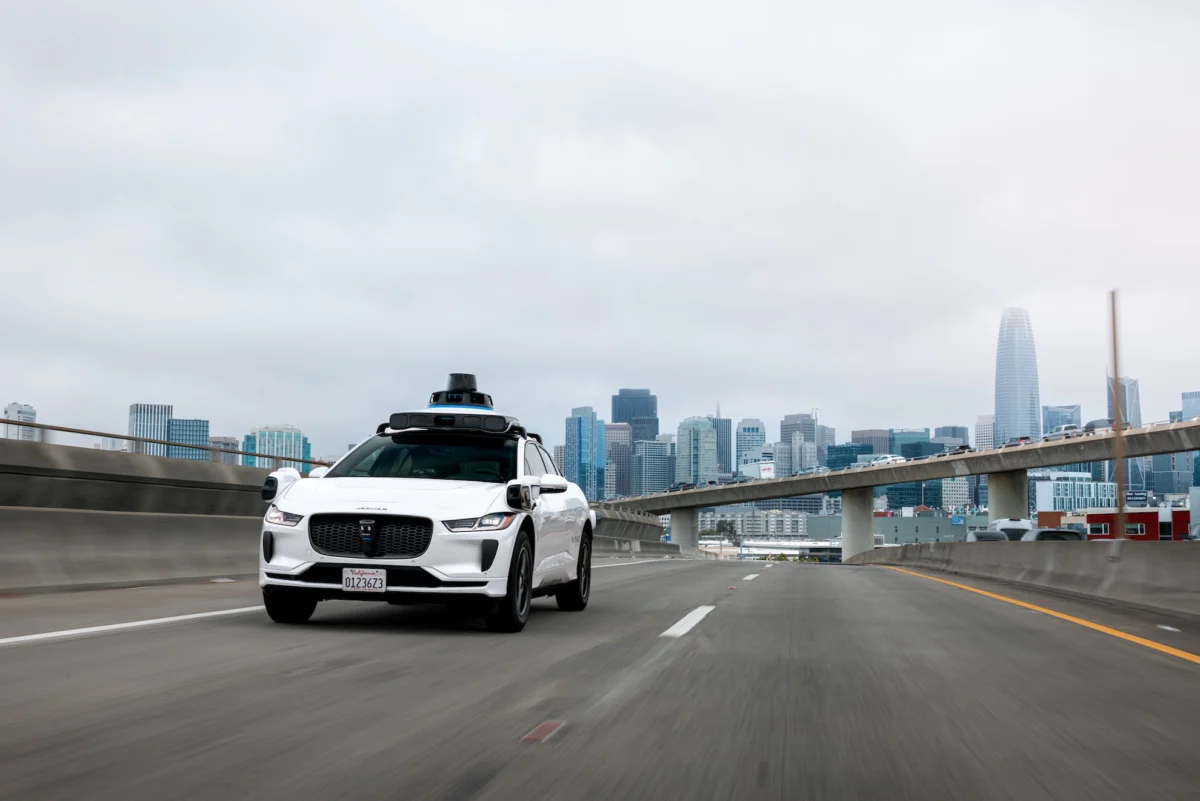
Phoenix, AZ — Alphabet Inc.’s autonomous driving subsidiary, Waymo, has announced the gradual reinstatement of freeway routes across its commercial service areas. The decision comes more than two months after the company suspended high-speed operations due to safety concerns regarding how its driverless fleet interacted with active highway construction zones.
The resumption marks a pivotal moment for the robotaxi pioneer as it navigates intense regulatory scrutiny, legislative pressure, and the technical challenges of operating fully autonomous vehicles at highway speeds.
Main Facts: The Return to the Highway
On Wednesday, Waymo announced via its official social media channels that it would begin a phased reintroduction of freeway routing, starting immediately in the Phoenix metropolitan area—the company’s longest-running and most mature driverless market. A Waymo spokesperson confirmed that other major service regions, including Los Angeles and the San Francisco Bay Area, are scheduled to follow in the coming days.
+-----------------------------------------------------------------------+
|                       WAYMO FREEWAY RESUMPTION                        |
+------------------------------------+----------------------------------+
| Launch Market                      | Phoenix, AZ (Immediate)          |
+------------------------------------+----------------------------------+
| Next Phases                        | Los Angeles, San Francisco Bay   |
|                                    | Area (In the coming days)        |
+------------------------------------+----------------------------------+
| Core Technological Fixes           | Enhanced scene recognition,      |
|                                    | optimized construction routing   |
+------------------------------------+----------------------------------+
The high-speed operations were suspended in May 2026 after the company identified systematic difficulties in how its vehicles processed and reacted to highway construction zones. According to an official statement emailed by Waymo, the company is "resuming freeway operations across its entire service area, including areas with construction, after implementing software updates designed to improve performance around freeway construction zones."
The technological remedies deployed in this update focus on two primary domains:
- Enhanced Scene Recognition: Upgrades to the vehicle’s perception stack to better identify, classify, and track non-standard road actors and objects, such as traffic cones, barrels, flares, and temporary construction signage at high speeds.
- Optimized Routing Protocols: Algorithmic changes that allow the fleet to proactively route around complex or highly volatile construction zones when necessary, prioritizing passenger safety and traffic flow over minor speed advantages.
Chronology of Events: From Launch to Suspension and Recovery
The path to integrating freeways into Waymo’s commercial ride-hailing service, known as Waymo One, has been defined by rapid expansion followed by abrupt technical setbacks.
   [Nov 2025] -> Freeway operations launch in SF, Phoenix, and LA.
       |
   [May 2026] -> Freeway routes quietly suspended; technical review begins.
       |
   [June 2026] -> Waymo issues voluntary recall of ~4,000 vehicles via NHTSA.
       |
   [July 2026] -> Federal legislative pushback (Rep. Mullin's AV safety bill).
       |
   [Present] -> Software updates deployed; freeway service resumes in Phoenix.
November 2025: The Initial Expansion
Waymo officially launched commercial freeway rides for public users in San Francisco, Phoenix, and Los Angeles. This was hailed as a monumental milestone for the autonomous vehicle (AV) industry. Previously, robotaxis were largely confined to surface streets, which limited their utility. By unlocking freeways, Waymo promised dramatically reduced travel times, direct routes to major hubs like Phoenix Sky Harbor International Airport, and a viable alternative to traditional human-driven ride-hailing services like Uber and Lyft.
May 2026: The Silent Disappearance
By mid-spring, users noticed that the option to take freeway routes had vanished from the Waymo app. Rides that previously took 15 minutes via the interstate were rerouted onto local arterial roads, doubling travel times in some cases. Following public inquiries on social media, Waymo confirmed it had temporarily disabled freeway routing to integrate "recent technical learnings" into its software stack, specifically targeting construction zone navigation.
June 18, 2026: The Voluntary Recall
The underlying reason for the suspension became clear when Waymo filed a voluntary recall notice with the National Highway Traffic Safety Administration (NHTSA). The recall affected the company’s entire active fleet of nearly 4,000 vehicles.
In the regulatory filing, Waymo disclosed that it had identified at least 13 distinct incidents between construction-related barriers and its autonomous vehicles. Although no collisions or injuries occurred, the data revealed a persistent software vulnerability that forced the company to restrict freeway operations until a permanent fix could be developed and validated.
Late July 2026: Legislative Backlash
The freeway pause coincided with a broader wave of political and public pushback against autonomous vehicles. On July 28, 2026, Representative Kevin Mullin (D-Calif.) introduced a federal bill aimed at establishing strict national safety standards for AV operators, citing a string of high-profile disruptions in urban centers.
Present Day: Gradual Re-Entry
Following rigorous closed-course testing and validation of its new software update, Waymo has initiated its phased re-entry onto freeways, beginning with Phoenix’s East Valley and extending outward.
Supporting Data: Analyzing the Recall and Incident History
Operating a vehicle at 65 miles per hour presents vastly different physics and cognitive demands on an artificial intelligence system than operating at 25 miles per hour on city streets. The stopping distance of a vehicle increases exponentially with speed, meaning perception systems must detect hazards much farther in advance.
+-----------------------------------------------------------------------+
|                      WAYMO SAFETY RECALL HISTORY                      |
+-------------+--------------------------+------------------------------+
| Recall Date | Primary Cause            | Fleet Impact                 |
+-------------+--------------------------+------------------------------+
| Dec 2025    | School Bus Interaction   | Software update deployed     |
+-------------+--------------------------+------------------------------+
| May 2026    | Flooded Road Navigation  | Restricted route protocols   |
+-------------+--------------------------+------------------------------+
| June 2026   | Freeway Construction     | ~4,000 vehicles recalled     |
|             | Zones                    | (Freeway operations paused)  |
+-------------+--------------------------+------------------------------+
The June 2026 recall was Waymo’s sixth major voluntary safety recall, illustrating the iterative and highly scrutinized nature of AV software development. Previous recalls have addressed various edge cases:
- December 2025: A recall addressing illegal or unpredictable behavior when operating in the vicinity of stopped school buses.
- May 2026: A recall triggered by vehicles failing to appropriately recognize and navigate heavily flooded roadways, which led to stalled vehicles and traffic blockages.
- June 2026 (Freeway Recall): Sparked by 13 incidents where the system failed to recognize that certain freeway lanes or entire highway ramps had been closed off by construction cones, barrels, and temporary signage.
While the absence of injuries or physical collisions in these 13 incidents is a testament to Waymo’s redundant safety protocols, the potential for a high-speed collision in a work zone made the temporary suspension of freeway driving an operational necessity.
Official Responses and Technical Solutions
Waymo’s engineering team has expressed confidence that the latest software updates successfully mitigate the risks identified in the June recall.
In its official communication, Waymo emphasized that the update leverages advanced machine learning models trained on millions of miles of simulated and real-world driving data. The updated perception system is designed to distinguish between permanent infrastructure and temporary construction markers, even in low-visibility conditions or when markers are placed in non-standard configurations.
"Our commitment to safety is absolute," a Waymo spokesperson stated. "By temporarily pausing freeway operations, we were able to isolate the technical variables that make highway construction zones uniquely challenging. The software updates we have deployed represent a major step forward in scene intelligence and dynamic routing, ensuring our fleet behaves predictably and safely alongside human road crews."
Federal regulators at the NHTSA have kept a close eye on Waymo’s corrective actions. While the agency has not issued formal punitive measures, it continues to monitor the performance of Waymo’s updated software through mandatory incident reporting databases.
Implications: The Future of Autonomous Transportation
The resumption of freeway driving is a critical step forward for Waymo, but it occurs within a highly volatile regulatory and political environment.
The Federal Legislative Threat
The introduction of Rep. Kevin Mullin’s bill highlights growing frustration among local municipalities and federal lawmakers over the lack of uniform safety standards for autonomous fleets. Currently, AV regulation is a patchwork of state-level policies, with California and Arizona offering relatively permissive environments, while other states remain highly restrictive.
Mullin’s proposed legislation seeks to address several recurring issues that have plagued cities like San Francisco, including:
- Emergency Vehicle Interference: Instances of robotaxis blocking ambulances, fire trucks, and police vehicles.
- Crime Scene Encroachment: AVs driving through active police tape or ignoring emergency flares.
- Infrastructure Confusion: Vehicles failing to recognize manual traffic directions given by first responders or construction workers.
If passed, the bill would direct the Department of Transportation (DOT) to establish national safety baselines. This could slow down the expansion of AV fleets but might ultimately provide a more predictable regulatory pathway.
Commercial and Competitive Pressures
For Waymo, freeway capability is not merely a convenience—it is a core business requirement. The commercial viability of robotaxis relies heavily on high-margin, high-frequency routes, such as airport transfers and inter-city commutes.
+-----------------------------------------------------------------------+
|                      FREEWAY VS. SURFACE STREETS                      |
+--------------------------+--------------------------------------------+
| Metric                   | Impact of Freeway Access                   |
+--------------------------+--------------------------------------------+
| Average Travel Time      | Reduced by 30% to 50% on long-distance     |
|                          | routes                                     |
+--------------------------+--------------------------------------------+
| Airport Accessibility    | Crucial for capturing high-fare business   |
|                          | travelers                                  |
+--------------------------+--------------------------------------------+
| Fleet Efficiency         | Higher vehicle utilization rates and less  |
|                          | urban congestion                           |
+--------------------------+--------------------------------------------+
Without freeway access, robotaxis are functionally locked out of the lucrative airport transportation market. By resolving the construction zone issue and returning to the highway, Waymo re-establishes its competitive edge over traditional ride-hailing platforms and rival autonomous developers.
Ultimately, Waymo’s return to the freeway serves as a real-world test case for the entire autonomous vehicle industry. The coming weeks will reveal whether the company’s software updates can successfully navigate the unpredictable nature of highway construction, or if further regulatory and technical hurdles lie ahead on the road to fully driverless mobility.
