





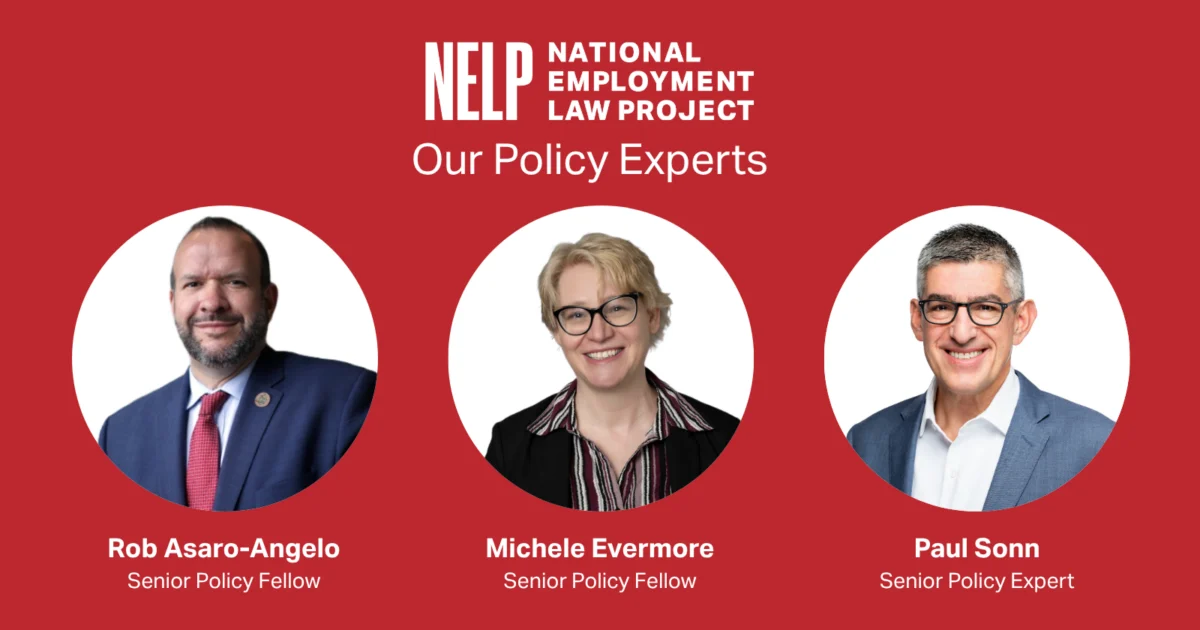
July 30, 2026 — In a move signaling a major escalation in the national effort to redefine labor standards for the modern era, the National Employment Law Project (NELP) today announced the appointment of three high-profile policy experts to its senior leadership team. As the American labor market faces unprecedented disruption from artificial intelligence, shifting gig-economy dynamics, and persistent wage inequality, NELP is positioning these leaders to spearhead a new wave of "worker-first" policy innovation.
The appointments—Rob Asaro-Angelo, Michele Evermore, and Paul Sonn—represent a strategic consolidation of expertise in public sector enforcement, social insurance modernization, and wage advocacy. These leaders are tasked with translating complex economic challenges into actionable, high-impact policy solutions that aim to protect the next generation of the American workforce.
The Strategic Shift: Building a Resilient Economy
The labor landscape of 2026 is markedly different from the pre-pandemic era. With the rapid integration of generative AI into office and industrial workplaces, and a growing public demand for job stability, NELP’s leadership has identified a critical need for structural reform.
"We are thrilled to have such extraordinary leaders as Rob, Michele, and Paul taking on these significant new roles for NELP," said Rebecca Dixon, President and CEO of NELP. "Among the nation’s most renowned worker advocates, each is an accomplished architect of both visionary policies and winning campaigns. Together, they will be the nucleus of a team that advances transformative policies for workers across the country."
The organization’s mission remains rooted in its 1969 founding: to build a just and inclusive economy. However, the current strategy involves a sharpened focus on enforcement capacity and the modernization of social safety nets, ensuring that legal rights on paper translate into economic reality for the working class.
Profiles in Leadership: The New Senior Team
Rob Asaro-Angelo: Senior Policy Fellow for Worker-First Protections
Rob Asaro-Angelo brings a wealth of executive experience to NELP, specifically regarding the mechanics of state-level labor enforcement. From 2018 to 2026, he served as the Commissioner of the New Jersey Department of Labor and Workforce Development (NJDOL). Under his tenure, New Jersey became a national laboratory for progressive labor policy.
Asaro-Angelo’s mandate at NELP is to bridge the gap between policy creation and regulatory enforcement. He will focus on:
- Combating Wage Theft: Developing strategies for state agencies to identify and recover lost wages more efficiently.
- Strengthening Temporary Protections: Addressing the unique vulnerabilities of temporary and migrant workers.
- Enforcement Modernization: Leveraging technology to help state labor departments maximize their impact with existing budget constraints.
Michele Evermore: Senior Policy Fellow for Economic Security and Worker Transitions
Michele Evermore’s return to NELP marks a significant strengthening of the organization’s social insurance expertise. A renowned authority on Unemployment Insurance (UI), Evermore previously served in the Biden administration as the Deputy Director for Policy in the Office of Unemployment Insurance Modernization.
Her work will be critical as the U.S. faces the transitionary shocks caused by AI. Her portfolio includes:
- UI Reform: Advocating for systemic changes that ensure social insurance can scale effectively during economic downturns.
- Worker Transitions: Designing support systems that allow workers to reskill without facing catastrophic income loss.
- Academic Integration: Bridging the gap between empirical research and policy advocacy through her continued involvement with the National Academy of Social Insurance.
Paul Sonn: Senior Policy Expert for Wages and Affordability
Paul Sonn is a cornerstone of the modern labor movement. As the long-time state policy program director at NELP and director of the NELP Action Fund, Sonn has been a primary architect behind the "Fight for $15" and various local living wage ordinances across the United States.
Sonn’s new role will focus on:
- Wage-Cost Parity: Developing policy frameworks that link minimum wage adjustments more directly to local cost-of-living indices.
- AI Guardrails: Spearheading the development of "just cause" job protections in sectors where AI is increasingly dictating productivity quotas and employment terms.
- State-Local Synergy: Scaling successful municipal labor victories into comprehensive state-level legislation.
Chronology of Influence: NELP’s Legacy of Change
Since its inception, NELP has evolved from a legal aid-focused nonprofit to a national policy powerhouse. The organization’s timeline reflects the trajectory of the American worker:
- 1969: NELP is founded to provide legal assistance to the poor and advance civil rights through the lens of employment law.
- 2010s: The organization gains national prominence by providing the legal and economic research backbone for the Fight for $15, shifting the national conversation on minimum wage from a moral argument to an economic imperative.
- 2020–2022: During the COVID-19 pandemic, NELP played a pivotal role in lobbying for the expansion of Unemployment Insurance, preventing a total collapse of consumer spending among displaced workers.
- 2026: NELP announces its "next generation" strategy, shifting focus toward AI-related job displacement and the modernization of state labor enforcement agencies.
Supporting Data: The Need for Reform
NELP’s strategic pivot is supported by a growing body of data indicating that current worker protections are failing to keep pace with the modern economy.
According to internal and external studies cited by the organization:
- Wage Theft Estimates: An estimated $15 billion to $50 billion is lost annually in the U.S. due to wage theft, highlighting the need for the enforcement-focused reforms Asaro-Angelo is tasked with leading.
- UI Coverage Gaps: Despite federal interventions, significant percentages of unemployed workers still fall through the cracks of state UI systems, often due to archaic eligibility requirements that Evermore aims to modernize.
- AI and the Workplace: Recent labor reports indicate that up to 30% of work hours in the U.S. could be automated by 2030, necessitating the "just cause" protections and transition support that Sonn and Evermore will prioritize.
Implications for the Future of Work
The appointment of these three leaders suggests that NELP is preparing for a "long game" in labor advocacy. By focusing on the administrative and state-level enforcement of labor laws, they are addressing the "implementation gap"—the reality that even the best-written laws are useless without the agency capacity to enforce them.
Impact on State Policy
By focusing on state-level interventions, NELP is effectively creating a "policy firewall." Regardless of federal-level shifts in political climate, states like New Jersey, California, and New York have proven that they can set independent labor standards that often lead to national trends. Asaro-Angelo’s background as a state commissioner is a clear signal that NELP intends to continue this "bottom-up" strategy.
Addressing the AI Challenge
The focus on AI-driven job transitions is perhaps the most forward-looking aspect of this announcement. For decades, unions and labor advocates were primarily concerned with wages and physical safety. Today, the concern has shifted to algorithmic management, data privacy in the workplace, and the right to retraining. Paul Sonn’s work on AI guardrails suggests that NELP will be at the forefront of defining the legal boundaries for how technology is deployed in the workplace.
Official Responses and Stakeholder Outlook
Labor advocates and policy experts have largely lauded the announcement. The move is viewed as a consolidation of the "brains" of the labor movement, bringing together the policy design, regulatory experience, and grassroots organizing expertise necessary to face the next decade of challenges.
"NELP has always been the think-tank of the movement," says a senior labor economist familiar with the organization. "By bringing these three individuals into these specific roles, they aren’t just filling vacancies; they are mapping out a five-to-ten-year legislative agenda."
As the organization moves forward, it continues to lean on its massive network of local, state, and national partners. With a legacy that has impacted the lives of an estimated 100 million workers over the last decade, the pressure to maintain this momentum is significant. However, with this new senior team, NELP is clearly signaling that it is prepared to tackle the complexities of the 21st-century labor market with renewed vigor.
For more information on the organization’s ongoing campaigns, policy papers, and advocacy resources, visit www.nelp.org.
