




Main Facts: The Strategic Postponement of Lucid’s Mass-Market Hope
Lucid Motors, the California-based electric vehicle (EV) manufacturer long celebrated for its engineering prowess but plagued by operational hurdles, has announced a sweeping strategic realignment. At the center of this pivot is the postponement of its most critical vehicle to date: the Cosmos, an affordable crossover SUV designed to start under $50,000. Originally scheduled for a near-term release, the Cosmos launch has been pushed back by nearly a full year to the second half of 2027.
The decision was handed down by Lucid’s newly appointed Chief Executive Officer, Silvio Napoli, who officially took the helm on June 1. Napoli framed the delay as a painful but vital intervention to save the company from repeating the quality and software crises that have hobbled its current luxury offerings.
In tandem with the delay, Napoli has initiated an aggressive restructuring program designed to strip $1.4 billion in costs from the company’s balance sheet by the end of this year. This "reset" has already resulted in:
- An 18% reduction of Lucid’s global workforce in June, following a 12% layoff earlier in the year.
- The complete overhaul of the executive suite, including the quiet departure of Senior Vice President of Finance Gagan Dhingra.
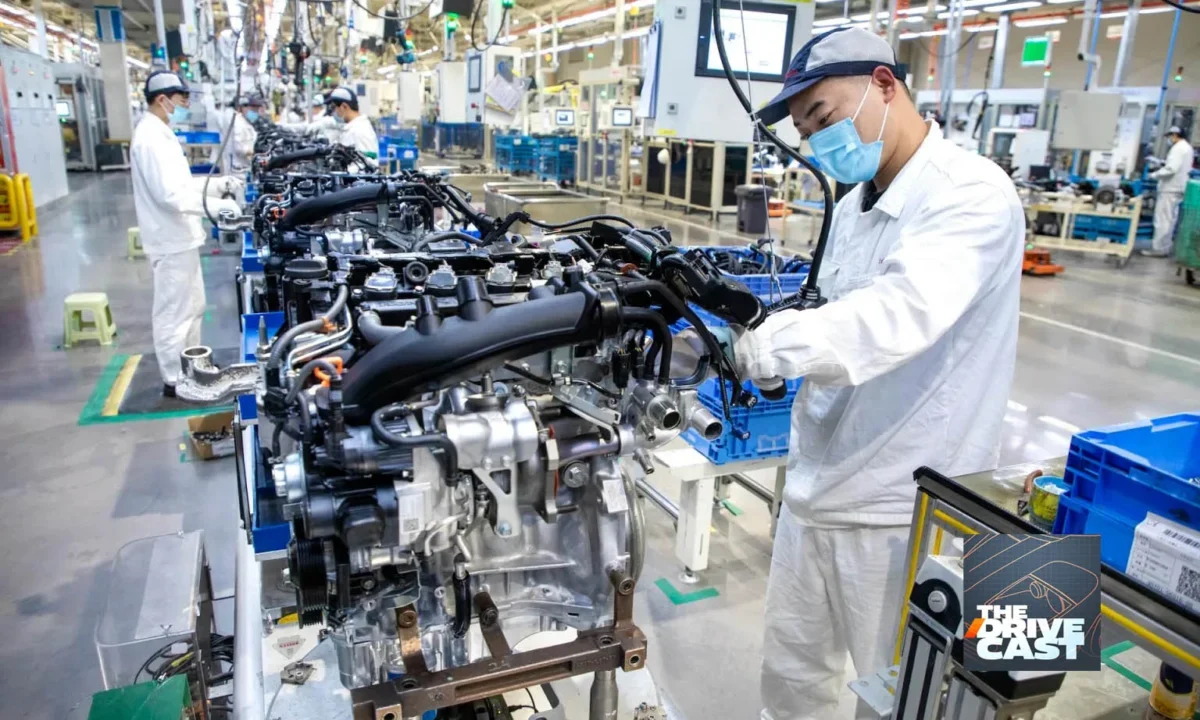
- The cancellation of the second production shift at the company’s manufacturing facility in Casa Grande, Arizona.
- A reduction in full-year production and sales guidance, which triggered a sharp 15% drop in Lucid’s stock price.
To bridge the gap until the Cosmos enters production, Lucid is pinning its immediate survival on its liquidity runway—guaranteed into 2027 by its majority shareholder, Saudi Arabia’s Public Investment Fund (PIF)—and a high-stakes robotaxi partnership with Uber and autonomous vehicle technology firm Nuro, slated to launch by the end of this year.
Chronology: From Premium Ambition to Operational Course Correction
[Late 2024 – Early 2026]     [June 1, 2026]           [June 2026]              [August 2026]              [H2 2027]                 [Late 2028]
Gravity SUV suffers from     Silvio Napoli takes      Napoli cuts 18% of       Q2 Earnings Call:          Delayed launch of         Scheduled production
build quality and software   over as CEO, replacing   workforce; cancels       Cosmos SUV delayed;        Cosmos affordable         of 25,000 mid-size
glitches under Winterhoff.   interim management.      Arizona second shift.    $1.4B savings targeted.    crossover SUV.            Uber robotaxis.
The Luxury Launch and the Quality Backlash
Lucid’s journey to this juncture has been defined by a stark contrast between world-class technology and execution failures. While the Lucid Air sedan set industry benchmarks for range and efficiency, its high price tag restricted it to a luxury niche. The company’s subsequent offering, the Gravity SUV, was intended to capture the lucrative premium utility market.
However, the Gravity’s launch was marred by persistent build quality issues and software glitches. The problems became so pronounced that Napoli’s predecessor, interim CEO Marc Winterhoff, took the unusual step of issuing a formal apology to owners. Despite the popularity of the SUV form factor, the Gravity failed to achieve the sales velocity Lucid desperately needed, leading to inventory buildup and underutilized factory capacity.
The Arrival of Silvio Napoli
On June 1, Silvio Napoli assumed the role of CEO with a mandate to stabilize the struggling automaker. Recognizing that the company was bleeding cash while producing vehicles that failed to meet quality standards, Napoli immediately began dismantling the operational status quo.
June Restructuring and Workforce Reductions
Within weeks of taking office, Napoli executed an 18% reduction of Lucid’s overall workforce. This headcount reduction came on top of a 12% layoff implemented earlier in the year under interim management.
To align production with flagging demand, Napoli also canceled the second shift at the Casa Grande, Arizona assembly plant. The factory, built to accommodate high-volume production, was throttled back to minimize cash burn.
The Q2 Earnings Call and the Cosmos Postponement
On Tuesday, during the company’s second-quarter earnings call, Napoli laid bare the structural deficiencies of the company. He announced that the Cosmos crossover—the vanguard of Lucid’s next-generation "mid-size" platform—would be delayed to the second half of 2027. Napoli made it clear that the company would not rush the vehicle to market, choosing instead to prioritize engineering maturity over immediate revenue.
Supporting Data: Operational Reductions and Financial Strain
The financial and operational metrics disclosed during Lucid’s Q2 earnings presentation paint a picture of a company undergoing severe contractions to preserve capital.
| Metric | Detail / Impact |
|---|---|
| Cosmos Target Price | Under $50,000 (Targeting mass-market EV buyers) |
| Cosmos Revised Launch | Second Half of 2027 (Delayed nearly one full year) |
| Cost Savings Target | $1.4 Billion (To be achieved by the end of this year) |
| June Workforce Cuts | 18% layoff (Following a 12% layoff earlier in the year) |
| Stock Price Impact | Decreased by over 15% on Wednesday following the Q2 call |
| Liquidity Runway | Secured "well into 2027," backed by Saudi Arabia’s PIF |
| Uber Robotaxi Orders | 10,000 Gravity SUVs; 25,000 next-gen mid-size vehicles |
The Executive Suite Cleansing
Napoli’s restructuring went far beyond assembly line workers. The CEO has systematically replaced the company’s C-suite. The most recent casualty of this transition was Senior Vice President of Finance Gagan Dhingra. Dhingra’s departure was not highlighted in the main body of the press release but was instead disclosed at the bottom of the company’s Q2 financial filing with the Securities and Exchange Commission (SEC) on Tuesday.
Supply Chain Turbulence
The decision to scale back production and delay the Cosmos platform has introduced severe friction into Lucid’s supply chain. In its quarterly SEC filing, the company issued a stark warning regarding its relationships with key component manufacturers:
"Lower production volumes or demand, or reductions in our projected production volumes, have negatively affected, and could continue to adversely affect, our relationships with existing suppliers, who may seek to increase pricing, assert contractual or other claims, or otherwise fail to perform or comply with contractual obligations."
Automotive suppliers rely on high-volume commitments to amortize their own tooling and development costs. By reducing production volumes in Arizona and pushing back the high-volume Cosmos platform, Lucid risks facing higher per-unit component costs and potential legal disputes from suppliers seeking to recoup lost capital.
Official Responses: Executive Candor and Partner Endorsements
Silvio Napoli’s Self-Assessment
In a departure from typical corporate earnings calls, Napoli offered a remarkably blunt assessment of Lucid’s historical failures. He acknowledged that the company’s engineering achievements had been overshadowed by organizational dysfunction:
"While there is no question that Lucid brought leading innovations and outstanding products to the market, we have disappointed on several fronts, and for far too long. We have not executed consistently. We missed commitments, launched products before they were ready, underinvested in service, responded too slowly to quality issues, and allowed complexity to slow decisions down."
Addressing the Cosmos delay directly, Napoli emphasized that quality would no longer be sacrificed for the sake of the product roadmap:
"We will not repeat the mistakes of the past by bringing a product to market before it is ready."
Uber’s Endorsement of the Reset
Despite the disruption to Lucid’s product timeline, key partners have rallied behind Napoli’s aggressive tactics. Uber CEO Dara Khosrowshahi, whose company has a massive operational stake in Lucid’s long-term viability, expressed confidence in the new leadership during Uber’s own earnings call.
"Silvio is taking some bold steps to go back to the fundamentals," Khosrowshahi remarked. He characterized the restructuring of the EV maker as both "necessary" and "positive."
Khosrowshahi also highlighted the stabilizing presence of Saudi Arabia’s Public Investment Fund (PIF), which holds a majority stake in Lucid and is also a major investor in Uber. He described the Kingdom’s sovereign wealth fund as "the definition of a long-term fundamental investor."
"We think the combination of ourselves, Nuro, and the Public Investment Fund backing Lucid, along with the actions that Silvio is taking, are kind of the right formula for them to deliver on the commitments that we have on the books with them," Khosrowshahi said.
Implications: The Narrow Path to Mass-Market Viability
          [ Lucid's Strategic Path Forward ]
                         |
       +-----------------+-----------------+
       |                                   |
[ Short-Term: 2026-2027 ]          [ Long-Term: 2027+ ]
       |                                   |
  • Strip $1.4B in costs             • Launch Cosmos SUV (<$50k)
  • Deliver Uber/Nuro Robotaxis      • Scale Mid-Size Platform
  • Leverage PIF liquidity runway    • Transition to high-volume player
The delay of the Cosmos SUV has profound implications for Lucid’s positioning in the global automotive landscape.
The Survival Gap
By delaying its entry-level crossover, Lucid is forcing itself to tread water for another year in the highly competitive luxury EV segment—a market that has seen slowing growth and aggressive price-cutting from competitors. The company must rely on its expensive Air sedan and the troubled Gravity SUV to generate organic revenue throughout 2026 and the first half of 2027.
The financial safety net provided by the Saudi PIF ensures that Lucid will not face an immediate liquidity crisis. However, relying on sovereign wealth injections is a temporary shield, not a permanent business model. Wall Street’s negative reaction to the Q2 call underscores the market’s impatience with Lucid’s prolonged path to profitability.
The Robotaxi Pivot as a Bridge
With the Cosmos sidelined, the focus now shifts entirely to Lucid’s commercial autonomous vehicle (AV) ambitions. The upcoming robotaxi service, co-developed with Uber and Nuro, has transitioned from a future-looking project into an immediate operational necessity. Napoli termed the project a "top priority" and a "must-win" for the company.
The commercial agreement is structured in two distinct phases:
- The Gravity Integration (Near-Term): Uber has committed to purchasing 10,000 Gravity SUVs, which will be retrofitted with Nuro’s autonomous driving technology. This initiative, scheduled to launch by the end of this year, provides Lucid with a guaranteed commercial buyer for its premium SUV, helping to offset weak retail demand and keep the Arizona factory running.
- The Mid-Size Platform Integration (Long-Term): Uber has also placed an order for 25,000 robotaxis built on Lucid’s upcoming mid-size platform. However, because these vehicles rely on the architecture of the delayed Cosmos, production is not expected to begin until late 2028.
Conclusion: A Necessary Retreat
Silvio Napoli’s "reset" of Lucid Motors is a classic corporate turnaround strategy: shrink to survive, clean up operational deficiencies, and delay products rather than destroy brand equity with half-baked releases.
If Napoli succeeds in stripping $1.4 billion in costs and stabilizing the quality of the Gravity SUV, Lucid will emerge in 2027 as a leaner, more disciplined manufacturer ready to launch the Cosmos into a mature EV market. If, however, the supplier friction escalates or the robotaxi launch with Uber and Nuro falters, Lucid risks exhausting the patience of its Saudi benefactors before its mass-market savior ever rolls off the assembly line.
