




Introduction
Nearly one year after introducing its driverless shuttle service to the public in Las Vegas, Zoox, the autonomous vehicle subsidiary of Amazon, is transitioning from experimental demonstrations to a fully commercial business model. The company has announced that it will begin charging passengers for rides in its purpose-built robotaxis in Las Vegas starting August 10. This milestone marks the official launch of Zoox’s commercial operations, representing the culmination of over a decade of intensive research, multi-billion-dollar investments, and rigorous regulatory negotiations.
The transition to a paid model represents a critical test for Zoox as it seeks to prove the commercial viability of its unique, ground-up vehicle design. Unlike competitors that retrofitted conventional passenger cars with autonomous driving stacks, Zoox has bet its future on a bespoke, carriage-style vehicle designed entirely without steering wheels, pedals, or traditional manual controls. Having secured a crucial regulatory exemption from federal authorities, the Silicon Valley-based company is now poised to enter the highly competitive ride-hailing market, aiming to challenge both legacy transportation networks and rival autonomous vehicle (AV) operators.
Main Facts: The Commercial Rollout and Pricing Structure
Beginning August 10, passengers in Las Vegas will be able to book rides in Zoox’s custom-built autonomous vehicles through the company’s proprietary mobile app. This rollout transitions Zoox from an experimental pilot program into a direct competitor to traditional ride-hailing giants like Uber and Lyft, as well as Alphabet’s Waymo.
To attract and retain customers, Zoox is introducing a pricing model structured to offer transparency and cost-competitiveness. The fare structure is calculated using three primary metrics:
- Base Fare: A flat fee applied at the start of every journey.
- Distance Traveled: A charge calculated per mile from the pickup point to the destination.
- Time Elapsed: A charge based on the estimated duration of the trip.
To address a common pain point in modern ride-hailing—price volatility and unexpected route changes—Zoox has committed to upfront pricing. The final fare will be calculated using the optimal route and presented to the user before they confirm the booking. Once accepted, this price is guaranteed; even if the robotaxi is forced to take a detour due to traffic, construction, or road closures, the customer’s fare remains unchanged.
In addition to standard distance-and-time metrics, Zoox will implement targeted destination fees. These surcharges will apply to high-demand, high-congestion routes, such as trips originating from or terminating at Harry Reid International Airport, or major entertainment venues along the Las Vegas Strip, including the Sphere and T-Mobile Arena.
In terms of market positioning, Zoox aims to price its service competitively with the "comfort" tier of traditional ride-hailing platforms. Rather than competing purely on a low-cost basis, Zoox is positioning its spacious, carriage-style cabin as a premium, private alternative to standard ride-hailing vehicles, offering a quiet, personalized environment for up to four passengers.
Chronology: A Dozen Years of Development, Acquisition, and Obstacles
The path to commercialization has been long and fraught with technical, financial, and regulatory challenges. The company’s twelve-year history is characterized by a persistent commitment to a radical design philosophy, punctuated by corporate restructuring and intense regulatory scrutiny.
- 2014: Founding and the "Clean Sheet" Vision
Zoox was co-founded in 2014 by Australian artist and designer Tim Kentley-Klay and Jesse Levinson, a self-driving researcher from Stanford University. While contemporary AV startups chose to retrofit existing vehicles, Zoox’s founders insisted on a "clean sheet" approach. They envisioned a symmetrical, bidirectional electric vehicle designed exclusively for autonomous ride-hailing, bypassing the need for a human driver’s interface entirely. - 2014–2019: Prototyping and Funding Pressures
The company spent its early years developing the software stack and building early prototypes, known as "VH" vehicles. Despite raising hundreds of millions of dollars in venture capital, the immense capital expenditures required to manufacture custom hardware and develop Level 4 autonomous software pushed the startup to its financial limits. - June 2020: The Amazon Acquisition
Recognizing the strategic value of autonomous technology for both passenger mobility and future logistics, e-commerce giant Amazon acquired Zoox in June 2020 in a deal valued at approximately $1.2 billion. This acquisition provided Zoox with the deep financial backing necessary to sustain its capital-intensive research and development. - December 2020: Unveiling the Robotaxi
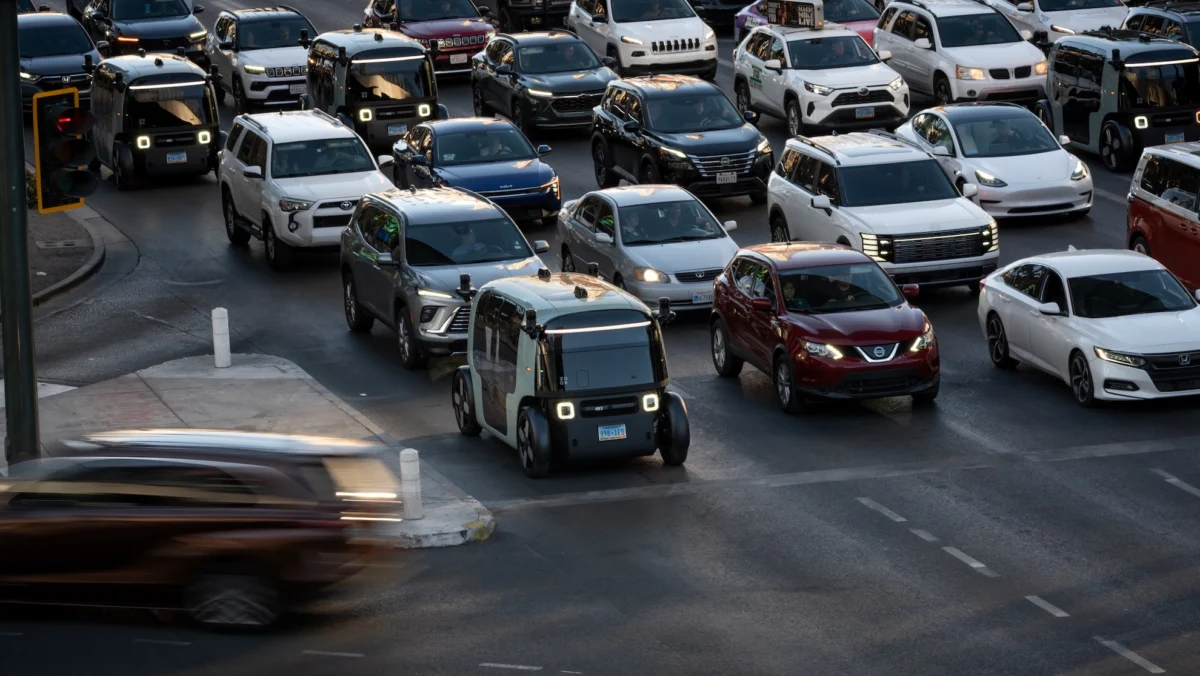
In late 2020, Zoox officially unveiled its custom-built robotaxi. The vehicle showcased a compact, boxy, carriage-style exterior, sliding doors, a spacious interior with face-to-face seating, four-wheel steering, and a 133 kWh battery pack capable of operating for a full day on a single charge. - 2021–2025: Testing, Public Pilots, and Recalls
Zoox initiated testing in multiple metropolitan areas, including San Francisco, Seattle, Austin, and Las Vegas. In 2023, the company launched its first public demonstration rides in Las Vegas, offering free trips to passengers within a geofenced area. However, the testing phase was not without setbacks. Zoox had to navigate several software and hardware recalls, including a notable software recall in July 2026 after one of its vehicles became confused and stopped unexpectedly when encountering heavy smoke. - Late July 2026: The Federal Breakthrough
The final regulatory obstacle to commercialization was cleared when the National Highway Traffic Safety Administration (NHTSA) granted Zoox a temporary, two-year commercial exemption, allowing the company to operate and charge passengers for rides in vehicles lacking traditional controls. - August 10, 2026: Commercial Launch
Zoox officially transitions to paid commercial operations in Las Vegas, marking the realization of its founding vision.
[2014] Zoox Founded (Vision of a custom, steering-wheel-free EV)
  │
[2020] Acquired by Amazon ($1.2B) & Custom Robotaxi Unveiled
  │
[2023] Public Demonstration Rides Begin in Las Vegas (Free)
  │
[July 2026] Software Recall (Smoke confusion) & NHTSA Exemption Approved
  │
[Aug 10, 2026] Commercial Paid Service Launches in Las Vegas
Supporting Data and Technical Overview
Zoox’s commercial launch is backed by a highly specialized hardware platform and an expansive sensor architecture designed to maximize safety in dense urban environments.
Vehicle Specifications and Architecture
Unlike traditional passenger cars, the Zoox robotaxi features a symmetrical, bidirectional design. This means the vehicle has no defined front or rear; it can drive forward or backward with equal capability, utilizing four-wheel steering to navigate tight spaces, perform precise U-turns, and parallel park in compact urban zones.
| Feature | Specification |
|---|---|
| Dimensions | 3.63 meters (length) x 1.93 meters (width) x 1.86 meters (height) |
| Battery Capacity | 133 kWh lithium-ion battery pack |
| Operating Time | Up to 16 continuous hours on a single charge |
| Maximum Speed | Up to 75 mph (120 km/h) |
| Seating Configuration | Face-to-face carriage seating (up to 4 passengers) |
| Steering & Drive | Bidirectional driving, four-wheel steering, all-wheel drive |
Sensor Suite and Safety Systems
The vehicle’s autonomous driving system relies on an array of sensor modalities positioned at the four corners of the vehicle to eliminate blind spots. This redundant sensor architecture provides a continuous 270-degree field of view at each corner, ensuring overlapping coverage of the vehicle’s entire surroundings.
- LiDAR: Multiple long-range and solid-state LiDAR sensors map the environment in 3D.
- Radar: High-resolution radar tracking provides speed and distance data, functioning reliably in adverse weather conditions.
- Cameras: High-definition optical cameras detect traffic signals, pedestrian movements, and road markings.
- Thermal Imaging: Infrared cameras assist in detecting pedestrians, animals, and hazards in low-light or smoky conditions.
To protect passengers in a cabin that lacks a dashboard or steering wheel, Zoox developed a custom airbag system. In the event of a collision, specialized curtain airbags deploy from the sides and center of the carriage seating, wrapping around passengers to provide protection comparable to or exceeding traditional automotive safety standards.
Official Responses and Regulatory Framework
The transition from free demonstration rides to a paid commercial service required a landmark regulatory decision at the federal level. Because federal motor vehicle safety standards were written with human-driven vehicles in mind, Zoox’s steering-wheel-free design presented a fundamental regulatory challenge.
The NHTSA Commercial Exemption
Under the National Highway Traffic Safety Administration (NHTSA) framework, vehicles operating on public roads must comply with Federal Motor Vehicle Safety Standards (FMVSS). These standards traditionally dictate the inclusion of physical controls, such as steering wheels, accelerator and brake pedals, rearview mirrors, and specific windshield defrosting systems.
In late July 2026, the NHTSA granted Zoox a temporary, two-year commercial exemption covering eight specific federal standards, including those regulating windshield defrosting and light-vehicle braking systems. This exemption is highly regulated:
- Fleet Limit: Zoox is permitted to deploy up to 2,500 of its custom robotaxis nationwide under this exemption.
- Reporting Requirements: The company must submit regular safety and performance reports to the NHTSA, detailing any system disengagements, near-misses, or collisions.
- Duration: The exemption is valid for two years, after which Zoox must apply for a renewal or demonstrate compliance with updated federal standards.
Regional Regulatory Hurdles: California vs. Nevada
While Nevada’s regulatory environment has allowed Zoox to move quickly from testing to commercialization, the regulatory landscape in California remains more stringent.
Zoox currently operates test fleets and offers free rides to employees and select public groups in San Francisco and Austin, Texas. However, the company cannot yet charge for rides in these markets. In California, commercial deployment requires a series of permits from two distinct state agencies:
- California Department of Motor Vehicles (DMV): To operate autonomous vehicles commercially on public roads.
- California Public Utilities Commission (CPUC): To charge passengers fares for autonomous rides.
Zoox is currently pursuing these final two permits in California, but until they are approved, its operations in San Francisco will remain free of charge.
Implications for the Ride-Hailing Industry and Urban Mobility
The commercialization of Zoox’s robotaxi service carries significant implications for the broader autonomous vehicle industry, public transit systems, and urban mobility models.
Competitive Dynamics in the Autonomous Space
Zoox’s commercial launch intensifies the competition among major autonomous vehicle developers. Currently, Alphabet’s Waymo is the market leader, operating thousands of paid rides weekly across Phoenix, San Francisco, and Los Angeles using retrofitted Jaguar I-PACE SUVs. Meanwhile, General Motors’ Cruise is working to resume full commercial operations following a high-profile pedestrian accident in late 2023 that temporarily grounded its fleet.
By introducing a purpose-built vehicle rather than a retrofitted passenger car, Zoox is testing a different hypothesis: that consumers prefer a vehicle designed specifically for ridesharing over a standard passenger car. If Zoox’s carriage-style layout proves popular, it may pressure competitors to accelerate their own purpose-built vehicle programs, such as Cruise’s "Origin" shuttle or custom designs from Chinese autonomous developers.
Strategic Value to Amazon
For Amazon, Zoox is more than just a ride-hailing experiment. The technology developed by Zoox has direct applications to Amazon’s core e-commerce and logistics business. The autonomous driving stack, sensor fusion, and electric drivetrain technologies can eventually be integrated into Amazon’s middle- and last-mile delivery fleets, potentially reducing delivery costs and improving operational efficiency.
Public Perception and the Road to Trust
The success of Zoox’s commercial operations in Las Vegas will depend heavily on its ability to build and maintain public trust. The autonomous vehicle industry has faced scrutiny from local governments, first responders, and safety advocates due to incidents where robotaxis blocked traffic, interfered with emergency vehicles, or suffered software glitches.
By pricing its service competitively with legacy ride-hailing "comfort" tiers and offering guaranteed, transparent pricing, Zoox is attempting to make autonomous rides an appealing, mainstream alternative for both tourists and residents. If successful in Las Vegas, the deployment will serve as a blueprint for Zoox’s expansion into more complex urban environments across the United States and globally.
