





In the rapidly evolving landscape of personal mobility, the transition to electrification has largely been dominated by passenger cars and heavy-duty commercial trucks. Yet, for off-road enthusiasts—hunters, farmers, and trail riders—the benefits of electric powertrains are perhaps even more compelling. The ability to traverse rugged terrain in near-silence, without the olfactory assault of exhaust fumes or the mechanical clamor of an internal combustion engine, represents a paradigm shift for recreational and utility vehicles.
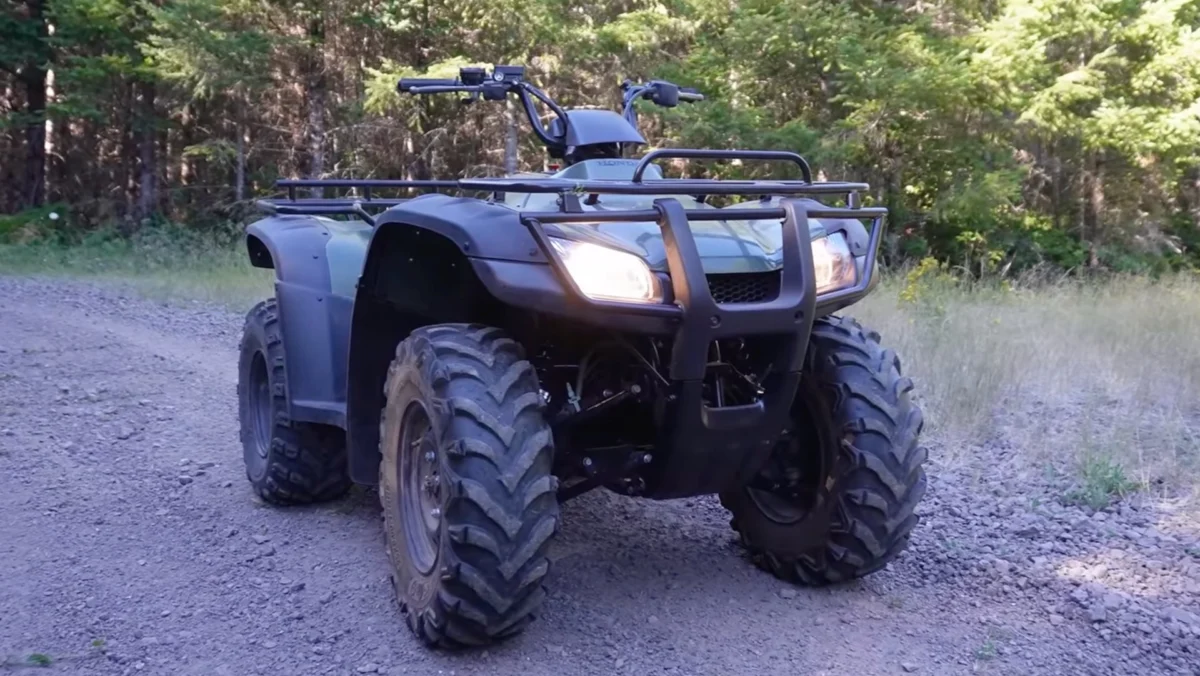
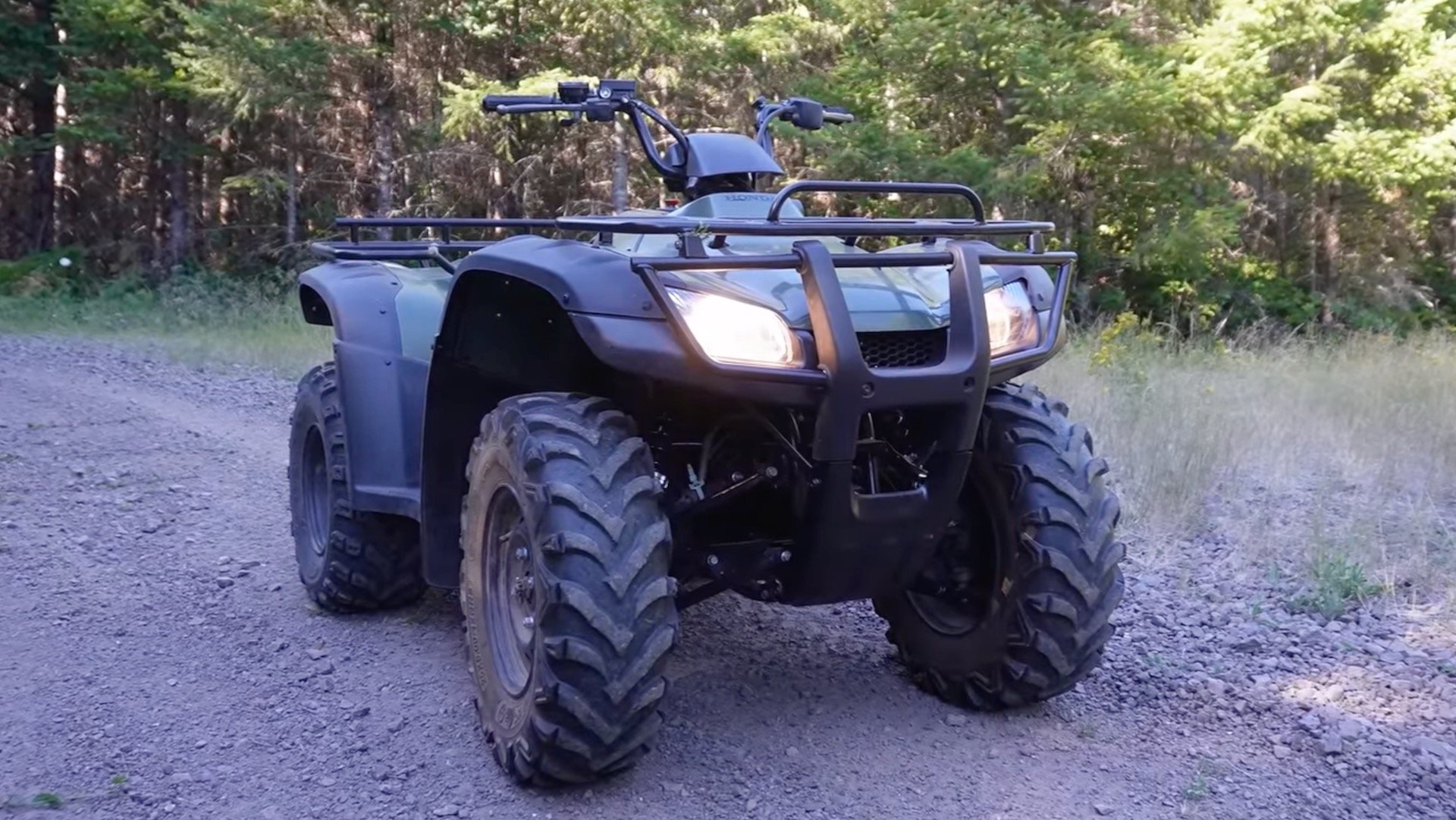
While major manufacturers are moving with deliberate, sometimes glacial, caution in the electric ATV space, the DIY community is surging ahead. Leading this charge is the YouTuber known as "RMS Builds," who has successfully transformed a 2006 Honda Rancher into a high-performance electric machine. This project serves as a masterclass in engineering ingenuity, proving that the future of off-roading might just be hidden in a suburban garage.
The Genesis of the Build: Moving Beyond the Yamaha Prototype
The journey toward a silent, emission-free quad did not begin with the Honda Rancher. RMS Builds previously converted a 2004 Yamaha RC450 to electric power. While that initial project was deemed a success, it provided a vital learning opportunity: the limitations of a chain drive. Even when stripped of its gasoline engine, the Yamaha’s chain-driven architecture created significant mechanical noise at higher speeds—a "clatter" that detracted from the serenity of electric propulsion.
Seeking an encore that prioritized acoustic refinement, the builder settled on the 2006 Honda Rancher. The Rancher’s defining feature—a robust, reliable shaft-drive system—offered the perfect foundation for a "stealth" build. By eliminating the chain, the builder aimed to achieve a level of whisper-quiet operation that would allow riders to move through the wilderness as if they were ghosts.
Technical Specifications: Anatomy of the Conversion
Transforming a legacy internal combustion platform into a modern electric vehicle is no small feat. It requires a meticulous balance of power, weight, and structural integrity.
The Powertrain
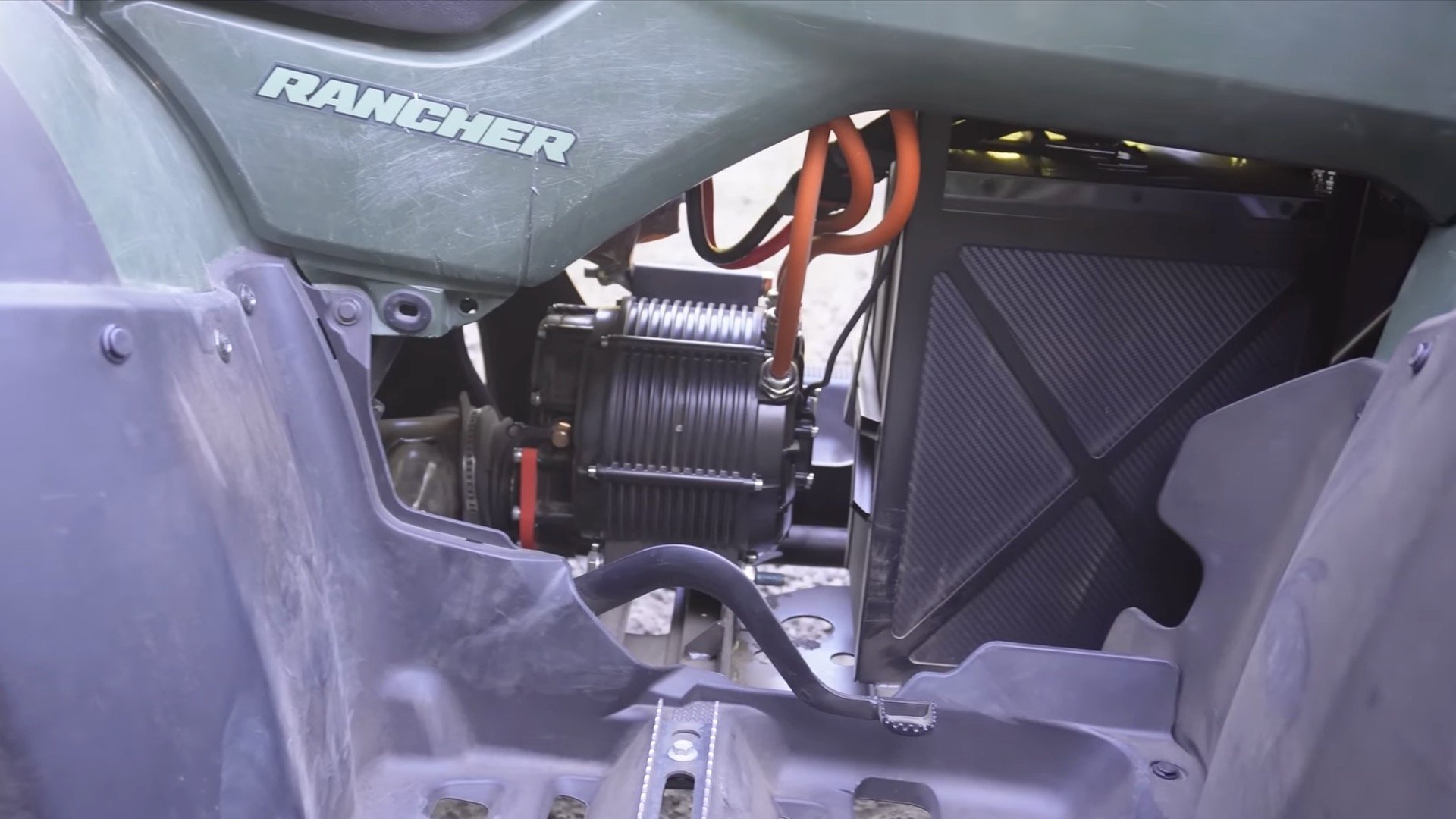
At the heart of the conversion sits a 10-kilowatt (13.4-horsepower) electric motor. While this figure might seem modest compared to the high-horsepower figures seen in modern street-legal EVs, it provides more than enough torque for the varied demands of off-road work. This motor is nestled precisely where the original gasoline block resided, minimizing the need for invasive chassis modifications.
Energy Storage
Powering the motor is a 6.1-kilowatt-hour battery pack. Strategically placed to maintain the ATV’s center of gravity, the pack is managed by a sophisticated controller mounted atop the motor housing. This configuration keeps the electrical system compact and shielded from the elements.
Fabrication Challenges
The most daunting hurdle was not the electrical wiring, but the mechanical marriage of the motor’s output shaft to the Honda’s rear differential. Because the original drivetrain was designed for a combustion engine’s specific torque curve and rotational speed, mating it to an electric motor required extensive custom machining. The builder had to fabricate a bespoke interface for the universal joint, ensuring that the power transfer was both efficient and durable enough to withstand the shocks of trail riding.
Weight and Performance: The Surprising Results
One of the most common criticisms of EV conversions is the "weight penalty" incurred by heavy battery arrays. RMS Builds achieved a remarkable result with the Rancher: the finished electric version tips the scales at 487 pounds.
According to the builder, this is approximately 10 pounds lighter than the lightest factory-stock gasoline version of the same year. This weight reduction is a testament to the efficiency of the modern components chosen for the project. In terms of range, the builder estimates the vehicle can cover approximately 35 miles under normal riding conditions. While this may not rival the long-haul capacity of a large-tank gas ATV, it is more than sufficient for typical day-trips, hunting excursions, or perimeter checks on a farm.
Chronology of the Transformation
The conversion process was documented in two distinct phases, providing a blueprint for future DIY enthusiasts:
- Phase One: Fabrication and Motor Mounting. This stage focused on the "hard" engineering. The removal of the internal combustion engine necessitated a clean slate. The builder prioritized frame integrity, ensuring that the motor mounts could handle the instantaneous torque spikes characteristic of electric motors.
- Phase Two: Electrical Integration and Assembly. This phase involved the complex task of wiring the controller, installing the battery management system (BMS), and aesthetic refinishing. The final assembly confirmed that the design not only functioned but did so with an unprecedented level of mechanical refinement.
The Quiet Advantage: Implications for the Industry
The "quiet" nature of this build is not merely a novelty; it is a functional upgrade. In many off-road scenarios, silence is a distinct advantage. Hunters can approach blinds without spooking game, land managers can monitor livestock without causing distress, and recreational riders can experience nature without the auditory pollution of a revving engine.
When the vehicle comes to a stop, the lack of an idling engine is transformative. It creates an immediate connection to the environment, allowing the rider to listen to the forest or field they have traveled into. As seen in recent developments with other electric off-roaders, the industry is beginning to recognize that silence is an "experience" that consumers are willing to pay for.
The Reality Check: Drag Racing vs. Utility
In the builder’s testing, the electric Rancher was pitted against a stock gasoline-powered equivalent in a series of drag races. The result? The gasoline-powered machine held the edge.
However, it is critical to note that speed was never the primary objective of this build. The project was conceived as an exercise in capability and acoustic comfort. By prioritizing the shaft-drive system and low-speed torque delivery, the builder created a vehicle that is superior for utility work, even if it sacrifices top-end speed. The drag race serves as a reminder that electric conversions aren’t about mimicking the performance of gas engines—they are about optimizing for different outcomes.
Industry Implications and Future Outlook
The work of builders like RMS Projects is a signal to major manufacturers—Honda, Polaris, Can-Am, and others—that the market for mid-sized, reliable electric ATVs is underserved. While companies like Rivian are pushing the boundaries of electric off-road trucks, and specialized firms are releasing high-end electric side-by-sides, the humble, utilitarian ATV remains largely tethered to the gas pump.
Why Major Manufacturers Should Take Note:
- Maintenance: Electric powertrains have significantly fewer moving parts than internal combustion engines. No oil changes, no spark plug replacements, and no carburetor tuning.
- Operational Costs: Electricity is consistently cheaper than gasoline, especially for those charging via solar arrays on farms or rural properties.
- Public Perception: As land-use regulations become stricter regarding noise and emissions, electric ATVs provide a pathway for continued access to protected areas.
Conclusion
The electric Honda Rancher build by RMS Builds is more than a YouTube hobby project; it is a proof-of-concept for the future of off-road utility. By successfully blending vintage mechanical reliability with modern electrical propulsion, the builder has created a machine that is quieter, lighter, and arguably more pleasant to operate than the original factory model.
As battery technology continues to improve in density and decrease in cost, we can expect to see an influx of similar conversions. Whether through the aftermarket DIY route or eventually through OEM adoption, the message is clear: the era of the loud, polluting ATV is waning. The future of the trail is silent.
