





Introduction: A Call for Accountability
Amnesty International issued a stern, urgent mandate on Friday, calling upon Hamas authorities and affiliated security forces in the occupied Gaza Strip to immediately halt the practice of extrajudicial executions. The organization’s intervention comes as a response to a disturbing, ongoing pattern of summary killings directed at individuals accused of collaborating with Israel. Despite repeated promises by Hamas officials to initiate investigations, the rights group notes that no perpetrators have been held accountable, fostering a climate of lawlessness that further imperils a population already decimated by years of conflict.
The call for action arrives as the humanitarian and security landscape in Gaza remains in a state of catastrophic disarray. With judicial institutions crippled and the rule of law effectively suspended, Amnesty International warns that the normalization of extrajudicial violence threatens to strip away the final vestiges of legal protection for civilians.
The Core Facts: A Pattern of Impunity
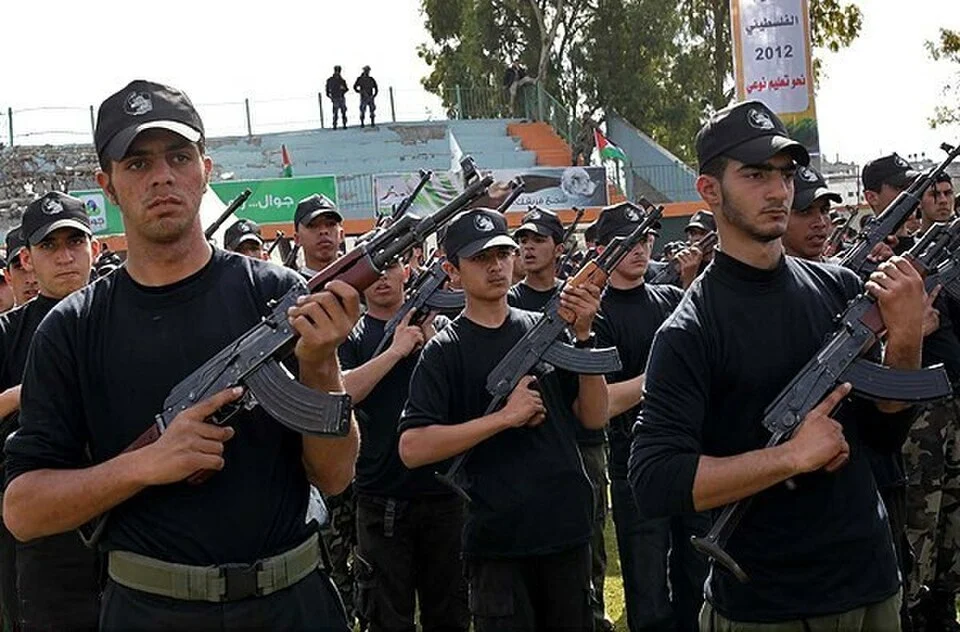
At the heart of the controversy are the actions of Hamas’s military wing, the Al-Qassam Brigades. In recent months, these forces have publicly announced the summary execution of individuals labeled as "informants" or "collaborators." These actions are often framed by the group as necessary measures within a "large-scale security campaign" intended to root out perceived threats.
However, human rights investigators emphasize that these "security" measures consistently bypass the fundamental tenets of due process. Rather than facing a trial, the accused are often subjected to public execution, a practice that serves both as a deterrent and a demonstration of power in a power vacuum. Amnesty International’s latest findings indicate that these killings are not isolated incidents but part of a systematic failure to uphold international human rights standards.
The organization specifically highlights the case of the Dughmush family, eight of whom were publicly executed in October 2025. According to reports verified by Amnesty, the men had surrendered to authorities under the express assurance that they would be granted a fair trial. Instead, video evidence verified by the organization shows the individuals blindfolded and shackled before being shot at close range, a brutal display that contradicts any claim of judicial oversight.
Chronology of Crisis: From Ceasefire to Summary Justice
To understand the gravity of the current situation, one must look at the timeline of events following the October 2025 ceasefire between Israel and Hamas.
- October 2025: In the immediate aftermath of the ceasefire, there was a sharp uptick in reported unlawful killings. The execution of the Dughmush family members served as a grim indicator that the end of active, large-scale combat did not signal a return to civil governance.
- Late 2025 to Early 2026: Throughout this period, security officials within the Al-Qassam Brigades escalated their public rhetoric, openly threatening suspected informants. The "large-scale security campaign" was intensified, leading to the reported execution of several men accused of collaborating with Israel.
- June 2026: The United Nations published a comprehensive report detailing a staggering 249 cases of extrajudicial executions and severe physical violence across Gaza between August 2024 and early 2026. Of these, at least 60 were directly attributed to Hamas-affiliated forces.
- August 2026: Amnesty International releases its latest assessment, documenting an additional nine cases of unlawful killings, while condemning the continued lack of investigations into previous atrocities.
This timeline reflects a steady erosion of the legal framework, where the absence of functional courts has been replaced by the arbitrary discretion of armed factions.
Supporting Data: Evidence of Systemic Abuse
The data provided by international monitoring bodies paints a harrowing picture. The UN report from June 2026 is perhaps the most damning evidence of the scale of the crisis. By documenting 249 cases of extrajudicial violence, the report highlights that this is not a phenomenon localized to one neighborhood or one faction, but a widespread systemic issue.
Amnesty International’s independent investigation corroborates these findings. By documenting an additional nine cases following the October 2025 ceasefire, the organization proves that the trend is not subsiding; rather, it is becoming a persistent feature of the post-war environment in Gaza. The use of public displays of violence—often broadcasted or witnessed by local communities—serves to intimidate the population, effectively silencing dissent and preventing any grassroots movement for justice.
Legal experts note that even in the context of an ongoing conflict or a state of emergency, the laws of war and international human rights law provide clear boundaries. The "collapse of civilian institutions" is frequently cited as a justification for these killings, but as human rights groups argue, this collapse is precisely why the protection of the individual is more critical than ever.
Official Responses and Justifications
The response from Hamas leadership has been a consistent defense of their "security" measures. Officials have frequently argued that the destruction of police stations, courthouses, and administrative offices during three years of war has left them with few options to maintain public order. They characterize the executions as necessary interventions to prevent chaos and neutralize those they believe are actively facilitating Israeli military operations.
However, this justification is flatly rejected by the international human rights community. Critics argue that the vacuum left by the collapse of the judiciary does not grant armed groups the authority to act as judge, jury, and executioner.
"Restoring law and order must never serve as a cover to commit grave human rights violations, carry out reprisals, or to collectively punish entire families," stated Erika Guevara-Rosas, Senior Director for Research and Advocacy at Amnesty International. Guevara-Rosas emphasizes that the trauma of the civilian population is profound; after years of enduring what many international bodies describe as a genocide, the people of Gaza are now facing a secondary layer of cruelty—a complete lack of legal recourse.
The Broader Implications: A Cycle of Violence
The implications of these extrajudicial executions are profound and potentially long-lasting. By prioritizing summary justice over due process, Hamas is undermining the possibility of rebuilding a sustainable, rights-respecting society.
1. Erosion of Social Cohesion
The practice of targeting suspected "collaborators" often relies on unverified tips, personal vendettas, and rumors. This creates a culture of suspicion where neighbors turn on neighbors, and any individual can be branded a target. This social fragmentation makes the eventual reconstruction of a cohesive Palestinian civil society significantly more difficult.
2. Legal Precedents of Impunity
When a governing authority, or a de facto power, engages in state-sanctioned murder, it sets a dangerous precedent. It signals that human rights are conditional and can be stripped away based on political expediency. This normalization of violence makes it increasingly difficult for international organizations to advocate for the protection of civilians in the future.
3. International Isolation
The continued use of extrajudicial executions distances Hamas from the norms expected by the international community. While the focus remains on the broader Israeli-Palestinian conflict, the internal human rights record of governing factions in Gaza plays a critical role in how international aid and diplomatic support are perceived and managed.
The Path Forward: Demands for Reform
Amnesty International’s demand is clear: there must be an immediate halt to all unlawful killings, arbitrary arrests, and vigilante justice. To move toward accountability, the organization recommends several critical steps:
- Independent Investigation: The establishment of an impartial, independent body to investigate all reported extrajudicial executions. This body should be composed of individuals who have not been involved in the security or military operations of the relevant factions.
- Transparency: All findings from these investigations must be made public. The families of the victims have a right to know the truth about the deaths of their relatives, and the public has a right to know who is being held responsible.
- Judicial Restoration: While acknowledging the physical destruction of infrastructure, efforts must be prioritized to establish basic, transparent, and fair procedures for handling criminal accusations. Justice cannot be a matter of armed force; it must be a matter of legal process.
- End of Collective Punishment: The practice of targeting entire families or associates of a suspected individual must stop. Collective punishment is a violation of international law and serves only to exacerbate the suffering of an already traumatized population.
Conclusion
The situation in the Gaza Strip remains one of the most pressing human rights challenges of the decade. As the international community grapples with the fallout of a prolonged and devastating war, the internal treatment of the Palestinian people by their own de facto authorities requires urgent attention.
Amnesty International has made it clear that the restoration of order cannot be built upon the foundations of extrajudicial violence. For the people of Gaza, the path toward a future defined by dignity and security must begin with the rejection of summary justice and a renewed commitment to the principles of human rights, transparency, and the rule of law. Without this, the cycle of trauma and death will continue, further entrenching a landscape of despair.
