



By [Your Name/Journalistic Desk]
Published August 25, 2026
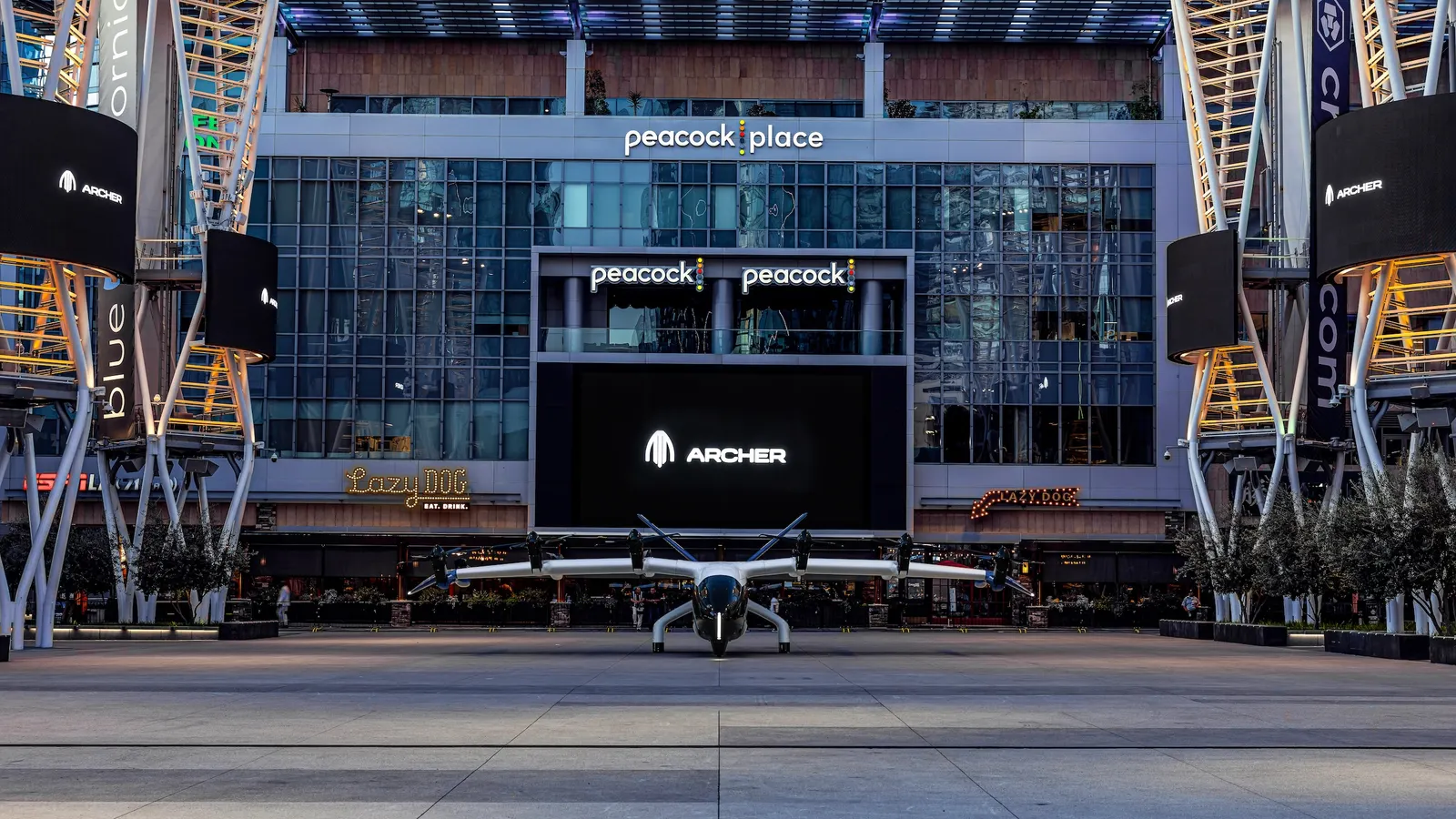
In a move that signals a paradigm shift for Southern California’s notoriously congested transit landscape, Archer Aviation—the designated official air taxi provider for the 2028 Olympic Games—has officially designated the L.A. Live sports and entertainment complex as a cornerstone of its burgeoning regional flight network. The announcement marks a critical milestone in the transition of electric vertical takeoff and landing (eVTOL) technology from experimental aviation to a functional component of metropolitan public infrastructure.
The collaboration between Archer and AEG, the owner and operator of the sprawling L.A. Live campus, is more than a logistical upgrade; it is a blueprint for the future of urban mobility. By integrating flight facilities directly into the heart of downtown Los Angeles, the project aims to bypass the city’s gridlocked freeways, offering a high-speed, zero-emission alternative for residents and international visitors alike.
The Evolution of Urban Air Mobility: Main Facts
The partnership hinges on the deployment of Archer’s "Midnight" aircraft, a pilot-plus-four-passenger eVTOL designed for rapid, back-to-back flights. The L.A. Live site will serve as a high-traffic vertiport, a specialized landing zone characterized by vertical takeoff and landing pads, passenger lounges, and advanced battery-charging infrastructure.
According to technical specifications released by Archer, the Midnight aircraft is optimized for “back-to-back” short-distance hops, capable of traveling up to 20 miles with minimal downtime for charging. The integration of L.A. Live into this network provides a central hub for commuters attending games for the Los Angeles Lakers, LA Kings, and Los Angeles Sparks, as well as major concert and convention attendees.
The project has cleared the initial feasibility phase, which involved exhaustive land-use analysis, airspace safety reviews conducted in coordination with the Federal Aviation Administration (FAA), and rigorous assessments of the site’s power grid capacity.
Chronology of the eVTOL Surge
The road to this announcement has been paved by a rapid succession of regulatory and technological breakthroughs over the last three years:
- Early 2024: The FAA releases its roadmap for the “Innovate28” plan, outlining the path to commercial eVTOL operations in time for the 2028 Olympic Games in Los Angeles.
- Late 2024: Archer Aviation and Joby Aviation receive conditional type certification for their respective aircraft, signaling that federal regulators are confident in the safety profiles of the designs.
- Mid-2025: Beta Technologies announces a massive infrastructure expansion, partnering with Archer and Macquarie Capital to develop a nationwide network of fast-charging stations.
- August 23, 2026: Archer Aviation conducts a live demonstration at the L.A. Live plaza, showcasing the Midnight aircraft to stakeholders and media.
- August 25, 2026: Official announcement of the L.A. Live site as a permanent vertiport facility.
Supporting Data and Technical Infrastructure
The scalability of the Archer-AEG model relies heavily on the "Charge-as-a-Service" ecosystem. Through its partnership with Beta Technologies, Archer is moving to install high-powered, rapid-charging infrastructure across 250 U.S. sites over the next decade.
At the L.A. Live facility, the electrical requirements are significant. Managing the energy load of a fleet of electric aircraft requires a sophisticated microgrid integration that can draw from the city’s power supply without disrupting the entertainment complex’s massive lighting and cooling demands.
Data from the FAA’s Integration Pilot Program suggests that the Southern California network will eventually handle hundreds of flights daily during peak events. To accommodate this, the vertiport design incorporates:

- Dynamic Load Balancing: Systems that ensure the airport charging grid communicates in real-time with the local utility provider to mitigate peak-demand strain.
- Automated Ground Handling: Robotic or highly efficient ground crews trained to swap passengers and initiate charging cycles within six to eight minutes.
- Acoustic Management: Since one of the primary hurdles for urban flight is noise pollution, the Midnight aircraft is designed to be whisper-quiet compared to traditional helicopters, operating at approximately 45 decibels—a level comparable to the ambient noise of a quiet office.
Official Responses
The collaboration has drawn praise from both the private sector and municipal planning officials, who view the project as a necessary evolution for the 2028 Games.
“This is an ambitious project and exactly the kind of forward-thinking collaboration that blends infrastructure and technology in service of our fans, visitors, and the broader community around major sports and live-entertainment events hosted at L.A. LIVE,” said Nick Baker, President and Chief Operating Officer of AEG Global Partnerships.
From the regulatory perspective, the FAA has characterized the Archer-AEG partnership as a "lighthouse project." In recent briefings, FAA representatives noted that while the technology is ready, the focus now shifts to the integration of these aircraft into the "Low Altitude Airspace," ensuring that air taxis can operate safely alongside drones, helicopters, and emergency services.
Implications for Urbanism and the Future of Cities
The integration of air taxis into city centers like Los Angeles presents several profound implications for urban planning and public transit.
1. The Decentralization of Transit
For decades, urban transit has been tethered to the ground—subways, buses, and freeways. The L.A. Live project suggests a shift toward a three-dimensional transit model. If the project proves successful, it could reduce the pressure on the I-110 and I-10 freeways, which are notorious for some of the longest commute times in the United States.

2. Environmental Impact
The transition to electric aviation is a cornerstone of the broader “Green Olympics” goal set by the International Olympic Committee. By replacing short-haul, fossil-fuel-reliant ground vehicles (such as private limousines or standard shuttles) with zero-emission eVTOLs, the carbon footprint of the Games could be significantly mitigated.
3. Economic Stratification vs. Accessibility
Critics of the air taxi movement have frequently raised concerns about accessibility. Will this be a service for the elite, or a genuine public utility? Archer Aviation has hinted at a "tiered" pricing model, similar to current ride-sharing apps, with the hope that high-volume operations will eventually bring the cost of a flight down to the level of an Uber Black or a premium shuttle service. The long-term goal is for these vertiports to act as "transit hubs" that connect to light rail and bus rapid transit, ensuring they are not just isolated islands for the wealthy.
4. Regulatory and Safety Hurdles
Despite the optimism, the path forward remains complex. The FAA is still finalizing the rules for autonomous flight, as the current model still requires a pilot on board. Future iterations of the L.A. Live site will likely need to accommodate fully autonomous vehicles, which will require a level of AI-driven air traffic management (ATM) that is currently still in the developmental phase.
Conclusion: A New Horizon for L.A.
The inclusion of L.A. Live into Archer’s network serves as a tangible marker of progress. It transforms the conversation from "if" this technology will work to "how" it will be integrated into the daily life of a megacity. As the 2028 Games approach, the world will be watching Los Angeles to see if it can successfully navigate the challenges of safety, noise, and public acceptance to usher in a new era of urban mobility.
The successful activation of this site will not only provide a high-profile demonstration during the Olympics but will also establish a template for other major cities—from New York to Dubai—to follow. As the infrastructure takes shape, the vision of a "vertical city" is no longer a science-fiction trope, but an engineering reality taking root in the heart of downtown Los Angeles.
