



In a rare alignment of corporate finance and judicial intervention, the retail sector is currently navigating the logistical and strategic complexities of a massive capital infusion. Following a landmark Supreme Court ruling that invalidated specific tariffs enacted under the International Emergency Economic Powers Act (IEEPA), U.S. Customs and Border Protection (CBP) has begun the arduous process of issuing refunds. As of late August, the total payout under the Consolidated Administration and Processing of Entries (CAPE) system has ballooned to a staggering $106.6 billion, fundamentally altering the balance sheets of the nation’s largest retailers.
While industry titans such as Walmart, Target, Home Depot, and Lowe’s have all secured significant portions of these repayments, their individual approaches to utilizing these funds reveal a fragmented strategy for long-term growth and market competitiveness.
The Judicial Catalyst: A Timeline of the IEEPA Overturn
The current windfall is the direct result of a legal challenge that questioned the executive authority used to impose the tariffs in question. The Supreme Court’s decision to invalidate the levies effectively rendered the previous collection of these duties unconstitutional or outside the scope of the IEEPA’s intended use.
The chronology of this fiscal shift began in earnest earlier this year, setting off a scramble among legal and supply chain departments across the Fortune 500. By April, the CBP launched the CAPE system, a centralized digital infrastructure designed to process the massive volume of refund claims. Since its inception, the system has acted as the primary conduit for returning billions of dollars to companies spanning industries from consumer electronics—such as Nintendo—to industrial giants like Caterpillar and consumer staples firms like Kimberly-Clark.
For the retail sector, the arrival of these funds represents more than just a ledger adjustment; it acts as a liquidity buffer during a period defined by stubborn inflationary pressures and shifting consumer spending habits.
The Magnitude of the Refund: Supporting Data
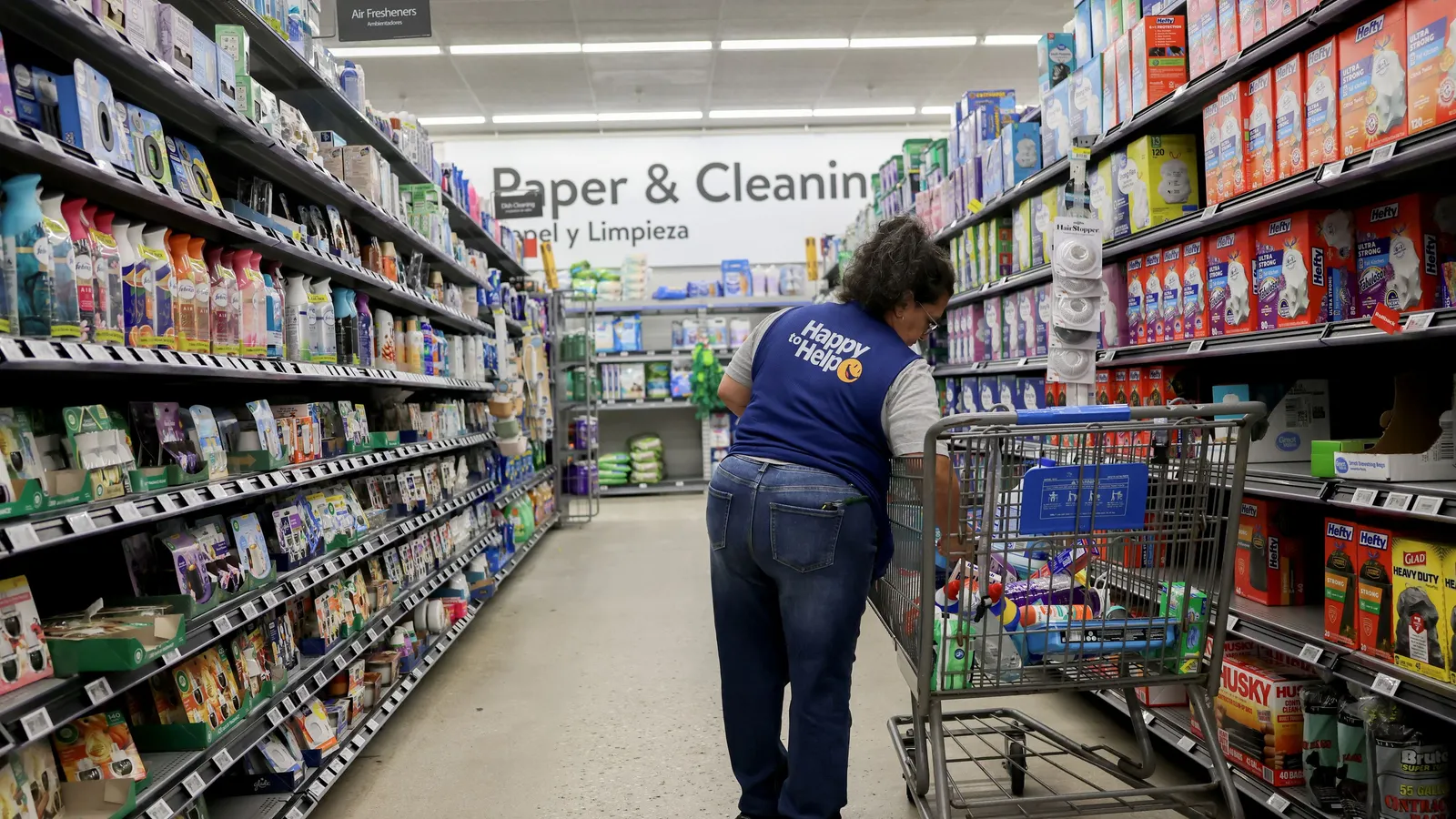
The scale of the payouts varies wildly depending on a company’s import volume and the specific categories of goods that were subjected to the now-defunct tariffs. The following figures highlight the breadth of the impact among the "Big Four" of American retail:
- Walmart: Emerging as the clear leader in the scope of its recovery, the retail giant has secured "substantially all" of its expected $2.9 billion in IEEPA refunds.
- Target: Following closely, Target has successfully recouped just under $1 billion in tariff duties, marking a significant, albeit singular, boost to its cost-of-goods-sold (COGS) metrics.
- The Home Depot: The home improvement leader reported a successful claim of $730 million, with the vast majority hitting its books by the end of June.
- Lowe’s: Representing the smaller end of this specific spectrum, Lowe’s has thus far reported $80 million, though management has signaled that this is merely a preliminary figure with more claims in the pipeline.
These numbers are not merely "found money." For publicly traded companies, the timing and classification of these refunds are critical. Most retailers have opted to report these receipts as a reduction in the cost of sales, effectively boosting gross margins for the current quarter. However, the decision of whether to pass these savings to the consumer or retain them to offset rising operational costs remains a point of divergence.
Strategic Divergence: Official Responses and Corporate Philosophy
Walmart: Prioritizing Price Leadership
Walmart’s strategy is perhaps the most consumer-facing of the group. Before the funds even cleared the accounts, CFO John Rainey was explicit about the company’s intent: to leverage the $2.9 billion windfall to maintain and enhance "price leadership."
In the company’s Q2 earnings call, Rainey emphasized that the capital is being funneled into price investments, particularly in the competitive grocery and general merchandise categories. By doing so, Walmart is betting that lowering prices will drive volume and customer loyalty, a classic strategy for the world’s largest retailer. The company’s guidance for the third quarter is explicitly tied to these pricing actions, suggesting that the tariff refunds are being treated as a strategic weapon to capture additional market share from smaller, less-capitalized competitors.
Target: A Measured, Analytical Approach
Target’s management has taken a more cautious stance, separating the "noise" of the refund from the company’s core operational health. CFO Jim Lee noted during the retailer’s recent earnings call that the $994 million refund was a welcomed reduction in costs, but cautioned analysts against viewing it as an indicator of sustainable operational performance.
Target is consciously adjusting its financial reporting to exclude these refunds when discussing earnings per share (EPS). The company’s philosophy is clear: the tariff refund is a non-recurring event. Consequently, Target is maintaining its focus on long-term performance metrics that are independent of the CAPE system’s payouts, even while acknowledging that further, smaller tranches of refunds are expected in the future.
The Home Depot: Offsetting the Cost of Doing Business
For The Home Depot, the $730 million refund serves a defensive purpose. Rather than utilizing the funds for aggressive price cuts, the company is using the windfall to offset the "market-borne pressures" of the current economic environment.
EVP and CFO Richard McPhail noted that the retail sector is facing increased costs in logistics, energy, and raw material inputs. By treating the tariff refund as a hedge against these rising costs, Home Depot is essentially neutralizing inflationary spikes. McPhail argued that this approach allows the company to maintain stable values for customers without eroding margins in a high-cost environment. The remaining $45 million in expected refunds will be processed as inventory turns over throughout the remainder of the fiscal year.
Lowe’s: The Long Game on Reinvestment
Lowe’s represents a different tactical approach. With a reported $80 million in hand—a figure the company admits is only a portion of its eligibility—Lowe’s is currently using the cash to absorb immediate, unavoidable costs such as transportation and fuel.
Unlike Walmart, Lowe’s has explicitly opted against matching the aggressive promotional pricing of its rivals. CEO Marvin Ellison noted that matching those price cuts was not part of the company’s financial plan and would not be "financially prudent." Instead, Lowe’s intends to pursue the remainder of its eligible refunds and reinvest those future amounts into "customer-facing actions" that reinforce its long-term value proposition rather than short-term price wars.
Broader Implications: What This Means for the Market
The influx of $106.6 billion into the private sector has profound implications that extend beyond the balance sheets of these four retailers.
1. The Competitive Landscape:
The divergent strategies of these retailers signal a shift in how they view their competitive advantage. Companies like Walmart are using the refunds to sharpen their competitive edge in price, while home improvement giants are using the money to stabilize their operational margins. This could lead to a widening gap in retail pricing strategies as the year progresses.
2. Inflation and Consumer Confidence:
If large-scale retailers like Walmart successfully pass these savings on to consumers, it could act as a mild, localized deflationary force in the retail market. However, as noted by companies like Target and Lowe’s, many firms are choosing to hold these funds to buffer against rising logistics and energy costs, which may limit the direct benefit to the average shopper.
3. Judicial and Regulatory Precedent:
The sheer scale of the CAPE system’s payouts underscores the high cost of executive overreach in trade policy. The legal invalidation of the IEEPA tariffs has created a massive administrative and financial burden on the U.S. government, while simultaneously forcing a re-evaluation of how retailers account for tariff volatility. Future administrations may be more cautious in using emergency powers for economic regulation, given the potential for massive, multi-billion-dollar retroactive liabilities.
4. Financial Reporting Volatility:
Investors must now be highly discerning when analyzing retail earnings. Because these refunds are being recorded in different ways—some as a reduction in COGS, others as one-time gains—the "true" performance of these companies is obscured by the volatility of the refund process. As Target’s CFO suggested, stripping out these numbers is now a mandatory exercise for any serious analysis of the retail sector.
Conclusion
The $100 billion-plus return of IEEPA tariff funds stands as one of the most significant financial events for the retail sector in recent memory. As these companies continue to process, receive, and allocate these funds, the marketplace is witnessing a real-time study in corporate strategy. Whether through the aggressive price-slashing of a global behemoth like Walmart or the defensive, margin-preserving tactics of a specialty retailer like Home Depot, the retail industry is effectively using a judicial correction to rewrite its own financial narrative for the coming fiscal year. The true impact of these refunds will only become clear as the capital is fully deployed and the retail sector enters the next phase of the post-pandemic economic cycle.
