





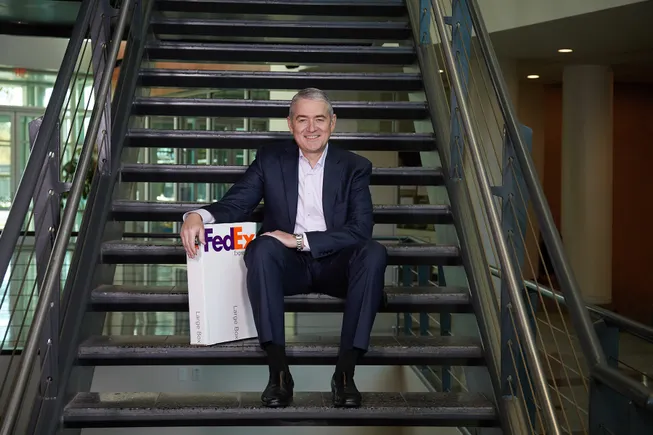
In the high-stakes arena of global logistics, the battleground for market dominance has shifted. As the e-commerce surge of the pandemic era stabilizes, major parcel carriers are increasingly pivoting away from low-margin consumer goods toward a more lucrative, resilient, and demanding sector: healthcare and life sciences. Leading this aggressive charge for FedEx is Nick Gennari, a company veteran tasked with transforming the logistics giant into the world’s premier partner for the pharmaceutical and medical device industries.
The launch of "FedEx Life Sciences" this past June marks a watershed moment for the company. By carving out a dedicated organization—comprised of approximately 150 specialized employees—FedEx is signaling that it no longer views healthcare as a subset of its general logistics network. Instead, it is treating the vertical as a specialized entity requiring bespoke infrastructure, distinct technological oversight, and a culture of extreme precision.
The Strategic Imperative: Why Healthcare?
For FedEx, the move into healthcare is not merely an expansion; it is an evolution of its business model. As CFOs across the logistics industry face the volatility of consumer spending, healthcare remains a beacon of stability. Unlike consumer retail, which ebbs and flows with the tides of GDP growth and inflation, medical demand is inelastic.
"Patients are going to continue to seek treatment when they need it, regardless of what’s going on from a GDP perspective," says Nick Gennari, President of Healthcare and Life Sciences at FedEx. This economic immunity makes the sector highly attractive for a company looking to build long-term, predictable revenue streams. In fiscal year 2026, FedEx reported nearly $10 billion in revenue from the healthcare segment, a figure the company is clearly aiming to grow as it shifts focus toward the high-value pharmaceutical market.
Chronology: A Multi-Year Transformation
The current push is the culmination of years of targeted investments and strategic realignment.
- 1992: Nick Gennari joins FedEx, beginning a three-decade tenure that provides him with a deep institutional understanding of the company’s global network.
- Pre-2024: FedEx initiates a gradual move to bolster its cold chain capabilities, recognizing that the future of medicine—specifically biologics and GLP-1 treatments—requires more than standard transit.
- February 2025: During its Investor Day, FedEx leadership explicitly identifies the pharmaceutical sector as its next major growth engine. EVP and Chief Customer Officer Brie Carere notes that the company’s pharmaceutical revenue had already reached $1.6 billion year-to-date.
- June 2026: The official launch of "FedEx Life Sciences," a dedicated business unit designed to provide end-to-end support for healthcare shippers.
- Present: FedEx continues to scale its global footprint of Life Science Centers, with six primary hubs currently operational in Memphis, Mumbai, Seoul, Tokyo, Veldhoven, and Singapore.
Supporting Data: The Logistics of Life-Saving Cargo
The shift toward healthcare is fueled by both financial potential and operational necessity. According to industry data, the addressable healthcare market is valued at approximately $80 billion, with the pharmaceutical sector accounting for nearly half of that total.
However, capturing this market requires more than just trucks and planes; it requires a "zero-defect" culture. Thomas Duke, Director of Strategic Intelligence and Analytics at Green Mountain Technology, emphasizes that healthcare shippers are among the most demanding clients in the world. "Our customers want to feel like these carriers are their true partner," Duke explains. "They require on-time delivery rates consistently above 99%."
To meet these requirements, FedEx has deployed its "Surround" monitoring suite. This technology provides near real-time visibility, predictive weather analytics, and, crucially, intervention capabilities. Currently, 40% of FedEx’s healthcare customers have integrated this tool into their supply chain operations, allowing for manual overrides—such as re-routing shipments to temperature-controlled facilities during unexpected transit delays—to prevent the degradation of sensitive cargo.
Official Responses and the "Human" Element
Gennari is clear about why a dedicated team is superior to a generalized sales or operations force. "We think it’s very, very difficult to do what we’re doing in healthcare if you have three or four other focuses," he states. By isolating the life sciences team, FedEx claims it can move with the pace required to design solutions that are not just "off the shelf," but meaningful.
The industry, however, remains skeptical of the "one-size-fits-all" approach. Pankit Bhalodia, a partner at consultancy West Monroe, notes that because healthcare shippers often move lower volumes than retail giants, the stakes for each individual shipment are exponentially higher. "Even a few late deliveries can have a large impact on their business," Bhalodia says. FedEx’s response to this is a strategy of "bringing the market to the customer." Rather than forcing pharmaceutical companies to route everything through a few massive, centralized hubs, FedEx is planning to expand its cold chain footprint into secondary markets, placing its infrastructure closer to manufacturing points.
Competitive Implications: The Battle with UPS
FedEx is not entering this space uncontested. Its primary rival, UPS, remains a formidable force in the medical logistics sector, reporting $11.2 billion in healthcare revenue in 2025. UPS has countered by investing $48 million into temperature-controlled cross-dock facilities and expanding its air hub capacity in Incheon, South Korea, specifically to capture the booming Asian pharmaceutical trade.
The competition is no longer about who can deliver the fastest; it is about who can provide the most comprehensive "assurance." The winner of this race will likely be the company that can best demonstrate to pharmaceutical giants that their supply chain is not a source of risk, but a core component of their product’s efficacy.
Implications for the Future of Global Health
The professionalization of medical logistics has profound implications for global health. As drugs become more specialized—requiring precise temperature control, specialized handling, and rigorous regulatory compliance—the role of the carrier becomes indistinguishable from that of the manufacturer.
For FedEx, the goal is to become an extension of the pharmaceutical supply chain. By rooting out waste and providing granular oversight, the company aims to move from a "vendor" to an "essential partner."
"As long as we are delivering the best solutions in this space," Gennari concludes, "we’re helping customers root out waste in their supply chain, and we’re providing them with the oversight that they’re looking for and the solutions that they require, the growth is going to be there."
As the industry moves forward, the success of FedEx’s Life Sciences initiative will serve as a bellwether for the logistics sector at large. If the company can successfully navigate the complexities of temperature-sensitive, high-value, and time-critical shipping, it will secure a competitive moat that is far more durable than the volatile world of e-commerce. The transition is not just a change in strategy—it is a shift in the company’s identity, moving from a carrier of packages to a custodian of patient outcomes.
Whether this transition can maintain the 99% reliability threshold while scaling into secondary markets remains to be seen. However, one thing is certain: the competition between FedEx and UPS for the health of the global supply chain has only just begun.
