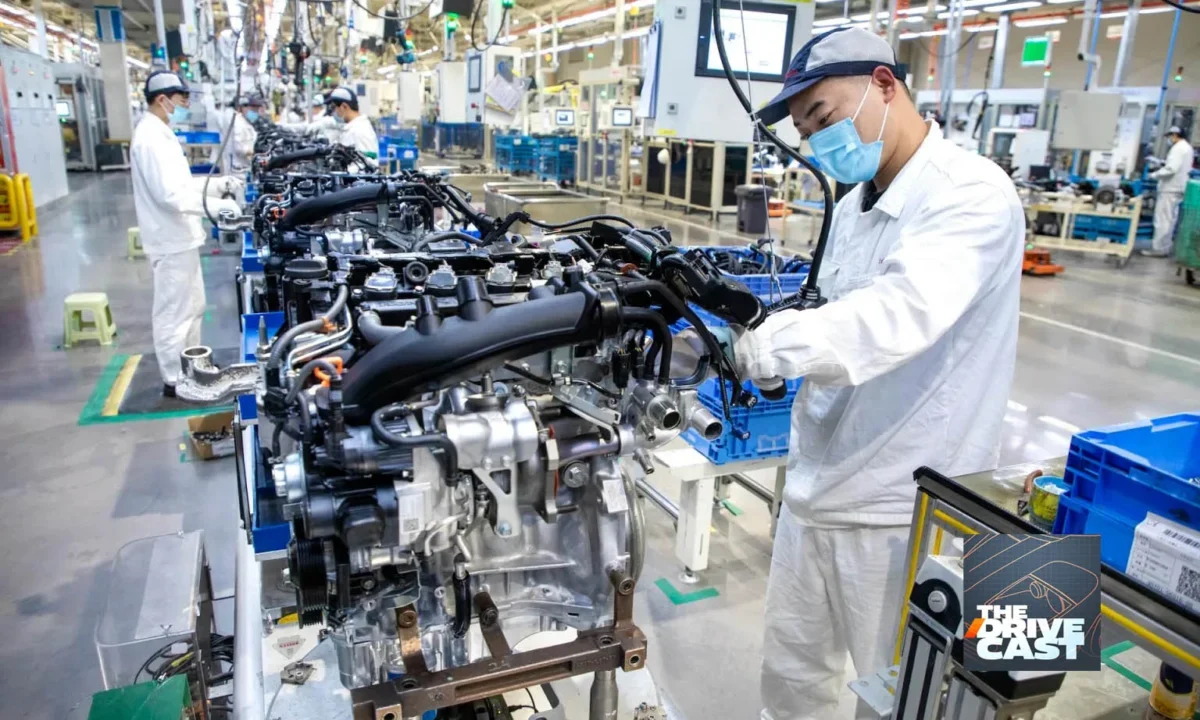
The landscape of European urban transportation is undergoing a quiet but drastic transformation. For decades, the narrow, winding streets of Rome, Paris, and Madrid were the natural habitat of diminutive European classics—affectionately dubbed pot de yaourt ("yoghurt pots") in France or epitomized by the iconic, ultra-compact Smart Fortwo. Today, however, the microcar segment is booming, but the manufacturing balance of power has shifted. The Smart brand has migrated its production to China under a joint venture between Mercedes-Benz and Geely, while a wave of inexpensive Chinese electric vehicles (EVs) has increasingly filled the vacuum left by legacy European automakers.
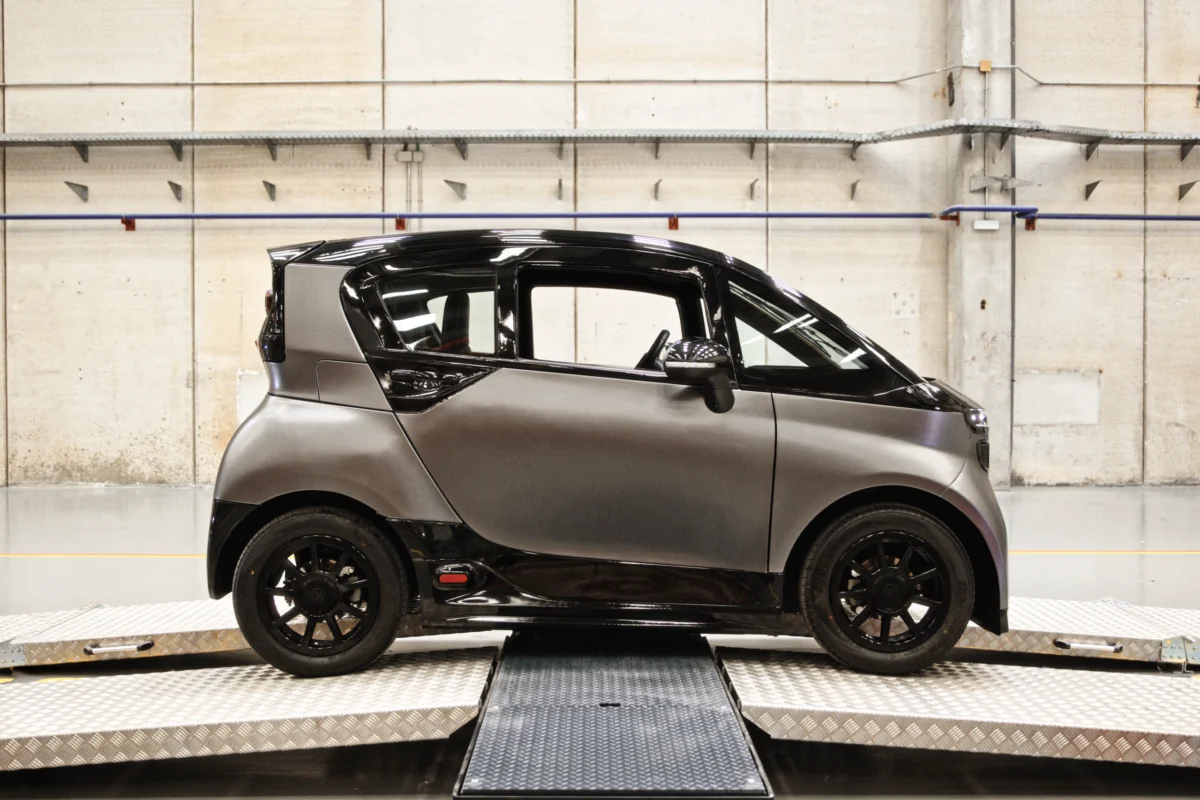
In this highly competitive and shifting market, Spanish startup Liux is attempting a daring counteroffensive. Armed with an unconventional philosophy, a novel bio-based material design, and a pragmatism that defies traditional European industrial protectionism, the company is preparing to launch its flagship microcar: the Liux Big.
Despite its ironic name, the Liux Big represents an oversized ambition to redefine sustainable manufacturing in Europe. Below is an in-depth analysis of the company’s strategy, technology, and prospects as it prepares for commercial rollout.
Main Facts: The Liux Big and the Circular Economy
Founded by entrepreneurs Antonio Espinosa de los Monteros and David Sancho, Liux is positioning itself not just as another EV manufacturer, but as a pioneer in circular industrial design. The company’s upcoming model, the Liux Big, is a heavy quadricycle designed specifically to tackle the dual challenges of urban congestion and environmental degradation.
+-----------------------------------------------------------------------+
|                           THE LIUX BIG AT A GLANCE                    |
+-----------------------------------------------------------------------+
| Category:           L7e (Heavy Quadricycle)                           |
| Body Material:      Linen-based (flax) biocomposite                   |
| Battery Options:    15 kWh and 20 kWh (removable/home-chargeable)     |
| Cargo Capacity:     260-liter trunk                                   |
| Target Price:       Under €18,000 ($21,000 USD) before subsidies      |
| Production Site:    Azuqueca de Henares, Spain (Lean Assembly)        |
+-----------------------------------------------------------------------+
Material Innovation: The Linen Body
The most distinctive feature of the Liux Big is its bodywork. Rather than relying on traditional stamped steel, heavy aluminum, or carbon fiber, the vehicle’s outer shell and structural components are constructed from a novel, linen-based biocomposite. Flax fibers are combined with a bio-resin to create a lightweight, highly durable material.
Crucially, this composite is engineered for disassembly. Unlike traditional carbon fiber—which is notoriously difficult to recycle and frequently ends up in landfills—the flax-based material used by Liux is designed so that the fibers can be cleanly extracted and repurposed at the end of the vehicle’s lifecycle, preserving the material’s integrity for a "second life."
Battery Flexibility and Home Charging
Recognizing that urban apartment dwellers rarely have access to dedicated street-side charging infrastructure, Liux has designed its battery packs to be modular and easily removable. The batteries can be charged at home using standard wall outlets, and they are fully compatible with domestic solar power systems, allowing owners to charge their vehicles using self-generated renewable energy.
Chronology: From Supercars and Water Bottles to Urban Mobility
The genesis of Liux is an unlikely intersection of high-performance automotive engineering and social entrepreneurship.
  [2017] David Sancho unveils the "Bóreas" 1,000-hp hybrid supercar at Le Mans.
    │
  [2022] Antonio Espinosa (ex-Auara) & Sancho co-found Liux; unveil "Animal" SUV.
    │
  [Late 2022] Pivot: Realizing SUV homologation is too costly, they shift to microcars.
    │
  [2023-2025] R&D on flax biocomposites, lean factory setup, and L7e development.
    │
  [2026] Liux Big secures Europe-wide homologation; workforce grows to 65.
    │
  [H1 2027] Scheduled commercial launch of the Liux Big urban model.
The Founders’ Pedigree
Antonio Espinosa de los Monteros (CEO): Espinosa previously co-founded Auara, a highly successful Spanish social enterprise and B-Corp that sold mineral water in bottles made from 100% recycled plastic. After Auara was acquired by the beverage giant Hijos de Rivera, Espinosa sought a larger industrial challenge where he could apply his expertise in "real circularity."
David Sancho (Chief Engineer): Sancho’s background lies in high-performance automotive development. In 2017, he gained international recognition by designing the Bóreas, a hybrid hypercar boasting over 1,000 horsepower, which was unveiled at the 24 Hours of Le Mans.
The Strategic Pivot
In late 2022, Liux made waves by showcasing its first prototype, the Liux Animal. The Animal was a fully electric, five-seater SUV constructed largely from recycled and plant-based materials.
However, the founders quickly realized the harsh realities of automotive startup economics. Homologating a full-sized M1-category passenger vehicle is an incredibly capital-intensive, multi-year process that has driven numerous well-funded EV startups into bankruptcy.
To mitigate this risk, Espinosa and Sancho executed a rapid strategic pivot. They determined that their probability of successfully navigating European homologation and reaching volume production would be significantly higher in the microcar category. This led to the development of the vehicle now known as the Liux Big.
By 2026, this pragmatic shift paid off: Liux officially secured Europe-wide homologation for the Liux Big, paving the way for commercial sales.
Supporting Data: Sizing Up the Market and the Vehicle
To understand where the Liux Big fits within the broader automotive ecosystem, it is necessary to examine the regulatory, financial, and physical metrics that define this project.
Regulatory Classification: L6e vs. L7e
European regulators divide light quadricycles into two distinct categories under the L-category framework:
L6e (Light Quadricycles): Limited to a maximum speed of 45 km/h, a maximum unladen mass of 425 kg, and engine outputs up to 6 kW. In many European countries, these can be driven without a full driver’s license by individuals as young as 14 or 16.
L7e (Heavy Quadricycles): Permitted to reach higher speeds (typically up to 90 km/h) with a maximum unladen mass of 450 kg (excluding batteries) for passenger transport. These require a standard driver’s license.
Liux opted for the L7e classification to ensure the Big could safely navigate arterial ring roads and urban highways, rather than being confined strictly to low-speed city centers.
Technical and Commercial Specifications
Trunk Space: Despite its ultra-compact exterior footprint, clever packaging allowed the engineering team to squeeze a 260-liter trunk into the vehicle—substantially larger than many competitors in the quadricycle space.
Capital Efficiency: To date, Liux has raised €16 million (approximately $18.5 million USD), a combination of private venture capital and European public funding. By comparison, traditional automotive programs routinely cost hundreds of millions of euros to reach production.
Target Capacity: Operating across three specialized facilities in Spain, Liux projects that its localized assembly model can scale to 20,000 vehicles per year by 2030.
Consumer Demand: The company has accumulated a no-fee waiting list of over 7,500 prospective buyers.
Demographic Insights
Data gathered from the waitlist has challenged some of the company’s initial assumptions. While micro-mobility is often marketed toward Gen Z and young urban millennials, Liux’s most highly represented demographic is the 55- to 60-year-old urban homeowner. Consequently, the company is positioning the Liux Big primarily as a household’s secondary vehicle—a clean, easily parkable commuter runabout for affluent suburbanites traveling into city centers.
Official Responses: Pragmatism Over Protectionism
In discussions regarding the future of the European automotive industry, Liux’s leadership team offers a perspective that is refreshing in its lack of corporate greenwashing.
The Illusion of the "100% European" EV
When asked about the challenge of competing with heavily subsidized Chinese manufacturers, CEO Antonio Espinosa de los Monteros was remarkably candid:
"The idea of a European car does not exist. A fully sovereign, closed-loop European supply chain is an illusion in the modern automotive world."
Espinosa acknowledged that while the Liux Big is proudly assembled in Spain, its battery cells are sourced from Asian manufacturers. Rather than exhausting capital on a futile quest to source every raw material domestically, Liux focuses its European sovereign efforts where they add the most value: localized assembly, advanced composite materials research, and circular end-of-life recycling systems.
Lean Manufacturing in Spain
To turn a profit on an €18,000 vehicle assembled in Europe, Liux has embraced Toyota’s famed lean management principles, adapted for a micro-factory setup. Beatriz Belda González, Head of Production at Liux and a former BMW manufacturing engineer, explained the setup at the company’s Azuqueca de Henares facility near Madrid:
"Our factory is intentionally compact because we only perform the final assembly and quality-assurance stages of the process. By outsourcing heavy stamping and sub-assembly manufacturing to regional partners, we keep our capital expenditure and footprint incredibly low while maintaining the agility to scale production up or down based on real-time market demand."
Elevating the Driving Experience
A common criticism of microcars is that they feel flimsy, unrefined, and unsafe. Celso Fernández Llorens, Head of R&D at Liux, emphasized that the company’s primary engineering objective was to overcome these limitations:
"In the L7e category, weight and structural constraints are severe. Many manufacturers meet these targets by stripping the vehicle down until it feels like a covered moped. We approached the problem from a premium automotive perspective. We designed the chassis and suspension to mimic the driving dynamics, braking performance, and roll stability of a standard passenger car."
To prove this, Liux has released test footage of the Big successfully completing high-speed slalom and emergency braking maneuvers—tests that are not legally mandated for quadricycles but are essential for building consumer trust.
Implications: Can Localized Circularity Beat Scale?
The trajectory of Liux carries profound implications for the broader European automotive sector, which is currently struggling to defend its market share against low-cost Chinese imports.
1. The Viability of the Micro-Factory Model
If Liux successfully scales production to 20,000 units using its lean, decentralized manufacturing model, it could serve as a blueprint for other European hardware startups. By avoiding the multi-billion-euro capital requirements of traditional automotive assembly plants, startups can remain agile, pivot when necessary (as Liux did from the Animal SUV), and achieve profitability at much lower volumes.
2. Sourcing vs. Assembly: The New Normal
Liux’s pragmatic approach to its supply chain highlights a growing consensus among realistic European industrial firms: the region cannot currently compete with China on raw battery cell production. However, by importing cells and focusing local innovation on battery management systems, circular biocomposite chassis materials, and regional assembly, European companies can still deliver a product with a significantly lower lifetime carbon footprint than a vehicle shipped entirely from East Asia.
3. Redefining the Aesthetics of Sustainability
Under the guidance of Head of Brand Ana Terrado Leyva, Liux is attempting to use sustainable design as a premium marketing tool. The brand’s showrooms utilize natural linoleum flooring (made from linseed oil, a nod to the car’s flax-fiber body) and minimalist textile screens. This deliberate aesthetic departure from the glossy, high-tech plastic interiors of mass-market Chinese EVs is intended to position the Liux Big not as a budget compromise, but as a conscious, design-forward lifestyle choice.
Whether this unique blend of flax-fiber innovation, high-performance engineering heritage, and supply-chain pragmatism will allow Liux to carve out a permanent niche in Europe’s crowded streets remains to be seen. However, as the first deliveries of the Liux Big approach in 2027, the startup has already proven that European automotive manufacturing is far from dead—it is simply getting smaller, smarter, and a lot more circular.