





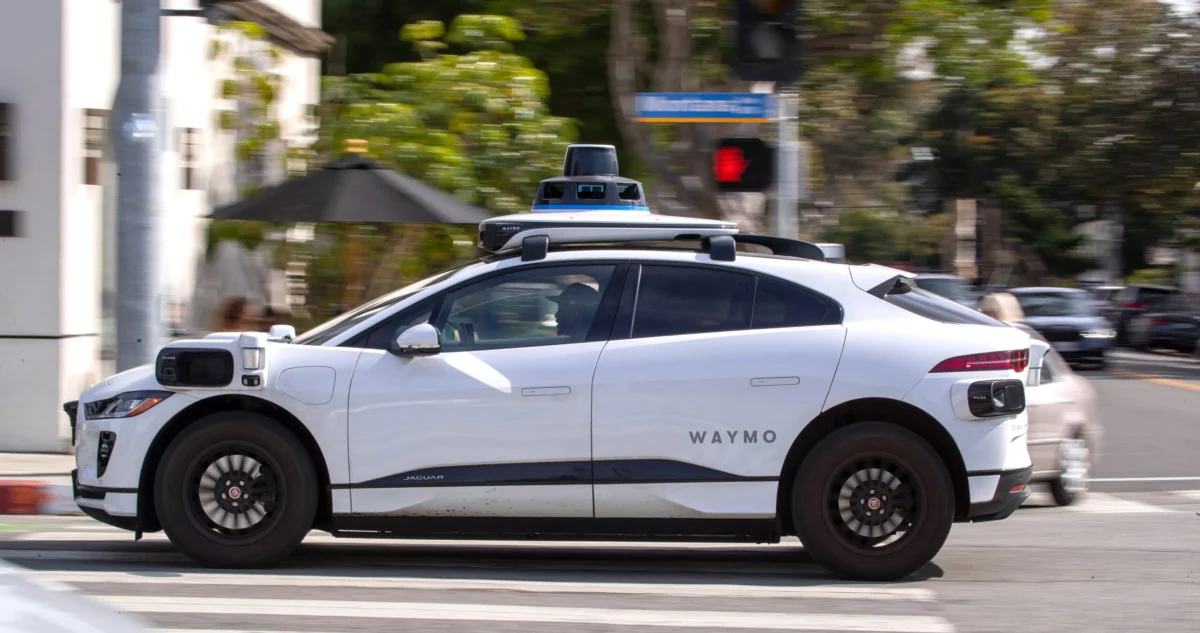
The autonomous vehicle (AV) industry has long operated under a singular, powerful narrative: that removing human drivers from the equation will dramatically reduce traffic accidents and make public roadways safer. While empirical data supports the long-term safety benefits of autonomous transport, the transition period has revealed a distinct, often overlooked human cost. Recent investigations into federal workplace safety records indicate that the personnel tasked with training and supervising these self-driving systems are sustaining physical injuries in the line of duty.
At the same time, the broader mobility sector is experiencing a massive realignment. High-profile venture capital rounds, major corporate restructurings, federal safety investigations into electric vehicle (EV) braking systems, and strategic executive departures are signaling that the race toward commercialization is entering a capital-intensive, highly scrutinized operational phase.
Main Facts
The Physical Cost of Autonomous Training
An analysis of data submitted to the Occupational Safety and Health Administration (OSHA) reveals that test drivers for major autonomous vehicle developers, specifically Alphabet’s Waymo and Amazon’s Zoox, sustained more than two dozen recordable injuries over the course of 2024 and 2025. The primary cause of these injuries was severe deceleration, commonly referred to as "hard braking," alongside other sudden, erratic maneuvers executed by the autonomous driving systems. Safety drivers suffered from musculoskeletal trauma, including severe whiplash, sprains, and chronic pain, with some workers sidelined for months. Notably, the reported figures may represent only a fraction of the industry-wide toll, as several AV developers operate under corporate structures or size thresholds that exempt them from certain OSHA reporting mandates.
Gatik Secures $200 Million to Scale Middle-Mile Logistics
Gatik, a prominent developer of autonomous box trucks specializing in "middle-mile" logistics, has raised $200 million in a fresh funding round. The investment was co-led by the Qatar Investment Authority and Koch Disruptive Technologies, with additional participation from Millennium Management, ARK Invest, and Intact Private Capital. This capital injection is designed to transition Gatik’s driverless freight operations from localized commercial pilots to large-scale, multi-state deployments. The funding follows a landmark multiyear commercial agreement signed with PepsiCo, contributing to Gatik’s $600 million in contracted revenue.
Maritime Electrification and Defense Convergence
Rhode Island-based electric seaglider developer Regent Craft secured $240 million in capital, split between a $120 million Series B equity round co-led by Mare Liberum and AE Ventures, and $120 million in debt financing provided by Erebor Bank—an institution founded by Palmer Luckey, the founder of defense technology firm Anduril Industries. Regent Craft, which recently completed its 255,000-square-foot manufacturing facility, is increasingly aligning its wing-in-ground (WIG) effect maritime transport technology with national defense and military logistics applications.
Executive Transitions and Regulatory Pressure
- Rivian Automotive: Chief Financial Officer Claire McDonough announced her resignation, effective at the end of October. Her departure comes at a critical juncture as the electric truck maker attempts to scale production of its mass-market R2 platform and execute its newly formed robotaxi vehicle partnership with Uber.
- General Motors: The legacy automaker is facing intensifying scrutiny from the National Highway Traffic Safety Administration (NHTSA) following hundreds of reports, over 20 crashes or fires, and at least six injuries linked to electronic braking failures in its electric vehicles.
- Ford Motor Company: Ford has appointed Dave Carroll, formerly of ENGIE North America, as the new president of its energy division, succeeding long-time executive Lisa Drake.
Chronology
The rapid convergence of these regulatory, financial, and operational developments unfolded across a highly active multi-year timeline, culminating in late August 2026:
- 2019: Gatik emerges from stealth, introducing the concept of autonomous middle-mile logistics to a highly skeptical market dominated by passenger-focused robotaxi hype.
- Mid-2024 to Late 2025: OSHA logs an influx of workplace injury reports from Waymo and Zoox. Test drivers report neck and back injuries resulting from aggressive autonomous maneuvers during public road testing.
- June 2026: Gatik solidifies its commercial viability by signing a massive, multiyear agreement with PepsiCo, establishing a core foundation for its $600 million contracted revenue pipeline.
- August 10, 2026: Waymo publishes a retrospective detailing ten key technical lessons learned from accumulating over 200 million autonomous miles, publicly defending its hardware-rich sensor approach against camera-only competitors.
- August 24, 2026:
- NHTSA elevates its investigation into GM EV braking systems.
- Indian autonomous drone developer Airbound raises a $37 million Series A round to deploy cargo drones.
- August 25, 2026:
- Gatik officially announces its $200 million funding round.
- Uber launches live-streaming video capabilities for its teen accounts.
- Waymo announces plans to expand its commercial robotaxi operations internationally, targeting Munich, Germany.
- August 27, 2026:
- Public release of the OSHA injury data exposing safety driver physical trauma at Waymo and Zoox.
- Rivian announces the upcoming departure of CFO Claire McDonough.
- Bloomberg reports that Dubai-based private aviation firm Vista Global is exploring a European IPO targeting a valuation of over $1 billion.
- August 28, 2026: YouGov releases a national survey indicating that a majority of Americans oppose the deployment of automated police license plate readers.
Supporting Data
The operational and financial landscape of modern mobility is defined by stark numbers, representing both capital influxes and physical risks.
The Safety Driver Injury Landscape (OSHA Data)
The physical toll of calibrating autonomous driving algorithms is documented in federal workplace safety filings:

| Metric | Details |
|---|---|
| Total Recorded Injuries (2024–2025) | More than 24 distinct cases reported by Waymo and Zoox |
| Primary Injury Mechanisms | Whiplash, lumbar strain, cervical spine sprains, and acute muscle spasms |
| Primary Cause | Sudden, high-G deceleration ("phantom braking" or emergency object avoidance) |
| Operational Impact | Multiple safety drivers required consecutive months of medical leave and physical therapy |
Funding and Market Valuation Metrics
The distribution of venture capital across the hardware, logistics, and aviation sectors highlights where institutional investors are placing their bets:
[Gatik Logistics] ──────────────► $200M (Series B/C - Led by QIA & Koch)
[Regent Seagliders] ───────────► $240M ($120M Equity / $120M Debt from Erebor Bank)
[Airbound Cargo Drones] ───────► $37M (Series A - Led by Greenoaks)
[Vista Global Aviation] ───────► $1.0B+ (Anticipated European IPO Target)
Waymo’s Compute and Sensor Infrastructure
In clarifying the technical architecture of its latest self-driving platform, Waymo corrected previous industry assumptions regarding its custom silicon:
- System-Wide Performance: The system delivers over 1,000 TOPS (Trillions of Operations Per Second) of Machine Learning (ML) performance.
- Silicon Architecture: The compute stack utilizes custom 5-nanometer ASICs (Application-Specific Integrated Circuits).
- Clarification: The 1,000 TOPS figure represents the cumulative capability of the entire front-end processing and ML stack, not a single, isolated chip. This puts its system-level performance on par with next-generation centralized automotive processors, such as Nvidia’s Drive Thor.
Official Responses and Industry Perspectives
The revelations surrounding safety driver injuries and technical limitations have prompted a series of strategic clarifications and defenses from the industry’s primary players.
Waymo’s Empirical Defense of Multimodal Sensors
In its public retrospective detailing lessons from 200 million autonomous miles, Waymo addressed the ongoing industry debate regarding vehicle sensor suites. Without naming competitors directly, Waymo strongly defended its use of a multimodal sensor suite (comprising LiDAR, radar, and cameras) over the low-cost, camera-only approach championed by Tesla:
"Multimodal sensors are indispensable for achieving the level of reliability required for true driverless commercialization. Operating in complex, low-batch regimes requires a highly optimized, redundant hardware stack."
Furthermore, a Waymo spokesperson clarified the computational capabilities of its custom hardware to prevent mischaracterizations in the tech community, emphasizing that its highly publicized 1,000 TOPS benchmark is achieved via a holistic, system-wide optimization rather than relying on a single, ultra-powerful processor.
The Regulatory Position on EV Safety
The federal government is signaling that it will no longer tolerate developmental or systemic hardware defects in next-generation vehicles. NHTSA’s escalating probe into General Motors’ EV braking systems highlights a growing regulatory impatience. The agency’s investigation focuses on the electronic brake boost system, which drivers report can fail unexpectedly, requiring significantly higher pedal pressure to stop the vehicle. GM has stated it is cooperating fully with the federal inquiry, emphasizing its commitment to vehicle safety and rigorous quality control.
Corporate Restructuring and Executive Departures
Rivian’s leadership transition comes at a time when the electric vehicle manufacturer must demonstrate fiscal discipline to Wall Street. The departure of CFO Claire McDonough is being managed as a structured transition. Rivian’s executive board expressed gratitude for her leadership during the company’s historic IPO and subsequent capital preservation phases, emphasizing that the search for her successor is focused on finding a leader capable of managing high-volume global production and capital-intensive joint ventures.

Implications
The Human Dilemma of Machine Learning
The injuries sustained by Waymo and Zoox safety drivers expose a profound paradox at the heart of the autonomous vehicle industry: in order to build a future free of human driving errors, human test pilots must absorb the physical shock of early-stage software errors.
Autonomous vehicles are programmed to prioritize safety above all else. When confronted with an ambiguous edge case—such as a misplaced construction cone, a reflective sign, or an erratic pedestrian—the vehicle’s default defensive action is often a maximum-effort brake application. To a human passenger, these sudden stops are unexpected and violent.
As these companies scale their operations in major metropolitan areas like San Francisco, Phoenix, and Munich, the reliance on human safety drivers remains a necessary bottleneck. The physical toll on these workers could catalyze increased labor organizing, higher insurance premiums for AV operators, and more stringent oversight from OSHA, which may eventually close the reporting loopholes that currently shield smaller startups from public scrutiny.
Gatik and the Triumph of the Middle-Mile Model
While passenger robotaxis struggle with regulatory pushback and the unpredictable chaos of urban centers, Gatik’s successful $200 million funding round demonstrates the immense viability of "middle-mile" logistics.
[Distribution Center] ───(Gatik Autonomous Box Truck)───► [Retail Store / Walmart]By constraining its operational design domain (ODD) to fixed, repeatable routes between distribution centers and retail hubs, Gatik has bypassed many of the complex variables that plague passenger AVs. The company’s $600 million in contracted revenue, anchored by retail giants like Walmart and PepsiCo, suggests that the near-term future of autonomous monetization lies in business-to-business (B2B) freight logistics rather than consumer ride-hailing.
The Intersection of Commercial Mobility and National Defense
Regent Craft’s successful funding round highlights a growing trend in the hardware startup ecosystem: the convergence of commercial dual-use technologies with defense funding. Electric seagliders, which operate on the wing-in-ground-effect principle to skim across the water’s surface at high speeds, present a highly efficient alternative for coastal transit.
The involvement of Erebor Bank and Palmer Luckey indicates that defense planners see massive potential in these vehicles for littoral combat logistics, rapid troop deployment, and island-hopping operations in contested regions like the Indo-Pacific. For mobility startups, the defense sector offers a stable, well-funded customer base that can subsidize the immense capital costs of early-stage manufacturing and regulatory certification.
