





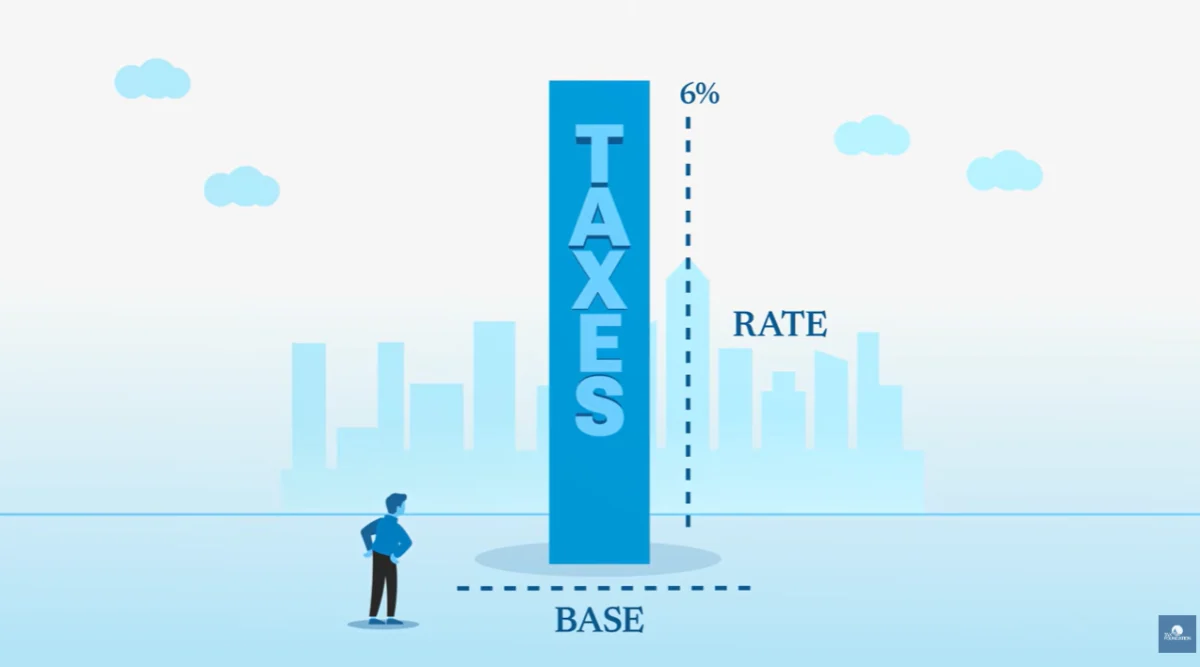
When taxpayers express frustration over their financial burden, the conversation almost invariably gravitates toward the "tax rate." Headlines scream about marginal income tax hikes, corporate rate increases, or sales tax adjustments. Yet, economists and tax policy experts argue that this singular focus on rates misses the most critical component of fiscal health: the tax base.
Understanding the interplay between the tax base and the tax rate is essential to grasping how governments fund public services without stifling economic growth. As fiscal challenges mount across the globe, the debate is shifting from how much we tax to what we tax.
Main Facts: Defining the Tax Architecture
At its core, a tax system is built on two pillars: the tax rate and the tax base. The rate is the percentage at which a government levies a tax on a specific economic activity. The tax base, conversely, defines the scope of that activity—what exactly is being taxed.
A tax base can include income, property, corporate profits, or retail goods and services. The critical principle here is "neutrality." A neutral tax system is one that raises necessary revenue without distorting the decisions of individuals or businesses. When the base is narrow—meaning large swaths of economic activity are exempt—governments are forced to push rates higher to meet their revenue targets. Conversely, a broad base allows for lower, more manageable rates.
The Problem of Economic Distortion
When tax bases are poorly designed, they create "distortions." These occur when individuals or companies change their behavior specifically to avoid taxes rather than to improve efficiency. For example, if a state exempts certain services from sales tax but taxes physical goods heavily, businesses may restructure their operations to bundle services with goods, or consumers may shift their spending patterns in ways that are economically inefficient. These distortions can lead to lower savings, decreased investment, and sluggish job growth.
Chronology: The Evolution of Tax Policy Thinking
The historical evolution of tax policy has moved from simplistic revenue collection to complex attempts at economic management.
- Early 20th Century: Tax systems were primarily narrow and blunt. Governments focused on easily identifiable wealth, such as land or high-end luxury imports, leading to high volatility in revenue collection.
- Post-WWII Era: As the middle class expanded, the focus shifted to income taxation. Governments began experimenting with deductions and exemptions, which were initially intended to encourage "socially beneficial" behaviors, such as homeownership or charitable giving.
- The 1980s Tax Reform Movement: This period marked a paradigm shift. Influential economists began advocating for "broad base, low rate" models. The landmark Tax Reform Act of 1986 in the United States served as a global benchmark, demonstrating that closing loopholes could allow for significantly lower marginal rates without sacrificing revenue.
- The Digital Transition (2010s–Present): The rise of the digital economy has severely strained traditional tax bases. As consumers moved from buying physical DVDs to streaming content, and from physical storefronts to online marketplaces, states found their traditional sales tax bases eroding. This has sparked a new wave of policy debate regarding the inclusion of services and digital goods in the tax base.
Supporting Data: The Efficiency Gap
Empirical evidence consistently supports the "broad base, low rate" philosophy. According to tax policy analysis, states with broader sales tax bases—those that include a wide array of services—are generally able to maintain lower tax rates while achieving higher fiscal stability.
The Sales Tax Case Study
Consider two hypothetical states:
- State A (Narrow Base): Taxes only physical goods but exempts groceries, professional services, and digital subscriptions. To meet its budget, State A must maintain a high sales tax rate (e.g., 9%).
- State B (Broad Base): Taxes physical goods, most services, and digital goods. Because its base is wider, it collects the same amount of revenue as State A but with a significantly lower rate (e.g., 5%).
The implications are profound. In State A, the high rate creates an incentive for consumers to travel to neighboring jurisdictions or purchase online to avoid the tax. In State B, the lower rate is less perceptible to the consumer, meaning it is less likely to alter purchasing behavior. Consequently, State B experiences fewer "deadweight losses"—the economic loss that occurs when the tax prevents a mutually beneficial transaction from taking place.
Official Responses: The Policy Dilemma
Policymakers face a significant political hurdle when attempting to broaden the tax base. While a broad base is economically efficient, it is often politically toxic.
The "Exemption" Trap
Most tax exemptions are created for popular reasons. Politicians often exempt groceries or children’s clothing to appear sympathetic to lower-income households. However, tax experts argue that these are often blunt instruments. Broadening the base by eliminating these exemptions can be perceived as an attack on the middle class.
The "Neutrality" Argument
Official bodies, such as the Organisation for Economic Co-operation and Development (OECD), have consistently advised member nations to simplify their tax codes. In recent years, the OECD’s Base Erosion and Profit Shifting (BEPS) project has sought to address how global companies shift profits to low-tax jurisdictions. While this is a different context than domestic sales tax, the principle remains identical: a robust, broad, and internationally aligned tax base is essential to preventing systemic economic leakage.
Implications: The Future of Fiscal Policy
As we look toward the future, the structural design of tax systems will likely become the primary battlefield of fiscal policy.
1. Stability in Volatile Times
Governments are increasingly realizing that narrow bases are unstable. During economic downturns, narrow bases tend to shrink faster than the economy itself. A broad base, which touches a wider variety of economic transactions, provides a more stable revenue stream, allowing governments to avoid sudden, panic-induced tax hikes during recessions.
2. The Tech Integration
The transition to a service-based economy is irreversible. Future tax policy will inevitably involve bringing digital services, cloud computing, and automated labor into the tax base. The challenge will be doing so without creating new, unintended distortions in the rapidly evolving tech sector.
3. Economic Neutrality as a Goal
The ultimate goal for any tax system should be "neutrality." If a tax system is designed properly, people should make economic decisions—buying a home, investing in a business, or choosing a career—based on the actual value of those decisions, not on how they will affect their tax bill. By broadening the base and lowering rates, governments can reduce the influence of the tax code on individual liberty and market efficiency.
Conclusion
The debate over "how high are my taxes" is incomplete without asking "what am I being taxed on?" By shifting the focus from the rate to the base, we can build more resilient, efficient, and fair fiscal systems. It is a transition that requires political courage, as it involves removing popular exemptions in favor of systemic, long-term stability. However, as the digital economy continues to evolve and fiscal pressures mount, the "broad base, low rate" model stands out as the most pragmatic path forward for a sustainable economic future.
In the final analysis, a well-designed tax code is not just a tool for revenue—it is the underlying framework that allows an economy to function at its peak potential. Moving away from the complexity of high-rate, narrow-base systems is not merely a policy preference; it is a necessity for modern economic competitiveness.
