





As the traditional funding mechanisms for America’s vast transportation network begin to buckle under the weight of technological advancement and shifting consumer habits, policymakers are increasingly turning their eyes toward a controversial successor: the Vehicle Miles Traveled (VMT) tax. While the concept of charging drivers based on their actual road usage—rather than their fuel consumption—is theoretically sound, it has become a lightning rod for concerns regarding government surveillance and the sanctity of personal privacy.
To understand the impasse, one must look at the structural decay of the current system and the urgent need for a fiscal evolution that respects both the public purse and the individual citizen.
The Structural Failure of the Gas Tax
For nearly a century, the gasoline tax has been the bedrock of American infrastructure funding. It served as a simple, effective "user fee": if you drove, you bought gas; if you bought gas, you contributed to the maintenance of the roads you used. However, this model is rapidly becoming obsolete.
The rise of fuel-efficient vehicles, hybrids, and, most significantly, electric vehicles (EVs) has decoupled road usage from fuel consumption. As the federal Highway Trust Fund and various state road programs face chronic shortfalls, the gas tax no longer provides a representative picture of who is using the roads and to what extent. Policymakers are left with a funding gap that threatens the safety and efficiency of national logistics and daily commuting.
A VMT tax offers a more principled alternative. By charging drivers based on the actual miles traveled on government-owned roads, the system creates a direct link between service consumption and payment. Furthermore, by factoring in vehicle weight—which correlates directly with road wear and tear—a VMT system acts as a neutral, equitable user fee, ensuring that heavy-duty vehicles pay a proportional share of the damage they inflict on infrastructure.
A Chronology of the Debate
The transition toward a VMT model has not happened overnight. It is the result of years of legislative exploration and public pushback:
- 2000s – Early 2010s: As fuel efficiency improved, transportation departments began noting the long-term decline in gas tax revenue. Pilot programs began in a handful of states, primarily focused on administrative feasibility.
- 2015 – 2020: The conversation shifted from "whether" to "how." States like Oregon and Washington launched robust pilot programs testing various methods of mileage reporting, from manual odometer checks to smartphone apps.
- 2021: The Infrastructure Investment and Jobs Act (IIJA) brought the national debate to the forefront, including federal research grants for VMT pilots. However, the bill also introduced controversial "kill switch" mandates for vehicle monitoring, which inadvertently fueled public paranoia regarding government overreach.
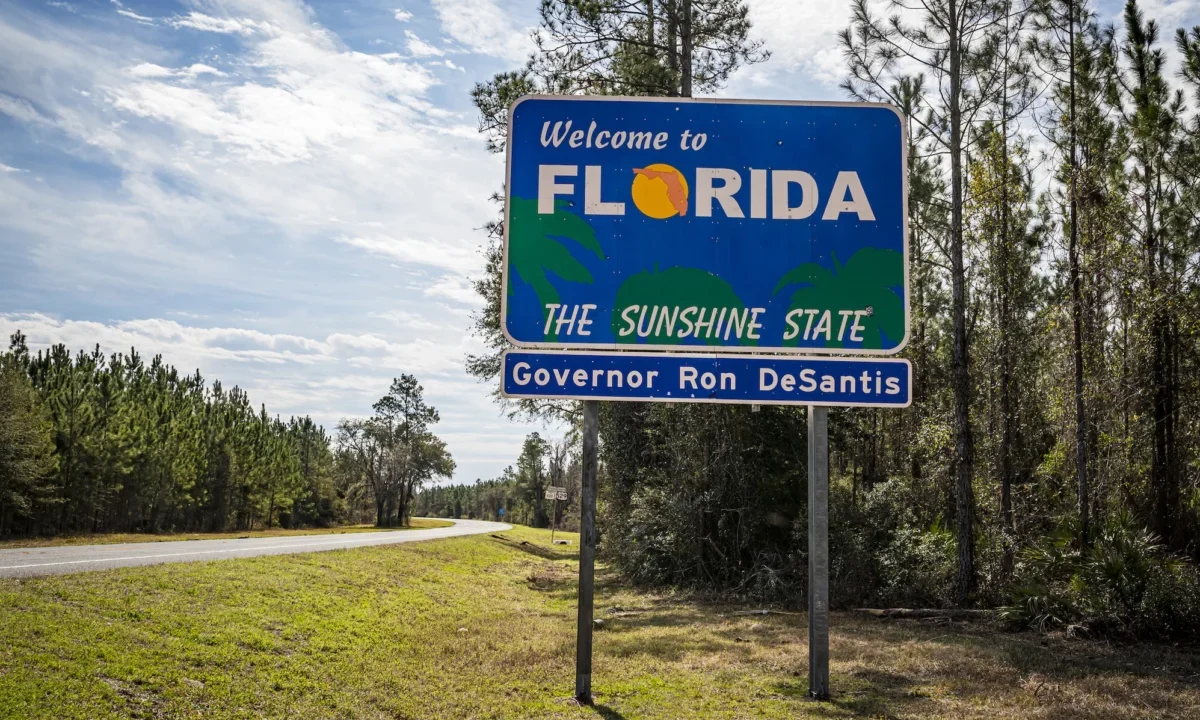
- 2024 – 2025: High-profile political figures, including Florida Governor Ron DeSantis, began using social media to frame VMT taxes as synonymous with "surveillance," successfully tapping into a deep-seated public distrust of digital tracking.
- 2026 – Present: The debate has reached a stalemate. While administrative models for a "privacy-first" VMT tax are ready for deployment, the political appetite for implementation remains low due to the perceived threat to civil liberties.
Supporting Data: Efficiency vs. Privacy
The opposition to VMT taxes rests on the assumption that they require real-time location tracking. However, data from state-led pilot programs suggests that the administrative requirements are far less intrusive than the public fears.
Washington State’s pilot program proved that simple odometer reporting—supported by photographic evidence—is a viable method for collection. This method requires no GPS, no real-time location streaming, and no tracking of driving patterns. It treats the government like a utility company: just as a water meter records total volume without tracking how the water is used, an odometer records total usage without tracking where the vehicle traveled.
Furthermore, current "user fees" are often opaque. Drivers currently pay a "gas tax" that is frequently used to fund environmental programs, mass transit, and general administrative bloat, rather than just road repairs. A VMT tax would increase transparency by creating a dedicated, ring-fenced stream of revenue. When a driver knows that every mile paid for is a mile invested in road quality, the tax becomes a service charge rather than a nebulous burden.
Official Responses and the "Surveillance" Narrative
The most significant obstacle to VMT adoption is the narrative that it constitutes an unconstitutional surveillance program. Governor Ron DeSantis’s public rejection of the VMT tax on X (formerly Twitter) crystallized this sentiment: "Vehicle Miles Driven (VMT) taxes require the government to surveil movements and violates individual privacy."

This response is representative of a broader political trend where any government interaction involving data collection is scrutinized through the lens of "Big Brother." However, this narrative ignores the existing, widespread surveillance that drivers already endure.
Automated License Plate Readers (ALPRs) are now ubiquitous. With over 100,000 cameras documented by groups like DeFlock, drivers are already being tracked by federal and local law enforcement in real-time. In many cases, these systems are used for "predictive policing," creating searchable databases of where a citizen goes and when. Paradoxically, the same states that oppose VMT taxes for "privacy" reasons often operate massive toll-road camera networks that track the exact location of vehicles.
The Path Forward: Privacy-Conscious Design
If the goal is to fix our crumbling infrastructure, the VMT tax must be decoupled from the surveillance state. Policymakers have the tools to design a "privacy-first" system that respects the Fourth Amendment.
1. The Voluntary Odometer Method
The simplest solution is to allow for annual or bi-annual odometer reporting. This requires no external technology and keeps the vehicle entirely "offline" regarding government communication. Drivers would report their mileage during annual registration, effectively turning the VMT tax into a once-a-year administrative task.
2. Commercial Account Managers (CAMs)
For those who prefer a more automated experience, the government could utilize third-party intermediaries. Similar to how tax software acts as a buffer between a taxpayer and the IRS, a CAM would collect granular data from a vehicle’s onboard computer, aggregate it, and report only the final mileage figure to the state. The government would receive the payment and the total mileage count, but never the route history or time-stamped location data.
3. Anonymization and Data Siloing
Legislation must strictly prohibit the retention of location data. If a driver opts for a GPS-based system (perhaps to receive lower rates for driving on rural roads or to avoid taxing private property miles), that data must be processed locally on the device or by a third party and destroyed immediately after the calculation is complete. By legally mandating that location data cannot be shared with law enforcement without a warrant, policymakers can restore the trust necessary for the program’s success.
The Long-Term Implications
The failure to address the funding gap will inevitably lead to one of two outcomes: a decaying, dangerous transportation network, or a haphazard, inefficient system of stop-gap taxes (such as retail delivery fees and excessive EV registration surcharges).
The latter is already happening. States are resorting to "creative" taxation—like taxing rental cars or applying flat fees to EVs—that are inherently discriminatory and economically inefficient. These fees fail to capture the reality of road use and often penalize innovation.
A VMT tax is not a "surveillance scheme" unless we choose to make it one. If designed with transparency, choice, and data minimization as its core pillars, it stands as the only sustainable, future-proof solution for funding the infrastructure that powers the American economy. The question is not whether we can afford to implement a VMT tax, but whether we can afford the cost of inaction. By choosing a path of privacy-conscious design, policymakers can prove that fiscal responsibility and civil liberty are not mutually exclusive—they are, in fact, the dual requirements of a modern, functioning democracy.
