




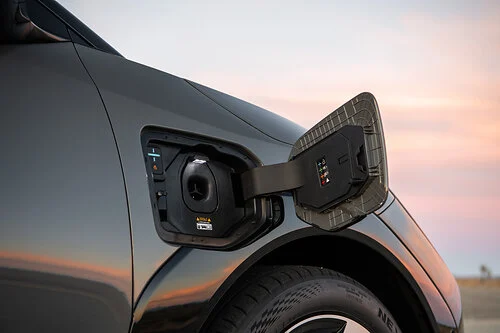
In a significant move to accelerate electric vehicle (EV) adoption and support sustainable infrastructure, Kia Canada has announced a major expansion of its strategic partnership with Variablegrid Adaptive Power Inc. The collaboration introduces a pioneering program titled “Variablegrid Plus,” designed to leverage Canada’s Clean Fuel Regulation (CFR) to put tangible financial returns directly into the hands of EV owners.
This initiative, which allows customers to earn credits for at-home charging, marks a milestone in the automotive sector, positioning Kia as the first manufacturer to offer a direct-to-consumer financial incentive under the CFR framework. As the automotive industry pivots toward electrification, programs like Variablegrid Plus serve as a critical bridge, lowering the total cost of ownership while simultaneously addressing the technical hurdles of home charging infrastructure.
Main Facts: The Variablegrid Plus Mechanics
The core of the Variablegrid Plus program is a three-year subscription model available exclusively at EV-certified Kia dealerships across Canada. By enrolling in this program, Kia EV owners become eligible for a rebate of $0.10 per kilowatt-hour (kWh) for energy consumed while charging their vehicles at home. This program is scheduled to run until 2030, aligning with the federal government’s long-term emissions reduction targets.
Key Program Highlights:
- Rebate Structure: Participants earn $0.10 for every kWh charged at home.
- Annual Potential: A driver covering an average of 20,000 kilometres annually in an EV4 model could see up to $360 in annual returns.
- Hardware Incentives: Customers who bundle the subscription with a Variablegrid in-home charger receive up to $350 in immediate upfront savings on hardware costs.
- Accessibility: Funds accumulated through the program are available for withdrawal once a user’s balance reaches a $50 threshold.
The program effectively transforms the act of charging from a utility expense into a revenue-generating activity, providing a clear financial offset for the electricity costs associated with daily commuting.
Chronology: Building the Partnership
The relationship between Kia Canada and Variablegrid did not emerge in a vacuum. It is the result of a calculated effort by Kia to integrate energy management solutions into the vehicle ownership experience.
- Initial Engagement: Kia Canada sought to address the "charging anxiety" often associated with residential infrastructure, particularly for homeowners living in older residences with limited electrical panel capacity.
- Technology Pilot: The two companies initially focused on the deployment of Variablegrid’s adaptive load management systems. By allowing Level-2 charging without requiring expensive electrical service upgrades, the technology made EV ownership viable for a larger demographic.
- CFR Integration: Recognizing the potential of the federal Clean Fuel Regulation, the companies spent the last year developing a mechanism to translate carbon credits into consumer-facing financial incentives.
- Official Launch: The “Variablegrid Plus” program was formally introduced to the Canadian market this quarter, marking the transition from a hardware-focused partnership to a comprehensive energy-as-a-service model.
Supporting Data: The Economics of the Clean Fuel Regulation
The Clean Fuel Regulation is the engine behind this initiative. Under the federal mandate, producers and importers of gasoline and diesel are required to reduce the lifecycle carbon intensity of their fuels. Since these companies must meet these targets by 2030, they are incentivized to fund projects that reduce emissions—such as supporting the shift to EVs.
The Math Behind the Savings
For the average Canadian driver, the cost of electricity remains significantly lower than the cost of gasoline. However, by adding a $0.10/kWh rebate, the effective cost of "fueling" a Kia EV is slashed further.
If an EV consumes approximately 18 kWh per 100 kilometres, a driver traveling 20,000 kilometres per year uses 3,600 kWh of energy. At $0.10/kWh, the $360 annual return represents a substantial reduction in operating costs. When combined with the $350 upfront hardware discount, the total cost of entry for a high-performance home charging setup is significantly mitigated.
Infrastructure Capacity
Variablegrid’s system is designed to solve the "Capacity Gap." Many residential panels in Canada are limited to 100 amps, which often cannot support a dedicated Level-2 charger without a costly service panel upgrade (which can cost thousands of dollars). Variablegrid’s adaptive technology monitors real-time energy use in the home and throttles the charging power when other high-draw appliances (like dryers or stoves) are in use, ensuring the home’s main breaker is never tripped.
Official Responses: A Vision for the Future
Elias El-Achhab, Vice-President and Chief Operating Officer at Kia Canada, emphasized that this partnership is fundamentally about the customer experience and the democratisation of EV technology.
“Kia Canada is the first manufacturer partnered with Variablegrid to extend a direct financial incentive to electric vehicle owners that puts money right back into customers’ pockets,” El-Achhab stated. “We are not just selling a vehicle; we are providing an ecosystem that makes the transition to sustainable transportation easier and more affordable.”
The sentiment from Variablegrid aligns with this vision. By focusing on the "invisible" infrastructure—the power management system—the company aims to remove the barriers that prevent apartment dwellers and owners of older homes from transitioning to electric mobility. The partnership is viewed as a blueprint for how automotive manufacturers can act as conduits for federal environmental policy, simplifying the complex world of carbon credits for the average consumer.
Implications: The Shift in the Automotive Landscape
The implications of the Variablegrid Plus program are far-reaching, affecting consumers, utility companies, and the automotive industry at large.
1. Consumer Impact
For the consumer, the program creates a "loyalty loop." By incentivizing home charging, Kia ensures that their customers remain within the Kia ecosystem. Furthermore, the program provides a predictable financial return, which helps combat the higher upfront purchase price of EVs compared to internal combustion engine (ICE) vehicles.
2. Grid Management
By using adaptive load management, Variablegrid helps prevent strain on the local electrical grid. By controlling the flow of electricity during peak demand hours, the technology supports utility companies in maintaining grid stability. This is a crucial aspect of the energy transition, as widespread EV adoption threatens to overwhelm local transformers if not managed intelligently.
3. Policy and Regulation
The program demonstrates that the federal Clean Fuel Regulation is working as intended. Rather than the benefits of carbon reduction staying solely within the energy sector, they are being passed down to the end-users who are doing the heavy lifting of decarbonization. If successful, this model could be replicated by other automotive manufacturers and tech firms, creating a broader standard for "EV-friendly" incentives in Canada.
4. Competitive Landscape
Kia’s move sets a new benchmark for other automakers. Competitors will likely face pressure to develop similar partnerships that offer tangible, ongoing financial benefits to owners. The "Total Cost of Ownership" (TCO) calculation for EVs is becoming increasingly favorable, and manufacturers that offer integrated energy solutions will likely see higher customer retention and brand loyalty.
Conclusion: A Sustainable Path Forward
The expansion of the partnership between Kia Canada and Variablegrid Adaptive Power Inc. is more than just a marketing initiative; it is a strategic integration of policy, technology, and consumer advocacy. By turning the Clean Fuel Regulation into a consumer benefit, Kia is helping to remove the friction points of EV ownership.
As we look toward 2030, the success of this program will likely serve as a case study for how the automotive industry can help meet national climate goals. By making home charging smarter, more affordable, and financially rewarding, Kia Canada is not only selling cars—they are facilitating a fundamental shift in how Canadians power their lives. For the prospective EV buyer, the combination of hardware savings and ongoing charging rebates makes the transition to electric not just an environmentally conscious choice, but a financially savvy one.
