





For over a century, the Haber-Bosch process has stood as the silent engine of modern civilization. By converting atmospheric nitrogen into ammonia, this industrial feat allowed humanity to transcend natural soil limitations, fueling the agricultural abundance required to sustain a global population of eight billion. Yet, this miracle comes with a staggering environmental and economic price tag. The production of synthetic fertilizer is an energy-intensive endeavor, accounting for approximately 2% of global greenhouse gas emissions.
Today, as geopolitical instability—most notably the ongoing conflicts in the Middle East—sends natural gas and fertilizer prices into volatile territory, the agricultural sector is desperate for alternatives. A burgeoning movement of biotech startups is looking toward the microscopic world for a solution, banking on the idea that the answer to our climate-impacted food supply lies not in heavy industry, but in the very soil beneath our feet.
The Problem with Nitrogen: An Energetic Paradox
The Earth’s atmosphere is composed of nearly 80% nitrogen, an element essential for plant DNA, protein synthesis, and chlorophyll. Despite this abundance, plants cannot utilize atmospheric nitrogen directly because the gas is locked in a triple bond that is exceptionally difficult to break. In nature, specific microbes have evolved the ability to "fix" this nitrogen, converting it into reactive compounds like ammonia that plants can absorb.
Synthetic fertilizers replicate this process on a massive scale, utilizing high heat and pressure—powered by natural gas—to force nitrogen and hydrogen together. It is an efficient, yet carbon-heavy, necessity.
The struggle for microbial fertilizer companies has been biological, not just chemical. For a bacterium to fix nitrogen, it must invest massive amounts of cellular energy. When a microbe is forced to prioritize nitrogen fixation, it often does so at the expense of its own survival and reproduction. In a field environment, these microbes are frequently outcompeted by native soil bacteria, leading to poor colonization and underwhelming results.
Chronology: From Ancient Symbiosis to Genetic Engineering
- Ancient History: For millennia, farmers practiced traditional nitrogen management through the use of manure and the rotation of legume crops, which house nitrogen-fixing bacteria in root nodules.
- 1909: Fritz Haber and Carl Bosch develop the industrial process for ammonia synthesis, sparking the Green Revolution.
- 2011: The founding of Pivot Bio marks a shift in the modern era of agricultural biotech, aiming to replace synthetic nitrogen with engineered microbes.
- 2024–2026: A new wave of startups, including Switch Bioworks, emerges, focusing on more sophisticated genetic "switches" to manage microbial energy expenditure.
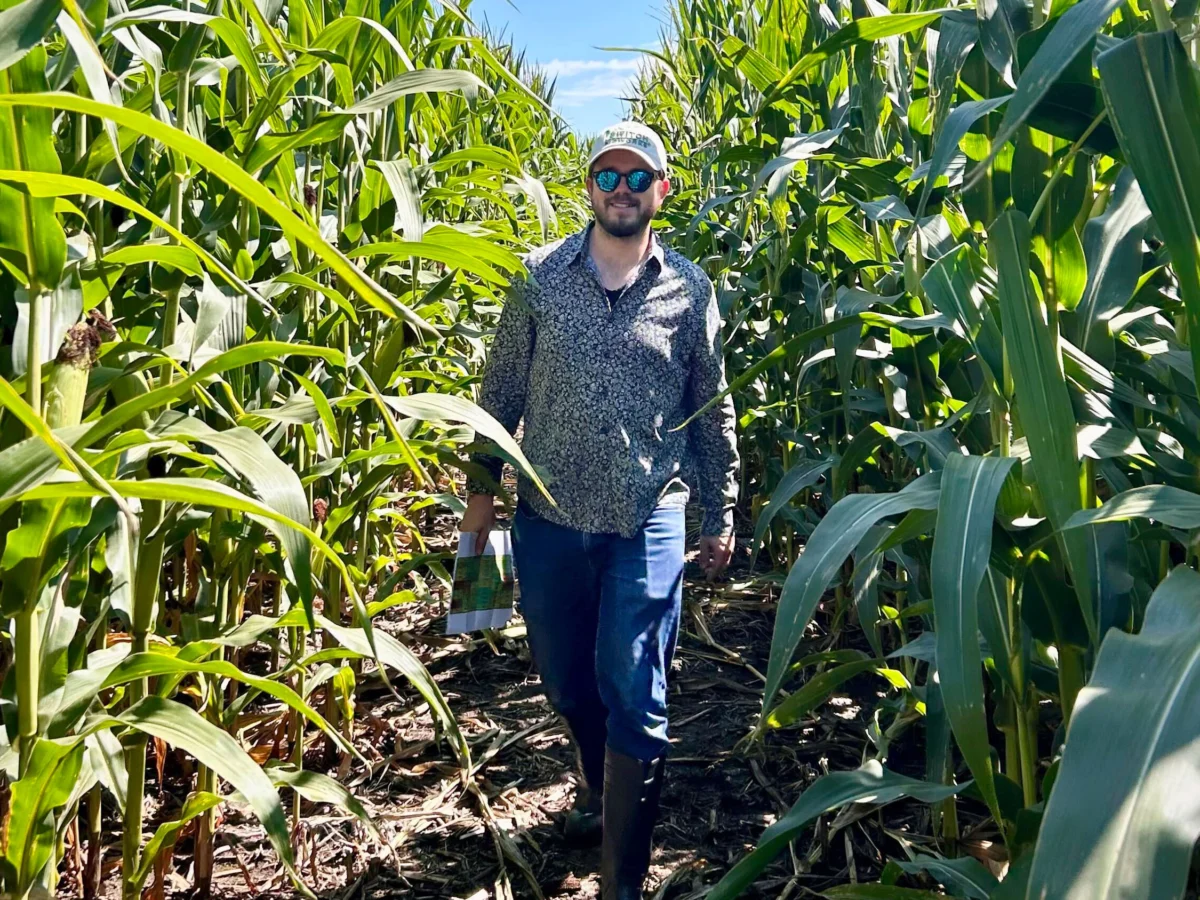
- 2026: Large-scale field trials across the United States reach a critical phase, with companies like Switch reporting early visual success in corn crops.
Switch Bioworks and the "Genetic Switch" Strategy
At the forefront of this evolution is Switch Bioworks, a startup led by CEO Tim Schnabel. The company is tackling the "energy expense" problem through a sophisticated application of synthetic biology. Instead of demanding that microbes produce ammonia constantly, Switch is engineering genetic switches—DNA sequences that act as control toggles for cellular behavior.
"We have to reinvent fertilizer," says Schnabel. The core strategy is to ensure that microbes first establish a thriving, healthy colony around the crop’s root zone. Only once the colony has reached a sufficient density and the soil environment signals a depletion of nitrogen does the "switch" activate, triggering the microbes to begin nitrogen fixation.
By separating the colonization phase from the production phase, Switch hopes to solve the fundamental trade-off that has hindered earlier biological fertilizer attempts. "You have this inherent biological reality, where it’s really expensive for microbes to fix nitrogen," explains Dan Blaustein-Rejto, director of food and agriculture at the Breakthrough Institute. "Adding genetic switches could help microbes grow and thrive and then help fertilize crops."
Supporting Data: The Scale of the Challenge
The potential impact of these technologies is significant, though it comes with realistic constraints. According to internal modeling from Switch Bioworks, their technology is currently designed to replace approximately 25% of synthetic fertilizer usage, with a long-term theoretical ceiling of around 50%. Pivot Bio, a more established player, has reported similar figures, noting that their microbial products can effectively offset a quarter of a farmer’s synthetic input.
The scale of the market is massive. In 2026 alone, the United States planted over 90 million acres of corn. Reducing fertilizer reliance on even a fraction of this land could equate to a massive reduction in the carbon footprint of the American agricultural sector. However, as John Havlin, a professor at North Carolina State University, notes, the goal is not total elimination, but a meaningful reduction in the total "load" of synthetic nitrogen applied to the environment.

Official Responses and Industry Outlook
The transition to microbial fertilizers is being watched closely by academics, environmentalists, and farmers alike. Travis Frey, CTO of Pivot Bio, describes the current market environment as a "double whammy" for farmers: rising input costs paired with declining prices for commodity crops. "This next decade is when biologicals on the farm are going to go mainstream," Frey asserts.
However, the transition is not without its skeptics. The scientific community emphasizes that moving from the laboratory to the field is the most difficult hurdle in biotechnology. "It’s too early to tell exactly how well this works in the field," admits Schnabel, even as he notes that early corn trials in 2026 show visually healthier plants compared to control groups.
Independent validation remains the gold standard. Blaustein-Rejto warns that the gap between company-reported data and independent peer-reviewed research can be substantial. "Field trials are a crucial step in proving a product," he says. "This is one of the final steps before they can go to market and make strong claims to farmers."
Implications: A New Era for Agriculture
The implications of this shift are far-reaching, touching on climate change, food security, and rural economics.
Environmental Impact
The "hard-to-abate" nature of the fertilizer industry makes it a prime candidate for disruption. If microbial fertilizers can successfully displace even 25% of synthetic ammonia, the resulting decrease in nitrous oxide emissions—a potent greenhouse gas—and the reduction in energy-intensive Haber-Bosch processing could be one of the most significant climate victories in the agricultural sector.
Economic Resilience
For farmers, the primary driver is not just carbon, but cost. As energy prices remain volatile due to global conflict, synthetic fertilizers become an increasingly expensive liability. Microbial solutions offer a degree of independence, potentially lowering the barrier to entry for farmers and protecting them from the boom-and-bust cycles of the fossil fuel market.
The Limits of Biology
Despite the optimism, experts caution against viewing microbes as a "silver bullet." Blaustein-Rejto maintains that there is no "clear and plausible vision" for the complete replacement of synthetic fertilizer in the foreseeable future. Soil chemistry is complex, and the nutrient requirements for high-yield, modern crop varieties are immense. Consequently, the future of farming will likely be a hybrid model: a delicate balance between traditional, precise synthetic application and the biological augmentation provided by engineered microbes.
Conclusion: The Path Ahead
The work being done by companies like Switch Bioworks and Pivot Bio represents a pivotal moment in the history of agriculture. By harnessing the power of synthetic biology to optimize microbial behavior, researchers are attempting to bridge the gap between ancient biological wisdom and the demands of modern industrial farming.
As the current field trials wrap up this autumn, the results will provide the first concrete data points on whether these "genetic switches" can hold up under the unpredictable conditions of real-world farming. If successful, the microbial revolution may not just provide a cleaner way to grow food; it may provide the necessary buffer to protect our global food supply from the mounting pressures of a changing climate and an unstable world. The transition will be slow, and it will be incremental, but the shift toward "living" fertilizer is well underway.
