





In the hyper-competitive world of global manufacturing, the technology supporting operations is a double-edged sword. While digital transformation promises efficiency, it often leaves organizations saddled with "technical debt"—a fragmented landscape of site-specific tools, manual spreadsheets, and disconnected workflows. For Jabil, a manufacturing giant with over 100 sites across 30 countries and a workforce exceeding 140,000, this complexity was no longer just an IT headache; it was a barrier to agility.
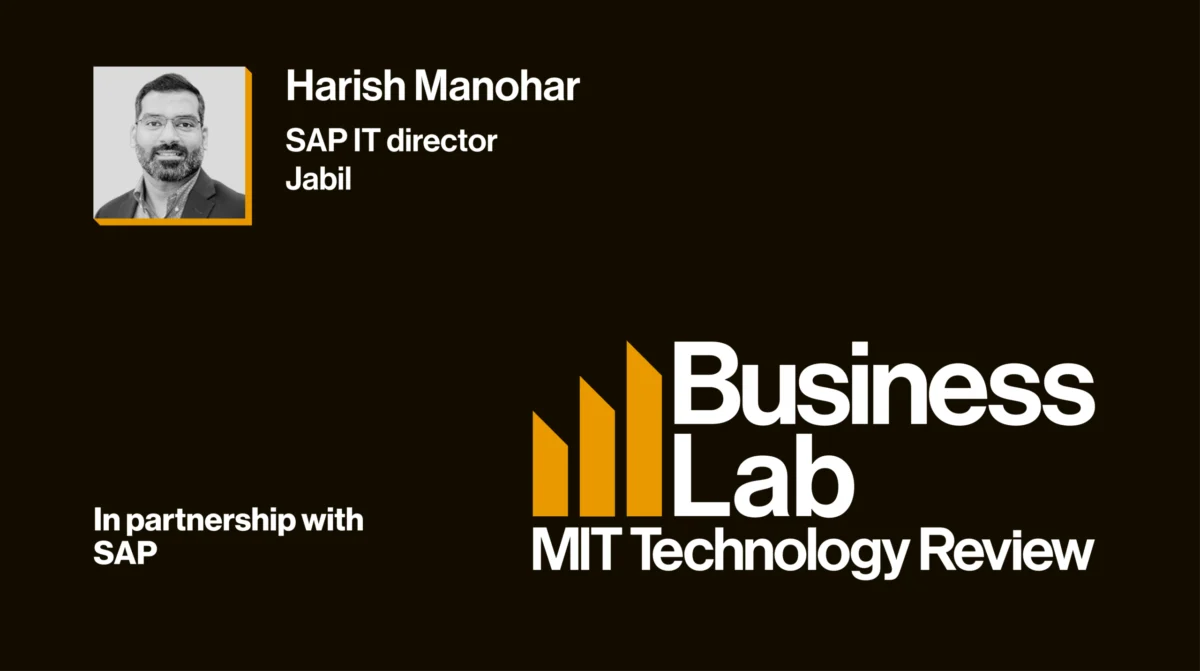
Harish Manohar, SAP IT Director at Jabil, recognized that to remain a trusted partner for the world’s top brands, the company needed a fundamental shift in strategy. The solution wasn’t just to add more cutting-edge technology, but to embrace a philosophy of "simplify-first, then-innovate."
The Strategic Imperative: Why Integration Must Come First
For a company with 60 years of history, the accumulation of legacy systems is inevitable. Over two decades, individual manufacturing plants developed localized workarounds to solve immediate problems. While these tools were effective in isolation, they created systemic "data silos" that hindered the company’s ability to coordinate responses to global supply chain disruptions.
"Any innovation without simplification is going to add more complexity," Manohar explains. For Jabil, the goal was to standardize processes and consolidate disparate systems to establish a "data backbone." Before the organization could leverage artificial intelligence or advanced automation, it had to ensure that data could flow seamlessly across the entire enterprise.
Integration is not merely a technical task; it is the prerequisite for business intelligence. By focusing on a unified data architecture, Jabil aimed to shift its operational culture from one of reactive, manual data reconciliation to proactive, insight-driven decision-making.
Chronology of a Transformation: From Fragmentation to Unity
Jabil’s journey toward an integrated enterprise did not happen overnight. It required a methodical, incremental approach to replacing 25 years of technical debt.
Phase 1: Auditing the Landscape
The initial stage involved a brutal assessment of existing tools. Jabil leadership analyzed the mix of legacy applications, spreadsheets, and site-specific software to identify which were hindering growth. This phase was critical for identifying where "tool sprawl" was preventing a holistic view of global operations.
Phase 2: Establishing the Foundation
Jabil designated SAP as its core digital platform, utilizing the SAP Integration Suite and Business Technology Platform (BTP) as the centerpiece for its integration strategy. The company moved toward an API-driven, event-based architecture, moving away from point-to-point data movement that often leads to inconsistencies.
Phase 3: Governance and the "Clean Core"
Recognizing that past reliance on heavy customization had made systems difficult to upgrade, Jabil adopted SAP’s "clean-core" approach. By migrating to SAP RISE and implementing strict governance, the company is now limiting custom code, ensuring that the system remains scalable and ready for future updates.
Phase 4: Scaling Through Standardization
Currently, Jabil is in the process of rolling out standardized templates to its 100+ sites. By leveraging tools like SAP Signavio for business process management, the company is transitioning from a "site-by-site" operations model to an "enterprise-capability" approach.
Supporting Data: The Business Case for Simplicity
The motivation for Jabil’s transformation is grounded in measurable business value. The company’s focus on integration serves several key performance indicators (KPIs):
- Supply Chain Visibility: By integrating end-to-end processes, Jabil has achieved earlier identification of missing materials, which is vital for maintaining production schedules in a volatile global market.
- Operational Risk Mitigation: Standardized workflows mean that compliance requirements—especially in highly regulated industries—are baked into the system rather than managed through ad-hoc processes.
- Efficiency Gains: Employees are now moving away from manual data reconciliation. By providing a "single source of truth," the company has reduced the time spent chasing information, allowing staff to focus on higher-level strategic analysis.
- Deployment Velocity: Standardizing processes has drastically reduced the need for site-specific customizations, allowing for the faster rollout of new technologies across the global network.
Official Perspectives: The Human Element of Technology
Harish Manohar emphasizes that the most significant impact of this transformation is on the people using the tools. "Before we embarked on this journey, our buyers, inventory planners, and finance analysts had to deal with multiple tools and inconsistent processes," Manohar says.
The shift to a simplified landscape has fundamentally changed the daily experience of Jabil’s employees. When data is trusted and accessible, the role of the employee evolves from a "data cleaner" to an "insight actor." This cultural shift is essential for operational resilience.
Furthermore, Manohar notes that IT and business must be true partners. "Any investment that we make in a transformation or a modernization initiative has to have a deliverable business case that is approved and signed off by the business," he asserts. This alignment ensures that technology is not treated as an overhead cost, but as a strategic enabler of business value.
Implications: The Road to AI-Enabled Manufacturing
With a robust integration foundation now in place, Jabil is poised to unlock the next frontier of manufacturing: artificial intelligence. The company is actively exploring predictive supply chain insights, intelligent exception handling, and AI-driven forecasting.
However, Jabil is careful not to view AI as a "silver bullet." According to Manohar, AI must augment decision-making rather than serve as an experimental add-on. By ensuring that AI models have access to high-quality, integrated data, Jabil can move beyond theoretical use cases and implement tools that offer tangible improvements in planning and operational speed.
Key Lessons for Industry Leaders
For other organizations struggling with tool sprawl, Jabil’s experience offers a clear roadmap:
- Prioritize Integration as a Foundation: Do not view integration as an afterthought. It is the core requirement for any scalable, modern business.
- Standardize Before You Optimize: It is more effective to standardize a process than to try to optimize a dozen different, fragmented versions of that same process.
- Think in Three-to-Five-Year Horizons: Build architectures that will serve the company’s future scale, not just its current needs.
- Focus on Outcomes: Success should be measured by speed, visibility, and resilience, rather than the mere implementation of new software.
Conclusion: Simplicity as a Competitive Advantage
Jabil’s transformation underscores a vital truth for the modern enterprise: in an era where technology is abundant, the real challenge is curation and connection. By prioritizing simplicity, Jabil has turned its technological landscape into a strategic asset.
As the company continues to integrate its global operations, the "simplify-first" mindset will likely serve as the bedrock for future innovations. For Jabil, the conclusion is clear: simplicity at scale is not just an IT goal—it is a formidable competitive advantage that ensures the organization remains resilient, agile, and ready to meet the challenges of the next decade.
This report is based on insights provided by Harish Manohar, SAP IT Director at Jabil, during an episode of the "Business Lab" podcast, produced in partnership with SAP.
