




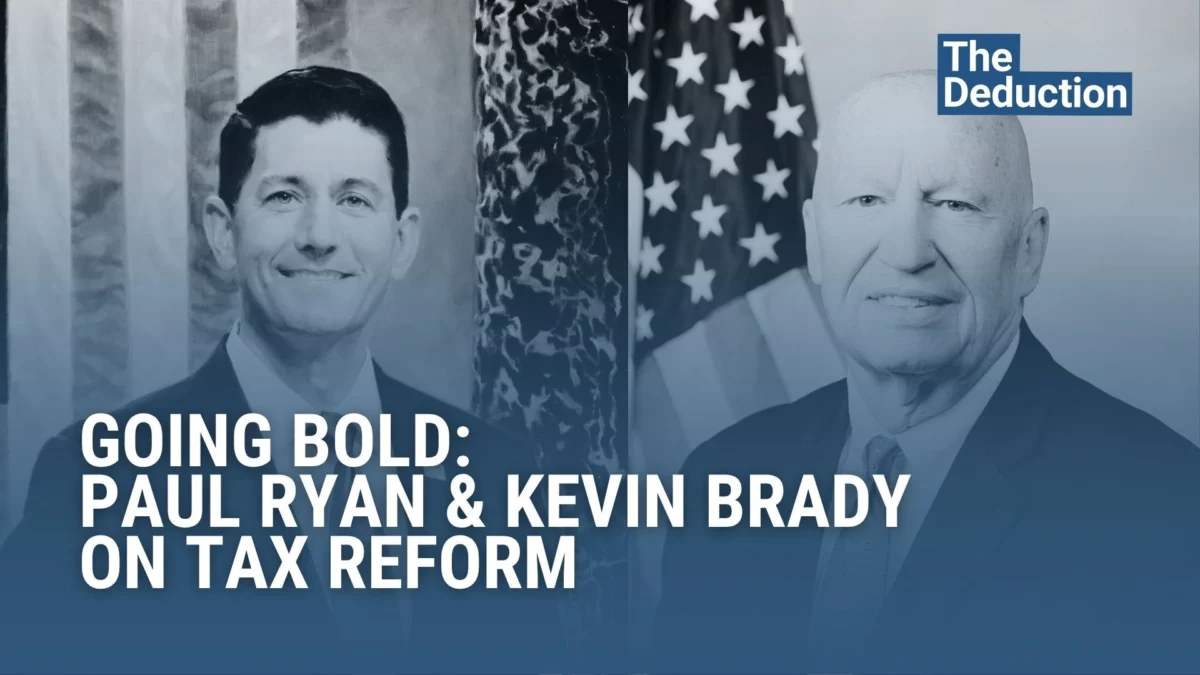
Ten years ago, the landscape of American fiscal policy was defined by a sense of stagnation. The U.S. tax code, a sprawling, antiquated labyrinth of loopholes and outdated provisions, had not seen a comprehensive overhaul in over three decades. Into this climate stepped then-Speaker of the House Paul Ryan and Ways and Means Chairman Kevin Brady. Their proposal, titled the "Better Way" tax plan, was not merely a series of suggestions—it was a definitive blueprint that would eventually serve as the structural backbone for the Tax Cuts and Jobs Act (TCJA) of 2017.
Today, as the United States navigates a complex economic environment characterized by ballooning national debt, the looming insolvency of Social Security, and a global economy increasingly defined by protectionist tariffs, the legacy of the "Better Way" plan remains a critical study. To mark this ten-year anniversary, the latest episode of the Tax Foundation’s podcast, The Deduction, features hosts Erica York and Kyle Hulehan in conversation with the original architects of the plan. They peel back the layers of how the legislation was constructed, the high-stakes political gambles that defined it, and the sobering reality of what comes next.
The Architecture of Reform: A Chronology of the "Better Way"
The story of the "Better Way" is one of long-term strategic planning. By 2014 and 2015, leadership within the House of Representatives realized that incremental tax changes were no longer sufficient to address the competitive disadvantages faced by American businesses in an increasingly globalized market.
The Blueprint Phase (2014–2016)
The process began in earnest with a series of hearings and consultations led by Chairman Kevin Brady. The goal was to move away from a "patchwork" approach and toward a pro-growth, consumption-based tax system. The "Better Way" white paper was released as a rallying cry for House Republicans, emphasizing three core pillars: lowering individual and corporate tax rates, transitioning to a territorial tax system, and simplifying the tax filing process for millions of Americans.
The Legislative Sprint (2017)
Following the 2016 election, the theoretical "Better Way" document was transformed into the legislative text of the Tax Cuts and Jobs Act. The transition from blueprint to law was marked by intense negotiations. While the final bill maintained the core vision of Ryan and Brady—most notably the dramatic reduction of the corporate tax rate from 35 percent to 21 percent—it also required significant compromises to ensure passage through a narrowly divided Senate via the budget reconciliation process.
The Implementation and Hindsight (2018–2024)
Since the enactment of the TCJA, the economic data has provided a mixed, yet informative, picture. The immediate aftermath saw a surge in domestic business investment and a tightening labor market. However, the long-term fiscal trajectory has remained a point of contention, with critics pointing to the growth in the deficit and proponents highlighting the structural improvements to American competitiveness.
Supporting Data: Economic Impacts and Miscalculations
The "Better Way" plan was rooted in the theory that lowering the cost of capital would unleash private sector investment. In many ways, the TCJA delivered on this promise. Data from the Tax Foundation and the Bureau of Economic Analysis indicates that the 2017 reforms lowered the marginal effective tax rate on new investment, encouraging firms to repatriate trillions of dollars in foreign-held earnings.
However, the "Better Way" also contained bold bets that did not survive the legislative process. Perhaps the most prominent was the Border Adjustment Tax (BAT). The architects envisioned the BAT as a way to level the playing field, taxing imports while exempting exports, effectively transforming the U.S. tax system into a destination-based cash flow tax. The proposal faced fierce lobbying from the retail industry and concerns regarding the impact on consumer prices, ultimately leading to its abandonment. This episode serves as a cautionary tale in tax policy: the bridge between an ideal economic model and political reality is often built with the materials of compromise.
Furthermore, the permanence of the TCJA provisions remains a looming fiscal cliff. Many of the individual tax cuts are set to expire in 2025, setting the stage for what many economists believe will be a massive, unavoidable legislative battle in the coming Congress.
Official Responses and Perspectives
During the anniversary episode of The Deduction, Ryan and Brady reflected on the inherent difficulty of the task. They noted that tax reform is not just a mathematical exercise; it is a communication challenge.
"The most difficult part was convincing the American public that a simpler, lower-rate system was not a giveaway to corporations, but a necessary update to a failing system," Brady remarked.
Critics, however, argue that the "Better Way" did not prioritize fiscal responsibility. Independent analysts have pointed out that the plan relied on dynamic scoring—the idea that the economic growth generated by the tax cuts would "pay for" the reduction in revenue. Ten years later, with the national debt reaching unprecedented levels, the debate over whether the growth was sufficient to offset the costs continues to polarize the economic community.
Implications for the Future: Where Do We Go From Here?
As the U.S. faces the next decade of fiscal challenges, the lessons from the "Better Way" are more relevant than ever. The current economic environment differs sharply from 2014. Inflationary pressures, the aging of the population, and the necessity of shoring up the Social Security and Medicare trust funds require a new, equally ambitious blueprint.
1. The Debt Challenge
The "Better Way" architects were operating in a time when deficit concerns were significant but not yet all-consuming. Today, the debt-to-GDP ratio is significantly higher. Any future tax reform must reconcile the need for growth-oriented policies with the urgent necessity of long-term fiscal sustainability.
2. The Tariff Era
The transition from the "Better Way" focus on territorial taxation to the modern political embrace of tariffs creates a paradox. While the original plan aimed to integrate the U.S. into the global economy by removing barriers, current political trends are shifting toward protectionism. Reconciling these two opposing philosophies will be the primary task for the next generation of tax policymakers.
3. The 2025 Cliff
With the expiration of the TCJA’s individual provisions, the U.S. faces a "taxmageddon" scenario. Policymakers must decide whether to extend current rates, allow them to lapse, or use the expiration as an opportunity for a second "Better Way"—a new comprehensive overhaul that addresses the complexities of the modern digital economy, the rise of remote work, and the need for a more stable revenue stream.
Conclusion
The ten-year anniversary of the "Better Way" plan is more than just a historical marker; it is a catalyst for the next phase of American fiscal evolution. Paul Ryan and Kevin Brady succeeded in changing the trajectory of the tax code, but their work also highlighted the limitations of even the most well-intentioned policy blueprints.
As Erica York and Kyle Hulehan explore in their special anniversary edition of The Deduction, the path forward will not be paved with simple answers. It will require the same boldness that defined the 2017 reforms, tempered by a clearer understanding of the trade-offs between growth, equity, and fiscal stability. For those interested in the future of the U.S. economy, the "Better Way" serves as both a roadmap and a reminder: in the world of tax policy, there is no final victory, only the constant, iterative process of improvement.
To dive deeper into these discussions and hear the full analysis from the original architects of the "Better Way" plan, subscribe to The Deduction on Apple Podcasts, Spotify, or your preferred podcast platform. For ongoing insights into the tax policies shaping your future, subscribe to the Tax Foundation’s newsletter.
