





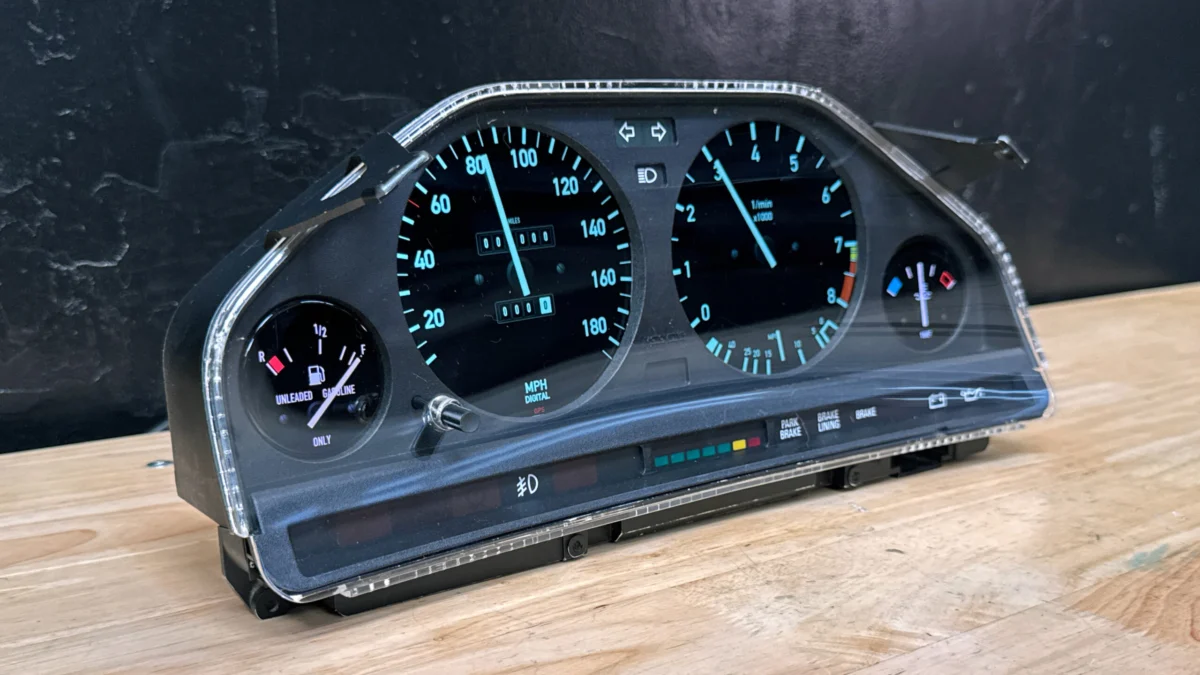
In the modern automotive landscape, the dashboard has become synonymous with the "floating tablet"—massive, monolithic screens that dominate the interior, often sacrificing tactile ergonomics for sheer digital real estate. But for enthusiasts of the classic era—specifically the E28 5 Series and E30 3 Series BMWs—this trend is a non-starter.
However, there is a middle ground between the analog charm of the 1980s and the screen-heavy cabins of the 2020s. Jean, the proprietor of Naples, Florida-based Usual Suspects Garage, is proving that the future of aftermarket car technology isn’t about bigger screens; it is about smarter, more refined integration. By developing a bespoke, plug-and-play digital instrument cluster for vintage BMWs, Jean is bridging the gap between historical aesthetics and modern functionality.
The Genesis of a Digital Retrofit
The project began as a personal quest for perfection. Jean, who built his reputation maintaining and modifying Porsches and BMWs, found himself frustrated by the limitations of aging gauges. While he wanted the utility of modern data—shift lights, precise trip diagnostics, and clear, high-resolution visuals—he refused to compromise the driver-focused ergonomics of the E28 and E30 cockpits.
"I didn’t know how to code beforehand," Jean admits. What started as an experimental rig on a piece of cardboard has evolved into a sophisticated, proprietary hardware and software ecosystem. "I started with one screen on a piece of cardboard, but I had the layout for the E30s. I bought another one, and then I realized it wasn’t going to fit in the E30 housing, so I moved it over to the E28, which is what I really started with in the beginning."
Chronology of Innovation: From Cardboard to Production
The development of this project has been a multi-year labor of love, characterized by trial, error, and intense self-teaching.
- 2020: The Initial Hurdles. The project hit significant roadblocks early on. The primary challenge was the hardware itself: the circular, high-fidelity displays required to mimic the look of a classic binnacle simply did not exist in the consumer market at the time. "Sourcing displays was one of the biggest hurdles," Jean notes. "Circular screens weren’t as readily available back in 2020 as they are now."
- 2021-2022: The Coding Pivot. After stepping away to focus on his core business, Jean returned to the project three years ago with a renewed sense of purpose. He took on the full stack of development, including the programming of the interface, which he did during his spare time.
- 2023: Defining the Aesthetic. With the hardware finally catching up to his vision, Jean began "letting his brain go crazy" with features. This phase introduced the shift lights, trip reset logic, and the custom UI that defines the project today.
- 2025: Viral Growth and Scaling. After teasing the project on Instagram and Facebook, the response was overwhelming. A social media presence that sat at 1,000 followers exploded to 40,000 in a matter of two weeks, signaling a massive, untapped market for high-end, period-correct digital retrofits.
- 2026 and Beyond: The Launch. Jean is currently in the final stages of refinement, targeting a full commercial launch next year.
The Philosophy of "Plug-and-Play"
A recurring theme in the automotive aftermarket is the "hack job"—wiring harnesses that look like spiderwebs and installations that require permanent modification to the vehicle. Jean’s primary directive for his cluster is reversibility.
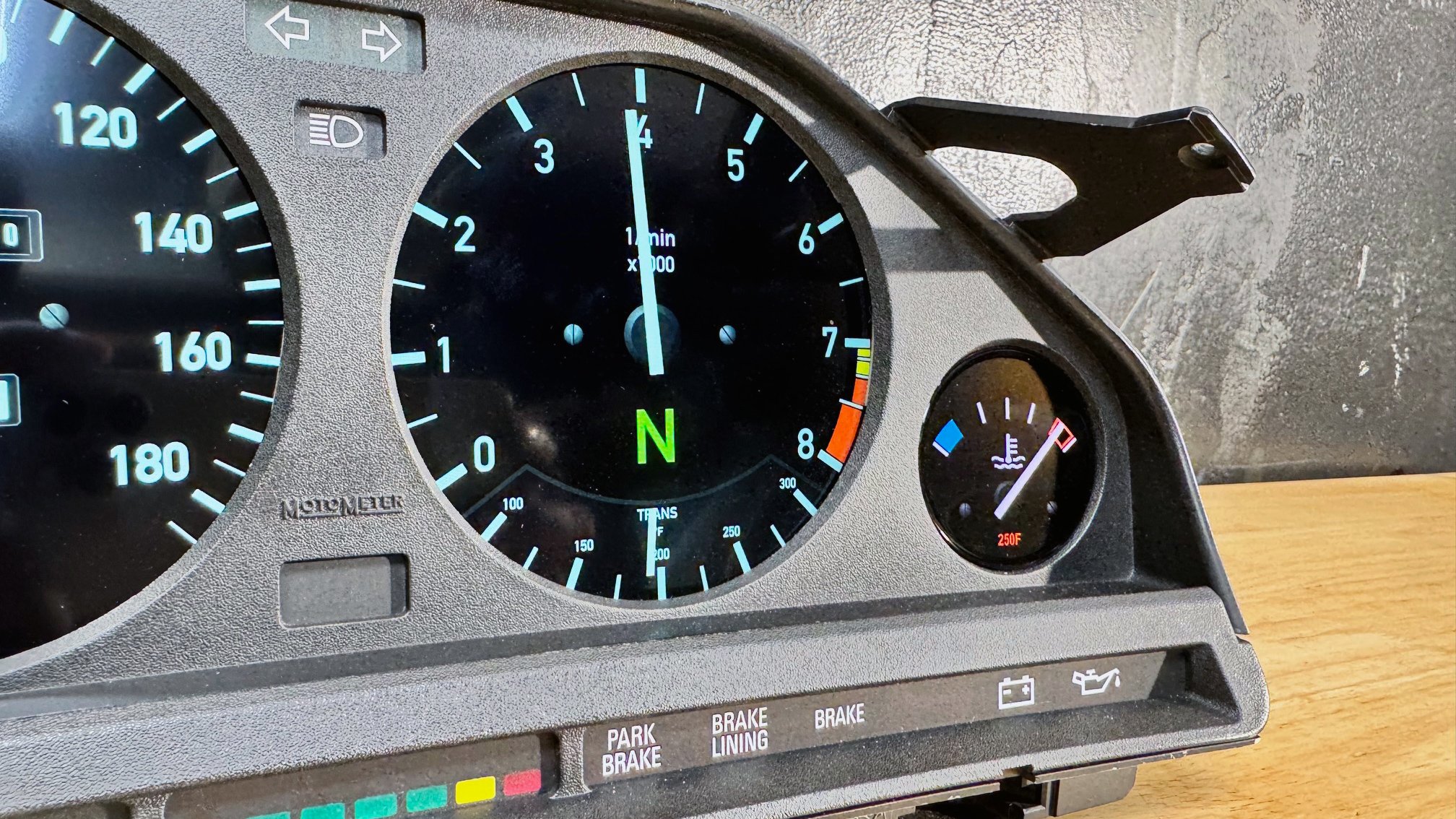
The system is designed to be completely plug-and-play. If a collector decides to sell their E30 or return it to stock condition, the digital cluster can be removed and the original analog gauges reinstalled in minutes. This is critical for the enthusiast market, where provenance and originality are often tied to the value of the vehicle.
"I’m trying to take account for every single variable that I can come up with in terms of the differences in years, the differences in wiring, and what’s needed and what’s not needed," Jean explains. This obsessive attention to detail ensures that the end-user experience is seamless, regardless of whether they are driving a base model or a high-performance M-badged variant.
Technical Specifications and User Interface
The core of the Usual Suspects cluster is a high-resolution, high-refresh-rate display designed to eliminate the "lag" common in cheaper, off-the-shelf digital gauge solutions.
Jean’s disdain for latency is a central tenet of his design. "I don’t want it to be laggy because then it reminds you that it’s digital," he says. He draws a pointed comparison to high-end racing hardware: "I was looking at a video of a MoTeC unit in a Gunther Werks Porsche. I noticed the needle was kind of laggy, and I was surprised that’s what you accept at that price level."
To ensure his product is superior, he is focusing on:
- Tactile Control: A physical control knob will be included with the unit. Jean correctly identifies that drivers do not want to fumble with a touchscreen while navigating a winding backroad.
- Connectivity: The system will feature wireless connectivity, allowing for over-the-air (OTA) updates via a companion smartphone app.
- Future-Proofing: While not in the immediate scope, Jean is exploring Apple CarPlay Ultra compatibility, which is specifically optimized for circular displays.
Market Implications and Future Outlook
The price point for the unit is expected to be around $1,300—a premium, yet competitive, figure for a bespoke piece of hardware that transforms the daily driving experience of a vintage car.
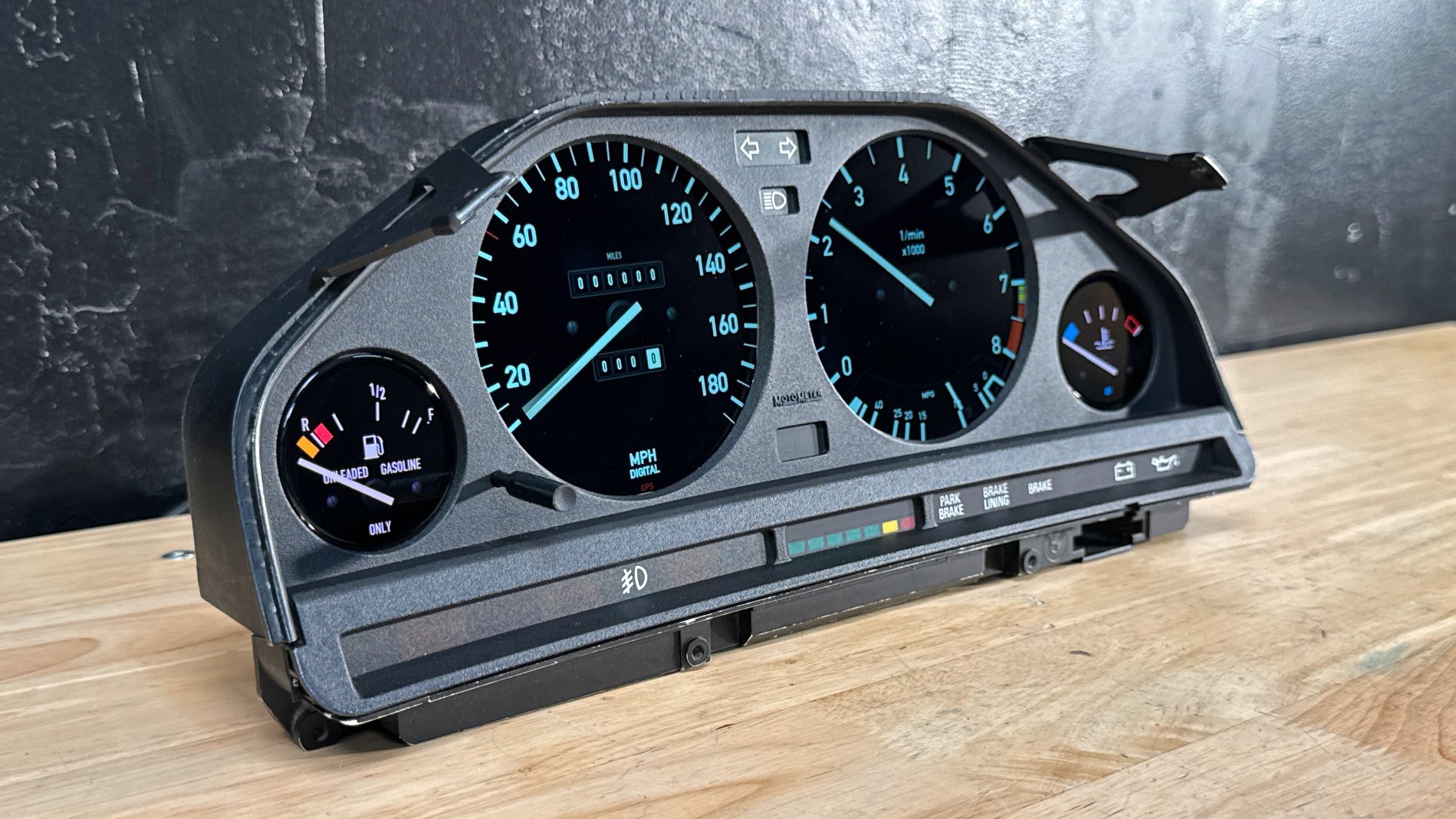
The market response has been nothing short of a landslide. Over 1,000 prospective buyers have already registered their interest on the Usual Suspects Garage website. This demand has validated the idea that modern enthusiasts want the convenience of current tech without losing the soul of their classic vehicles.
Looking ahead, the potential for expansion is vast. Jean has already begun preliminary work on a Porsche-specific version, and he has explicitly identified Mercedes-Benz as a potential candidate for future development.
Maintaining Trust in a Crowdfunded World
Despite the massive interest, Jean remains cautious about the business side of his innovation. He has resisted the urge to launch a crowdfunding campaign, opting instead to self-fund the development. "Realistically, I don’t want to lose anyone’s trust," he says. His plan is to prove the product’s viability with an initial launch before scaling or seeking outside capital.
This grounded approach to business, combined with his background as a hands-on mechanic, sets him apart from many "tech-first" startups. He isn’t trying to disrupt the industry with a gimmick; he is solving a problem he experienced himself in his own garage.
Conclusion: A New Era for Restomods
The work being done at Usual Suspects Garage represents a shift in the restomod community. We are moving away from the era where "modernization" meant cramming an iPad into a dashboard. Instead, we are entering a phase where the technology is designed to respect the architecture of the car, hiding the complexity behind a classic, familiar face.
Jean’s project is not just a gauge cluster; it is a testament to the idea that with enough ingenuity, one can keep the analog machines of the past relevant, capable, and connected in the high-speed world of the future. As we wait for the final, shippable product to hit the streets next year, one thing is clear: the dashboard of the future might just look a lot like the one from 1985, only better.
