




Introduction: A Call for Urgent Recalibration
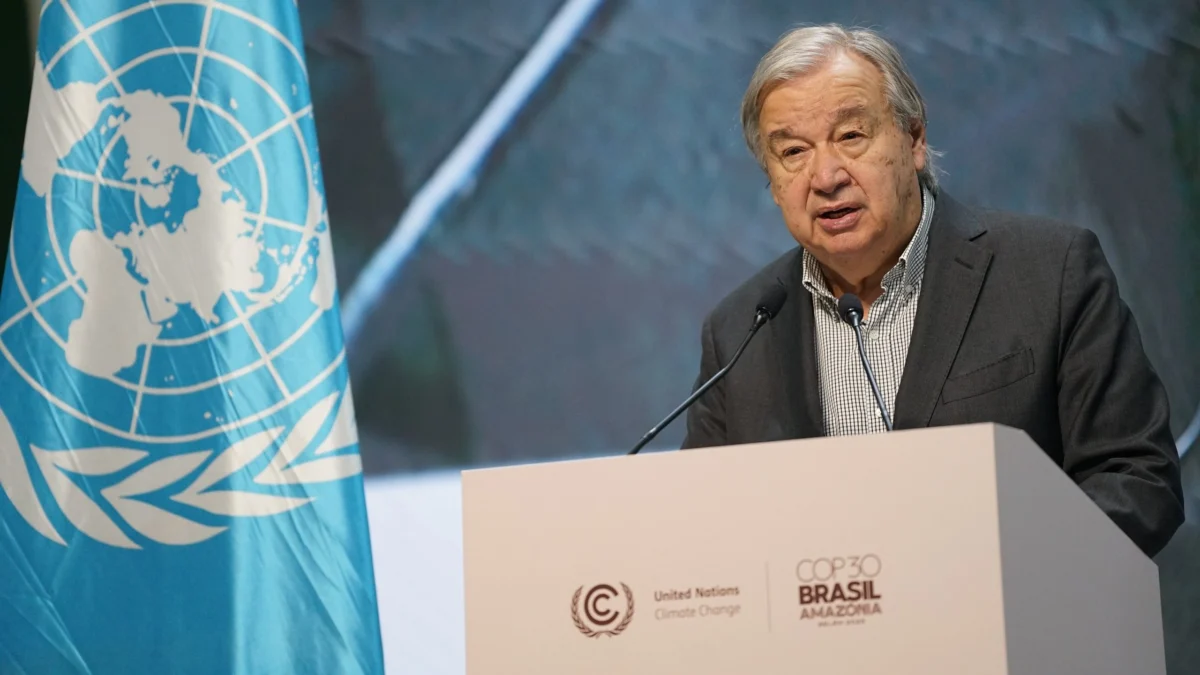
As the United Nations prepares for its annual General Assembly high-level debate, Secretary-General António Guterres has delivered a stark, somber assessment of the state of global stability. Standing before the iconic Japanese Peace Bell at UN Headquarters in New York, Guterres issued a clarion call to world leaders: the era of passive diplomacy is over. With global conflict reaching its highest intensity since the end of the Second World War, the Secretary-General warned that the international community is currently failing to foster the dialogue and solidarity required to prevent systemic collapse.
The ceremony, held in anticipation of the International Day of Peace on September 21, served as a symbolic backdrop for a sobering reality check. Under the theme "Invest in Peace: For Everyone, Everywhere, Every Day," Guterres underscored that peace is not a stagnant state of existence but an active, daily pursuit that requires deliberate investment, institutional integrity, and a fundamental shift in how nations prioritize their financial and moral capital.
The Chronology of a Growing Crisis
The current state of global affairs is the culmination of years of eroding multilateralism and the systematic breakdown of international norms. To understand the gravity of the Secretary-General’s appeal, one must look at the trajectory of the last several years:
- 1954: The Japanese Peace Bell is gifted to the United Nations, cast from coins collected by children from 60 nations, symbolizing a collective post-war desire for a peaceful future.
- 1981: The UN General Assembly formally establishes the International Day of Peace, aiming to provide a global date for the observance of non-violence and ceasefire.
- 2001: The General Assembly unanimously reaffirms the day as a period of absolute non-violence, setting a standard that many nations have since struggled to uphold.
- 2024: UN Member States adopt the "Pact for the Future," a landmark document intended to revitalize international cooperation in the face of climate change and shifting geopolitical alliances.
- 2025: A UN report reveals that global military spending has hit a staggering $2.7 trillion, a figure that highlights the widening chasm between national security priorities and human development needs.
- 2026 (September): Secretary-General Guterres delivers his final Peace Bell address, marking his transition out of office while simultaneously setting a definitive agenda for the incoming General Assembly.
Supporting Data: The Cost of Perpetual Conflict
The rhetoric of peace is often undermined by the cold, hard mathematics of warfare. According to data synthesized by the United Nations, the world is currently experiencing a "rearmament paradox." While global challenges—ranging from food insecurity to climate-driven migration—demand unprecedented cooperation, the global response has been an intensification of military expenditure.
The Military-Development Gap
The Secretary-General’s 2025 report, The Security We Need: Rebalancing Military Spending for a Sustainable and Peaceful Future, provides the definitive evidence for this imbalance. In 2024, global military budgets rose by over nine percent, reaching a record $2.7 trillion. To contextualize this:
- The 13x Factor: Global military spending is currently 13 times higher than total international development aid.
- Humanitarian Strain: The UN Office for the Coordination of Humanitarian Affairs (OCHA) estimates that more than 200 million people now require emergency humanitarian assistance.
- Forced Displacement: Nearly 120 million people have been forcibly displaced, a record number driven by a combination of armed conflict, systemic persecution, and the fallout of regional crises.
These figures represent more than just numbers; they represent the erosion of healthcare systems, the failure of education programs, and the abandonment of climate adaptation strategies that could have otherwise prevented the very conflicts that necessitate this military spending.
Official Responses and the "Architects of Peace"
Secretary-General Guterres’s address was not merely a critique of government inaction; it was an acknowledgment of those who fill the void left by state failure. By honoring the "everyday architects of peace"—the volunteers, civil society leaders, and community organizers who work in the shadows of war—Guterres highlighted a profound disconnect between the halls of power and the realities on the ground.
A Challenge to World Leaders
As the General Assembly high-level debate commences on September 23, the pressure on world leaders to pivot is immense. The Secretary-General’s directive is explicit:
- Re-invest in Social Foundations: Governments must prioritize spending on health, education, nutrition, and social safety nets.
- Restore Trust: Nations must rebuild institutions that are transparent, equitable, and capable of protecting human dignity.
- Return to Diplomatic Fundamentals: Diplomacy is not an abstract concept; it is a "proven tool" that includes rigorous negotiation, mediation, and a renewed commitment to peacekeeping missions—the latter of which has become increasingly dangerous, as evidenced by recent lethal ambushes of UN personnel in South Sudan.
Implications: The Path Forward
The implications of the current trajectory are dire. If the international community continues to prioritize military dominance over sustainable development, the threshold for global conflict will only continue to lower. The Secretary-General’s warning that "peace requires active effort instead of passivity" is a direct challenge to the geopolitical status quo.
The Legacy of a Departing Leader
For Guterres, who is entering his final months as Secretary-General, the message is a parting testament. Having overseen the UN through some of the most volatile years of the 21st century, his commitment to the "cause of peace" serves as both a roadmap for his successor and a final plea to the member states.
The Japanese Peace Bell, which Guterres rang for the final time, remains a physical reminder of the fragility of peace. It was cast from the donations of citizens, not the treasuries of states. This distinction is the core of the Secretary-General’s argument: peace is not something that is granted from the top down; it is a collective achievement that must be defended against the encroaching tides of nationalism, division, and indifference.
Conclusion: A Moment of Choice
As the world stands at this post-WWII high for conflict, the choice facing the United Nations and its member states is binary. They can either continue to sink trillions into the machinery of destruction—thereby exacerbating the cycles of poverty and displacement that fuel instability—or they can heed the Secretary-General’s call to rebalance their priorities.
The tools for peace are well-documented: dialogue, negotiation, human rights protection, and equitable resource distribution. The absence of these tools in the modern geopolitical landscape is not a failure of strategy, but a failure of will. As the General Assembly gathers in the coming weeks, the world will be watching to see if the rhetoric of peace can finally be matched by the substance of policy. The "everyday architects of peace" are already at work; it is time for the world’s leaders to finally join them.
