





The Mazda MX-5 Miata has occupied a singular position in the automotive landscape for over three decades. Since its debut in 1989, it has served as the gold standard for lightweight, analog driving engagement. However, as the ND generation enters its second decade, the automotive industry has shifted toward heavy electrification, massive digital interfaces, and increasingly complex driver-assistance suites. For the purist, these trends often feel like a dilution of the "Jinba Ittai" (horse and rider as one) philosophy that defines the Miata.
While Mazda remains constrained by global safety regulations, fleet emissions targets, and the demands of the modern consumer, the aftermarket community faces no such limitations. Enter Geaux Moto, a Louisiana-based performance shop that is radically challenging the boundaries of the ND chassis. By transplanting Ford’s potent 2.3-liter EcoBoost engine into the svelte Mazda frame, they have created a machine that defies the traditional Miata power-to-weight ratio, turning a weekend cruiser into a track-devouring weapon.
Main Facts: A Pocket Rocket Reimagined
The core of the Geaux Moto build is a comprehensive engineering overhaul centered on the Ford 2.3-liter EcoBoost inline-four. This powerplant, widely recognized for its high-performance applications in the Ford Mustang and the legendary Focus RS, brings a massive infusion of torque and horsepower that the naturally aspirated Mazda Skyactiv engine simply cannot match.
The build is not a "slap it in and go" conversion. It is a highly engineered kit that integrates modern turbocharging technology with the Miata’s nimble rear-wheel-drive architecture. With a larger twin-scroll Garrett turbocharger and dual wastegates, the modified ND produces an astonishing 460 horsepower and 393 pound-feet of torque on the dyno. To ensure the car remains usable for its owners, the shop offers a street-focused tune that dials output back to a more manageable 321 horsepower and 378 pound-feet of torque.
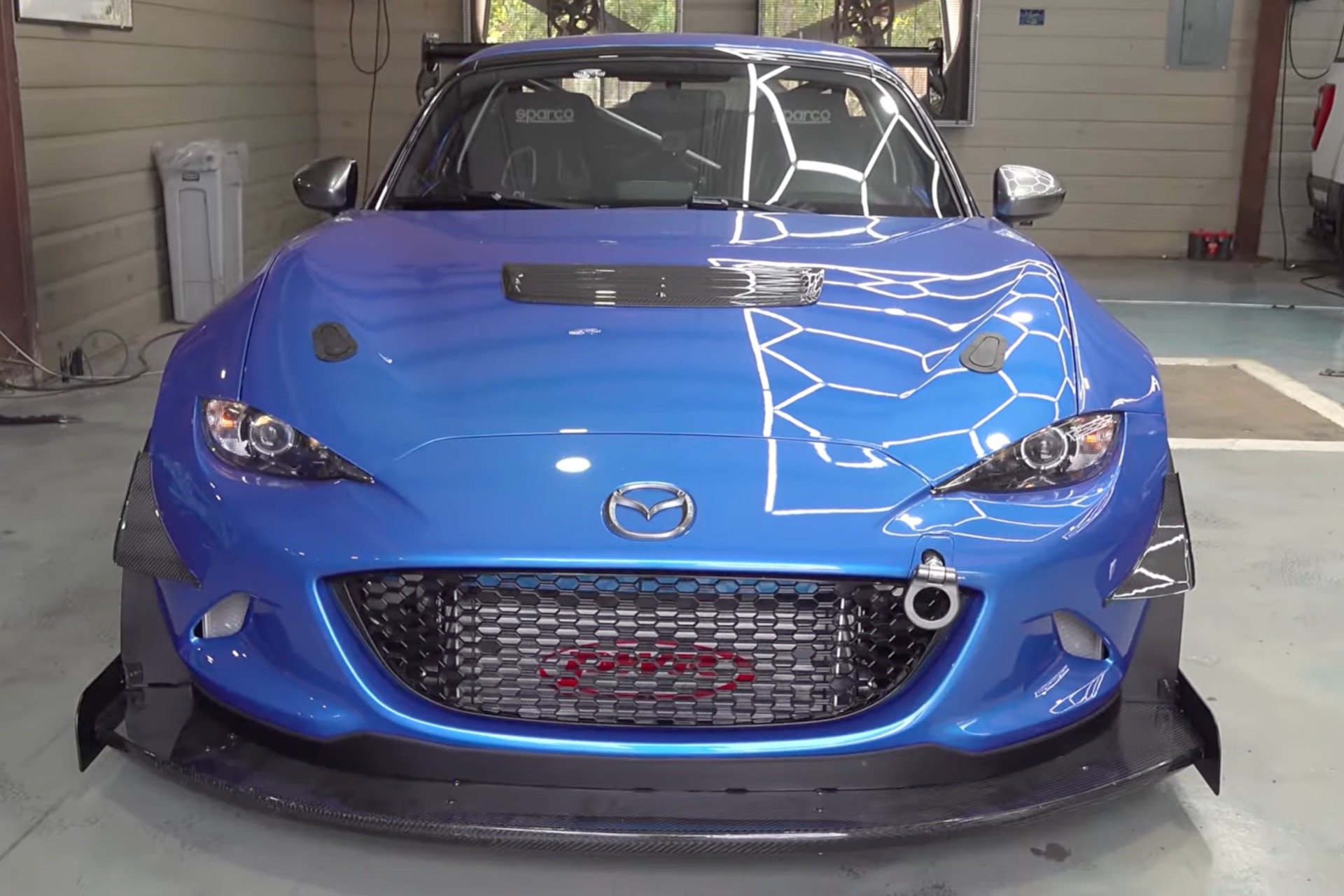
The vehicle’s handling characteristics have been equally addressed. To combat the added thermal load, the build incorporates a high-capacity radiator, a bespoke intercooler, and auxiliary cooling units housed discreetly within the factory foglight apertures.
Chronology: From Concept to Asphalt
The development of the Geaux Moto EcoBoost swap was not an overnight success but rather a calculated evolution of the ND platform.
- Phase 1: Foundation and Feasibility. Geaux Moto identified the ND as the ideal lightweight canvas. Initial testing focused on engine bay fitment, which, fortunately, required only minor cowl modifications and peripheral accessory relocation.
- Phase 2: The Transmission Hurdle. The most significant challenge was replacing the stock gearbox with the Ford MT-82 six-speed manual transmission. This required an entirely new approach to the chassis’s structural integrity. Unlike a traditional frame, the Miata utilizes a "Power Plant Frame" (PPF) that connects the transmission to the rear differential. Replacing this necessitated custom fabrication to maintain the car’s structural rigidity and driveline alignment.
- Phase 3: Drivetrain and Aerodynamics. With the engine and transmission secured, the team upgraded the rear end with an OS Giken limited-slip differential housed within a reinforced factory casing.
- Phase 4: Validation. Extensive dyno testing and track sessions followed to dial in the dual-wastegate Garrett turbo system. The final stage involved the integration of the Varis-engineered aero kit, designed to provide the necessary downforce to manage the car’s newfound speed.
Supporting Data: The Physics of Performance
To understand the transformation of this Miata, one must look at the numbers. A stock ND Miata weighs approximately 2,300 to 2,400 pounds. By doubling the factory horsepower, Geaux Moto has effectively pushed the Miata into supercar territory in terms of power-to-weight ratio.
Cooling and Drivetrain Specifications
- Engine: Ford 2.3L EcoBoost (modified).
- Turbocharger: Large Garrett twin-scroll with dual wastegates.
- Peak Output: 460 hp / 393 lb-ft of torque.
- Street-Tune Output: 321 hp / 378 lb-ft of torque.
- Cooling System: Focus RS-sourced oil pan with added baffling, high-capacity radiator, custom intercooler, and foglight-housing auxiliary coolers.
- Differential: OS Giken LSD.
Aerodynamic Profile
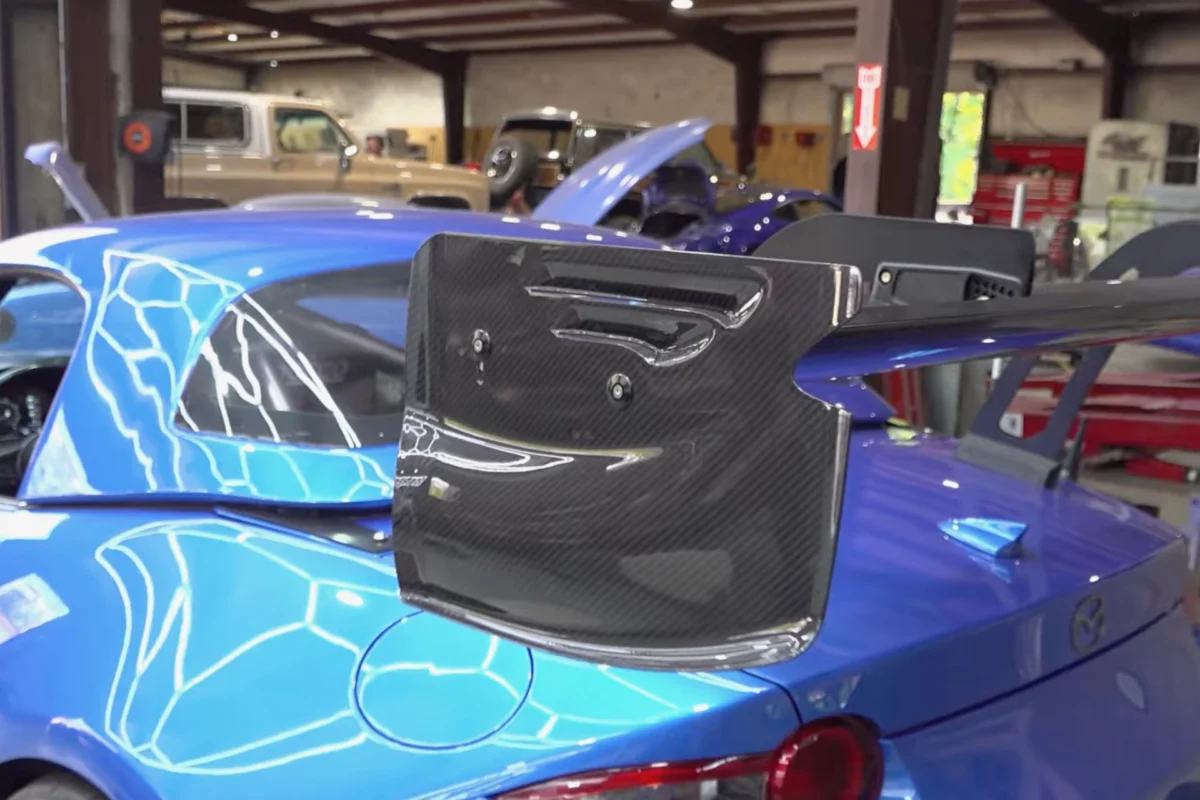
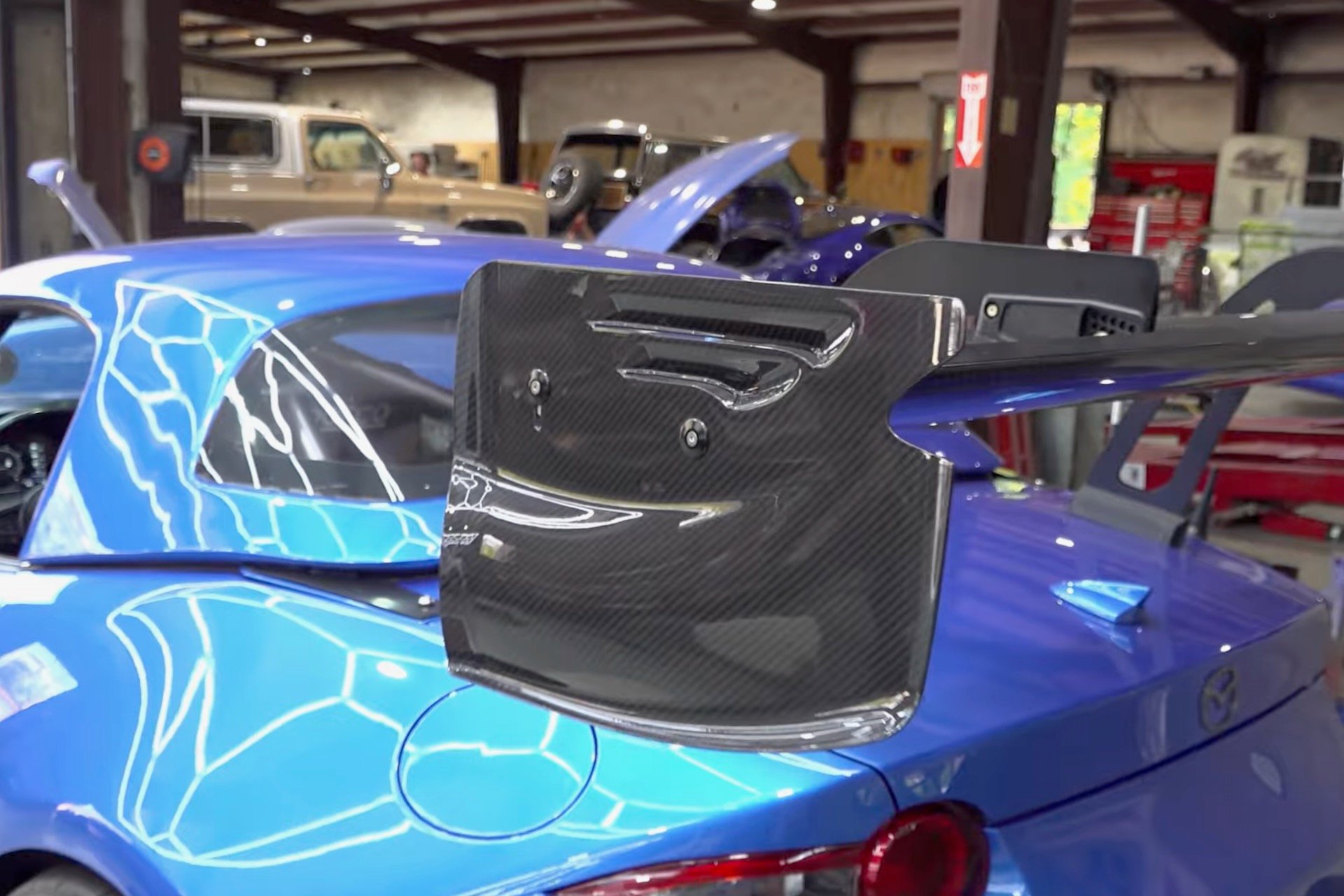
The Varis aero kit is not merely aesthetic; it is a critical functional component. The package includes a massive rear wing paired with a custom-built carbon-fiber front splitter. According to the build data, this configuration generates 576 pounds of downforce at 100 mph. When paired with 285/30ZR17 performance tires at all four corners, the car gains the mechanical and aerodynamic grip required to put its massive torque output to the pavement without becoming unruly.
Official Responses and Builder Insight
In their recent technical breakdown, the team at Geaux Moto emphasized that the goal was never to strip the Miata of its soul, but to provide an alternative for those who find the factory engine lacking in punch.
"We wanted something that could handle a track day with the intensity of a GT3 car, yet retain the ability to drive to the grocery store," a spokesperson for the shop noted. By retaining the air conditioning, the factory interior, and adding a custom roll bar under the DG hardtop, the builders have successfully navigated the fine line between a dedicated race car and a street-legal enthusiast vehicle. The use of Sparco bucket seats further cements the intent: this is a driver’s car, designed to prioritize feedback and control over creature comforts.
Implications: The Future of the "Miata Ethos"
The Geaux Moto project serves as a barometer for the health of the automotive aftermarket. As manufacturers like Mazda face increasing pressure to electrify, the window for internal combustion performance projects is narrowing. However, this build proves that the ND Miata’s chassis is inherently "over-engineered" in terms of its capability to handle power beyond its original design specs.
1. The Death of the "Slow Car Fast" Argument?
For years, the mantra of the Miata community has been that it is "more fun to drive a slow car fast." The Geaux Moto build challenges this. By providing the chassis with the power it was arguably always capable of handling, the shop has invited a new demographic into the fold: those who want the precision of a Japanese roadster with the raw, forced-induction power of a modern high-performance coupe.
2. The Longevity of the Platform
This build signals that the ND will remain a relevant platform for the next decade, regardless of what happens in Mazda’s showrooms. Because the kit addresses the primary bottlenecks of the car—the modest power output and the necessity of improved aero—it ensures that the Miata remains a viable base for high-end track builds well into the future.
3. Engineering as Art
Perhaps the most significant implication is the demonstration of custom engineering. Replacing the Power Plant Frame and integrating a Ford transmission into a Mazda chassis is a complex feat of mechanical engineering. It highlights a burgeoning movement in the automotive world: the "Restomod" approach to modern cars. Just as classic cars are updated with modern tech, newer platforms like the ND are being "hot-rodded" to exceed the limitations imposed by mass-market production requirements.
Conclusion
The Geaux Moto EcoBoost-swapped Miata is more than just a novelty; it is a testament to the enduring appeal of the lightweight roadster. By carefully balancing aggressive power with a refined chassis, the team has created a vehicle that respects the Miata’s heritage while pushing it firmly into the modern era of high-performance driving. For the owner who wants a car that feels at home on both the canyon road and the race circuit, the Geaux Moto build is, quite possibly, the ultimate evolution of the Mazda MX-5.
