





In the modern era, the name "NASCAR" is a misnomer. Today’s Cup Series machines are highly specialized, purpose-built aerodynamic silhouettes that share little more than a name and a few decals with the vehicles rolling off the assembly lines in Detroit. However, there was a time—a golden, gritty, and dangerous era—when the “Stock” in National Association for Stock Car Auto Racing meant exactly what it said.
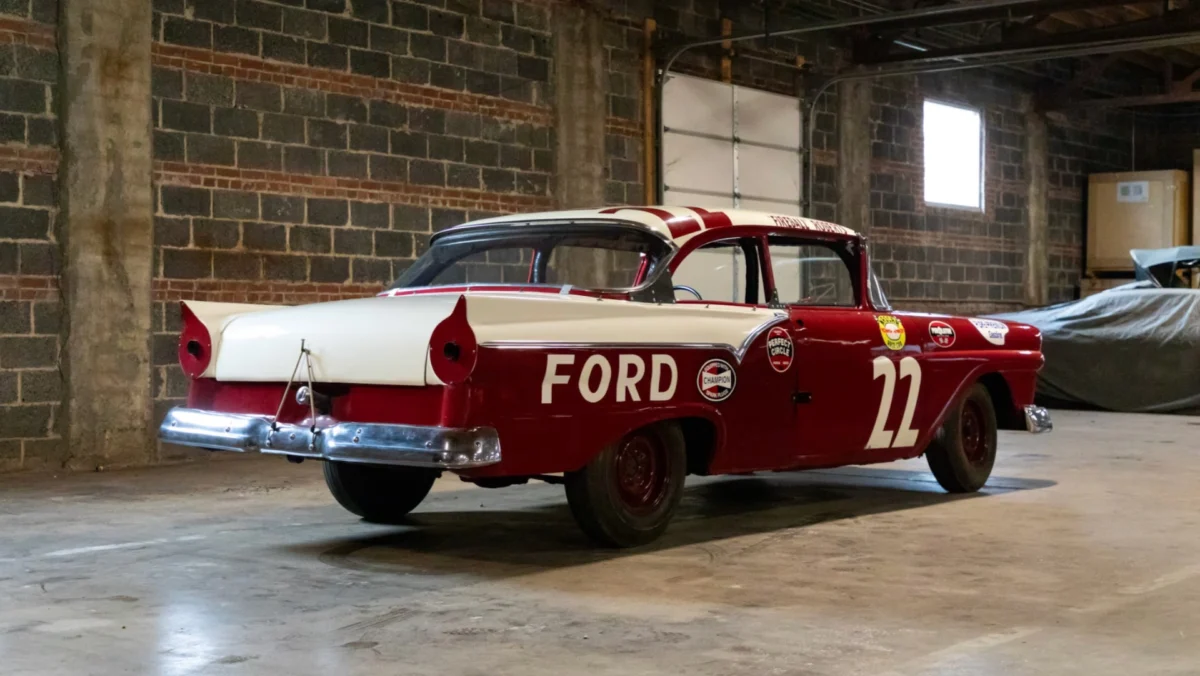
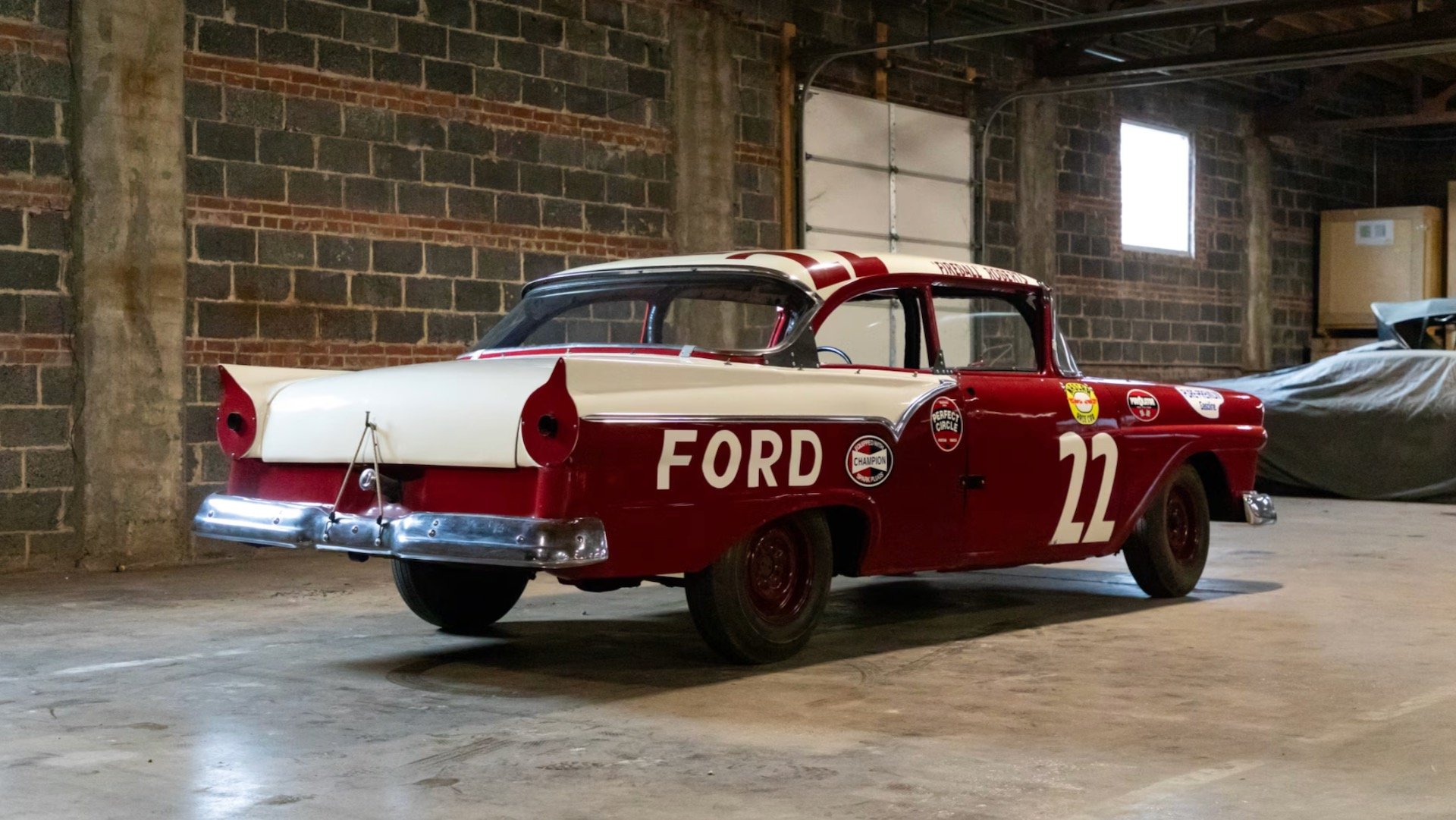
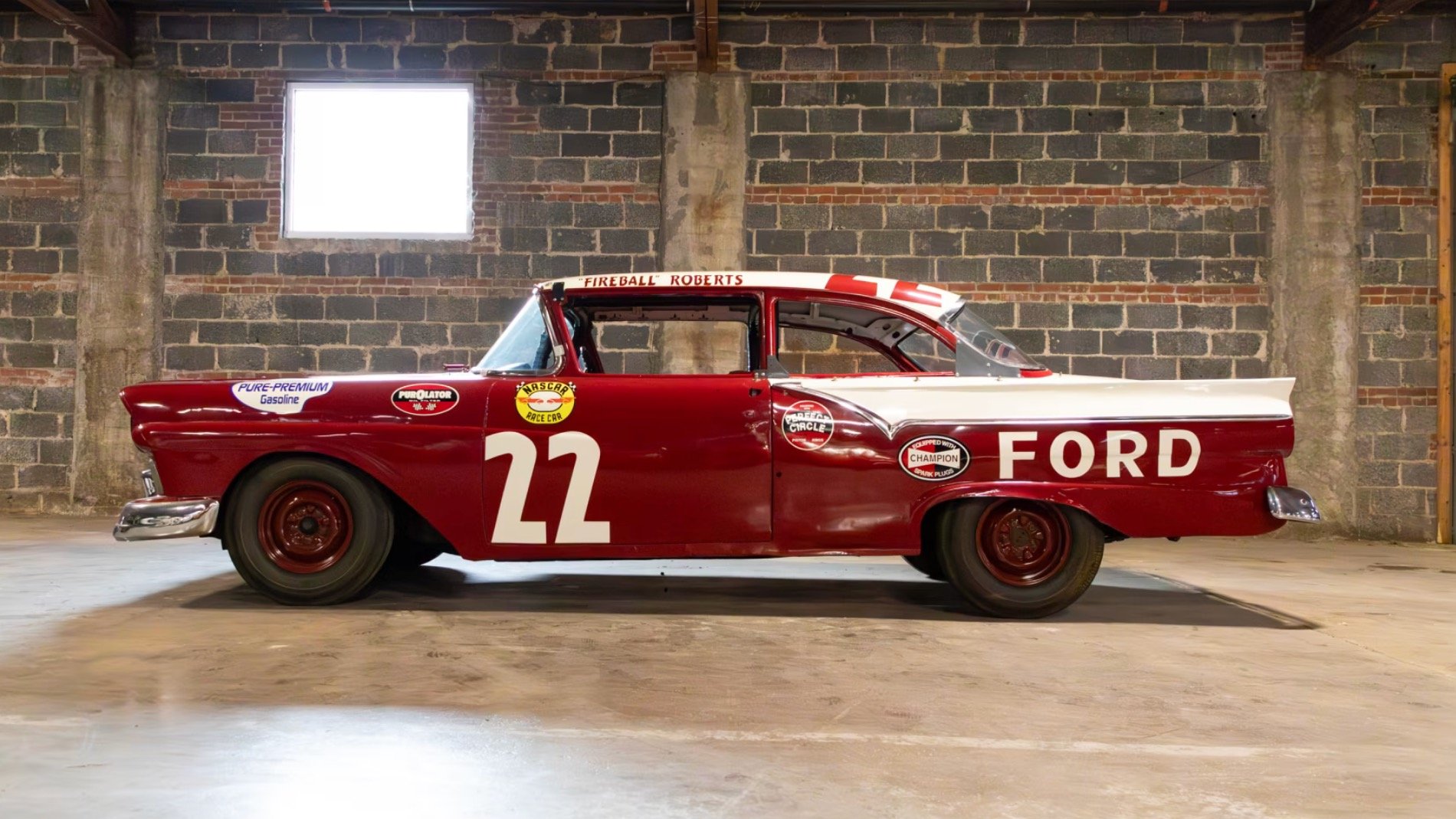
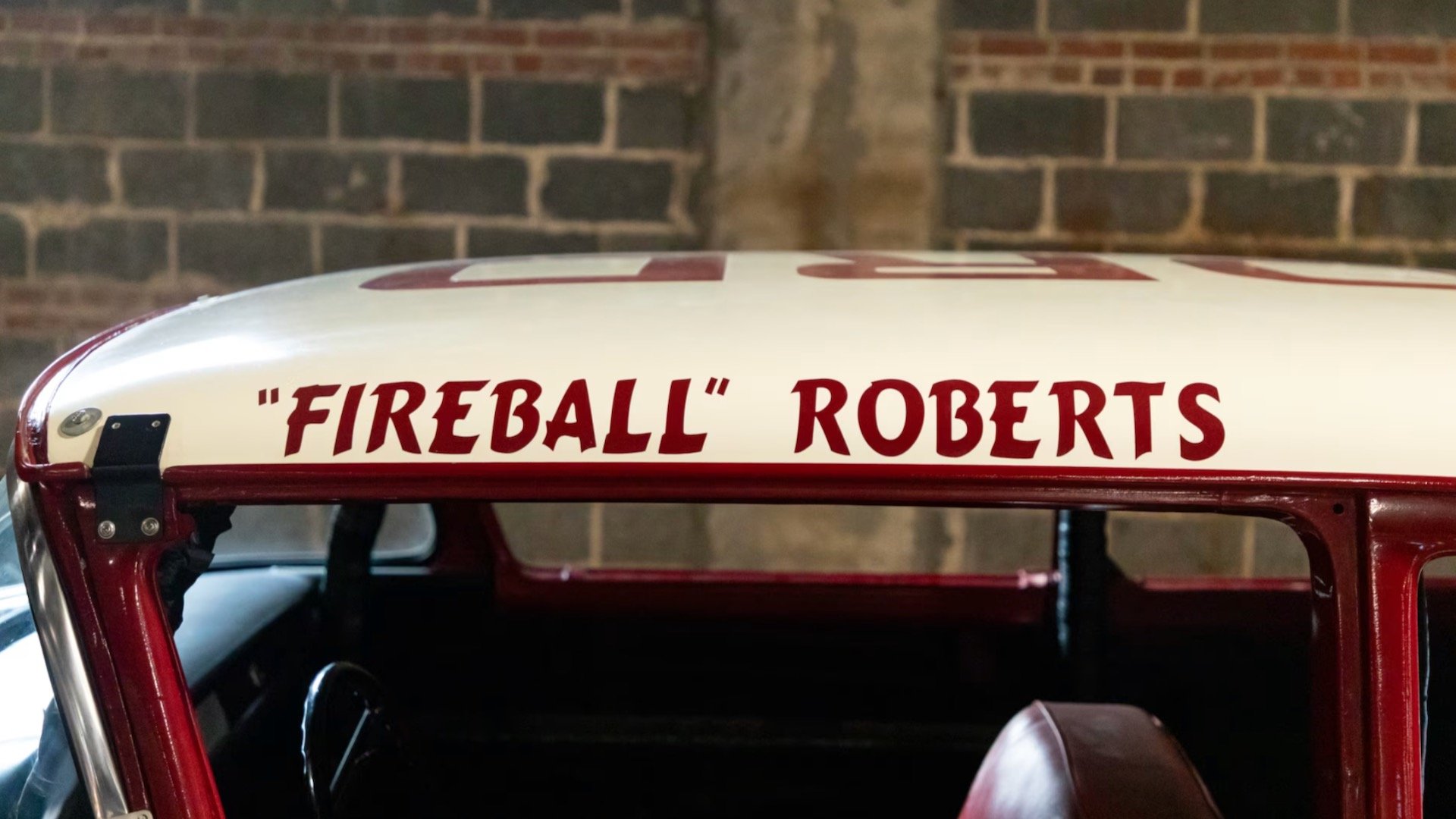
A rare artifact from that primordial age of American motorsport is currently preparing to cross the auction block. On September 26, Mecum Auctions will offer a 1957 Ford Fairlane that served as the chariot for one of the sport’s most legendary pioneers: Edward Glenn "Fireball" Roberts Jr. This vehicle is not merely a collector’s item; it is a mechanical time capsule that provides a window into the evolution of professional racing.
A Relic of the "True Stock" Era
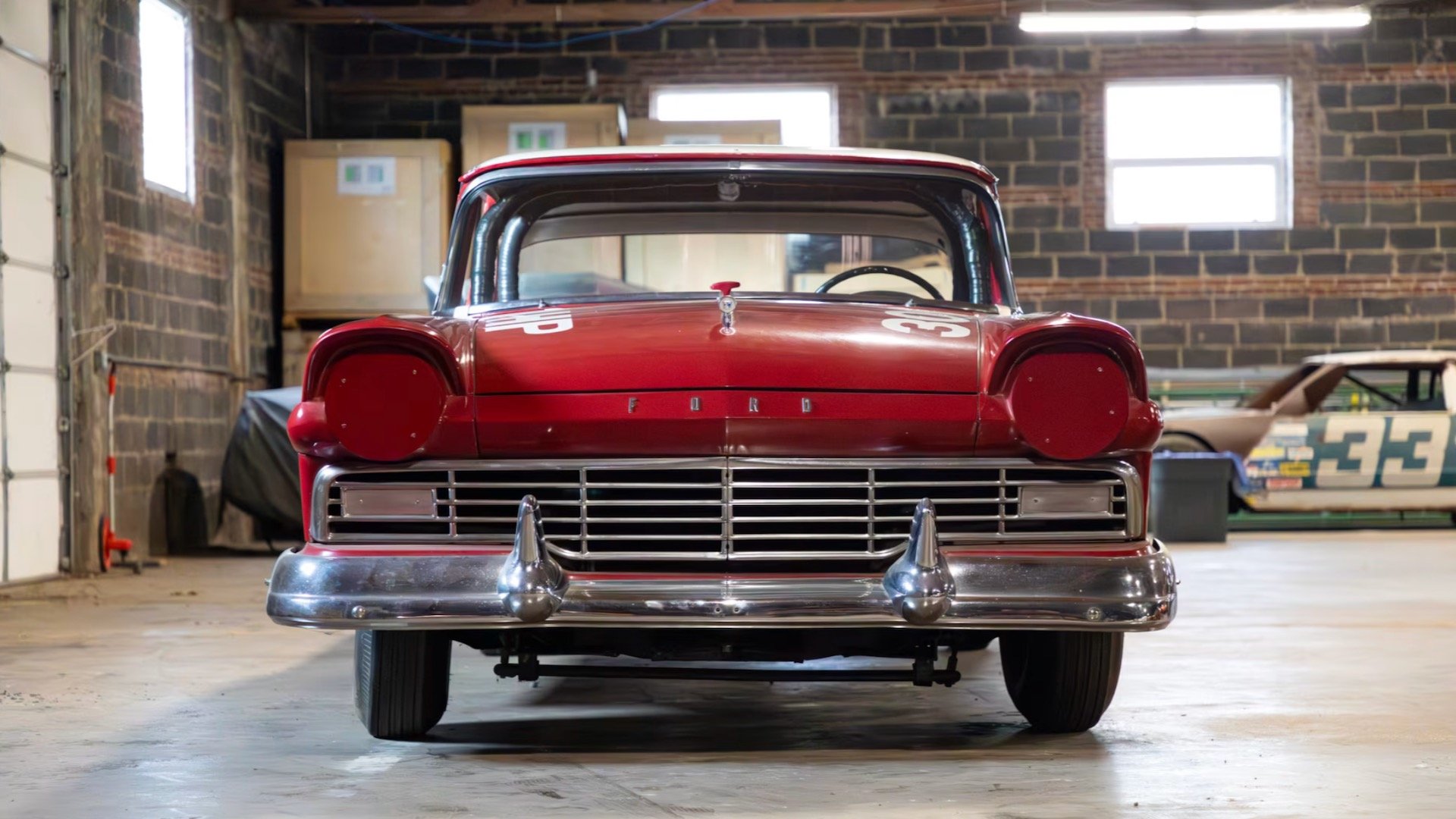
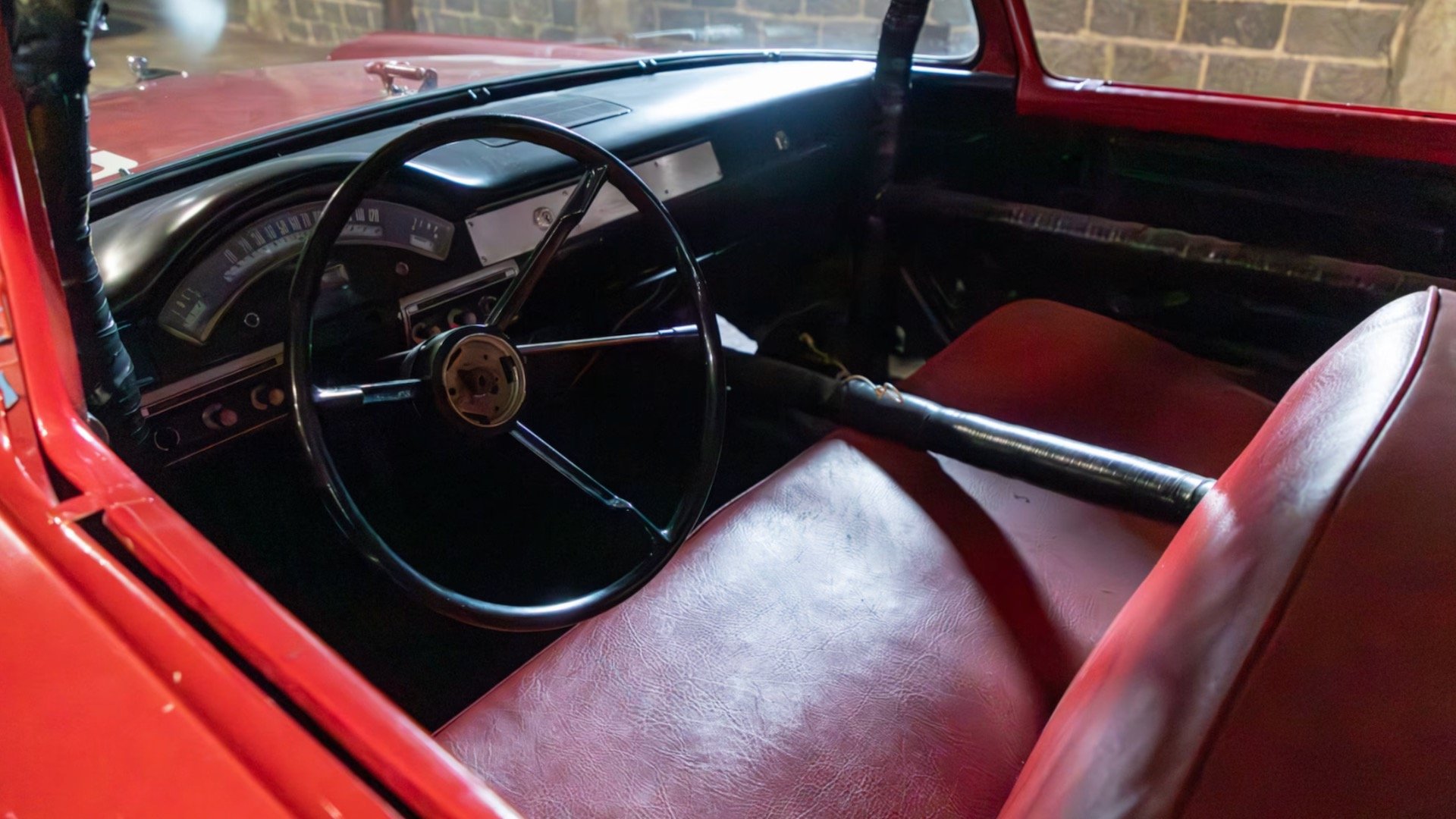
To modern eyes, this 1957 Ford Fairlane appears almost comical in a racing context. It lacks the aggressive, stripped-down aesthetic of a modern Next-Gen car. Instead, it features heavy chrome bumpers, a full factory-style interior, and a front bench seat—though the latter is interrupted by a rigid, ominous roll bar strut that serves as a jarring reminder of the era’s primitive safety standards.
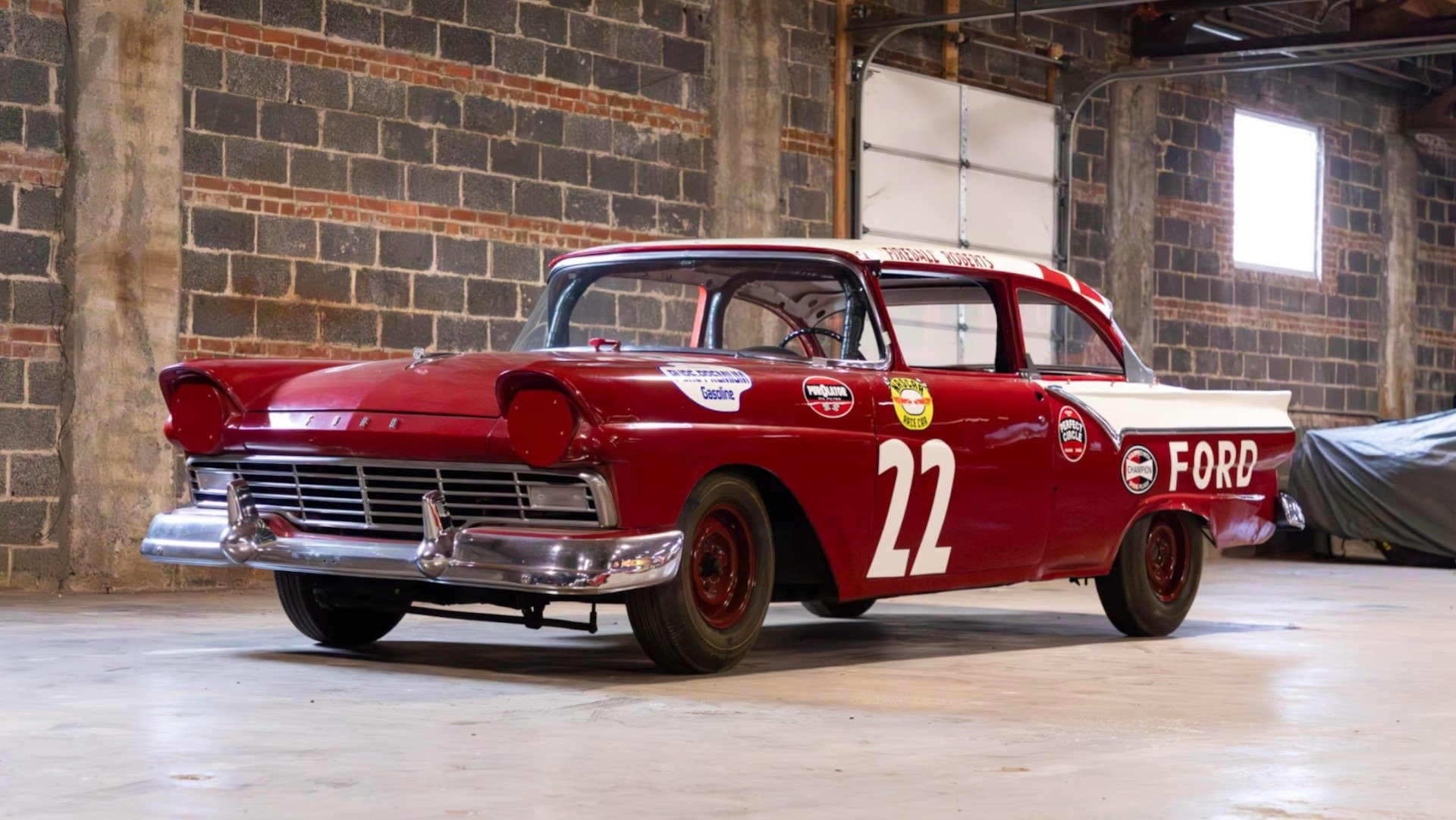
This car is a surviving witness to a time when manufacturers viewed racing as the ultimate marketing laboratory. In the 1950s, the logic was simple: "Win on Sunday, sell on Monday." Ford, Chevrolet, and Chrysler poured resources into their showroom-ready models, allowing teams to pull a car off the lot, perform a few "unofficial" performance tweaks, and hit the track. This particular Fairlane represents the apex of that philosophy, where a car could be driven to a track, dominate a 500-mile endurance race, and arguably be driven home afterward.
The Man Behind the Wheel: Fireball Roberts
The history of this car is inextricably linked to the legacy of Fireball Roberts. A native of Florida, Roberts was one of the first true superstars of the NASCAR circuit. His nickname was earned on the baseball diamond—a nod to his pitching speed—but it became synonymous with his aggressive, high-velocity driving style on the dirt and asphalt ovals of the American South.
During his tenure in this specific 1957 Fairlane, Roberts was a force of nature. He secured eight major victories in this chassis, including a legendary winning streak across three distinct venues: North Wilkesboro Speedway, Langhorne Speedway, and the Southern States Fairgrounds. These triumphs were part of a storied 15-year career that saw him claim 33 race wins and 36 pole positions.
Despite his prowess, the championship title remained elusive; his highest standing was a second-place finish during his rookie season in 1950. Tragically, Roberts’ career—and life—was cut short. In 1964, during the World 600 at Charlotte Motor Speedway, Roberts was involved in a horrific crash that left him with severe burns. He passed away several weeks later, cementing his place in the pantheon of racing martyrs who sacrificed their lives to build the sport into the spectacle it is today.
Technical Specifications: The "Y-Block" Powerhouse
Under the hood of this Fairlane lies a piece of engineering history: the Ford "Y-block" V8 engine. Displacing 312 cubic inches (5.1 liters), this engine was a hallmark of the mid-1950s Ford performance lineup. The moniker "Y-block" refers to the engine’s architecture, characterized by a deep block skirt that extends well below the crankshaft centerline, giving it a distinct "Y" shape when viewed from the front, rather than the traditional "V" of standard engine blocks.
In its racing configuration, this engine was estimated to produce approximately 300 horsepower. While that figure is modest by today’s 670-horsepower Cup Series standards, in 1957, it was an immense amount of power to manage on narrow, bias-ply tires and primitive drum brakes. The engine is mated to a column-shifted, three-speed manual transmission—a far cry from the sophisticated sequential gearboxes used by modern drivers. The experience of piloting such a machine would have been one of constant physical struggle, requiring immense strength to maneuver the heavy, steel-bodied car through high-speed corners.
Chronology: From the Track to the Museum
The journey of this car from the winner’s circle to the auction block is a story of rediscovery. Following its active racing life, the Fairlane effectively disappeared, eventually being discovered in the backyard of Roberts’ former home in Charlotte, North Carolina. The car was in a state of decay, a shadow of its former glory.
Recognizing the historical significance of the find, the car underwent a comprehensive restoration. It was eventually acquired by the 57 Heaven Museum in Branson, Missouri, where it served as a centerpiece for years. Its pedigree was further solidified when it was placed on display at the NASCAR Hall of Fame, also located in Charlotte. This provenance makes the vehicle one of the most documented and verified early-era NASCAR racers currently in existence.
Market Implications and Collector Value
Predicting the value of a piece of racing history is notoriously difficult. Unlike high-end European supercars or iconic Formula 1 chassis—which often command tens of millions of dollars—early NASCAR stock cars occupy a niche, albeit passionate, market.
"There isn’t a standardized pricing guide for cars like this," notes one industry analyst. "It isn’t a commodity in the way a 1960s Ferrari is. Its value is entirely dependent on the intensity of the bidders. If you have two die-hard NASCAR historians who grew up watching Roberts, you could see a bidding war that shatters expectations. If the market is lukewarm, it could fly under the radar."
However, the car’s impeccable provenance—its direct link to a Hall of Fame driver and its authentication by the NASCAR Hall of Fame—provides a level of investment security that few other historic race cars can offer.
The Divergence of Road and Track
The auction of this Fairlane serves as a poignant reminder of how much the automotive landscape has shifted. As NASCAR continues to struggle with declining road relevance, the divide between the cars on the track and the cars in the driveway has never been wider.
In the 1950s, a fan could look at the track and see a reflection of their own vehicle. Today, fans see a high-tech chassis that shares no parts with their own daily drivers. Furthermore, the rise of the SUV and the decline of the traditional sedan have left manufacturers with few body styles that translate well to the current NASCAR aerodynamic package.
Industry experts have long speculated that the future of the sport may shift toward the truck segments. As manufacturers like Ram, Ford, and Toyota pivot their marketing toward the lucrative truck market, the possibility of the NASCAR Truck Series eventually becoming the "prestige" category of the sport is no longer an idle theory—it is a strategic inevitability.
Conclusion
As the 1957 Ford Fairlane rolls across the block in Nashville this September, it carries the weight of a bygone era. It is a reminder of a time when the racing was raw, the cars were heavy, and the men behind the wheels were legends forged in fire and steel. Whether it finds a home in a private collection or a public museum, the car remains a vital piece of the American cultural tapestry, documenting the precise moment when the hobby of moonshiners and mechanics transformed into a multi-billion dollar professional sport.
For the collector, it is a chance to own a piece of the soul of NASCAR. For the historian, it is the ultimate primary source. Regardless of the final price, the significance of the "Fireball" Roberts Fairlane remains priceless.
