
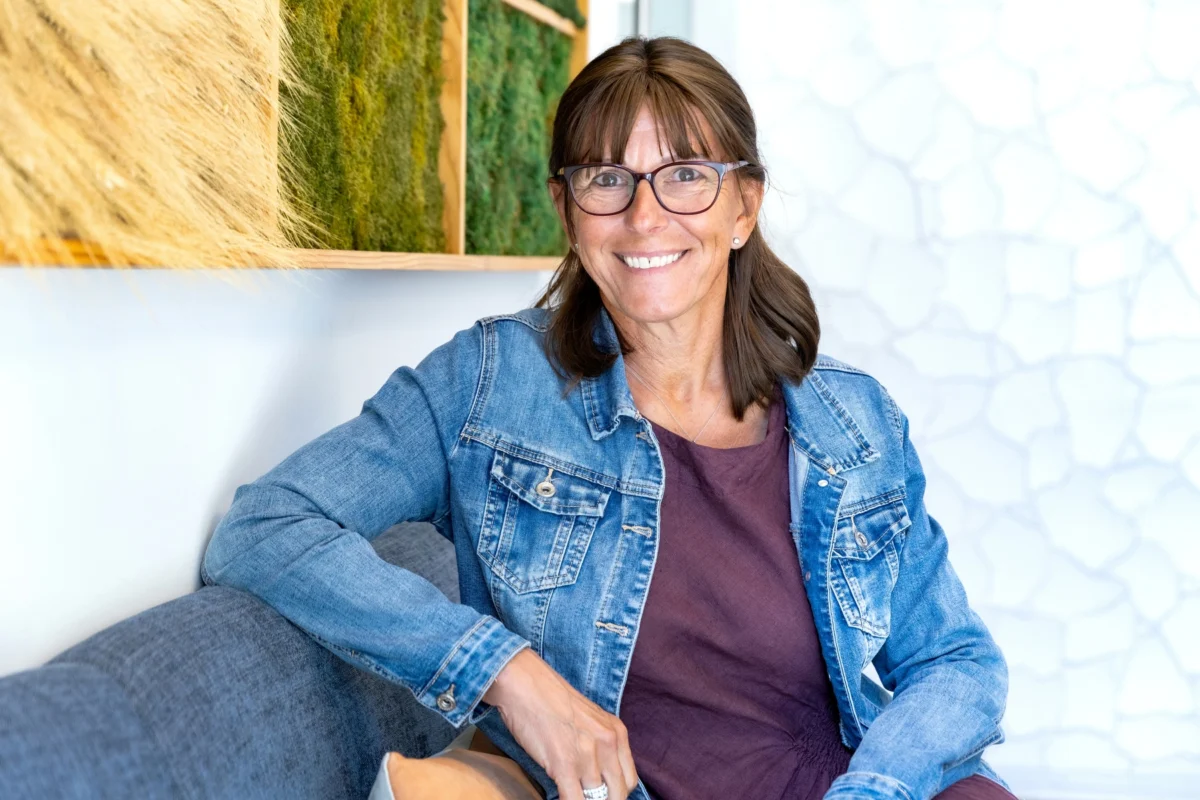
The global race for autonomous vehicle (AV) dominance has entered a highly commercial, capital-intensive phase. In a move that underscores this shifting landscape, London-founded self-driving startup Wayve has hired Elisa de Martel, the former Chief Financial Officer of Alphabet’s autonomous driving unit, Waymo.
De Martel, a veteran technology and manufacturing finance executive, joins Wayve at a critical juncture. Having guided Waymo through a period of rapid commercial expansion and multi-billion-dollar fundraising rounds, her transition to Wayve signals a maturing industry where financial discipline, scale, and strategic partnerships are becoming just as vital as software code.
Main Facts of the Appointment
Elisa de Martel has officially assumed the role of Chief Financial Officer at Wayve, succeeding Max Warburton, who had held the CFO position since 2024. Warburton will not be leaving the company; instead, he is transitioning into a strategic advisory role to support Wayve’s executive leadership team through its next phase of corporate growth.
De Martel will remain based in Sunnyvale, California, establishing a vital executive presence for Wayve in Silicon Valley. In her new capacity, she will oversee:
- Financial Strategy and Planning: Structuring Wayve’s long-term financial model as it moves from capital-intensive R&D to commercial deployment.
- Capital Allocation: Directing investments into computational infrastructure, fleet testing, and talent acquisition.
- Corporate Governance and Reporting: Establishing institutional-grade compliance, treasury, and tax structures.
- Strategic Dealmaking: Partnering with the executive team to negotiate commercial licensing agreements, investor relations, and deep-tech partnerships with global automotive manufacturers.
The hire represents a major coup for Wayve. By securing a CFO who has already navigated the financial complexities of operating a commercial robotaxi fleet at scale, Wayve is signaling to public markets and global automakers that it is ready to transition from a high-potential startup to an industry-defining commercial supplier.
Chronology of Leadership and Corporate Evolution
The professional trajectory of Elisa de Martel, juxtaposed with the rapid rise of Wayve, highlights how the financial demands of the autonomous vehicle sector have evolved over the past decade.
Elisa de Martel’s Career Path
- 2011–2022: The Apple Era. De Martel spent over eleven years at Apple, eventually serving as a Manufacturing Finance Director. During this decade, she managed the complex capital expenditures and supply-chain financing required to manufacture hundreds of millions of premium consumer electronics annually. This role gave her deep expertise in hardware scaling and global supply chains.
- 2022: Transition to Carbon. She transitioned to the deep-tech sector as CFO of Carbon, an industrial-grade 3D printing company, where she managed the intersection of hardware, software, and advanced materials.
- 2022–January 2026: The Waymo Milestone. De Martel joined Waymo as CFO during a pivotal era. Under her financial stewardship, Waymo transitioned from a highly localized testing project into a commercial ride-hailing service operating in major metropolitan areas, including San Francisco, Phoenix, and Los Angeles.
- September 2026: Wayve officially announces de Martel as its new CFO, capitalizing on her recent departure from Waymo to steer its own commercialization efforts.
[2011 - 2022] Apple: Manufacturing Finance Director (Supply chain & hardware scaling)
       │
[2022 - 2022] Carbon: CFO (Deep-tech & industrial hardware)
       │
[2022 - 2026] Waymo: CFO (Commercial expansion, $5.6B Series C fundraising)
       │
[2026 - Pres] Wayve: CFO (Global commercialization, "AV 2.0" scaling)
Wayve’s Corporate Milestones
- 2017: Foundation. Wayve was founded in Cambridge, UK, by Alex Kendall and Amar Shah, pioneering a different approach to autonomous driving based on end-to-end deep learning rather than hand-coded rules.
- 2021–2023: Early Testing and Partnership Foundations. Wayve secured early trials with UK delivery fleets, demonstrating its technology in complex, unstructured urban environments.
- 2024: The Megaround. Wayve secured a massive $1.05 billion Series C funding round, led by SoftBank Group, with participation from Nvidia and Microsoft, cementing its position as a major contender in the global AV space.
- Early 2026: Expansion of Testing. Wayve initiated public trials of its autonomous driving technology in London (utilizing safety drivers) and announced plans for imminent deployments in Tokyo.
Supporting Data: Financial and Technological Metrics
To understand why de Martel’s appointment is so significant, one must look at the financial scale of the companies involved and the stark technological differences between Waymo’s "AV 1.0" and Wayve’s "AV 2.0" architectures.
| Metric / Feature | Waymo (Alphabet) | Wayve |
|---|---|---|
| Founding Year | 2009 (as Google Self-Driving Car Project) | 2017 |
| Estimated Valuation | $45 Billion+ | ~$8.5 Billion |
| Total Capital Raised | $11 Billion+ (Estimated) | $3.2 Billion |
| Core Technology Philosophy | AV 1.0: Lidar-heavy, high-definition (HD) 3D mapping, localized geofencing, custom hardware suites. | AV 2.0: Camera-first, mapless, end-to-end neural networks, hardware-agnostic. |
| Key Strategic Backers | Alphabet, Andreessen Horowitz, Silver Lake, Fidelity | SoftBank, Nvidia, Microsoft, Uber, Nissan, Stellantis |
| Primary Commercial Focus | Vertically integrated robotaxi fleets (Waymo One). | Software licensing for consumer passenger vehicles and robotaxi networks. |
The Financial Legacy of de Martel at Waymo
During her tenure at Waymo, de Martel managed the financial strategy behind Waymo’s massive $5.6 billion Series C fundraising round (completed in late 2024). That round, which was led by Alphabet and supported by external institutional investors, pushed Waymo’s valuation past the $45 billion mark.
Waymo used this capital to fund highly expensive vehicle hardware suites (featuring custom lidar, radar, and camera setups) and to build out depot infrastructure in expansion cities.
Wayve’s Capital-Efficient Alternative
In contrast, Wayve has raised $3.2 billion to date, pushing its valuation to approximately $8.5 billion. Because Wayve’s software does not require expensive, localized HD mapping or highly specialized, proprietary sensor suites, its path to profitability is theoretically much shorter.
Instead of building and maintaining its own multi-billion-dollar fleet of vehicles, Wayve’s financial model focuses on licensing its AI "driver" to existing automotive OEMs (Original Equipment Manufacturers) and fleet operators like Uber.
Official Responses and Strategic Perspectives
While executive transitions in the tech sector are common, the recruitment of de Martel has been met with high praise from industry insiders, who view the hire as a deliberate move to prepare Wayve for institutional scaling.
According to Silicon Valley insiders close to the recruitment process, Wayve’s leadership—particularly founder and CEO Alex Kendall—was not simply looking for a traditional corporate accountant. They specifically targeted de Martel because of her deep-tech pedigree. Her experience at Apple, Carbon, and Waymo gave her a unique understanding of how hardware constraints, software development, and manufacturing margins interact.
In an internal communication regarding the appointment, Wayve emphasized that de Martel’s role will extend far beyond typical balance-sheet management. She is expected to be a key player in structuring complex commercial licensing deals with global automakers.

Her presence in Sunnyvale is also strategic; it positions Wayve’s financial leadership in close proximity to the venture capital, private equity, and tech-focused investment banks of Sand Hill Road, hinting at future massive funding rounds or a potential path toward an Initial Public Offering (IPO).
Implications for the Autonomous Vehicle Industry
The transition of a top-tier executive from Waymo to Wayve is more than just a personnel change; it reflects a broader philosophical battle occurring within the autonomous vehicle industry.
       ┌────────────────────────────────────────────────────────┐
       │                 THE AUTONOMOUS VEHICLE BATTLE          │
       └───────────────────────────┬────────────────────────────┘
                                   │
         ┌─────────────────────────┴─────────────────────────┐
         ▼                                                   ▼
┌─────────────────────────────────┐                 ┌─────────────────────────────────┐
│     AV 1.0: THE WAYMO MODEL     │                 │     AV 2.0: THE WAYVE MODEL     │
├─────────────────────────────────┤                 ├─────────────────────────────────┤
│ • High-Definition (HD) Maps     │                 │ • No HD Maps Required           │
│ • Lidar & Sensor Heavy          │                 │ • Camera-First / Vision-Based   │
│ • Geofenced to Specific Cities  │                 │ • Globally Scalable AI          │
│ • High Capital Expenditure      │                 │ • Lower Capital Expenditure     │
└─────────────────────────────────┘                 └─────────────────────────────────┘
1. The Shift from AV 1.0 to AV 2.0
For years, the AV sector was dominated by the "AV 1.0" approach pioneered by Waymo and Cruise. This approach relies on:
- Geofencing: Vehicles can only drive in areas that have been meticulously scanned and mapped in 3D.
- Expensive Hardware: Each vehicle requires tens of thousands of dollars in lidar and sensor technology.
- Rule-Based Code: Millions of lines of code written by hand to tell the car how to react in specific situations.
Wayve is the flagbearer for "AV 2.0." Its technology uses a single end-to-end deep learning neural network. The vehicle learns to drive by observing human behavior, mimicking how a human brain processes visual data. It does not need HD maps or expensive lidar. If a Wayve-enabled car is dropped in a city it has never seen before, it can navigate using real-time computer vision.
By hiring de Martel, Wayve is proving that the AV 2.0 model has matured to the point where it requires a world-class financial architect to scale it globally.
2. The OEM Licensing Play vs. Proprietary Fleets
Operating a proprietary robotaxi fleet, as Waymo does, is a capital-intensive endeavor. It requires physical depots, vehicle maintenance teams, and localized regulatory approval city by city.
Wayve’s business model is vastly different. By partnering with automakers like Nissan and Stellantis, Wayve intends to integrate its software directly into consumer vehicles on the assembly line.
For automakers, Wayve offers an "eyes on" assisted-driving system (similar to Tesla’s Autopilot or FSD) and an "eyes off" fully automated-driving system. Because Wayve’s software is hardware-agnostic, automakers can install it on their existing vehicle platforms without completely redesigning their chassis or electrical architectures. De Martel’s background at Apple—where she managed relationships between software design and hardware manufacturing—makes her uniquely qualified to structure these complex OEM partnerships.
3. The Uber Factor and the Future of Robotaxis
Wayve’s ambitions are not limited to consumer cars. The company’s technology is highly attractive to ride-hailing giants like Uber, which has invested heavily in Wayve.
Rather than building its own self-driving cars, Uber wants to integrate Wayve’s virtual driver into vehicles operating on its network. This would allow Uber to deploy robotaxis at scale without having to bear the massive capital expenditures of owning the physical fleet.
As CFO, de Martel will be tasked with balancing these dual revenue streams: licensing software to consumer OEMs while simultaneously managing high-volume fleet-deployment partnerships with ride-hailing networks.
Conclusion: The Road Ahead
The appointment of Elisa de Martel is a definitive signal that the autonomous vehicle industry is transitioning from a scientific playground into a highly competitive commercial market. Wayve has successfully built the foundational AI; now, it must build a highly profitable, scalable business around it.
With a balance sheet backed by $3.2 billion, strategic partnerships with global automotive giants, and a CFO who has already navigated the industry’s most high-profile commercial expansion, Wayve is well-positioned to challenge the established giants of the self-driving world.
