





By Syeda Aamna Hasan
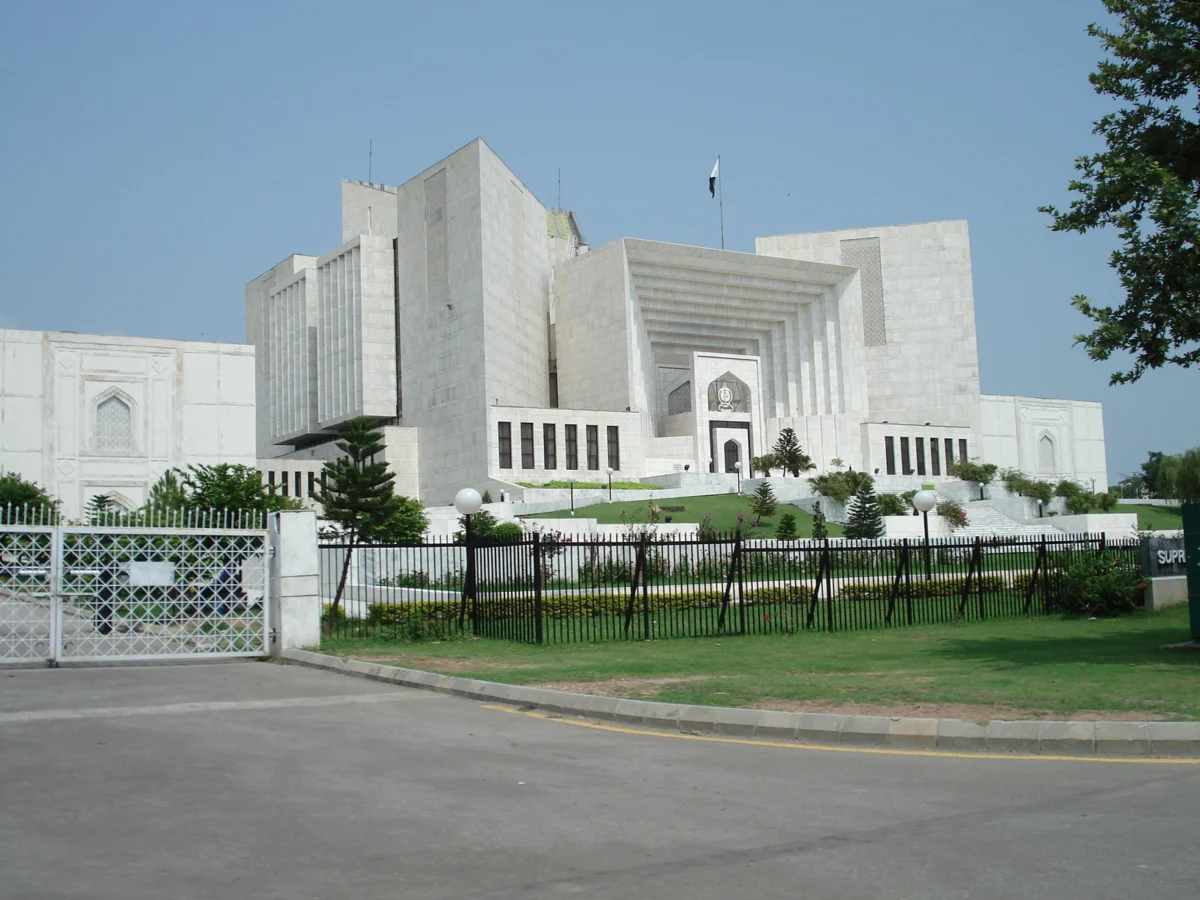
In an unprecedented development that has sent shockwaves through Pakistan’s legal and political landscape, a burgeoning institutional confrontation has emerged between the Supreme Court of Pakistan and the newly established Federal Constitutional Court (FCC). At the center of this constitutional storm lies the incarceration and medical treatment of former Prime Minister and Pakistan Tehreek-e-Insaf (PTI) founder, Imran Khan.
On Wednesday, September 16, a three-member Supreme Court bench—comprising Justice Shahid Waheed, Justice Naeem Akhtar Afghan, and Justice Ishtiaq Ibrahim—was forced to defer proceedings regarding the transfer of Khan to a private medical facility. The adjournment was not merely a procedural delay but a direct result of a jurisdictional dispute triggered by the FCC’s intervention in matters already under the Supreme Court’s active consideration.
The Genesis of the Conflict: The August 18 Interim Order
The current impasse is rooted in an interim order issued by the Supreme Court on August 18. In a bid to address concerns regarding the health and wellbeing of the imprisoned former Prime Minister, the apex court had directed authorities to transfer Khan from Adiala Jail to Shifa International Hospital in Islamabad.
The Court’s directive was specific: Khan was to be moved within 48 hours for a comprehensive medical examination by a multidisciplinary medical board. Furthermore, the order explicitly mandated that the government facilitate regular family meetings and ensure consistent communication between Khan and his children. This order was issued without prejudice to the legal rights and contentions of any party involved, serving as an urgent humanitarian safeguard.
However, the implementation of this order became a flashpoint for non-compliance. Instead of the prescribed transfer to Shifa International, government authorities moved Khan to the state-run Pakistan Institute of Medical Sciences (PIMS). Officials cited "security considerations" for the deviation, a move that legal experts and Khan’s defense team viewed as a direct affront to the Court’s authority. While doctors from Shifa were reportedly involved in the examinations at PIMS, the failure to adhere strictly to the Court’s designated facility led to a contempt petition filed by Khan’s sister, Dr. Uzma Khan.
A Chronology of Escalation
- August 18: The Supreme Court issues an interim order directing the transfer of Imran Khan to Shifa International Hospital for medical treatment and mandates family visitation rights.
- August 31: The Islamabad High Court dismisses petitions from three other Adiala Jail inmates—Muhammad Ilyas Khan, Muhammad Isamil Hussain, and Owais Altaf—who had sought private medical treatment mirroring the relief granted to Khan.
- September 15: The Federal Constitutional Court (FCC) intervenes, asserting its authority under Article 175-E of the Constitution. It summons the records of all cases related to Khan’s hospital transfer pending before the Supreme Court and the High Court.
- September 16: The Supreme Court convenes to hear the contempt petition. It expresses deep reservations regarding the FCC’s order to requisition case records and fixes the matter for hearing. The bench defers proceedings for three weeks, seeking clarity from the Attorney General on the constitutional hierarchy and jurisdiction.
The FCC’s Intervention: Article 175-E
The legal landscape shifted dramatically on September 15 when the newly minted Federal Constitutional Court asserted its mandate. The FCC was originally seized with appeals from three Adiala Jail prisoners who argued that if Imran Khan was entitled to private medical care, they, too, deserved equal protection under the law.
In a bold procedural move, the FCC invoked Article 175-E, a provision introduced via the 27th Constitutional Amendment. This article empowers the FCC to call for the record of any case involving significant questions of constitutional law. By requisitioning the files pertaining to the Supreme Court’s August 18 order, the FCC signaled its intent to potentially override or consolidate the ongoing proceedings.
The wording of the FCC’s order—directing its office to fix the matters before it—caused immediate alarm within the Supreme Court. During the September 16 hearing, Justice Shahid Waheed pointedly questioned whether such an instruction fell within the FCC’s legitimate constitutional bounds, casting doubt on the legality of the FCC attempting to "take over" a matter already under the purview of the Supreme Court.
Official Responses and the Role of the Attorney General
Attorney General of Pakistan, Mansoor Usman Awan, found himself in the difficult position of navigating the conflicting directives of two superior courts. Appearing before the Supreme Court, the Attorney General argued that the Constitution clearly defines the respective jurisdictions of the two bodies. His position, supported by various legal analysts, is that it is constitutionally untenable for two superior courts to exercise simultaneous jurisdiction over the same matter.
The government’s defense of its actions remains tethered to the security argument. Throughout the hearing, government representatives insisted that the transfer to PIMS was a necessary precaution given the high-security profile of the prisoner. However, the Supreme Court bench remained skeptical, questioning how the government could unilaterally ignore a direct judicial order for a specific private hospital without first seeking a clarification or modification from the bench that issued the order.
Dr. Uzma Khan’s counsel, appearing in the contempt proceedings, emphasized that the rule of law necessitates compliance. She argued that if the state found the August 18 order logistically impossible to implement, the only legitimate path was a motion for clarification, not a self-styled interpretation of "security" that undermined the Court’s mandate.
Implications: A Constitutional Crisis in the Making
The ongoing dispute extends far beyond the medical records of Imran Khan. It represents a fundamental tension regarding the power structure of the Pakistani judiciary. By challenging the FCC’s attempt to requisition case records, the Supreme Court is effectively defending its own institutional integrity and the doctrine of judicial finality.
If the FCC is permitted to pull cases from the Supreme Court at will, it could lead to "forum shopping" by litigants and a state of permanent instability where judicial orders are subject to reversal by a rival court. This could erode public confidence in the judiciary, which is already under immense pressure due to the country’s polarized political climate.
Furthermore, the delay in providing adequate medical care to Khan—as requested by his legal team—adds a layer of humanitarian urgency to the legal quagmire. As the proceedings remain deferred for three weeks, the question remains: is the state prioritizing security protocols over the explicit directives of the apex court?
Conclusion: The Path Forward
As of mid-September, the August 18 order technically remains in force, yet its implementation is effectively paralyzed by the jurisdictional tug-of-war. The Supreme Court’s decision to grant a three-week window for the Attorney General to submit formal guidance indicates that the judiciary is treading carefully. The goal is to avoid an open institutional war while attempting to establish a clear boundary between the Supreme Court and the FCC.
The outcome of these deliberations will be a bellwether for the future of the 27th Constitutional Amendment and the functional independence of Pakistan’s judicial hierarchy. For now, the legal community watches with bated breath, as the fate of a former Prime Minister becomes the focal point of a historic clash between two of the country’s most powerful legal institutions.
Disclaimer: Opinions expressed in JURIST Dispatches are solely those of our correspondents in the field and do not necessarily reflect the views of JURIST’s editors, staff, donors, or the University of Pittsburgh.
