



By Editorial Staff
August 31, 2026
As the rapid integration of artificial intelligence (AI) into the global workforce continues to accelerate, the conversation surrounding the future of labor has largely focused on the potential for mass displacement. While widespread, systemic job loss attributed directly to AI has yet to reach catastrophic levels, policy experts are sounding a deafening alarm: the United States’ primary defense against economic volatility—the Unemployment Insurance (UI) system—is fundamentally broken.
According to Michele Evermore, Senior Policy Fellow for Economic Security at the National Employment Law Project (NELP), waiting for an AI-driven economic crisis to manifest before reforming the UI system would be a historic error. The current framework, characterized by decades of under-investment and legislative neglect, is ill-equipped to handle the modern labor market’s complexities, let alone the potential shockwaves of an AI-led transition.
The Core Problem: A Safety Net in Disrepair
At its inception, the UI system was designed with three primary pillars: providing immediate income stabilization for displaced workers, facilitating a bridge for career transitions, and acting as a countercyclical stabilizer to mitigate the impacts of economic downturns. Historically, the multiplier effect of UI is significant; every dollar distributed in benefits generates nearly two dollars of local economic activity, as displaced workers immediately inject those funds back into their communities for essential goods and services.
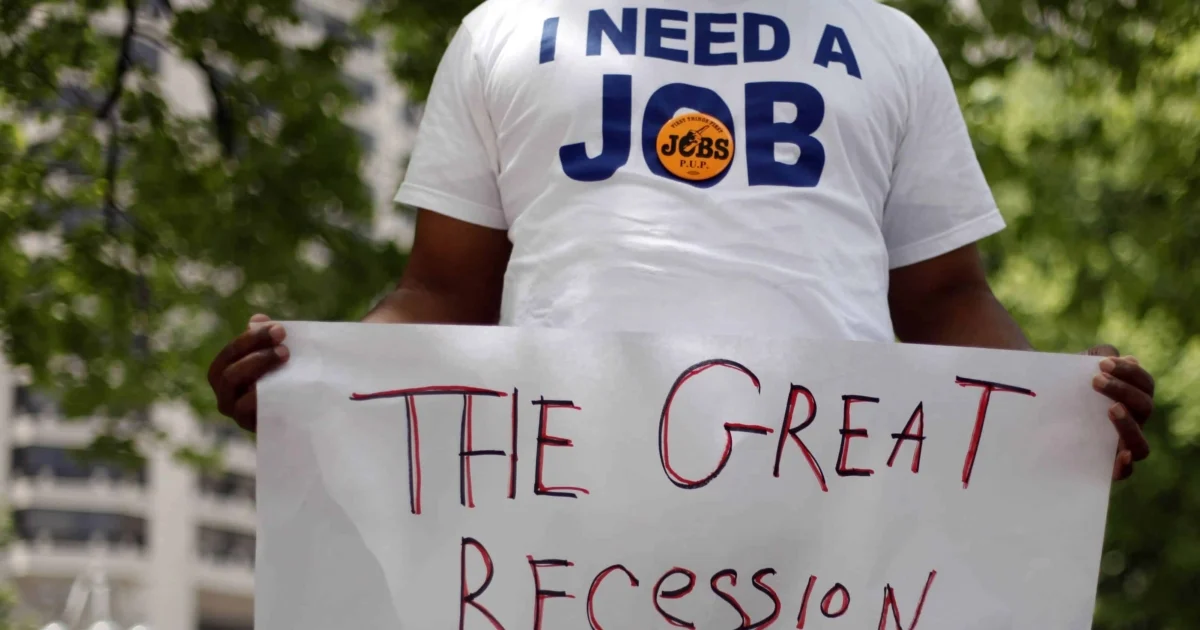
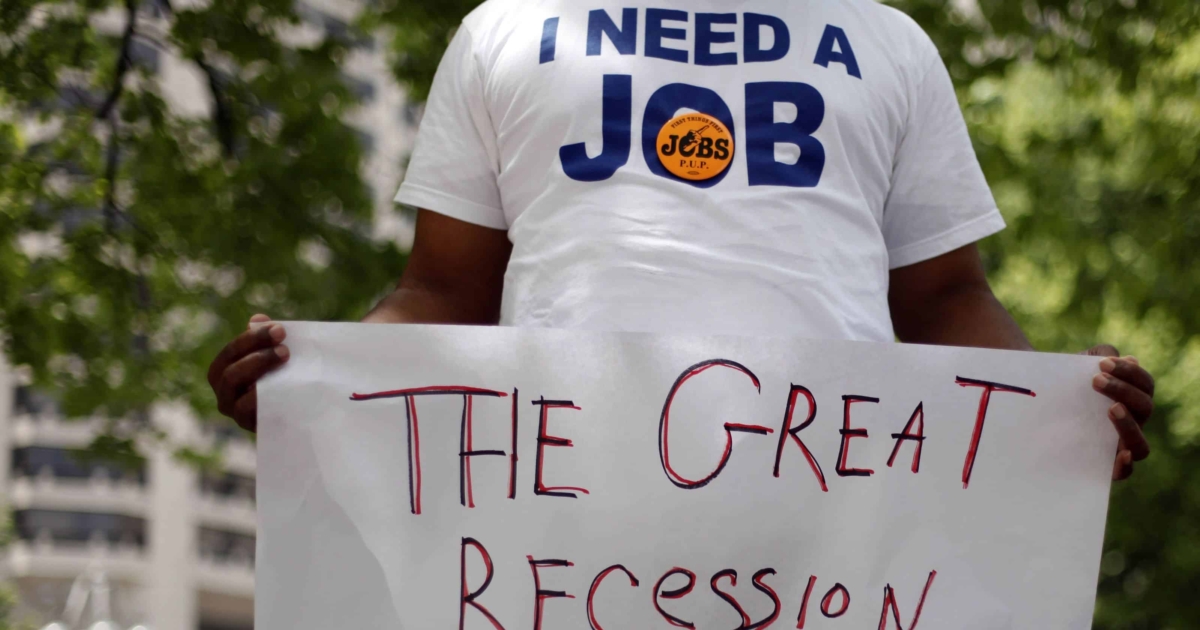
However, the reality of the 2026 landscape is starkly different. Since the Great Recession of 2008, many U.S. states have engaged in what economists describe as a "race to the bottom." By systematically reducing benefit amounts, narrowing eligibility criteria, and shortening the duration of support, states have stripped the UI system of its efficacy. In many jurisdictions, the safety net is no longer a net at all; it is a sieve that fails to catch those who need it most.
Chronology of Neglect: From Pandemic Lessons to Present Day
To understand the current fragility of the system, one must look at the recent history of American labor policy.
- 1980–1996: Bipartisan commissions were established to analyze the labor market and provided robust, actionable recommendations to bolster the UI system. These recommendations were largely sidelined by political inertia.
- 2008–2010: The Great Recession tested the limits of state UI systems, prompting a wave of austerity measures at the state level that effectively eroded coverage.
- 2020–2021: The COVID-19 pandemic served as a brutal stress test. As unemployment claims hit record highs, the federal government was forced to create three separate, temporary emergency programs because the base UI system was incapable of scaling.
- 2022: Government audits revealed that decades of under-investment had left state agencies with antiquated technology and skeleton crews. This lack of institutional capacity allowed sophisticated criminal fraud rings to exploit the system, siphoning away billions intended for legitimate workers.
- 2025–2026: Legislative efforts led by Senators Ron Wyden and Michael Bennet, alongside Congressman Don Beyer, have sought to revive the reforms proposed decades ago, but these bills remain in the throes of a contentious legislative process.
The pandemic exposed a dangerous pattern: when the government ignores UI during periods of economic relative stability, it pays a much higher price in terms of both administrative failure and human suffering when the inevitable crisis arrives.
Supporting Data: The "Low-Hire" Economy
The modern job seeker faces hurdles that were unimaginable in the mid-20th century. The rise of algorithmic hiring and digital job boards has birthed a phenomenon known as the "ghost job" market. Data suggests that as many as one in three job postings currently visible on major platforms are either fake, expired, or never intended to be filled.
For the unemployed, this translates into a demoralizing cycle of sending hundreds of resumes into a digital void with zero feedback. This has contributed to a record increase in long-term unemployment and a historic low in labor force participation rates. When the system designed to help workers re-enter the workforce—the federal Employment Service—has been dismantled through steady budget cuts, the "bridge" to new employment effectively collapses. The discouraged worker then exits the labor market entirely, deepening the economic stagnation.
Official Responses and Legislative Efforts
There is a growing consensus among policy analysts that the current UI infrastructure is a relic of the industrial age, ill-suited for the information economy.
Legislative champions, including Senator Ron Wyden (D-OR) and Senator Michael Bennet (D-CO), have introduced comprehensive, bicameral legislation that aims to codify the recommendations of the 1980 and 1996 commissions. These proposals focus on:
- Federal Standards: Establishing minimum requirements for benefit levels and duration to prevent states from continuing the "race to the bottom."
- Modernization Grants: Providing states with the funding necessary to upgrade IT infrastructure to prevent fraud while ensuring timely delivery of funds.
- Restoring the Employment Service: Reinvigorating the U.S. Department of Labor’s Employment Service division to provide meaningful job placement assistance, counseling, and training for workers displaced by automation and AI.
"We had the solutions to address mass unemployment fifty years ago, and we chose to ignore them," says Michele Evermore. "The bill introduced by Senators Wyden, Bennet, and Representative Beyer isn’t just about money; it’s about institutionalizing a responsive, dignified system that recognizes the realities of the 21st-century worker."
Implications: Preparing for the AI Disruption
The looming integration of AI is not merely a technological shift; it is a structural transformation of the economy. If the workforce is not supported during this transition, the result could be a widening of the wealth gap and a permanent class of disenfranchised, long-term unemployed individuals.
1. The Human Cost
When the safety net fails, the downstream effects are felt in healthcare systems, increased homelessness, and a decline in educational outcomes for the children of the displaced. The erosion of UI is, at its core, a public health issue.
2. The Economic Multiplier
As the economy becomes more automated, the necessity for a strong UI system becomes even more acute. A well-funded system allows workers to "wait for the right job" rather than settling for precarious, low-wage labor. This improves the overall productivity of the labor market by ensuring better worker-job matching, which is the cornerstone of a healthy, growing economy.
3. Preventing Systemic Fraud
Modernizing the IT infrastructure of the UI system is the only way to ensure that benefits reach those who need them without being siphoned off by global criminal enterprises. Neglect is not a cost-saving measure; it is a fiscal liability.
4. Rebuilding Institutional Knowledge
The Employment Service once acted as a vital hub for local economies. By decentralizing and dismantling these offices, the government lost the ability to provide localized training and job matching. A return to a robust, federally-supported, local office model is essential to help the workforce adapt to the specific skill demands created by AI.
Conclusion: A Call for Proactive Governance
The narrative that "AI will take all the jobs" is often used to paralyze policymakers with fear. However, the more pressing reality is that the lack of a functional, modern social safety net will prevent the workforce from adapting to the new reality.
If Congress continues to wait until a crisis is at its doorstep, the cost of the next intervention will be exponentially higher than the cost of reform today. We are at a crossroads where we must choose between a cycle of reactive, panicked policy and a proactive, systemic strengthening of the American labor force. The time to build the foundation for an AI-integrated economy is not when the displacement begins—it is now.
