



In a pivotal week for Washington D.C., as the city buzzed with the high-stakes energy of the Congressional Black and Hispanic Caucuses and bipartisan summits grappling with the existential risks of Artificial Intelligence, a quieter but equally profound transformation was taking place. The National Employment Law Project (NELP) convened a high-level assembly of labor policy architects, activists, and veteran organizers to confront an urgent question: How can the American labor movement pivot from a posture of defense to one of proactive, systemic reform?
This gathering—the first major in-person policy event hosted by NELP since the onset of the COVID-19 pandemic—served as both a reflection on the organization’s storied history and a crucible for the future of worker rights in an era defined by rapid technological disruption and shifting economic paradigms.
A Legacy of Leadership in Uncertain Times
The event was anchored by the personal and professional testimonials of long-time partners who have spent decades in the trenches of the worker justice movement. Speakers including Alan Barber of the Roosevelt Institute, Jaribu Hill of the Mississippi Workers’ Center for Human Rights, Angela Hanks of The Century Foundation, MB Maxwell of Workshop, and Kevin Reilly of the Laborers’ International Union provided a vital retrospective. Their insights served to contextualize the current landscape, reminding attendees that the modern struggle for labor rights is a continuation of a century-long effort to secure the dignity of the American workforce.
Opening the summit, Raj Nayak, chair of NELP’s Board of Directors, set a sober tone. "We’re facing existential threats to our bedrock worker protections—some of which workers have relied upon for nearly a hundred years," Nayak noted. He emphasized that throughout history, during moments of deep economic insecurity, NELP has consistently acted as a vanguard for working families. The subtext of his remarks was clear: the old playbook is no longer sufficient.
The Call to Action: Refusing the Inherited World
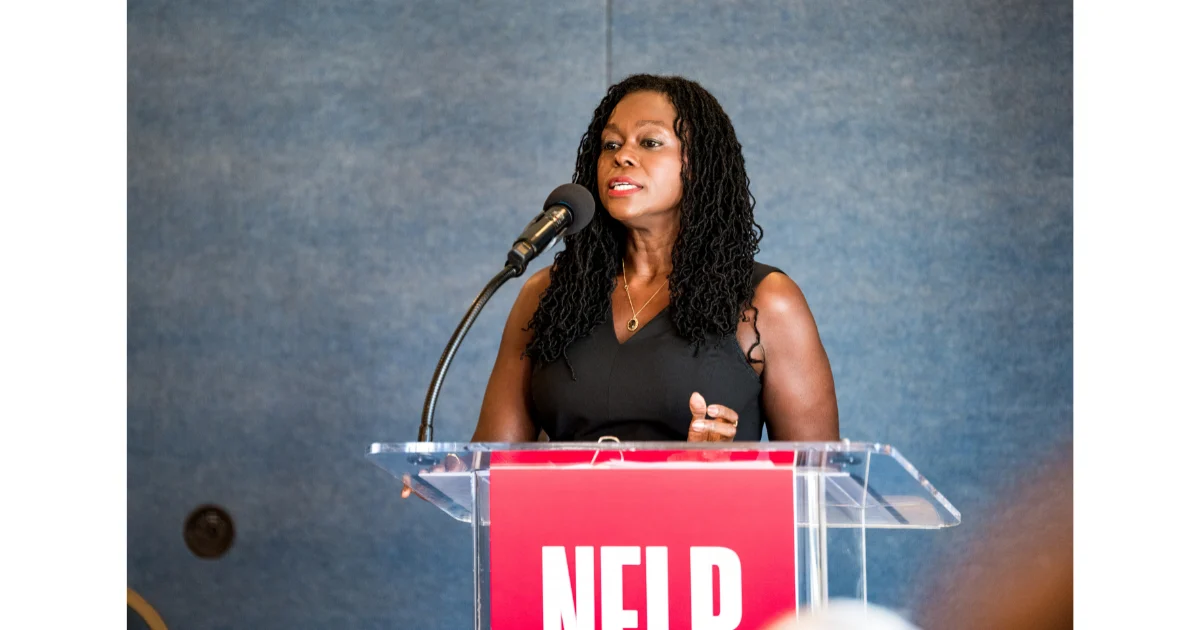
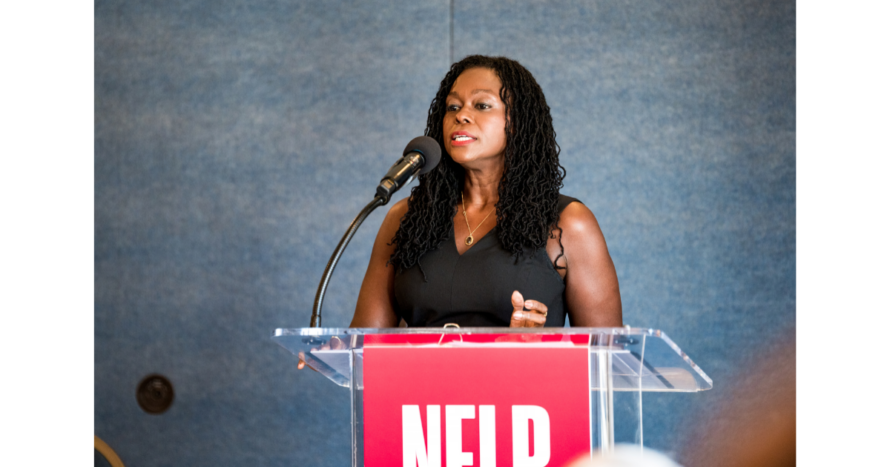
NELP President and CEO Rebecca Dixon delivered the event’s most evocative message, framing the current moment as a fundamental turning point. Reflecting on her own formative years as a civil service worker in Mississippi, where she witnessed firsthand the impact of NELP’s early litigation against employment discrimination, Dixon urged attendees to reject complacency.
"We are once again living through a period when the rules are being rewritten," Dixon declared. "We must collectively keep organizing, building, and fighting—we must refuse to accept the world we inherited is the best we can do." Her challenge to the assembled representatives—spanning labor unions, worker centers, and economic research institutes—was to move beyond incrementalism and instead engage in the collaborative development of bold, transformative policy solutions.
The Changing Nature of Work: AI, Automation, and Precarity
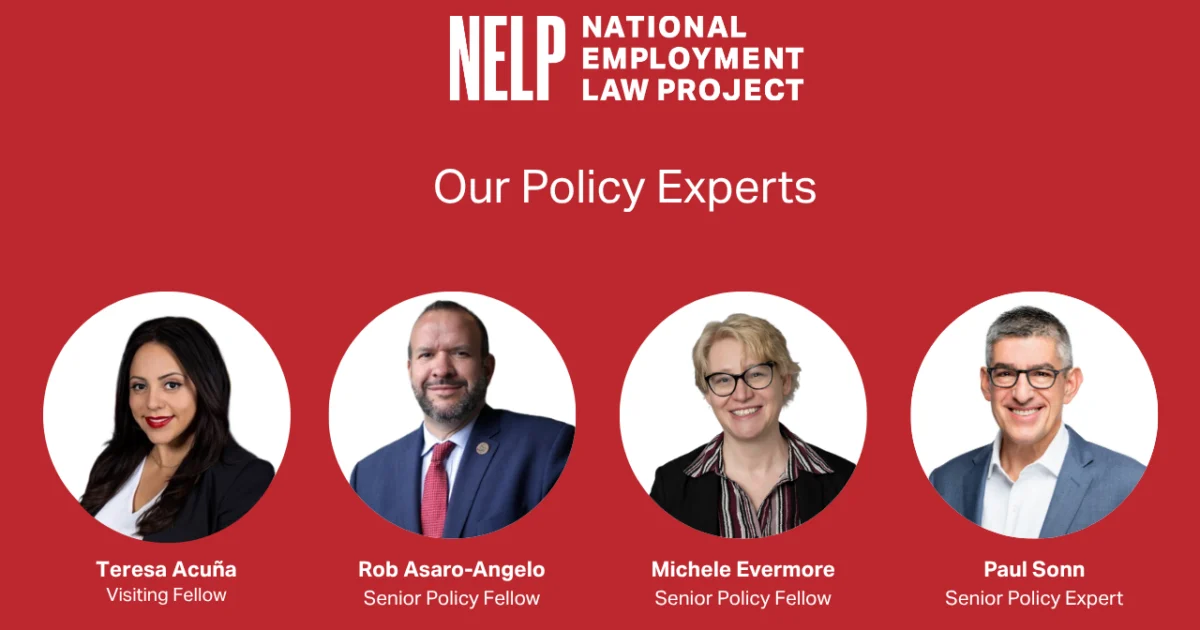
The heart of the summit featured a panel discussion moderated by Teresa Acuña, NELP’s Visiting Fellow for Good Jobs Democracy. Joined by experts Michele Evermore, Rob Asaro-Angelo, and Paul Sonn, the panel dissected the rapid evolution of the labor market.
Acuña opened the discussion by noting that the institutional infrastructure designed to protect workers is struggling to keep pace with the velocity of change. "We’re talking today about the future of worker justice at a moment when work itself is changing rapidly," Acuña observed. "AI, automation, contract work, and rising costs are creating new challenges, but they also give us an opportunity to rethink what workers need to thrive."
Reimagining Unemployment Insurance (UI)
Michele Evermore’s critique of the current unemployment insurance system was blunt and uncompromising, labeling the existing framework as "garbage." She highlighted a systemic failure where the people who need the safety net the most are often those least likely to access it.
"Too many unemployed people never even apply because benefits pay far too little in most states, fail to keep pace with inflation, and run out before people land their next job," Evermore argued. She pointed to a labor market increasingly plagued by "ghost jobs"—fake postings that clutter the system—and a lack of meaningful reemployment assistance. Her proposal involves a radical simplification of the UI process, bolstered by a more robust role for labor unions in navigating the bureaucracy and fostering neighbor-to-neighbor support networks.
Beyond the Minimum Wage: A New Wage Paradigm
Paul Sonn addressed the "affordability trap" that currently defines the national economic discourse. While much of the political energy has been directed toward lowering the cost of living, Sonn argued that the labor movement has been too passive regarding the stagnation of real wages.
"Working families are being squeezed between rising living costs and stagnant pay," Sonn stated. Reflecting on the monumental success of the "Fight for $15" movement, he suggested that the movement has reached a plateau. He proposed that the next phase of the wage fight must move beyond a universal minimum wage toward "sector-based wage standards." By setting industry-specific benchmarks, activists could secure higher pay that reflects the actual economic output and profitability of specific sectors, rather than relying on a one-size-fits-all legislative approach.
Innovations in Labor Law Enforcement
Drawing on his eight-year tenure as New Jersey’s Labor Commissioner, Rob Asaro-Angelo offered a pragmatic vision for state-level enforcement. He pushed back against the narrative that budget constraints must inevitably lead to weak oversight.
Citing a Rutgers University study, Asaro-Angelo emphasized that strong statutes are meaningless without effective implementation. He proposed three key pillars for modern enforcement:
- Strengthened Partnerships: Leveraging the combined power of state agencies and worker organizations.
- User-Friendly Infrastructure: Creating digital portals and intuitive processes for workers to file claims without fear of retaliation.
- Strategic Procurement: Using the power of the public purse—government contracts—to set higher labor standards for all private-sector employers who wish to do business with the state.
Implications for the Future of Worker Justice
The summit did not aim to produce a single legislative bill, but rather to establish a roadmap for the next decade of advocacy. The implications of the discussion are clear: the labor movement is shifting its focus toward a trifecta of systemic reforms: modernizing the social safety net, implementing sectoral bargaining and wage standards, and professionalizing the enforcement of labor law.
As the conference concluded, the atmosphere was one of calculated optimism. The challenges—ranging from the displacement caused by generative AI to the atomization of the workforce through contract work—are immense. Yet, the consensus among participants was that these threats also provide a rare opening to dismantle outdated structures and replace them with policies built for the 21st century.
A Sustained Movement
The event served as a reminder that worker justice is not a static achievement but a continuous process of negotiation and struggle. By gathering leaders who span the spectrum of the labor movement, NELP has fostered a rare cross-pollination of ideas that bridges the gap between academic research and grassroots organizing.
As attendees departed the summit, the message was clear: the time for incremental adjustments has passed. Whether it is through the reimagining of unemployment benefits to better serve a precarious workforce, the transition to sector-based wage strategies, or the modernization of state-level enforcement, the movement is signaling its intent to reclaim the narrative of the American economy. The path forward will require sustained organizing, deep policy innovation, and an unwavering commitment to the belief that the current economic order is not the limit of what is possible for American workers.
For NELP and its partners, the work begins now—not in the halls of power alone, but in the collaborative efforts to rebuild the infrastructure of dignity for every worker in the nation.
