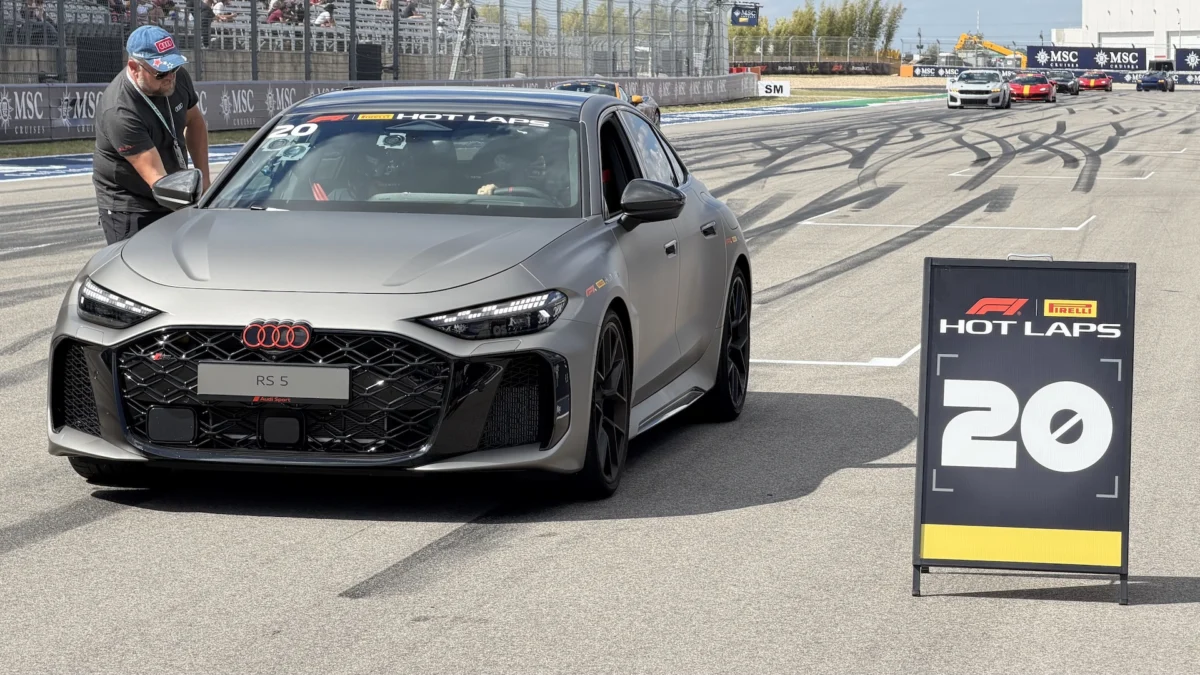





The modern performance sedan is currently undergoing a radical transformation. As the industry pivots toward hybridization, manufacturers are tasked with the daunting challenge of maintaining the "soul" of their performance icons while integrating complex, weight-heavy electrical architectures. At the 2026 Formula 1 United States Grand Prix, Audi provided a compelling demonstration of this transition. With the 2027 Audi RS5 acting as a high-speed shuttle through the undulating corners of the Circuit of the Americas (COTA), the message was clear: electrification is not the end of the visceral driving experience—it is a new chapter of it.
The Engineering Evolution: A Complex, Glorious Hybrid
The 2027 RS5 represents a departure from the traditional, naturally aspirated or pure-combustion lineage that enthusiasts have long associated with Ingolstadt’s RS division. Under the hood lies a sophisticated 2.9-liter twin-turbocharged V6, a powerplant that has been refined to provide an exceptional baseline of performance. However, the true innovation lies in the integration of a rear-mounted electric motor and a 22-kWh lithium-ion battery pack tucked beneath the floor.
This hybrid configuration yields a staggering output of 630 horsepower and 609 lb-ft of torque. When combined with Audi’s signature Quattro all-wheel-drive system, the vehicle achieves a level of traction that defies its curb weight. While colleagues have noted the vehicle feels "heavy and complicated," the performance metrics suggest that this complexity is well-masked by the chassis’s ability to distribute torque and power with surgical precision.
Chronology of a Hot Lap: COTA in the Passenger Seat
The opportunity to experience the RS5 at full tilt came via the Pirelli Hot Lap program during the U.S. Grand Prix weekend. Steering the machine was Carrie Schreiner, a professional racer whose pedigree includes podium finishes at the Nürburgring 24 Hours and victories in the Lamborghini Super Trofeo and the Formula Academy.
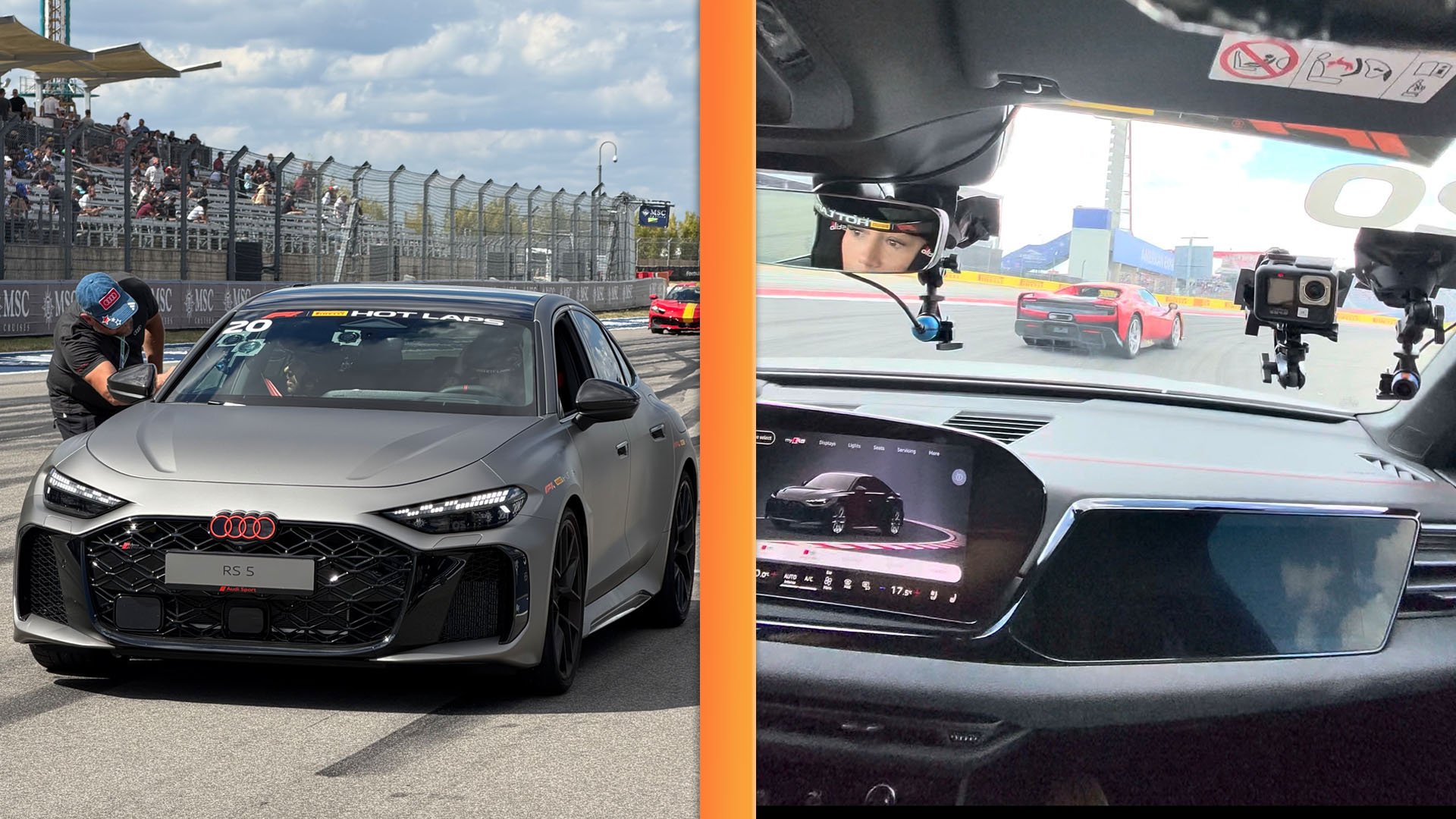
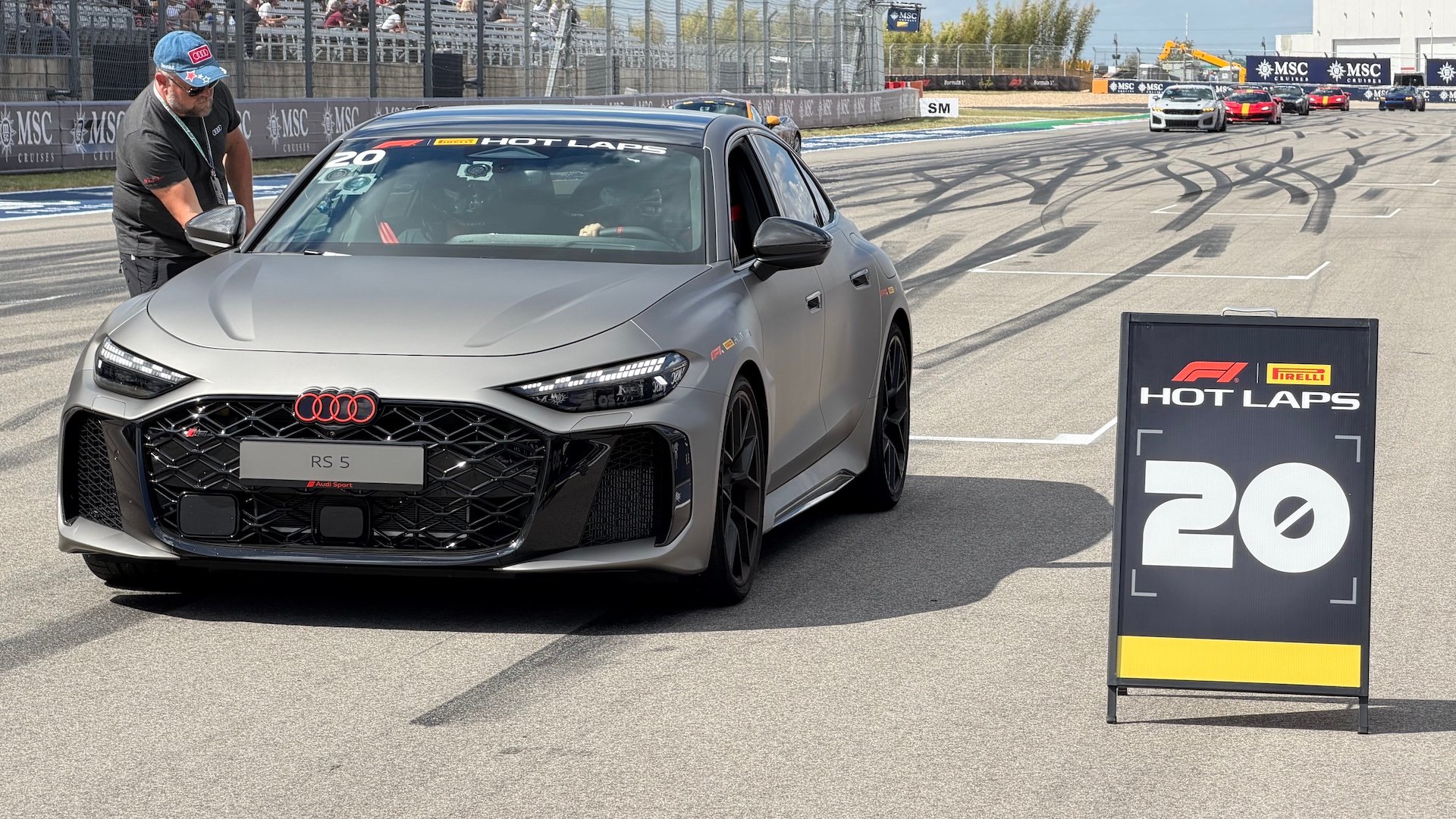
The session began in the pit lane, where the hum of the electric drivetrain provided a subtle, futuristic contrast to the roar of the F1 cars on track. As Schreiner merged onto the circuit, the RS5’s acceleration through the iconic uphill run toward Turn 1 was immediate and relentless. Despite the presence of higher-strung supercars—Ferraris, McLarens, and Aston Martins—on the track, the RS5 held its own.
As we navigated the challenging esses of COTA, the car’s agility was surprising. The Quattro system worked in tandem with the electric torque vectoring to pull the sedan out of corners with a level of confidence that allowed Schreiner to push the vehicle to its limits. By the time we reached the long back straight, the RS5 showcased its grand-touring DNA, feeling composed and stable even at the high speeds required for a professional-grade hot lap.
Supporting Data: Why the RS5 Stacks Up
While the raw performance of the RS5 is noteworthy, its position in the market is defined by its accessibility. In an era where hyper-exclusive supercars dominate the track day landscape, the RS5 offers a unique value proposition:
- Utility: Unlike the mid-engine supercars sharing the tarmac, the RS5 retains its four-door practicality, making it a "do-it-all" performance machine.
- Torque Delivery: The 609 lb-ft of torque is available almost instantaneously thanks to the electric assist, negating the turbo-lag often associated with smaller displacement engines.
- Dynamic Versatility: The blend of the 2.9L V6 and the electric motor allows for a broad power band, ensuring the car feels as comfortable in stop-and-go traffic as it does on a technical circuit.
Official Stance and Brand Strategy
Audi’s presence at the F1 U.S. Grand Prix is not merely promotional; it is a calculated effort to align the brand’s consumer performance vehicles with its upcoming foray into Formula 1. By utilizing brand ambassadors like Carrie Schreiner, who also plays a role in Audi’s F1 media initiatives, the company is bridging the gap between its track-focused racing efforts and its showroom-floor innovation.
The "heavy but glorious" feedback from reviewers is a sentiment the company seems to embrace. Audi engineers have long prioritized the "Quattro" experience—a feeling of unshakeable grip and confidence. By evolving the drivetrain to include a heavy battery pack, the engineers have shifted the weight distribution, but they have done so with the specific intent of improving the car’s center of gravity and cornering stability.
The Broader Implications for the Performance Segment
The industry is currently obsessed with the question of how to retain engagement in an electrified future. The 2027 RS5 suggests that the answer lies in the "hybridization of personality."
The Weight Dilemma
The primary critique of modern performance cars is weight. As batteries become denser, the challenge of maintaining handling dynamics increases. However, the RS5 demonstrates that electronic suspension management and torque vectoring can mitigate these concerns. The car does not feel like a lumbering electric vehicle; it feels like a high-performance sports sedan that happens to have the added benefit of electric torque.
The Death of the "Supercar-Only" Track Day
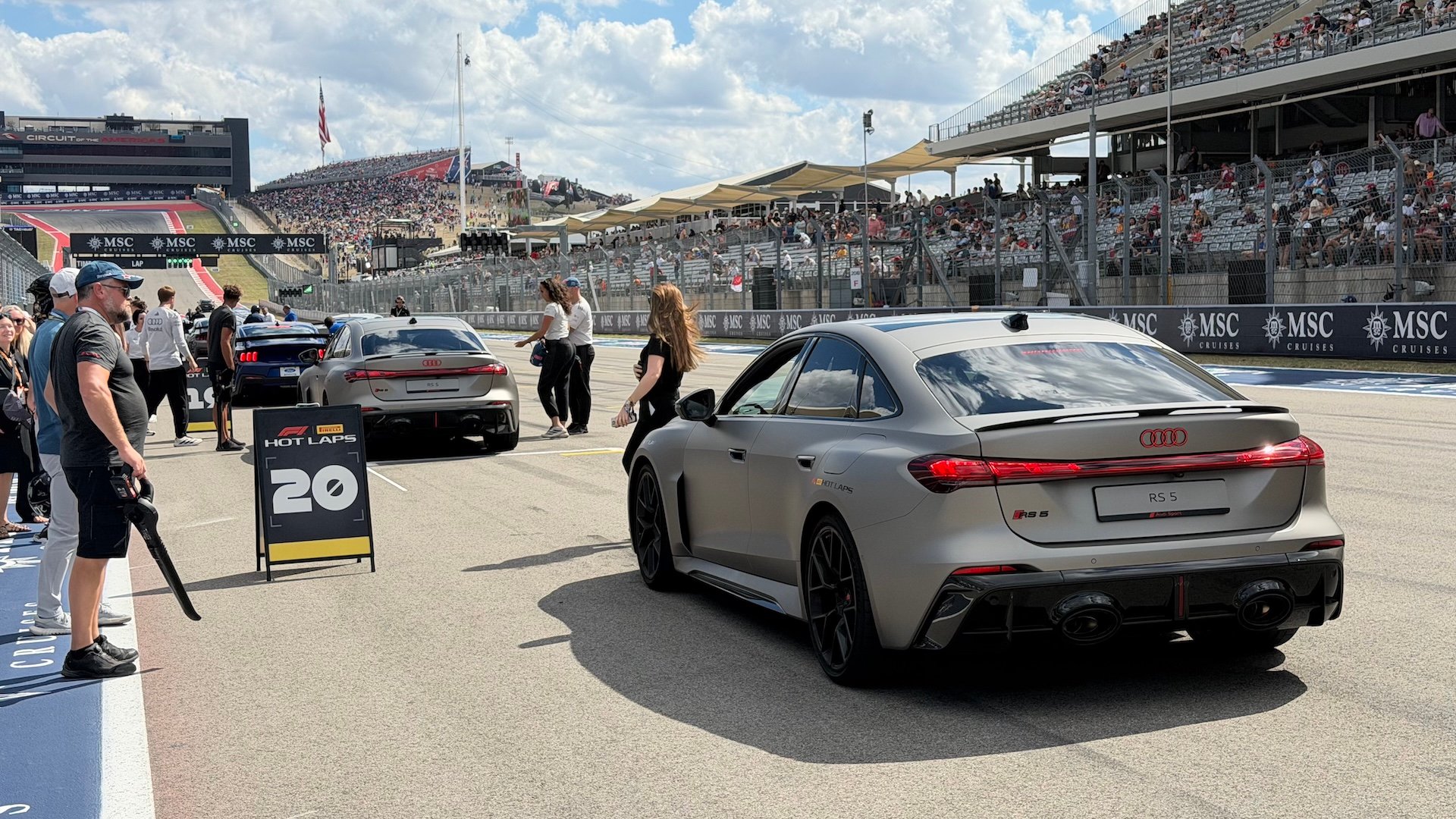
The inclusion of the RS5 in the Pirelli Hot Lap program alongside dedicated supercars signals a shift in consumer expectations. Enthusiasts no longer want a track toy that must be trailered to the circuit. There is an increasing demand for the "daily driver supercar"—a vehicle that can drop the kids off at school in the morning and set a competitive lap time at a regional circuit in the afternoon.
Conclusion: A New Benchmark
The 2027 Audi RS5 is a testament to the fact that we do not have to mourn the loss of combustion entirely. Instead, we are entering an era of augmentation. The twin-turbo V6 provides the familiar auditory excitement, while the electric components provide the performance edge necessary to keep pace with the changing demands of the automotive world.
For the driver, the RS5 offers a rare blend of civility and violence. It is, perhaps, the most approachable performance vehicle in its class. While the allure of the mid-engine supercars on the track was undeniable, the RS5 stood out as the vehicle one could actually live with, drive every day, and still enjoy on a weekend at the track.
As I stepped out of the car at the end of the session, the takeaway was clear: Audi hasn’t lost its touch. They have simply redefined what it means to be a "driver’s car" in the 21st century. The 2027 RS5 is not just a triumph of engineering; it is a bold statement that the future of the performance sedan is not only secure—it is better than ever. If the opportunity arises to put this car through its paces on my own, I will not hesitate. Until then, the memory of those COTA corners remains the gold standard for what a modern, electrified RS machine is capable of.
