

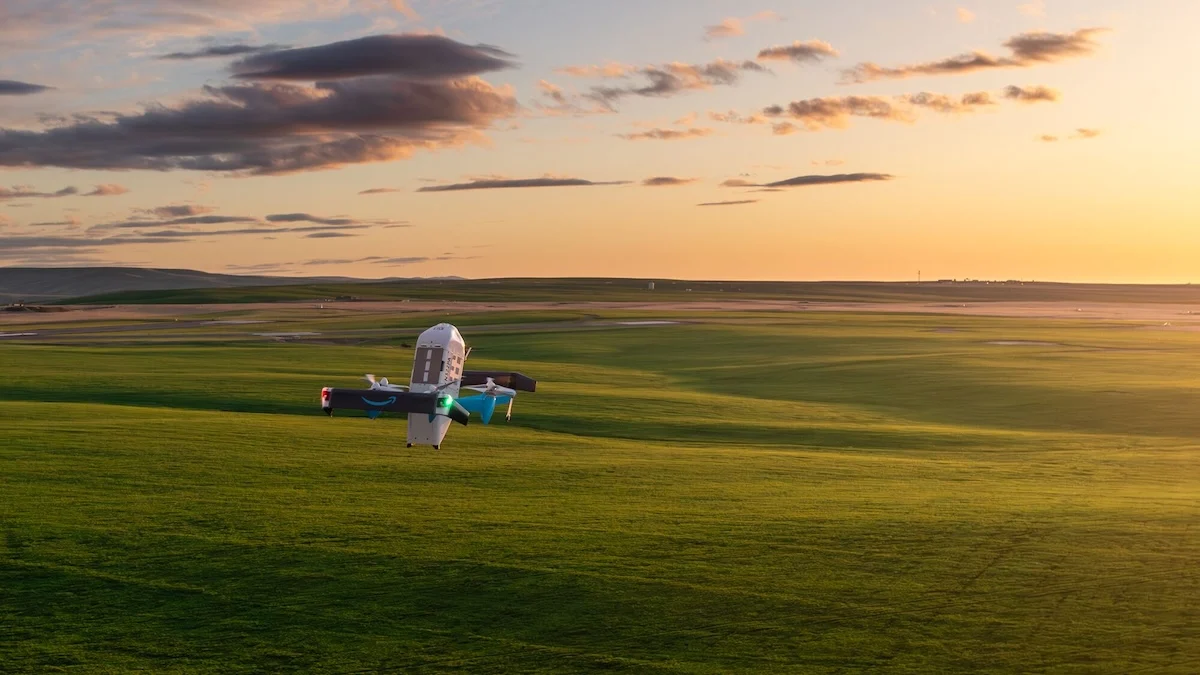
Main Facts: Amazon’s Aggressive Push to Dominate Autonomous Delivery
Amazon has announced a sweeping expansion of its drone delivery service, Amazon Prime Air, aiming to establish operations in nearly 500 U.S. cities by the end of 2026. This aggressive roadmap represents an approximate sixfold increase in the service’s current geographical footprint, signaling a shift from localized, experimental pilot programs to a scaled, mainstream utility.
As the e-commerce giant battles rival retailers and tech conglomerates for dominance in the "last-mile" delivery sector, the expansion aims to bring ultra-fast, 30-minute drone deliveries to millions of suburban and urban households.
According to the company, the service will soon launch in 11 new municipal markets across seven states. These initial expansion sites include:
- Arizona: Tolleson
- Florida: Ruskin
- Kansas: Kansas City
- Nebraska: Papillion
- Louisiana: Baton Rouge
- Michigan: Hazel Park and Pontiac
- Texas: Richmond, San Antonio, Richardson, and Waco
Amazon Prime Air Expansion Blueprint (Target: late 2026)
┌─────────────────────────────────────────────────────────┐
│ Current Footprint: Limited regional hubs (7 States)     │
├───────────────────────────┬─────────────────────────────┤
│ 11 New Launch Sites       │ Next-Phase States Coming    │
│ • Tolleson, AZ            │ • Georgia                   │
│ • Ruskin, FL              │ • Ohio                      │
│ • Kansas City, KS         │ • Illinois                  │
│ • Papillion, NE           │ • Idaho                     │
│ • Baton Rouge, LA         │ • New York                  │
│ • Hazel Park & Pontiac, MI│                             │
│ • Richmond, TX            │                             │
│ • San Antonio, TX         │                             │
│ • Richardson, TX          │                             │
│ • Waco, TX                │                             │
└───────────────────────────┴─────────────────────────────┘
The service is currently active across portions of Arizona, Florida, Kansas, Louisiana, Michigan, Nebraska, and Texas. To support its target of 500 cities, Amazon has also confirmed that service rollouts are planned for Georgia, Ohio, Illinois, Idaho, and New York.
Chronology: The Evolution and Setbacks of Amazon’s Drone Ambitions
The road to scaling Amazon Prime Air has been marked by technological breakthroughs, regulatory hurdles, and high-profile operational incidents. Understanding the timeline of Prime Air’s development highlights the significance of this expansion.
Prime Air Timeline: From Concept to National Expansion
┌───────┐
│ 2013  │ Jeff Bezos introduces the "Octocopter" concept on CBS's "60 Minutes."
└───┬───┘
    ▼
┌───────┐
│ 2020  │ FAA grants Amazon Part 135 air carrier certification.
└───┬───┘
    ▼
┌───────┐
│ 2024  │ Integration of drone deliveries into Same-Day Delivery sites.
└───┬───┘
    ▼
┌───────┐
│ 2025  │ Operational setbacks, including a two-drone collision in Tolleson, AZ.
└───┬───┘
    ▼
┌───────┐
│ 2026  │ Amazon announces expansion to 500 cities, resuming Tolleson flights.
└───────┘
The Early Vision and Regulatory Hurdles
- December 2013: Former Amazon CEO Jeff Bezos famously debuted the concept of "Octocopter" delivery drones on CBS’s 60 Minutes, predicting that commercial drone deliveries would be commonplace within five years.
- August 2020: Amazon received a crucial Part 135 air carrier certification from the Federal Aviation Administration (FAA), allowing it to operate as an R&D drone airline. Despite this, progress remained slow due to stringent regulatory constraints regarding flight beyond visual line of sight (BVLOS).
- Late 2024: Amazon began integrating drone delivery operations directly into its Same-Day Delivery sites, seeking to streamline logistics by co-locating drones with standard fulfillment centers.
Operational Incidents and Safety Setbacks
As Amazon pushed to expand its operational boundaries, it encountered several hardware and navigational failures that drew scrutiny from federal regulators and local communities:
- October 2025 (The Tolleson Collision): In Tolleson, Arizona—one of the key cities featured in the new expansion announcement—two Amazon delivery drones collided with the boom of a construction crane. The incident led to a temporary halt in local operations and triggered a thorough internal investigation.
- Late 2025 (Texas Apartment and Infrastructure Incidents): In Texas, an Amazon delivery drone crashed into an apartment building, while another clipped an overhead internet cable, temporarily disrupting local utility services. Additionally, a drone crashed into a residential garden, raising concerns regarding the safety of low-altitude flights over populated neighborhoods.
- Early 2026: Following modifications to its flight path planning software and sensor suites, Amazon received clearance to resume operations in Tolleson, paving the way for the nationwide expansion announced this week.
Supporting Data: Pricing, Fleet Capacity, and the Competitive Landscape
To make drone delivery a viable daily service rather than a novelty, Amazon has structured its pricing and weight parameters to capture high-frequency, small-batch household orders.
Customer Pricing Structure and Order Eligibility
Amazon’s monetization model for Prime Air seeks to incentivize Prime memberships while offering tiered access to non-members:
| Customer Tier | Order Value | Delivery Fee |
|---|---|---|
| Prime Members | $50.00 or more | Free |
| Prime Members | Under $50.00 | $2.99 |
| Non-Prime Customers | Any Eligible Order | $4.99 |
- Weight and Size Constraints: Amazon states that nearly all items weighing 5 pounds (2.3 kg) or less are eligible for drone delivery. This weight limit covers approximately 70% to 80% of Amazon’s standard inventory of household essentials, over-the-counter medicines, beauty products, and small electronics.
- Delivery Velocity: The service guarantees fulfillment in as fast as 30 minutes from the moment the order is placed to its arrival in the customer’s designated yard.
The Battle for the Skies: Amazon vs. Wing and Walmart
Amazon’s expansion occurs alongside a highly competitive push by other retail and logistics giants:
U.S. Commercial Drone Footprint Comparison
┌────────────────────────────────────────────────────────┐
│ Alphabet's Wing & Walmart                              │
│ • Largest active commercial drone network in the U.S.  │
│ • Integrated into over 150 Walmart retail locations    │
│ • Major metro presence: Phoenix, Philly, Bay Area      │
├────────────────────────────────────────────────────────┤
│ Amazon Prime Air                                       │
│ • Targeting nearly 500 cities by end of 2026           │
│ • Operating under FAA Part 135 air carrier status      │
│ • Hundreds of thousands of packages delivered in 2026  │
└────────────────────────────────────────────────────────┘- The Alphabet-Walmart Alliance: Google’s parent company, Alphabet, operates Wing, which has partnered closely with Walmart. Together, they run what they describe as the largest commercial drone delivery network in the United States.
- Scale of Competitor Operations: In mid-2026, Wing and Walmart expanded their joint drone delivery network to include an additional 150 Walmart stores, introducing the service to major metropolitan markets such as Phoenix, Philadelphia, and the San Francisco Bay Area.
Official Responses: Safety Protocols and Regulatory Compliance
In light of past crashes and ongoing public skepticism regarding overhead drone traffic, Amazon’s announcement emphasized safety, hardware reliability, and strict adherence to federal aviation guidelines.
Technical Safeguards: The Detect-and-Avoid (DAA) System
Amazon’s current generation of delivery drones relies heavily on its proprietary Detect-and-Avoid (DAA) system. According to the company, this system uses an array of onboard cameras, optical sensors, and radar to continuously scan the surrounding airspace.
The DAA system is designed to autonomously identify both static obstacles (such as chimneys, power lines, and construction cranes) and dynamic obstacles (such as birds, helicopters, and other unmanned aerial vehicles). If an obstacle is detected, the drone’s onboard computer recalculates its flight path in real time without requiring intervention from a ground-based pilot.
Furthermore, Amazon noted that the physical design of its latest drone fleet allows for operations under variable real-world weather conditions, including light rain and a wide range of operational temperatures.
Executive Commentary
David Carbon, Vice President of Amazon Prime Air, emphasized both the maturity of the technology and its integration into Amazon’s broader logistics network:
"Customers already turn to Amazon for fast Same- and Next-Day Delivery, and Prime Air provides them an even speedier option when they need it, with deliveries in as fast as 30 minutes. The service has already delivered hundreds of thousands of packages to customers by drone this year."
Federal Aviation Administration (FAA) Alignment
Amazon continues to operate its drone fleet under the FAA’s Part 135 certification. This designation holds Amazon to the same operational, training, and maintenance standards as commercial regional air carriers and charter airlines.
By maintaining Part 135 status, Amazon aims to reassure municipal governments that its fleet is subject to continuous federal oversight, mandatory incident reporting, and rigorous pilot training requirements.
Implications: The Future of E-Commerce and Urban Logistics
Amazon’s planned expansion to 500 cities by 2026 has broad implications for the e-commerce industry, municipal infrastructure, and the regulatory environment.
Downstream Impacts of Mass Drone Integration
┌────────────────────────────────────────────────────────┐
│ 📦 E-Commerce & Retail                                 │
│ • Shifts consumer expectations to sub-30-minute delivery│
│ • Pressure on traditional retailers to adopt robotics  │
├────────────────────────────────────────────────────────┤
│ 🏙️ Municipal Infrastructure                            │
│ • Reduced traffic congestion from delivery vans        │
│ • New local ordinances for noise and airspace rights   │
├────────────────────────────────────────────────────────┤
│ 🛡️ Privacy & Safety                                    │
│ • Increased scrutiny of onboard cameras in suburbs     │
│ • Legal challenges over property-line airspace rights  │
└────────────────────────────────────────────────────────┘
Reshaping Consumer Expectations and Retail Standards
By scaling drone deliveries to 500 cities, Amazon is positioned to shift consumer expectations. If 30-minute delivery becomes standard for household essentials, traditional brick-and-mortar retailers and regional e-commerce players will face pressure to adopt similar robotic automation or risk losing market share. This shift could accelerate consolidation within the logistics sector, favoring companies with the capital to invest in autonomous fleets.
Environmental and Traffic Mitigation
From a municipal logistics perspective, shifting small-package delivery from road to air could help ease urban and suburban congestion. Replacing diesel-powered delivery vans with electric drones for deliveries under five pounds has the potential to lower last-mile carbon emissions and reduce wear on local road infrastructure.
Regulatory and Civil Liberty Challenges
The proliferation of low-altitude commercial flights will likely test current legal frameworks regarding airspace rights and privacy. As hundreds of drones equipped with high-resolution cameras navigate residential neighborhoods daily, local governments may face pushback from residents concerned about privacy.
Additionally, property rights advocates may challenge the federal government’s authority over low-altitude airspace, potentially leading to litigation regarding where property owners’ rights end and public transit corridors begin.
Safety Under Pressure
As Amazon and its competitors scale up, the absolute volume of flights will increase, raising the statistical likelihood of mechanical or software failures. The success of Amazon’s expansion will depend not just on its logistics capabilities, but on its ability to maintain a low accident rate under varied weather conditions and in complex suburban environments.
How Amazon handles the operational challenges of this expansion will likely set the standard for the future of commercial autonomous flight.
