




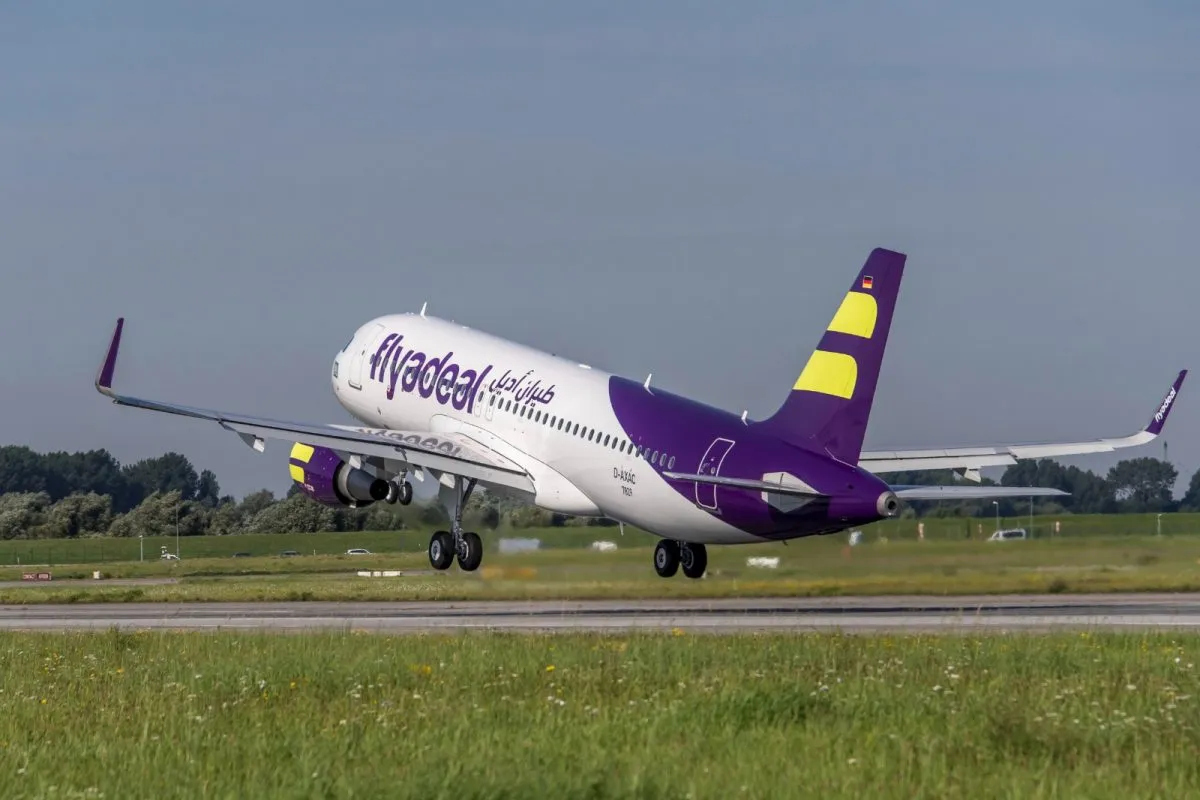
In a move that signals a profound evolution for Saudi Arabia’s low-cost aviation sector, Flyadeal—the budget subsidiary of the national carrier Saudia—is preparing to abandon its strictly point-to-point business model. Acting CEO Sanjiv Kapoor has confirmed that the airline will soon implement a network of connecting flights, a fundamental shift designed to capture a larger share of the Kingdom’s rapidly growing travel market.
This strategic pivot comes at a critical juncture for the Saudi aviation industry, which is currently undergoing a massive transformation under the auspices of Vision 2030. By introducing origin-and-destination fares and seamless transfer capabilities, Flyadeal is positioning itself to compete more effectively not only with regional low-cost carriers but also with global network airlines operating in the Middle East.
The Strategic Shift: Moving Beyond Point-to-Point
For the better part of its operational life, Flyadeal has functioned as a quintessential low-cost carrier (LCC), mirroring the models of airlines like Ryanair or Southwest. By focusing exclusively on point-to-point routes, the airline minimized complexity, reduced turnaround times, and kept operational overheads at an absolute minimum.
However, according to Acting CEO Sanjiv Kapoor, the demands of the Saudi market have reached a level of sophistication that necessitates a more integrated approach. Speaking to Skift on Monday, Kapoor outlined the roadmap for this transition.
"Until now, the model for Flyadeal has been a point-to-point airline where connections were not part of our strategy," Kapoor explained. "But in the coming weeks, we’re going to introduce connecting flights with origin and destination fares and seamless connections."
This transition is more than just a scheduling update; it is an architectural change in how Flyadeal manages its inventory, customer experience, and operational logistics. The introduction of "seamless connections" implies that the airline is likely upgrading its IT infrastructure to handle baggage transfers and synchronized scheduling, features typically reserved for full-service carriers or hybrid LCCs.
Chronology of a Growing Carrier
To understand the weight of this decision, one must look at the trajectory of Flyadeal since its inception.
- 2017: The Launch. Flyadeal began operations in September 2017, targeting the underserved domestic market within Saudi Arabia. Its initial mission was to provide affordable air travel for a growing population of young Saudis and budget-conscious travelers.
- 2018–2021: Rapid Domestic Scaling. The airline grew its fleet steadily, focusing on high-density domestic routes such as Riyadh-Jeddah. During this period, it maintained a strict focus on "unbundling" services to keep base fares low.
- 2022–2023: Fleet Modernization. Recognizing the need for greater efficiency, Flyadeal began planning for a more versatile fleet, moving beyond its initial reliance on standard A320ceo aircraft to embrace newer, more efficient technology.
- 2024: The Strategic Pivot. The current transition toward a connecting-flight model marks the airline’s maturation. It is no longer just a "budget bus" of the skies; it is evolving into a regional connector that leverages the geographic advantages of the Saudi Arabian peninsula.
- 2025 and Beyond: The anticipated arrival of A321neos and A330neos will further cement the airline’s ability to serve longer-haul routes, potentially connecting the Kingdom to distant markets in Europe, Asia, and Africa.
Fleet Evolution: Powering the Network Growth
A network model requires a fleet that can handle both short-haul domestic hops and longer regional legs. Flyadeal’s fleet strategy is currently undergoing a significant overhaul to support this transition.
The Airbus A321neo Advantage
In the second half of next year, Flyadeal is scheduled to take delivery of its first Airbus A321neo aircraft. The "neo" (new engine option) offers superior fuel efficiency and, crucially for a connecting-flight strategy, increased range and cabin versatility. The A321neo will allow Flyadeal to maintain high-frequency domestic flights while opening up new, longer-range international routes that were previously unreachable with the standard A320 fleet.
The Widebody Leap: A330neo
Perhaps the most ambitious component of the fleet strategy is the planned induction of Airbus A330neo widebody aircraft in the fourth quarter of 2027. Widebodies are rarely found in the fleets of traditional low-cost carriers, as they typically require higher capital expenditure and different maintenance protocols. By introducing the A330neo, Flyadeal is signaling its intent to enter the long-haul market, likely positioning itself as a hybrid carrier capable of feeding the broader Saudia Group’s network while offering its own brand of value-based travel.
Industry Context: Navigating the Global Supply Chain Crisis
Flyadeal’s expansion plans, while ambitious, are being executed against a backdrop of severe global aerospace instability. The industry is currently grappling with a "delivery drought," where aircraft manufacturers Airbus and Boeing are failing to meet promised delivery timelines due to supply chain bottlenecks, labor shortages, and engine-related quality control issues.
The Global Ripple Effect
The struggle to secure new metal is a universal pain point. Air India, for instance, has been forced to recalibrate its aggressive expansion plans because its massive orderbook remains largely unfilled. Similarly, the launch of Riyadh Air—the new Saudi "national champion" airline—has faced repeated delays. These setbacks, often attributed to supply chain disruptions and certification hurdles, serve as a cautionary tale for any airline relying on fleet growth for market expansion.
Flyadeal’s ability to secure and integrate these new aircraft will be the ultimate test of its management. Any slippage in the A321neo or A330neo delivery schedule could force the airline to delay its transition to a hub-and-spoke model, potentially ceding market share to competitors.
Official Responses and Strategic Implications
The pivot toward connectivity has significant implications for the Saudi aviation landscape. By introducing connecting flights, Flyadeal is essentially creating a "mini-hub" model. This allows the airline to aggregate demand from smaller domestic cities and feed it into major hubs like Jeddah and Riyadh, which can then be connected to international destinations.
Competitive Dynamics
This shift creates a direct competitive overlap with other regional players. While the Middle East is dominated by the "Big Three" (Emirates, Qatar Airways, and Etihad), the rise of Saudi carriers is reshaping the market. Flyadeal, by acting as a value-based connector, could potentially siphon passengers away from legacy carriers that maintain higher cost structures.
Furthermore, the integration with the broader Saudia Group strategy is clear. If Flyadeal can effectively act as a feeder for the parent company, it strengthens the group’s overall competitive position against the arrival of Riyadh Air. It is a symbiotic relationship: Saudia provides the premium, full-service global network, while Flyadeal provides the affordable, flexible regional connectivity.
The Passenger Perspective
For the traveler, this transition is almost universally positive. The introduction of "origin and destination" fares means that passengers will no longer need to purchase separate tickets for multi-leg journeys, nor will they need to collect and re-check baggage during transfers. This creates a friction-less travel experience, a crucial component in driving tourism and business travel to the Kingdom—key objectives of the Vision 2030 program.
Conclusion: A New Era for Saudi Aviation
The decision by Flyadeal to introduce connecting flights is not merely a change in operational policy; it is a declaration of intent. The airline is moving past its startup phase and into a period of strategic maturity, characterized by a sophisticated fleet, a complex route network, and a more integrated customer experience.
As Sanjiv Kapoor and his team prepare for this transition, they do so with the awareness that the success of the model rests on execution. With global supply chain challenges threatening to derail fleet plans, the next 36 months will be the most critical in the company’s history. If Flyadeal can successfully navigate the delivery of its new Airbus aircraft and seamlessly launch its connectivity model, it will cement its status as a cornerstone of the Saudi aviation ecosystem, effectively bridging the gap between low-cost accessibility and global network efficiency.
The transformation of Flyadeal is emblematic of the broader changes occurring within the Kingdom. As Saudi Arabia opens its doors to the world, its aviation infrastructure must be robust, flexible, and capable of handling a surge in demand. By evolving its business model today, Flyadeal is ensuring that it is not just participating in this growth, but actively driving it.
