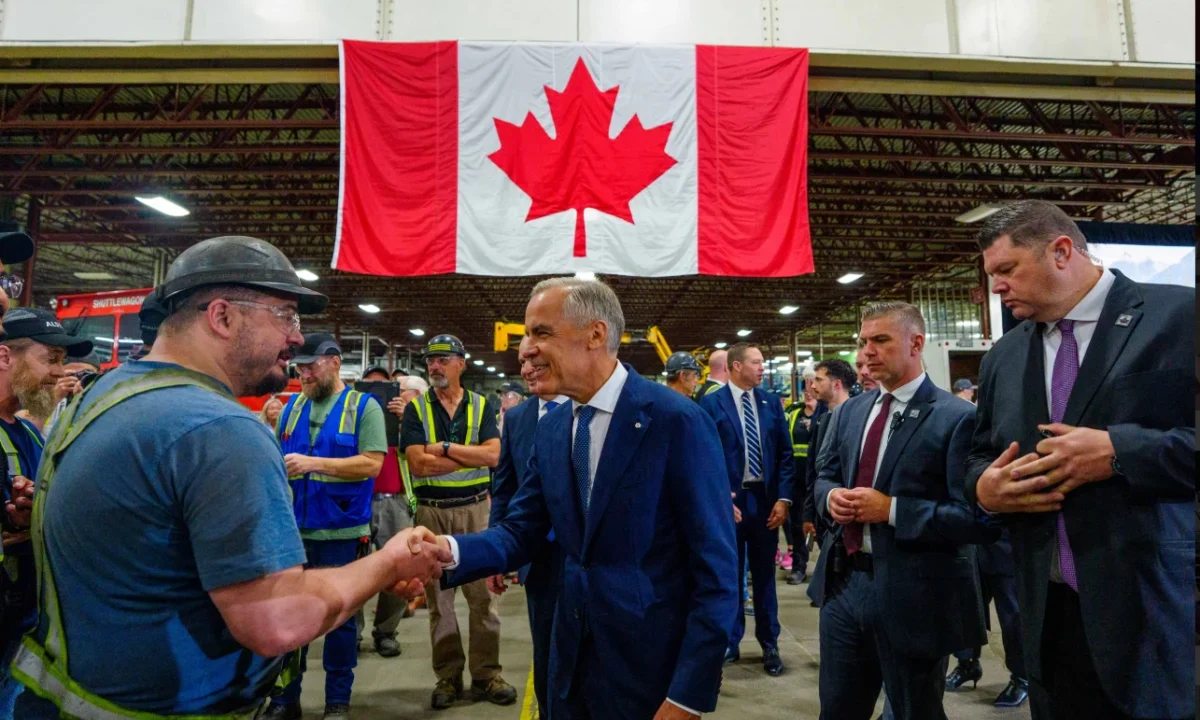





In a significant move to fortify Canada’s industrial backbone, the federal and Ontario provincial governments have jointly announced a massive $2.5 billion investment package aimed at securing the future of the nation’s automotive sector. This strategic injection of capital arrives at a critical juncture, as the domestic manufacturing industry grapples with the dual pressures of global supply chain restructuring and the looming threat of protectionist trade policies emanating from the United States.
By combining $1.5 billion from Ottawa with $1 billion from Queen’s Park over the next two years, the governments are positioning Canada as a resilient hub for the production of connected and electrified vehicles. Beyond the capital infusion, the administration has introduced regulatory relief, signaling a pragmatic shift in policy to ensure that automakers remain competitive while navigating the transition to a low-carbon economy.
The Core Investment: Strengthening the Industrial Base
The $2.5 billion funding package is designed as a direct response to the heightened economic uncertainty currently plaguing the North American automotive landscape. As U.S. policymakers weigh potential tariffs and stricter protectionist measures, Canada is seeking to solidify its position as an indispensable partner in the integrated continental supply chain.
Financial Breakdown
- Federal Contribution: $1.5 billion committed via Ottawa.
- Provincial Contribution: $1.0 billion committed via the Ontario government.
- Duration: Two-year rollout period.
- Primary Objectives: Protecting jobs across the supply chain, facilitating the transition to electric vehicle (EV) production, and upgrading infrastructure for connected vehicle manufacturing.
This investment is not merely a subsidy; it is framed as an economic stabilizer. By providing the liquidity necessary for large-scale projects, the governments hope to prevent the exodus of manufacturing talent and ensure that Canadian assembly plants remain the preferred destination for global automotive giants, despite the higher costs of production associated with the Canadian labor market.
Chronology of the Automotive Strategy
The recent announcement represents the latest chapter in a multi-year effort to revitalize Canada’s automotive sector, which has faced significant headwinds since the 2008 financial crisis and the subsequent acceleration of the EV transition.
2022–2023: The Foundation of the Auto Strategy
Earlier this year, the federal government launched the national auto strategy, a comprehensive framework designed to pivot the country toward battery electric vehicle (BEV) production. This strategy prioritized the creation of a "cradle-to-grave" battery ecosystem, attracting multibillion-dollar investments from companies like Volkswagen, Stellantis, and LG Energy Solution to construct massive battery plants in Ontario.
Mid-2024: Navigating Trade Pressures
As 2024 progressed, the geopolitical climate shifted. With increased rhetoric from U.S. political figures regarding the "Made in America" agenda, Canadian policymakers realized that the initial auto strategy required an additional layer of protection. The current $2.5 billion package acts as an evolution of that strategy, moving from initial infrastructure support to operational sustainability and regulatory flexibility.
The Present: A Strategic Pivot
The current announcement marks a transition from "growth-at-all-costs" to "resilience-focused growth." By addressing both the capital requirements of manufacturers and the regulatory burdens of environmental compliance, the government is attempting to strike a delicate balance between climate targets and economic survival.
Supporting Data: The Economic Stakes
The automotive sector remains one of Canada’s largest export industries, contributing tens of billions of dollars to the GDP and supporting hundreds of thousands of high-skilled jobs.
Industry Impact Metrics
- Employment: The sector supports over 500,000 direct and indirect jobs in Canada, the vast majority of which are concentrated in Ontario’s "Golden Horseshoe" region.
- Export Volume: Canada produces approximately 1.5 million vehicles annually, with the overwhelming majority destined for the U.S. market.
- The Tariff Threat: Economists estimate that a 10% tariff on Canadian-made vehicles entering the U.S. could lead to a 15–20% decline in output within three years if local manufacturers are not adequately supported.
The government’s decision to freeze the light-duty vehicle greenhouse gas (GHG) fleet-average standard at 2026 levels through 2029 is a data-driven move. By providing this four-year "regulatory breather," the government is acknowledging that the current pace of consumer adoption of EVs—while growing—is not yet sufficient to force immediate compliance without risking the profitability of the broader fleet.
Official Responses and Stakeholder Perspectives
The reception to the announcement has been largely positive, though industry analysts remain cautious about the long-term impact of the regulatory shift.
Government Stance
Federal officials emphasized that the funding is a necessary measure to ensure Canada remains a "Tier 1" destination for automotive investment. "We are protecting the thousands of workers who build our vehicles," a government spokesperson noted. "This is about ensuring that when the automotive market fully transitions, it does so in Canada, not elsewhere."
Provincial officials in Ontario echoed this sentiment, emphasizing the importance of the Canada-Ontario Automotive Task Force. This new body is tasked with overseeing the implementation of the funding, ensuring that taxpayer money is being directed toward projects that demonstrate clear economic returns and job retention metrics.
Industry and Labor Feedback
The labor movement has generally welcomed the investment, viewing it as a shield against potential layoffs. However, representatives from parts manufacturers have urged the government to ensure that the $2.5 billion is accessible to small- and medium-sized enterprises (SMEs) in the supply chain, not just the large Original Equipment Manufacturers (OEMs).
"We need to ensure that the parts makers—the companies that build the gears, the wiring harnesses, and the software components—are not left behind while the massive assembly plants take the spotlight," said a representative from a regional automotive parts coalition.
Implications: The Road Ahead
The decision to freeze GHG standards until 2030 while simultaneously injecting capital suggests a complex balancing act.
1. The Regulatory "Breather"
By holding the GHG standards steady, the government is essentially subsidizing the production of internal combustion engine (ICE) vehicles for a longer period. While this may draw criticism from climate activists, the economic reality is that automakers need the profit margins from traditional vehicles to fund the massive R&D required for the electric transition. This flexibility is expected to save the industry billions in potential non-compliance penalties over the next four years.
2. The Canada-Ontario Automotive Task Force
The creation of this task force is a significant development. It suggests that the government wants a granular level of oversight on how these funds are spent. Expect this task force to be the primary interface between the government and major automakers, monitoring everything from production quotas to the sourcing of raw materials.
3. Geopolitical Positioning
The ultimate implication of this package is defensive. As the U.S. becomes increasingly protectionist, Canada is using its fiscal policy to lower the "cost of entry" for manufacturers. By offsetting the costs of high energy prices and regulatory compliance, the Canadian government is attempting to make it economically irrational for automakers to shift their production to Mexico or the Southern United States.
4. The 2030 Horizon
The government has been clear: the regulatory freeze ends in 2030. This creates a hard deadline for the industry. Automakers now have a clear, four-year runway to finalize their transition strategies, retool their plants, and ramp up EV production before the GHG requirements once again tighten. This predictability is perhaps the most valuable component of the announcement, as it allows for long-term capital expenditure planning.
Conclusion
The announcement of a $2.5 billion automotive funding package, coupled with a strategic pause in emissions standard escalations, represents a sophisticated, if pragmatic, approach to modern industrial policy. By acknowledging the realities of the North American trade climate and the cyclical nature of the automotive market, Canada is attempting to steer its manufacturing sector through a period of intense turbulence.
The success of this initiative will not be measured by the initial disbursement of funds, but by the ability of the Canada-Ontario Automotive Task Force to foster a collaborative environment where industry, labor, and government work in lockstep. As the global automotive sector continues its historic pivot toward electrification, Canada’s ability to remain competitive will depend on its capacity to adapt its policies to meet the evolving demands of both the market and the geopolitical environment.
For now, the message to the industry is clear: Canada is committed to the long game, and it is willing to invest the necessary capital to ensure that the future of the automobile remains, in significant part, a Canadian-led endeavor.
