
Introduction
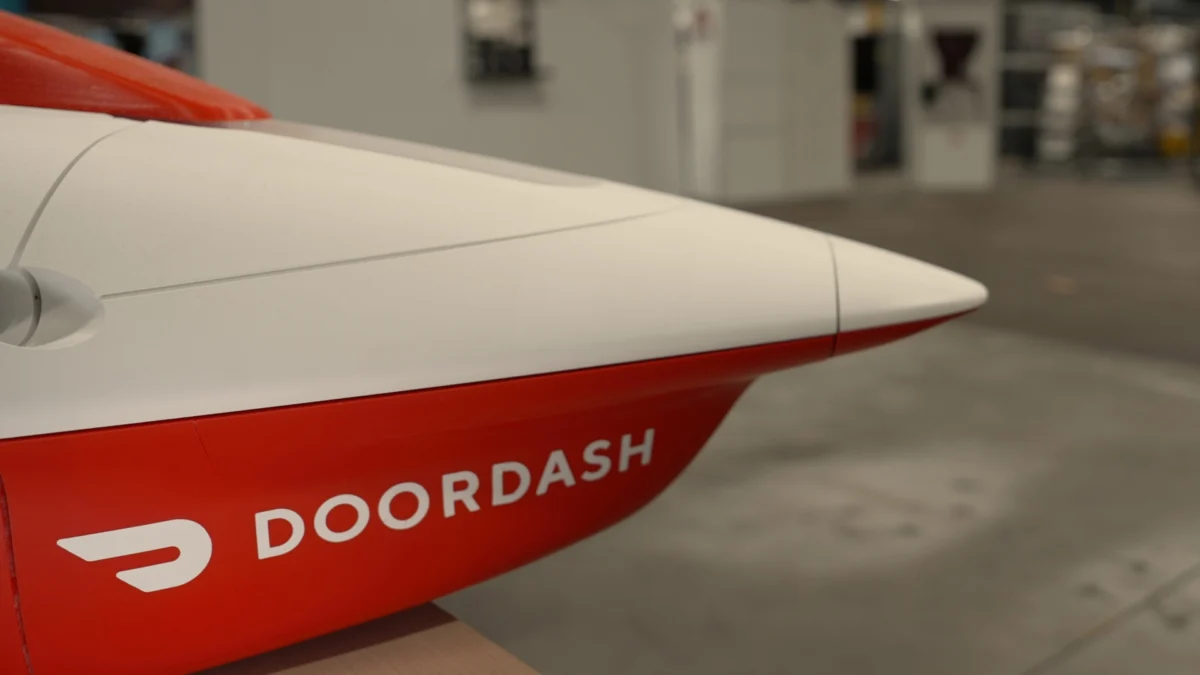
In a major bid to redefine the logistics of last-mile delivery, DoorDash has officially announced the launch of its own drone delivery business, branded as DoorDash Air. The food and grocery delivery giant has developed its own custom-built unmanned aerial vehicles (UAVs) under its specialized robotics and autonomy division, DoorDash Labs.
This ambitious expansion is backed by a pivotal regulatory milestone: the U.S. Federal Aviation Administration (FAA) has granted DoorDash a Part 135 air carrier certification. This designation legally permits the company to operate a commercial drone delivery service within the United States.
While the certification marks a historic step forward for the platform, it does not mean consumers will see custom DoorDash drones dropping off orders immediately. Instead, the announcement signals a long-term, multi-modal autonomous strategy aimed at optimizing the efficiency, speed, and cost of the highly competitive delivery ecosystem.
1. Main Facts of the DoorDash Air Initiative
The unveiling of DoorDash Air marks a structural evolution for the company, transitioning it from an asset-light software platform that connects merchants and gig workers into a hardware-developing logistics enterprise.
The Regulatory Milestone
The core of this announcement is the acquisition of the FAA’s Part 135 air carrier certificate. Unlike basic drone operations governed by Part 107—which restrict commercial operations to small drones within the pilot’s direct line of sight—a Part 135 certification treats the drone operator similarly to a small commercial airline. It establishes rigorous safety, maintenance, training, and operational standards, serving as the legal foundation required for any company seeking to run a commercial, revenue-generating drone delivery network at scale in the United States.
Phased Operational Strategy
DoorDash has not yet committed to a precise public timeline for when its custom aircraft will enter active commercial service. Before these proprietary drones can operate autonomously over long distances, DoorDash must clear several regulatory hurdles.
Initially, the program is expected to roll out through highly controlled, localized pilot programs. During this initial phase:
- Flights will be restricted to short distances.
- Drones will remain within the visual line of sight (VLOS) of a designated human operator.
- The company will gather telemetry, safety, and performance data to refine its flight systems.
To transition to fully autonomous, long-distance operations, DoorDash must secure additional FAA approvals for Beyond Visual Line of Sight (BVLOS) technology. This certification is highly coveted and technically demanding, requiring advanced detect-and-avoid (DAA) sensors and redundant safety systems.
Sustaining Ecosystem Partnerships
Despite investing heavily in its proprietary hardware and software through DoorDash Air, the company is not abandoning its collaborative approach. DoorDash plans to maintain its active partnerships with third-party drone operators:
- Wing (Alphabet): DoorDash first partnered with Wing in 2022 to pioneer drone deliveries in Logan, Australia. In late 2024, the partnership expanded to the United States, launching operational hubs in select metropolitan areas, including Dallas-Fort Worth, Texas.
- Flytrex: DoorDash continues to leverage Flytrex’s established drone delivery networks in suburban markets to service localized merchant demands.
2. Chronology: The Evolution of DoorDash’s Autonomous Strategy
DoorDash’s foray into robotics is the result of a multi-year research and development roadmap managed by DoorDash Labs, the company’s dedicated R&D division. The journey from a software-only platform to a hardware innovator has followed a deliberate timeline.
[2022] DoorDash partners with Alphabet’s Wing in Logan, Australia.
  │
[Late 2024] Drone delivery partnership with Wing expands to Dallas-Fort Worth, TX.
  │
[Sept 2025] DoorDash Labs launches "Dot," a proprietary 350-pound sidewalk delivery bot.
  │
[Present] DoorDash receives FAA Part 135 Certification and unveils "DoorDash Air."
The Foundations of DoorDash Labs
Originally established to explore how automation could alleviate the high labor costs and logistical bottlenecks of the "last mile," DoorDash Labs initially focused on ground-based robotics.
- September 2025 — The Launch of "Dot": DoorDash Labs introduced Dot, a custom-built, 350-pound autonomous sidewalk delivery robot. Designed to navigate pedestrian infrastructure, Dot was deployed to handle short-range deliveries in dense suburban environments.
- Geographic Expansion of Ground Autonomy: Dot’s operations began in the Phoenix, Arizona suburbs of Tempe, Mesa, Gilbert, and Chandler, alongside pilot programs in Fremont, California.
- The Shift to the Skies: Following the deployment of Dot, DoorDash Labs quietly shifted resources toward aerial logistics, culminating in the development of the proprietary DoorDash Air drone hardware and the successful acquisition of the FAA Part 135 certificate.
3. Supporting Data and Technical Architecture
DoorDash’s automation strategy relies on a sophisticated interplay between physical hardware and a proprietary software layer known as the Autonomous Delivery Platform (ADP).
The Multi-Modal Routing Engine
DoorDash does not view drones or sidewalk robots as outright replacements for human couriers (Dashers). Instead, the company is building a hybrid, triaged logistics network. The ADP software acts as the central brain of this network, dynamically analyzing incoming orders and assigning them to the most efficient delivery method based on several parameters:
| Delivery Method | Ideal Payload Capacity | Range Profile | Optimal Environment |
|---|---|---|---|
| Human Couriers (Dashers) | High / Variable | Long / Complex | High-density urban, complex apartment buildings, large catering orders |
| Sidewalk Robots (Dot) | Medium (up to 350 lb gross weight) | Short-range (under 1-2 miles) | Suburban sidewalks, master-planned communities, college campuses |
| Drones (DoorDash Air) | Light (small meals, convenience items) | Medium-range (direct line-of-flight) | Suburban residential, low-density neighborhoods with clear landing zones |
By integrating these three distinct delivery vectors into a single dispatch engine, DoorDash aims to optimize fuel efficiency, reduce traffic congestion, and lower the average cost per delivery.
4. Official Responses and Executive Vision
The strategic philosophy behind DoorDash Air differs from that of traditional robotics firms. Rather than focusing solely on the novelty of autonomous flight, DoorDash leadership emphasizes a customer-first, systems-level approach.
In a blog post announcing the launch of DoorDash Air, Stanley Tang, Co-founder and Chief Product Officer of DoorDash, explained the rationale behind the company’s internal R&D:
"We didn’t start with the question, ‘What’s the coolest autonomous tech we could make?’ We started from first principles: What’s the actual customer problem that needs to be solved?"
Tang emphasized that the true competitive advantage for DoorDash lies not just in building a high-performing drone, but in controlling the entire technology stack—from physical hardware to real-time dispatch algorithms.
"Most autonomy companies work on one layer. At DoorDash, you’re working on all of them simultaneously; nobody else is running all these systems on one network. DoorDash is where the most interesting problems in autonomy are being solved today."
This holistic approach serves as a key recruitment pitch for top-tier engineering talent in hardware, embedded systems, and machine learning, positioning DoorDash as a direct competitor to traditional silicon valley robotics firms.
5. Strategic and Industry Implications
The launch of DoorDash Air and the receipt of its Part 135 certification carry profound implications for the delivery sector, regulatory policies, and the broader gig economy.
1. Navigating the Regulatory Bottleneck
While the Part 135 certification is a critical milestone, the true test for DoorDash Air will be securing Beyond Visual Line of Sight (BVLOS) approval. Currently, only a select group of heavily funded enterprises—including Amazon Prime Air, Alphabet’s Wing, and Zipline—have secured broad BVLOS waivers from the FAA.
Without BVLOS, drone delivery remains economically unviable at scale, as companies must station human observers along flight paths. DoorDash’s ability to secure these advanced waivers will dictate how quickly DoorDash Air can transition from a localized pilot program into a mainstream delivery option.
2. Shifting the Unit Economics of the Last Mile
The "last mile" of delivery is widely recognized as the most expensive and inefficient segment of the supply chain, often accounting for up to 50% of total shipping costs. By automating mid-range, lightweight deliveries (such as medicine, quick-service meals, and convenience items), DoorDash can significantly lower its marginal cost per delivery.
[Traditional Model]
Merchant ──(High Marginal Cost / Human Labor)──> Customer

[Hybrid Autonomous Model]
Merchant ──(ADP Routing Engine)──┬──> Sidewalk Bot (Short range) ──> Customer
                                 ├──> Drone (Mid-range aerial) ───> Customer
                                 └──> Dasher (Long/Complex range) ──> Customer
While building and maintaining a proprietary drone fleet requires substantial upfront capital expenditure (CapEx), it drastically reduces operational expenditure (OpEx) over time by minimizing reliance on human labor for simple, short-distance deliveries.
3. Impact on the Gig Economy and Labor Dynamics
The introduction of proprietary drones and sidewalk bots raises questions about the long-term role of DoorDash’s independent contractor workforce. While DoorDash asserts that autonomous systems will complement rather than replace human couriers, a successful rollout of DoorDash Air and Dot will inevitably absorb high-volume, short-distance orders. This shift could redefine the earning patterns of "Dashers," leaving human couriers to handle more complex, high-value, or long-distance deliveries that robots cannot easily execute.
4. Competitive Positioning Against Tech Giants
With its own drone fleet and ground-robotics division, DoorDash is positioning itself to defend its market share against technology conglomerates and specialized logistics providers. Alphabet’s Wing and Amazon Prime Air have spent years developing proprietary aerial networks. By building its own full-stack autonomous platform, DoorDash ensures it will not be dependent on third-party technology providers to power its delivery network in an increasingly automated future.
