



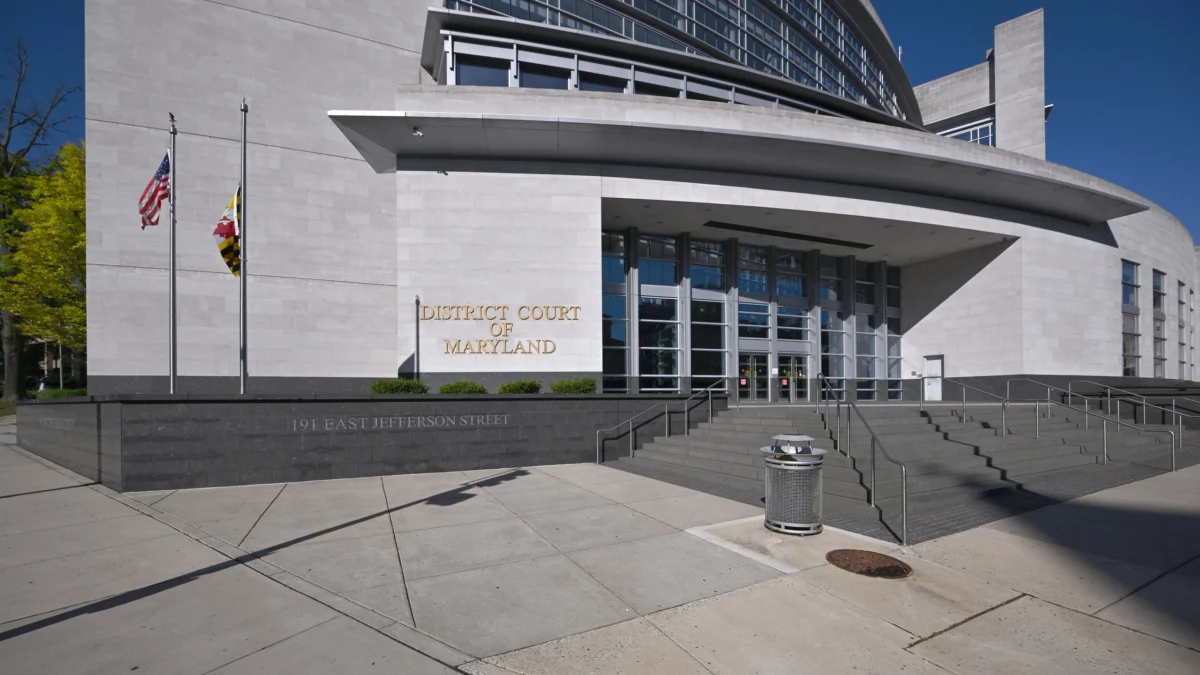
In a significant judicial rebuke to the executive branch, U.S. District Judge Deborah Boardman issued a preliminary injunction this Wednesday, effectively freezing the enforcement of two sweeping executive orders issued by President Trump. These orders, aimed at curbing "birth tourism" and restricting birthright citizenship for specific classes of individuals, have been deemed by the court as a direct defiance of established Supreme Court precedent.
The ruling marks the latest chapter in a protracted legal struggle over the interpretation of the Fourteenth Amendment. By attempting to administratively bypass a high court ruling, the administration has reignited a fierce national debate regarding the limits of executive power, the sanctity of constitutional birthright, and the definitions of American citizenship.
The Chronology of a Constitutional Impasse
To understand the gravity of Judge Boardman’s decision, one must look at the timeline of the administration’s persistent attempts to alter the status quo.
The controversy gained renewed momentum in June 2026, when the Supreme Court issued its landmark ruling in Trump v. Barbara. In that decision, the Court reaffirmed the long-standing legal doctrine that children born on U.S. soil—regardless of their parents’ immigration status or legal standing—are citizens by birth under the Fourteenth Amendment. The Court’s decision was intended to settle the matter definitively, striking down previous executive attempts to curtail citizenship via administrative fiat.
However, undeterred by the rebuke, the Trump administration issued two new executive orders in early August 2026. These orders were designed to circumvent the Barbara ruling by targeting specific categories of individuals, including foreign diplomatic staff, those labeled as "alien enemies," individuals accused of obtaining citizenship through commercial transactions or "fraudulent means," and those born in U.S. territories where citizenship is not explicitly conferred by statute.
The second order focused specifically on "birth tourism"—the practice of non-residents traveling to the U.S. for the sole purpose of giving birth to gain citizenship for their children. By mid-August, the administration’s rhetoric had intensified, setting the stage for the legal challenge that ultimately landed in Judge Boardman’s court.
Analyzing the Executive Orders: A Two-Pronged Approach
The administration’s strategy involved a bifurcated approach to restricting birthright citizenship.
The First Order: Expanding Definitions of Exclusion
The first executive order sought to redefine the eligibility criteria for citizenship at birth by creating new, narrow categories of exclusion. By targeting "alien enemies" and those utilizing "commercial transactions" to secure citizenship, the administration attempted to frame its actions as a national security and anti-fraud measure. Critics argue this is a semantic attempt to circumvent the Fourteenth Amendment by redefining the "subject to the jurisdiction thereof" clause, which has historically been interpreted to include virtually everyone physically present on U.S. soil.
The Second Order: The "Birth Tourism" Crackdown
The second order focused on the subjective intent of expectant mothers. It mandated that consular officers and immigration officials investigate the primary purpose of travel for pregnant women entering the country. The policy essentially created a system of "intent-based" citizenship, where a woman’s stated reason for visiting could be used to deny her child the right to citizenship.
White House Deputy Chief of Staff Stephen Miller framed this as a matter of integrity. During a press briefing, Miller stated, "If you’re telling a consular officer you’re here as a tourist but your true purpose and intent is to go to a baby mill, give birth and try and mint an American citizen while you’re here, then you’re committing fraud against the American government."
Supporting Data and the Reality of "Birth Tourism"
The administration’s aggressive stance on birth tourism rests on the premise that the phenomenon is a massive, systemic threat to the integrity of the American passport. President Trump has frequently cited "hundreds of thousands" of such births annually as justification for his executive actions.
However, data from demographic experts and immigration policy researchers paint a different picture. According to reports from institutions such as Northeastern University, the phenomenon of "birth tourism" is statistically rare, both within the United States and globally. While it is a measurable trend in certain specific geographic enclaves, researchers emphasize that it does not account for a significant percentage of annual births in the U.S.
Legal analysts point out that the administration’s focus on this issue is disproportionate to the actual scope of the activity. Critics argue that the executive orders represent a "solution in search of a problem," designed more for political signaling to the administration’s base than as a necessary administrative or national security reform.
Official Responses and the Judicial Pivot
The response to the orders was swift and multidisciplinary. A coalition of rights organizations, led by the American Civil Liberties Union (ACLU), argued that the orders were not only unconstitutional but also imposed "irreparable harm" on individuals who are legally entitled to the protections of the Fourteenth Amendment.
State officials, including New Jersey Attorney General Matthew Platkin, led a multi-state challenge, arguing that the administration’s unilateral approach undermines the rule of law. Platkin characterized the move as an attempt to "rewrite the Constitution through memo-writing," warning that such actions threaten the stability of the legal system.
In her stinging decision to grant the preliminary injunction, Judge Boardman centered her reasoning on the doctrine of stare decisis—the legal principle of following established precedent. She dismissed the administration’s attempt to bypass the Barbara ruling, noting that the judiciary had already spoken on the matter.
"The Supreme Court has spoken: Children in the certified class are ‘citizens at birth’," Boardman wrote in her opinion. "Barbara is the law of the land. The President must follow it."
Boardman’s order is expansive, applying to all children born after February 19, 2025. However, she also noted significant procedural flaws in the executive orders themselves. She criticized the "vague nature" of the language, noting that the administration failed to clarify whether the rules were intended to be retroactive or prospective, which she argued would lead to chaos in the administration of immigration law and vital records.
Implications: A Constitutional Crisis?
The legal implications of this ruling are profound. By ignoring a direct Supreme Court mandate, the administration has effectively signaled that it is willing to test the boundaries of the separation of powers. If the executive branch is permitted to treat Supreme Court rulings as optional guidelines rather than binding law, it could lead to a permanent degradation of the constitutional checks and balances system.
Furthermore, the ruling highlights the vulnerability of birthright citizenship in the current political climate. Even if the current orders are struck down, the legal infrastructure created by the administration—such as the new consular vetting procedures—creates a "chilling effect" on immigrant populations. Families may fear that even if their children are technically citizens, the administrative hurdles required to secure documentation like social security cards or passports will be insurmountable under the current political regime.
For the judicial branch, this case serves as a test of its own relevance. The courts rely on the executive branch to enforce their rulings; when that cooperation is withheld, the judiciary is forced to use tools like injunctions to hold the administration accountable.
As the case moves toward a final hearing, the nation watches to see whether the administration will attempt a legislative route—such as pushing for a constitutional amendment, which would be a monumental and unlikely task—or whether it will continue to challenge the judiciary’s authority. For now, the "law of the land," as affirmed by the courts, remains that citizenship is a birthright, not a privilege to be granted or revoked at the discretion of the executive branch.
The struggle over the definition of an "American" is far from over, but for this moment, the Constitution stands as a shield against the administration’s latest attempt to alter the fundamental identity of the nation.
