


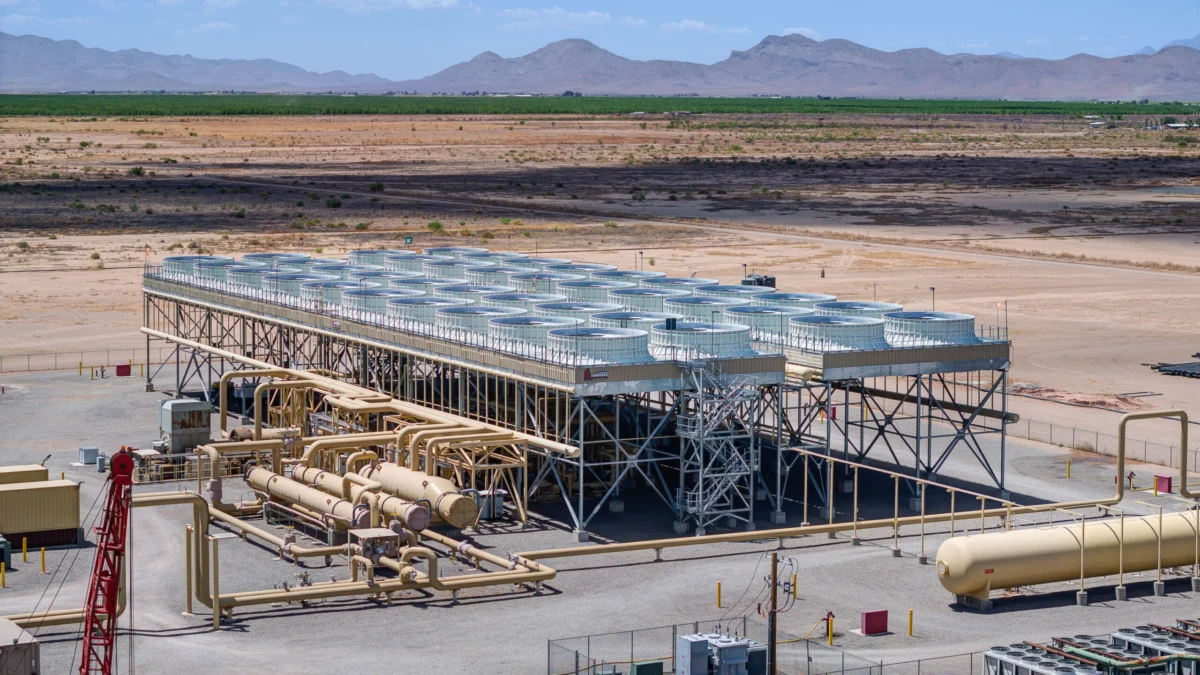
In the high desert of New Mexico, the Lightning Dock geothermal power plant serves as a silent, steaming sentinel of the energy transition. By early 2024, however, the facility was effectively on life support. Once a promising source of emissions-free, 24/7 baseload electricity, the plant was failing. The subterranean reservoir feeding the turbines was cooling at an alarming rate, rendering the operation economically unviable.
In a radical pivot that has caught the attention of the energy sector, Zanskar—a small but ambitious firm specializing in geothermal advancement—purchased the ailing site. Two years later, the plant is not only back online; it is operating at full capacity, producing double the electricity of its predecessor. By leveraging cutting-edge modeling and deep-drilling techniques previously reserved for the oil and gas industry, Zanskar has proven that the "death" of a geothermal site is often merely a failure of imagination and technology.
The Chronology of a Turnaround
The history of the Lightning Dock site is a cautionary tale of conventional geothermal limitations. When the plant first came online in 2013, it was powered by two production wells tapping into a hydrothermal reservoir. However, geothermal energy is not an inexhaustible static resource; it requires a delicate balance of heat and fluid flow.
The Decline (2018–2024)
Typically, a well site experiences a natural cooling rate of roughly 1°F to 2°F per year. Lightning Dock, however, suffered a catastrophic thermal collapse. In the five years leading up to Zanskar’s acquisition, the reservoir temperature plummeted by 50°F—a staggering rate of 10°F annually. By the time Zanskar took the reins, the water entering the plant was a tepid 250°F, far below the 310°F threshold required for the plant’s design efficiency. The facility was effectively starving for heat.
The Intervention (2024–2025)
Upon acquiring the site, Zanskar’s team applied advanced subterranean modeling to visualize the reservoir’s architecture. They discovered a fundamental error in the original development strategy: the existing wells, bored to a depth of only 2,500 feet, were merely skimming the surface of a much larger, deeper, and hotter resource.
The company moved to execute a bold strategy. Using modern drilling technology, they targeted a new location and bored down to 8,000 feet—more than triple the depth of the original wells. In May 2025, the new well went online. The results were instantaneous and transformative.
Supporting Data: By the Numbers
The success of the Lightning Dock revival is anchored in hard data, providing a compelling case for the viability of "re-powering" aging geothermal assets.
- Flow Rate: The new well is producing a consistent, robust flow of over 4,000 gallons per minute, proving that deeper drilling does not necessarily equate to lower permeability—a major hurdle previously feared by engineers.
- Thermal Efficiency: The plant is now operating at its designed capacity, effectively reversing the 50°F loss seen in the previous half-decade.
- Output: Over the first year of the new operation, the facility generated double the electricity compared to its output under the old, shallow-well configuration.
- Scale: While the 15-megawatt capacity—enough to power roughly 11,000 American homes—is modest compared to massive natural gas or nuclear plants, its value lies in its reliability. Unlike solar or wind, geothermal provides baseload power, running around the clock regardless of weather conditions.
Official Responses: A Paradigm Shift
The leadership at Zanskar views the Lightning Dock project not as a one-off rescue mission, but as a proof-of-concept for the entire industry.
"It looks really exciting," says Joel Edwards, cofounder and CEO of Zanskar. "The plant has completely turned around. Ultimately, you need to run these things for long time frames to get confidence in their performance, but the data so far suggests we are looking at a long-term, sustainable operation."
Ben Brenner, Zanskar’s director of federal affairs, emphasizes that the discovery that flow rates actually increased at the 8,000-foot mark is a "game changer." For decades, the industry operated under the assumption that moving deeper meant encountering "tighter" rocks—geological formations so compressed that water flow would be choked off.
"That fundamentally changes how you think about not just Lightning Dock, but all hydrothermal assets in America," Brenner notes. "It recalibrates our understanding of the potential for existing, underperforming sites across the country."
Implications for the Future of Geothermal
The success at Lightning Dock has wide-ranging implications for the broader energy sector, particularly as the U.S. looks to decarbonize its grid while maintaining reliability.
The "Deep" Strategy
The oil and gas industry has spent the last several decades perfecting the art of deep-well drilling, with some operations reaching 20,000 feet or more. Geothermal, by contrast, has largely remained in the shallow "comfort zone" of 3,000 to 5,000 feet. Edwards believes the geothermal sector is on the precipice of a similar technological arc. As drilling costs decrease and modeling precision improves, "deep geothermal" could become the new industry standard.
Beyond Enhanced Geothermal Systems (EGS)
There is currently significant investor buzz surrounding Enhanced Geothermal Systems (EGS)—projects like those from Fervo Energy that use hydraulic fracturing (fracking) to create reservoirs where they don’t naturally exist. While EGS is undoubtedly a critical frontier, the Lightning Dock project serves as a reminder that there is significant "low-hanging fruit" available right now.
Many of the nation’s existing geothermal sites are currently written off as "depleted," yet they represent pre-permitted, grid-connected assets that simply require a second look and deeper exploration. By applying modern data science to old fields, developers can squeeze more power out of existing infrastructure, minimizing environmental impact and capital expenditure.
A Roadmap for Renewal
Looking ahead, Zanskar plans to conduct further development at Lightning Dock. With continued investment and potential upgrades to the existing power plant machinery, the site’s output could climb even higher.
The broader lesson is clear: geothermal energy is not inherently a finite, decaying resource. Like any complex system, it is subject to the limitations of the technology used to tap into it. By marrying the subsurface mapping techniques of the digital age with the heavy-duty drilling capabilities developed by the petroleum industry, we can turn "dead" power plants into permanent sources of clean energy.
As the world scrambles to replace coal and gas with reliable, emissions-free power, the Lightning Dock project stands as a quiet reminder that the solution to our energy crisis may not be something we invent from scratch, but something we find—if only we are willing to dig a little deeper.
