



In the highly competitive landscape of automotive repair, the difference between a thriving business and a struggling shop often comes down to data. For years, shop owners have navigated the complexities of profitability—balancing labor rates, parts margins, and customer volume—often operating in a vacuum, unsure of whether their performance metrics align with industry standards. Today, Tekmetric, a leader in shop management software, is changing that dynamic with the launch of the Tekmetric Shop Index, a powerful, free benchmarking tool designed to democratize access to high-level operational data.
By providing shop owners with the ability to measure their performance against anonymous, real-world data from thousands of facilities, Tekmetric is moving to bridge the "visibility gap" that has long hindered independent repair centers. Whether a shop is a local neighborhood garage or a multi-location enterprise, this tool offers a standardized lens through which to view growth, pricing, and efficiency.
The Core Fundamentals: What is the Tekmetric Shop Index?
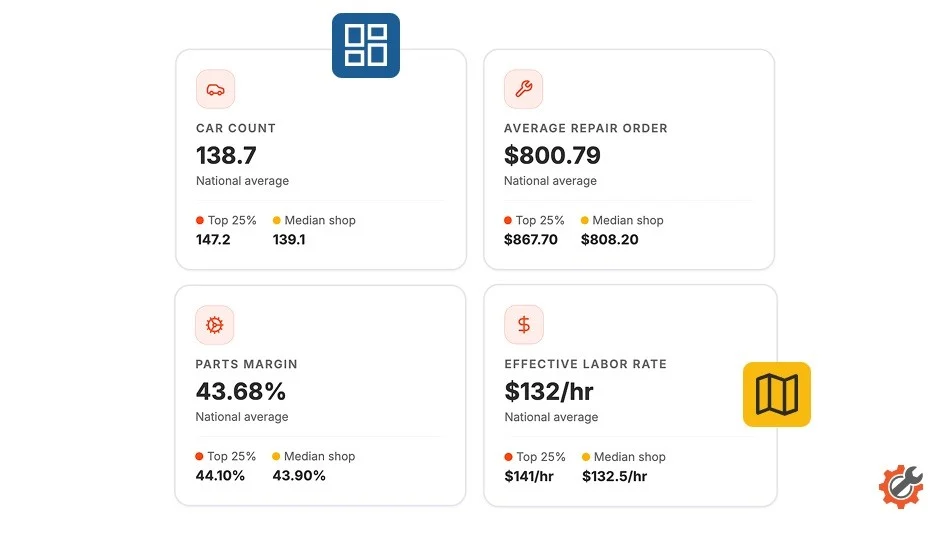
The Tekmetric Shop Index is a web-based benchmarking utility that requires no subscription, login, or existing account to access. By entering four fundamental performance indicators, shop owners receive an immediate, data-driven assessment of their business health. The tool is designed to provide clarity on the metrics that directly impact the bottom line:
- Average Repair Order (ARO): Measuring the average value of each transaction, a critical indicator of service advisor efficacy and shop pricing strategy.
- Car Count: The volume of vehicles serviced, which acts as a proxy for operational capacity and marketing success.
- Parts Margin: The profitability generated from parts procurement, a vital component of the shop’s overall gross profit.
- Effective Labor Rate (ELR): Perhaps the most misunderstood metric in the industry, the ELR provides a true picture of what the shop earns per labor hour after accounting for discounts and inefficiencies.
By inputting these figures, users receive an anonymous, side-by-side comparison. The results are contextualized against a massive dataset drawn from the 15,000+ repair shops currently utilizing the Tekmetric platform. Users can toggle between national averages or drill down into state-specific data, providing a localized perspective that accounts for regional labor costs and market demand.
Chronology: The Evolution Toward Data-Driven Operations
The release of the Shop Index marks the culmination of a multi-year trend toward digitization within the automotive aftermarket. Historically, the repair industry was notoriously opaque; shop owners relied on "gut feeling" or anecdotal evidence from peers to gauge success.
The Pre-Digital Era
For decades, benchmarking was the exclusive domain of large franchise chains or expensive consulting firms. Independent shop owners had little access to comparative data, often remaining unaware that their effective labor rates were trailing behind the market or that their parts margins were eroding due to inefficient procurement processes.
The Rise of Cloud-Based Management
As cloud-based shop management systems (SMS) gained traction in the late 2010s, the potential for aggregated data grew. Tekmetric, since its inception, focused on building a robust, data-rich infrastructure. By centralizing workflows—from digital vehicle inspections (DVIs) to invoicing—the company began to accumulate a vast repository of operational intelligence.
The Development Phase
Over the past 18 months, Tekmetric engineers and data scientists began curating this anonymized information. The goal was not merely to hoard data, but to transform it into a functional tool for the industry. Recognizing that many shop owners—even those not currently using Tekmetric—struggled to assess their performance, the company prioritized accessibility. The decision to make the tool free and account-free reflects a strategic shift toward becoming a thought leader in the broader automotive ecosystem, rather than just a software vendor.
Supporting Data: Why Benchmarking Matters
The automotive repair sector is facing unprecedented pressure. Rising costs of diagnostic technology, the shift toward electric and hybrid vehicles, and a persistent shortage of skilled technicians have made operational efficiency more important than ever.
The Profitability Gap
According to internal Tekmetric analysis, there is often a significant delta between top-quartile shops and the industry median. This "Profitability Gap" is usually driven by small, incremental failures in tracking. For example, a shop that fails to monitor its Effective Labor Rate may inadvertently offer discounts that erode profit margins by 5% to 10% annually. When extrapolated over thousands of repair orders, this oversight can result in the loss of tens of thousands of dollars in potential revenue.
The Power of Aggregation
With more than 15,000 shops on the platform, Tekmetric’s dataset is among the largest in the independent aftermarket. This scale provides high statistical confidence. When a user compares their metrics against this index, they are not looking at arbitrary goals; they are looking at the "winning formula" currently being executed by successful peers in their own geographic vicinity. This local filtering is particularly crucial, as the cost of living and labor market competition vary wildly between states like California and Ohio, for example.
Official Perspectives: The Vision Behind the Tool
The launch of the Shop Index is a central pillar of Tekmetric’s broader mission to professionalize the independent repair industry. Sunil Patel, founder and CEO of Tekmetric, has long advocated for a shift from "reactive" to "proactive" management.
"You can’t improve what you’re not measuring," Patel stated during the product announcement. "The industry has reached a point where intuition is no longer enough to sustain growth. We wanted to give every shop owner—regardless of their size or the software they use—a mirror. The Tekmetric Shop Index gives them honest, real-world benchmarks so they can see exactly where they stand, spot their biggest opportunities, and take the next step toward better results."
Industry analysts have noted that by providing this tool for free, Tekmetric is effectively lowering the barrier to entry for business intelligence. By encouraging shop owners to focus on these four KPIs, the company is fostering a culture of data literacy that benefits the entire automotive supply chain.
Implications for the Aftermarket: What Comes Next?
The introduction of the Shop Index is expected to have several ripple effects across the automotive repair sector.
1. Standardization of KPIs
As more shops adopt these four metrics as their primary "north star," the industry will likely see a move toward more standardized reporting. This benefits everyone from shop owners to parts distributors and lenders, who now have a clearer way to assess the viability and performance of repair businesses.
2. Informed Decision Making
The immediate impact for the individual shop owner is a shift in strategy. Armed with the knowledge that their parts margin is below the state average, a shop owner might re-evaluate their relationship with local vendors or reconsider their markup structures. If their car count is high but their ARO is low, it may signal an opportunity to improve service advisor training or implement more comprehensive digital vehicle inspection processes.
3. A Catalyst for Professionalization
By treating the repair shop like a modern retail business, Tekmetric is helping to elevate the professional standing of the aftermarket. As shops become more profitable through better benchmarking, they are better positioned to invest in better facilities, better wages for technicians, and better equipment—ultimately benefiting the consumer.
4. Competitive Dynamics
For competitors of Tekmetric, the release of this index raises the bar. The expectation for software providers is no longer just "management" of records, but the provision of "intelligence." The company has effectively signaled that its competitive advantage lies in its data superiority, setting a high standard for others in the CRM and SMS space.
Conclusion
The Tekmetric Shop Index is more than just a software feature; it is a diagnostic tool for the business itself. By simplifying complex data into an actionable, user-friendly format, Tekmetric has provided shop owners with a path toward greater financial transparency and operational rigor. In an industry defined by precision, the ability to measure one’s own performance against the collective success of the market is an invaluable asset. As the aftermarket continues to evolve, tools like the Shop Index will likely serve as the foundational bedrock for the next generation of successful, data-driven repair centers.
