



By [Your Name/Journalistic Staff]
As British Columbia accelerates its transition toward a sustainable, low-carbon transportation future, the demand for a specialized workforce has reached a critical juncture. To bridge the widening gap between the rapid adoption of electric vehicles (EVs) and the availability of qualified service technicians, Vancouver Community College (VCC) has unveiled a comprehensive suite of new automotive training programs. These initiatives are designed to equip the next generation of technicians with the high-voltage expertise required to maintain the province’s evolving vehicle parc.
The Shift Toward Zero-Emission Transportation
The automotive industry is undergoing its most significant technological transformation since the internal combustion engine replaced the horse and carriage. With British Columbia’s Zero-Emission Vehicles Act mandating that all new light-duty vehicles sold in the province must be zero-emission by 2035, the pressure on the automotive service sector is mounting.
Currently, thousands of hybrid and electric vehicles are hitting B.C. roads annually, yet the traditional automotive curriculum—long focused on mechanical pistons, fuel injection, and exhaust systems—is struggling to keep pace with software-defined, battery-electric platforms. VCC’s new program suite is a direct, industry-aligned response to this structural mismatch, ensuring that as British Columbia pivots toward cleaner transportation, the infrastructure to maintain those vehicles is not left behind.
Chronology of an Industry-Driven Initiative
The genesis of VCC’s new automotive curriculum was not an overnight decision but a multi-year collaborative process involving labor market analysis and direct input from industry stakeholders.
- 2021–2022: As EV sales began to climb, industry associations and major service centers identified a burgeoning "skills vacuum." While parts and service departments were ready to sell EVs, they lacked the staff qualified to perform diagnostics on high-voltage battery packs and electric drivetrains.
- 2023: VCC began formal consultations with automotive manufacturers, independent repair shop owners, and provincial energy regulators to identify core competencies needed for modern vehicle maintenance.
- 2024: The college finalized the curriculum design, prioritizing a modular approach that caters to both seasoned mechanics and students entering the trade for the first time.
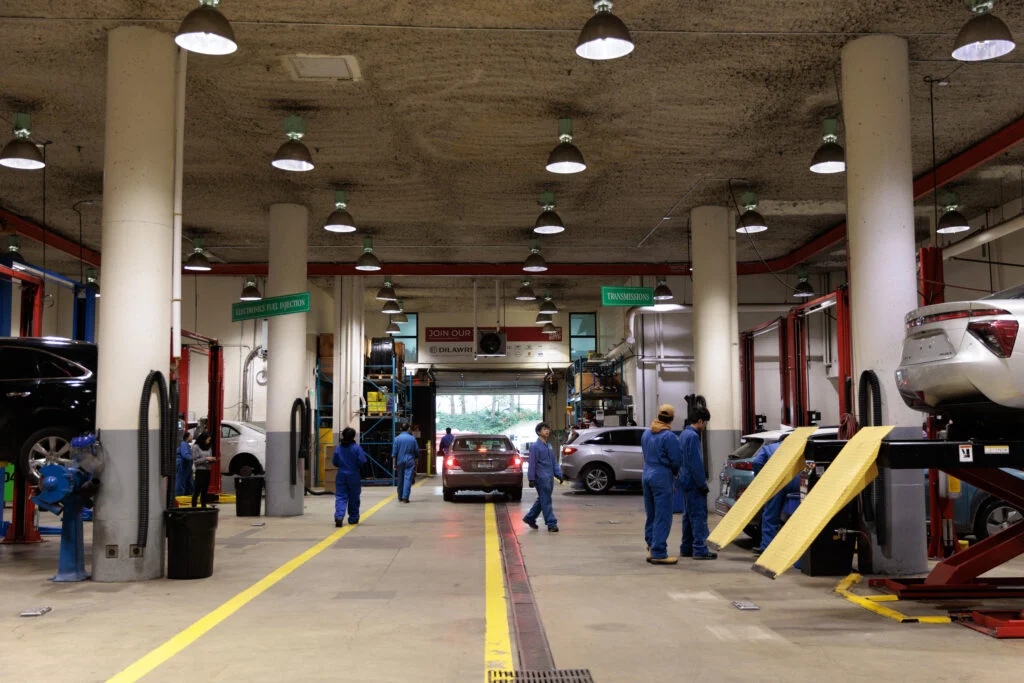
- 2025 (Current Phase): VCC is finalizing infrastructure upgrades to its workshops, integrating high-voltage safety stations and specialized diagnostic testing equipment.
- September 2026: The official launch of the first full intake of students into the comprehensive EV certification programs.
Supporting Data: The Skills Gap
The urgency behind VCC’s initiative is backed by stark economic and environmental data. According to provincial transport reports, the "vehicle parc"—the total number of registered vehicles on the road—is seeing a year-over-year decrease in the ratio of internal combustion engines to electrified platforms.
Recent labor surveys suggest that while the number of automotive service jobs remains stable, the nature of these roles is shifting. Approximately 60% of modern vehicle diagnostic time is now spent on software, sensors, and electrical systems rather than traditional mechanical repair. Furthermore, independent repair shops report that they are frequently forced to turn away EV customers because their staff lacks the "High-Voltage Certification" required to safely open a battery enclosure or service an electric traction motor.
By providing targeted training, VCC aims to stabilize this labor market, ensuring that small-to-medium-sized repair businesses remain competitive against larger dealership networks that have already begun internalizing EV training.
Official Responses and Strategic Vision
The leadership at VCC emphasizes that this transition is as much about economic opportunity as it is about environmental policy.
"Now is an exciting time to be working in the automotive industry as we’re seeing a huge expansion in the roles and skills needed within the field," said Brett Griffiths, dean of trades, technology, and design at VCC. "VCC partnered closely with industry to develop these programs. This wasn’t an academic exercise; it was a collaborative project to ensure that when a student graduates, they are walking into a job that is vital to the province’s infrastructure."
Industry partners have lauded the move, noting that the "hands-on" component of the VCC curriculum is the missing link in current vocational training. By focusing on real-world applications—such as battery thermal management systems, regenerative braking calibration, and high-voltage safety protocols—the program ensures that graduates are not just "theory-trained" but "shop-ready."
Curriculum Focus: Beyond the Engine
The new programs represent a paradigm shift in what it means to be a "mechanic." The curriculum is divided into several specialized pillars:
1. High-Voltage Battery Systems
Students will learn the intricacies of lithium-ion battery management, including cell balancing, thermal regulation, and safety procedures for high-voltage disconnects. This is the "heart" of the new curriculum, requiring rigorous adherence to safety standards to prevent arc flashes and electrical hazards.
2. Electric Traction Motors
Unlike traditional engines, traction motors are relatively simple in their mechanical design but complex in their electromagnetic control. Training will focus on the power electronics that drive these motors, including inverters and converters.
3. Parts Sourcing and Inventory Management
A critical, often overlooked aspect of the EV transition is the supply chain. The curriculum introduces students to the complexities of sourcing proprietary EV components, managing battery recycling logistics, and understanding the environmental regulations governing the disposal of hazardous materials.
4. Advanced Diagnostics and Software
Modern EVs are essentially mobile computers. The program emphasizes software troubleshooting, over-the-air (OTA) update management, and the use of proprietary diagnostic tools to interpret vehicle data logs.
Implications for the Workforce and the Province
The implications of this rollout extend far beyond the walls of VCC. For the student, the program offers a future-proof career path in a high-demand sector. For the consumer, it promises more options for service, which in turn lowers the "Total Cost of Ownership" for EVs, as repairs become more accessible and less concentrated in expensive dealership networks.
For the province of British Columbia, this initiative is a cornerstone of the Zero-Emission Vehicles Act. If the government expects to phase out gas-powered vehicles, the province must be able to support those vehicles through their entire lifecycle. Without a trained workforce, the "green transition" would likely face a massive bottleneck, as consumer confidence in EVs would plummet if they found themselves unable to service their vehicles.
Flexibility and Accessibility: A Modular Approach
Recognizing that the automotive workforce is diverse in its experience levels, VCC has structured the new offerings to be highly accessible:
- The Diploma Pathway: Designed for those looking to start a career in the trade, this is a comprehensive, multi-year program that covers everything from foundational mechanical systems to advanced EV diagnostics.
- Microcredentials: These are the program’s most innovative feature. Designed for working professionals—journeypersons who have spent decades under the hood of gas-powered cars—these short, intensive courses allow them to add "EV Specialist" credentials to their resumes without committing to a full multi-year degree. This allows the current workforce to upskill rapidly as the vehicle parc changes around them.
Conclusion: The Road Ahead
As the September 2026 start date approaches, VCC is preparing for a wave of interest from both current high school graduates and career-changers looking for a stable, high-tech profession. The college’s commitment to industry partnerships ensures that the training will evolve alongside the technology.
In an era of rapid technological change, VCC’s proactive approach serves as a blueprint for how vocational institutions can act as engines of economic and environmental progress. By aligning academic rigor with the immediate, high-stakes needs of the automotive sector, Vancouver Community College is not just teaching students how to fix cars—it is ensuring that British Columbia has the skilled hands and sharp minds necessary to keep the province moving in a cleaner, more sustainable direction.
As the automotive landscape continues to electrify, the technicians trained in these halls will be the silent guardians of the road, ensuring that the transition to a zero-emission future is safe, reliable, and efficient for everyone.
